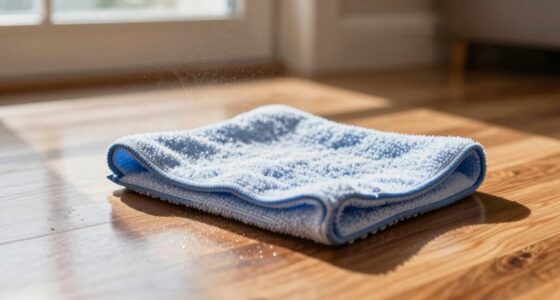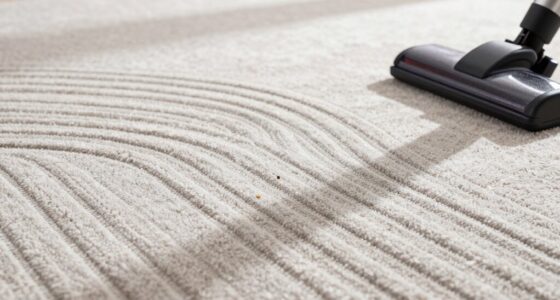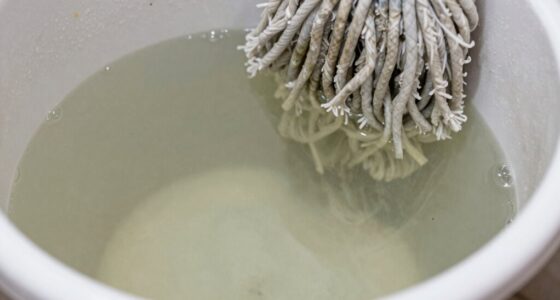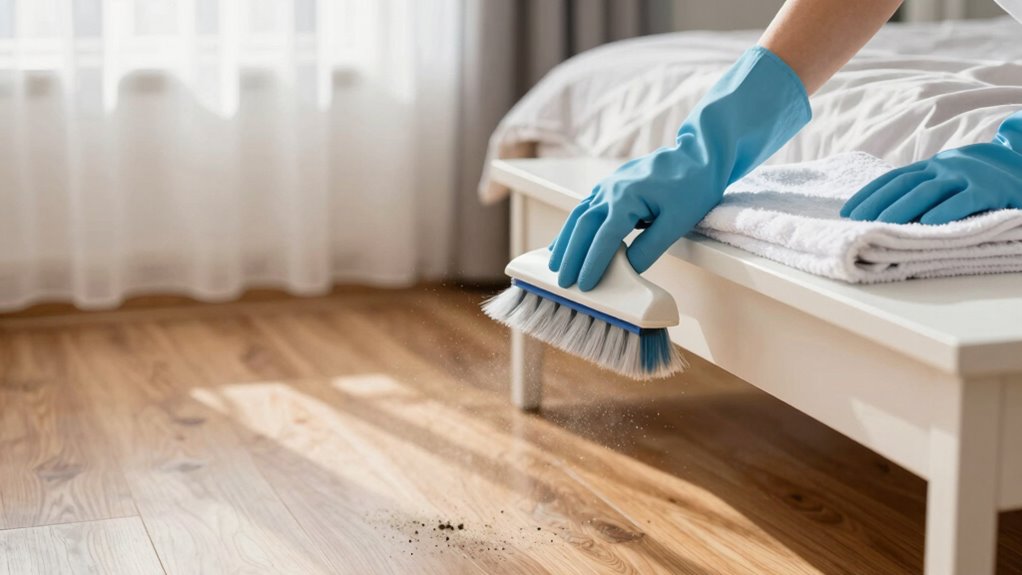

To prevent dust from settling on clean floors, start your cleaning by dusting high surfaces like ceiling fans, light fixtures, and shelves, working from the top down. Use damp microfiber cloths to trap dust effectively and avoid spreading it around. Then, move on to furniture, baseboards, and other lower surfaces. Finish with vacuuming carpets or sweeping and mopping hard floors. Following this order guarantees dust doesn’t settle on areas already cleaned, and you’ll discover more tips to keep your space spotless.
Key Takeaways
- Start by dusting high surfaces like ceiling fans and shelves to prevent dust from falling onto lower areas.
- Use damp microfiber cloths to trap dust effectively during high surface cleaning.
- Declutter and organize surfaces before cleaning to reduce dust accumulation and improve efficiency.
- Dust furniture, baseboards, and corners after high surfaces, working from top to bottom.
- Finish with vacuuming floors and mopping to ensure all dust is removed without resettling.
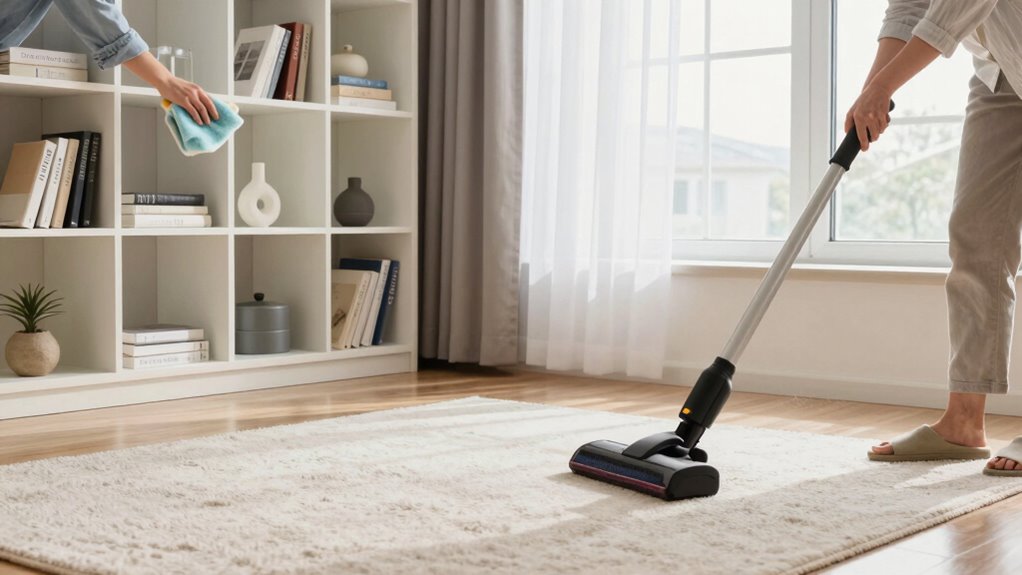
Cleaning a room might seem overwhelming, but having a clear order can make the process much easier. When you approach it systematically, you prevent dust from settling on freshly cleaned floors, saving you time and effort. Start by gathering your cleaning supplies so you’re ready to go. Then, focus on dusting techniques that target high surfaces first, such as ceiling fans, light fixtures, and shelves. Using a microfiber cloth or a dusting tool with an extendable handle, you can reach those tricky spots without spreading dust onto lower surfaces. The key is to work from top to bottom, ensuring dust falls downward onto surfaces you’ll clean later.
Start by dusting high surfaces from ceiling fans to shelves, working from top to bottom.
Once you’ve tackled the high surfaces, move on to organizing strategies that help declutter the space. Clear off surfaces like desks, tabletops, and dressers, and put items in their designated spots. This step makes dusting and vacuuming more efficient because you won’t have to work around clutter. As you organize, consider storage solutions that keep things tidy and accessible, reducing future dust buildup. When everything’s in order, you create a more streamlined cleaning process, minimizing the chances of dust resettling on cleaned areas.
Now, it’s time to dust the remaining surfaces, including furniture, picture frames, and baseboards. Use a damp cloth or a slightly damp microfiber cloth to trap dust rather than just moving it around. Pay special attention to corners and crevices where dust tends to accumulate. Remember, if you’ve dusted high surfaces first, any falling dust during this process will land on the floors or surfaces you plan to vacuum or mop next. That’s why it’s best to do these steps in this order—top to bottom, high to low. Incorporating proper dusting techniques can further enhance your cleaning results.
Next, vacuum or sweep the floors thoroughly. If you’ve kept dusting and organizing in the right sequence, the floors should be relatively free of loose debris and dust. For carpets, use a vacuum with a HEPA filter to trap microscopic particles. For hard floors, follow up with mopping to pick up any remaining dust and dirt. Since you’ve dusted from top to bottom, you won’t have to worry about redistributing dust onto freshly cleaned floors, making your overall cleaning more effective.
Following this order—dusting high surfaces first, organizing, then cleaning lower surfaces—ensures dust doesn’t fall on clean floors. It streamlines your efforts and keeps your room looking spotless longer. By implementing these organizing strategies and dusting techniques in the right sequence, you’ll find cleaning becomes quicker and less frustrating. Plus, you’ll enjoy a fresh, dust-free space that stays cleaner longer.
Frequently Asked Questions
How Often Should I Clean My Room to Prevent Dust Buildup?
You should clean your room at least once a week to prevent dust buildup and reduce dust mites, which can trigger allergies. Regular dusting and vacuuming, especially in high-traffic areas, help keep allergens at bay. Don’t forget to wash your bedding weekly, as it’s a key area for dust mites. Consistent cleaning creates a healthier environment and helps with allergy prevention.
What Tools Are Best for Dusting Delicate Surfaces?
Imagine you’re cleaning a delicate antique vase; you’d use a microfiber cloth and a gentle brush. For dusting delicate surfaces, microfiber cloths are best because they trap dust without scratching, while gentle brushes like soft paintbrushes remove dust from intricate details. These tools prevent damage and guarantee thorough cleaning, making your efforts more effective without risking harm to fragile items.
Can I Use a Vacuum for Dusting Furniture?
Yes, you can use a vacuum for dusting furniture. Attach a brush or upholstery tool to your vacuum to gently lift dust without scratching surfaces. For delicate areas, use microfiber cloths for a soft, effective clean. Combining vacuum attachments for larger surfaces and microfiber cloths for detailed or fragile spots guarantees thorough dust removal while protecting your furniture from damage. This method keeps dust from falling onto clean floors.
Should I Clean the Ceiling Fans Before or After the Floors?
You should clean the ceiling fans before the floors to stay ahead of dusting order. By tackling ceiling fan maintenance first, you prevent dust from falling onto freshly cleaned floors, saving you double work. Think of it as hitting two birds with one stone. Dusting the fans early keeps your space cleaner longer and guarantees that ceiling fan dust doesn’t settle onto clean surfaces, making your entire cleaning routine more efficient and effective.
How Do I Dust High or Hard-To-Reach Areas Safely?
To dust high or hard-to-reach areas safely, use a microfiber cloth or extendable duster to trap airborne particles effectively. Be gentle with fragile fixtures, avoiding excessive pressure that could cause damage. When reaching, make certain your ladder or step stool is stable, and wear gloves if necessary. Take your time, and work slowly to prevent dust from falling onto already cleaned surfaces, reducing the risk of recontamination.
Conclusion
By following this cleaning order, you’ll find dust settles where you least expect it, making your efforts feel almost serendipitous. As you finish sweeping the floors, a sudden breeze stirs up a faint cloud, reminding you that even perfect plans can align with life’s little surprises. Sometimes, cleaning isn’t just about order — it’s about embracing those unexpected moments that turn a routine task into a mindful ritual. After all, dust has a way of revealing what we might overlook.