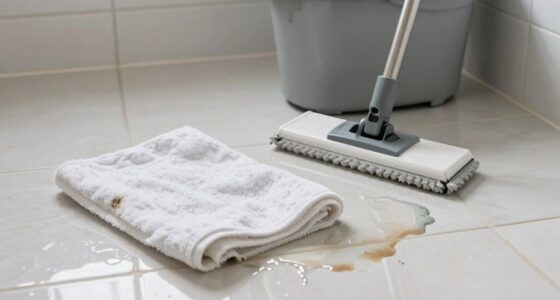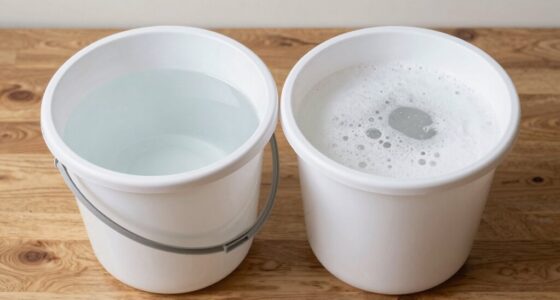
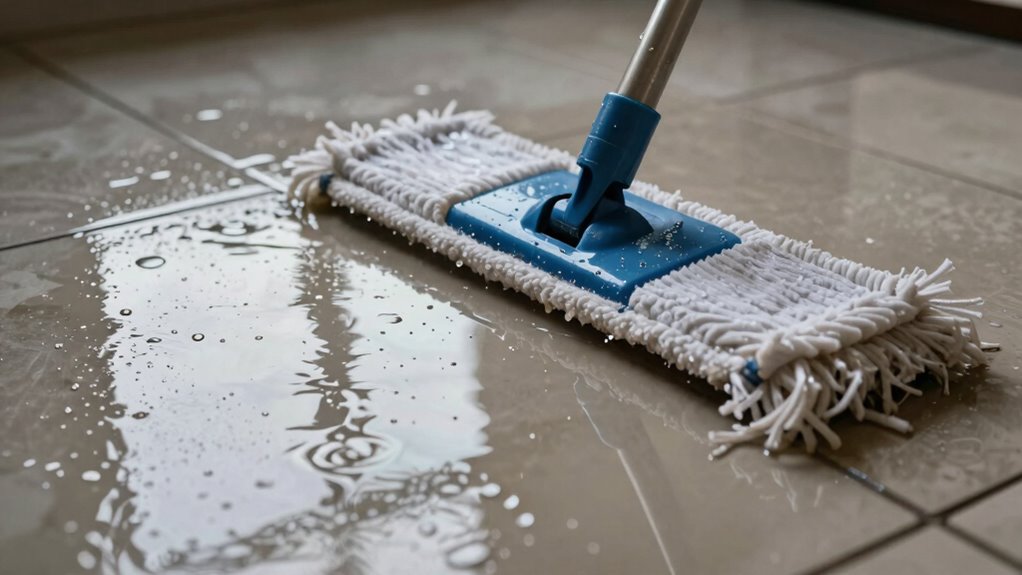
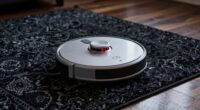
The biggest mistake that makes mopping feel impossible is using too much water. When your mop is soaked, it leaves streaks, damp patches, and spreads dirt instead of lifting it. Excess moisture can also cause long-term damage like warping or mold growth. The key is to use a damp, well-wrung mop, not a soaked one. Want to discover simple ways to improve your mopping technique? Keep going to learn more.
Key Takeaways
- Excess water causes streaks, damp patches, and longer drying times, making mopping less effective and frustrating.
- Overly wet mops spread dirt instead of lifting it, reducing cleaning efficiency.
- Using too much water increases moisture retention, risking mold growth and floor damage over time.
- Proper mopping involves wringing out the mop until damp, not soaked, to prevent streaks and residue.
- A damp, well-wrung mop improves cleaning, shortens drying time, and makes mopping feel easier.
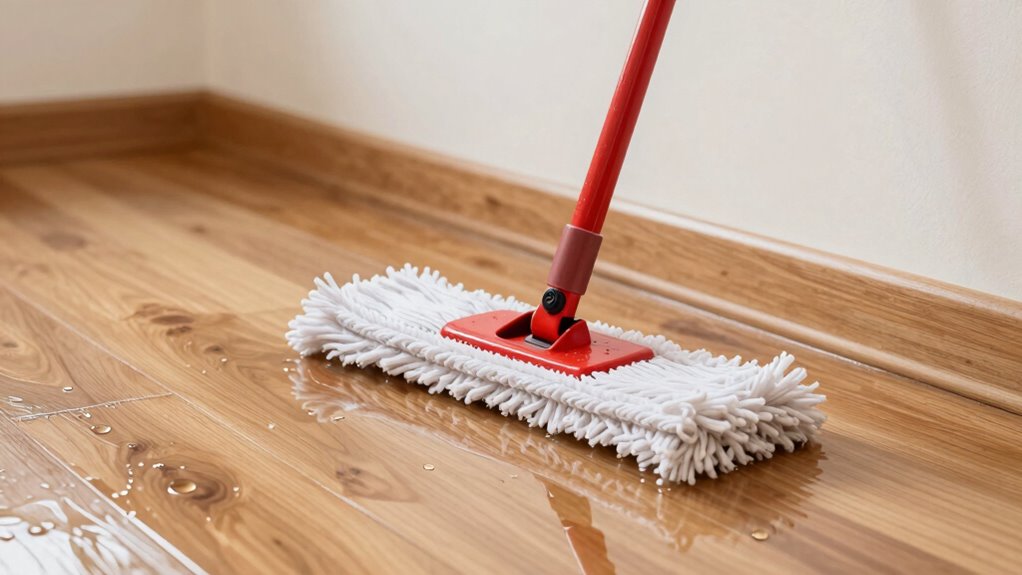
Mopping can feel like an impossible task when you’re constantly battling streaks, dampness, and stubborn dirt that just won’t come up. One of the biggest culprits behind these frustrations is often too much water on your floor. You might think that using more water helps lift dirt better, but in reality, it’s a common cleaning myth that excess moisture makes mopping more effective. Too much water soaks into your floors and backing materials, which can lead to long drying times and even damage over time. This mistake is frequently made because people assume a wetter mop cleans better, but in truth, it often results in streaks and residue that are hard to remove.
When it comes to cleaning myths, many believe that a sponge is better than a mop for detailed cleaning, but that’s not always the case. Sponges are great for spot cleaning and scrubbing small areas, but they don’t cover large surfaces efficiently. Mops, especially those designed for wet cleaning, allow you to tackle broad areas quickly and evenly. However, the key is to use the mop correctly—damp, not saturated. If your mop is dripping or dripping water onto the floor, you’re adding to the problem instead of solving it.
The sponge vs. mop debate often centers on their cleaning power, but the real difference lies in how you use them. A sponge soaked in water can spread dirt around if it’s too wet, similar to a poorly wrung-out mop. Conversely, a well-wrung mop that’s damp rather than dripping will pick up dirt without leaving excess water behind. This is vital because excess water can seep into porous flooring like hardwood or laminate, causing warping or swelling. It also prolongs drying time, leaving your floor damp and susceptible to new dirt or mold growth.
Using the proper mopping technique can greatly improve your results and prevent these issues from happening. To avoid this, always wring out your mop thoroughly before starting. Your goal is a damp, almost dry mop that can glide smoothly over the surface without leaving puddles or streaks. Remember, less water is more effective. A properly damp mop traps dirt efficiently and dries quickly, leaving your floor clean and free of unwanted streaks or damp patches. By debunking cleaning myths and understanding how to properly use your mop, you’ll find mopping less frustrating and more effective. The right approach minimizes excess water, reduces drying time, and makes the entire process feel much more manageable.

Spray Wet Mops for Hardwood Floor Cleaning: MEXERRIS Floor Mop with 3 Washable Pads for Swiffer Powermop – Refillable Dust Dry Mop Home Commercial Mops for Wood Laminate Ceramic Tiles Vinyl
MEXERRIS Household Commercial Cleaing Essentials: All spray wet mops parts are made from top-grade materials for durability. Features…
As an affiliate, we earn on qualifying purchases.
As an affiliate, we earn on qualifying purchases.
Frequently Asked Questions
Can Using Too Much Water Damage My Flooring?
Yes, using too much water can damage your flooring. Excess water can seep into the material, leading to water damage and causing your floor to warp or swell over time. To prevent this, use a damp mop rather than a soaking one and make sure to dry the surface thoroughly afterward. Proper technique helps protect your flooring from warping and other water-related damages.
What’s the Best Type of Mop for Excess Water?
Did you know microfiber mops absorb up to seven times their weight in water? For excess water, microfiber mops are your best choice—they’re designed to hold more moisture and dry quickly. Steam mops are great for sanitizing and using less water overall, but if you’re battling excess liquid, microfiber mops give you better control. Choose based on your needs, but microfiber mops are especially effective for managing extra water while cleaning.
How Do I Prevent Streaks When Mopping With Too Much Water?
To prevent streaks when mopping with too much water, start by dry mopping the area to remove loose dirt. Use a microfiber mop, as its effectiveness helps absorb excess water and reduces streaks. Always wring out the mop well before applying it to the floor, and work in small sections. This approach guarantees a cleaner, streak-free finish while making the most of microfiber’s superior water absorption.
Does Water Temperature Affect Mopping Efficiency?
Did you know that water temperature can boost mopping efficiency by up to 20%? Warm water generally works better because it helps loosen dirt and grime more effectively than cold water. When you use the right water temperature, your mopping becomes easier, and you get cleaner floors faster. So, try slightly warm water instead of cold, and see how it improves your cleaning routine.
Are There Eco-Friendly Solutions to Reduce Water Usage?
Yes, you can reduce water usage by switching to eco-friendly solutions. Use biodegradable detergents that clean effectively with less water, and opt for reusable mop pads instead of disposable ones. These choices help cut down on waste and water consumption. Additionally, wring out your mop well to minimize water use and focus on targeted cleaning. This way, you’re making a positive impact on the environment while keeping your space clean.

O-Cedar EasyWring Microfiber Spin Mop, Bucket Floor Cleaning System, Red, Gray, Standard
HANDS-FREE WRINGING: Our exclusive mop bucket design features a built-in wringer that allows for hands-free wringing while Splash…
As an affiliate, we earn on qualifying purchases.
As an affiliate, we earn on qualifying purchases.
Conclusion
Remember, too much water is like carrying a heavy cloud—you’re overwhelmed before you even start. But just as a cloud can part to reveal clear skies, using less water clears the way for a smoother, more confident mop. When you let go of excess, cleaning becomes a gentle breeze instead of a storm. Embrace simplicity, and your space will shine—free and light, just like the fresh air after a rain.

Cleanow OneTouch GO! Floor Cleaner, Wring Mop, Cleaning Tool with Wringing Function – Sponge mop for Cleaning Floors- with PVA Sponge and Stainless Steel mop Handle
✅ For ALL SMOOTH FLOORS – Convenient self-wringing mechanism enables this speed mop controlled moisture levels, preventing excessive…
As an affiliate, we earn on qualifying purchases.
As an affiliate, we earn on qualifying purchases.
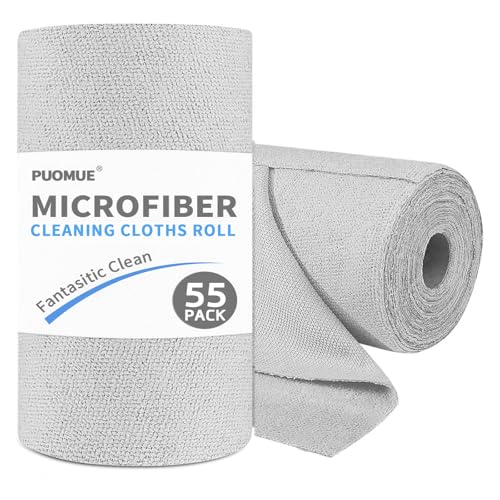
Puomue 55 Pack Microfiber Cleaning Cloth Roll, Tear Away Reusable Paper Towels, 11" X 9", Ultra Absorbent & Lint Free Microfiber Cloth for Cleaning Cars, Kitchen, Window, Home and Shop, Grey
ABSORBENT & FAST DRYING – Reusable paper towels made of microfiber material provides super absorbent water ability which…
As an affiliate, we earn on qualifying purchases.
As an affiliate, we earn on qualifying purchases.