When people set out to buy an electric mop for deep cleaning, two products dominate the shortlist for very different reasons: the Tineco Floor One S7 Pro, a premium cordless vacuum-mop hybrid around the $500–600 range, and the Bissell SpinWave, a corded spin mop that typically sells for $130–200 depending on the version. The real decision here isn’t just about money — it’s about what “deep cleaning” means to you. If your floors collect crumbs, pet hair, and sticky spills daily, a mop without suction forces you to sweep or vacuum first, which doubles your workload. If your floors are mostly dust and dried footprints, a spinning-pad mop may deliver everything you need at a quarter of the price.

Get cleaning gear delivered free — and shop member deals
- Fast, free delivery on millions of items
- Access to Prime Big Deal Days deals on October 6–7
- Prime Video, Amazon Music and more included

VMAI Cordless Electric Mop with Water Spray and Detachable Battery
- ✔ Runtime: Up to 60 minutes
- ✔ Coverage: Up to 2,150 sq ft
- ✔ Weight: Less than 3 lbs
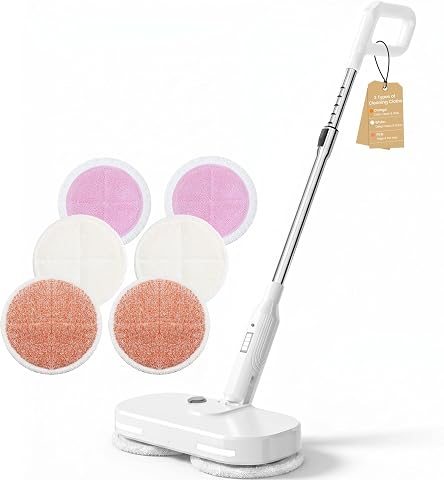
Buways Rechargeable Cordless Electric Spin Mop, White
- ✔ Brand: buways
- ✔ Color: White
- ✔ Battery capacity: 8000mAh

Cordless Electric Spin Mop with Spray, LED Headlights, and Self-Propelled Dual-Spin
- ✔ Motor speed: 160 RPM
- ✔ Battery capacity: 2000 mAh
- ✔ Runtime: 30–50 minutes
The core tension is automation and versatility versus simplicity and value. The Tineco senses dirt, adjusts water flow, vacuums and mops in one pass, and cleans its own roller; the Bissell scrubs with two rotating pads, dispenses solution on demand, and requires you to vacuum beforehand and hand-wash the pads afterward. This comparison walks through cleaning performance, convenience, maintenance, runtime, floor compatibility, and cost so you can match the right machine to your household rather than overpaying for features you’ll never use — or saving money only to end up doing two passes every time you clean.
At a Glance
| Criteria | Tineco Floor One S7 Pro | Bissell SpinWave | Winner |
|---|---|---|---|
| Deep cleaning performance | Roller mop with adjustable water flow and dirt-detecting sensors; handles dried stains well | Two rotating microfiber pads with on-demand solution spray; strong scrubbing on stuck-on grime | A |
| Suction / debris pickup | Integrated vacuum — picks up solids and liquid spills while mopping | No suction — debris must be vacuumed or swept before mopping | A |
| Convenience and ease of use | Cordless, self-propelled, self-cleaning roller cycle, app connectivity | Corded (25 ft), push-to-spray trigger, no automation, pads need hand washing | A |
| Runtime and power | Up to ~35–40 min per charge; rechargeable battery | Unlimited runtime — plug in and go, but tethered to an outlet | Depends |
| Maintenance burden | Self-cleans roller; empty dirty tank and rinse; occasional roller replacement | Hand-wash pads after each use; refill solution tanks; pads wear out | A |
| Floor compatibility | Sealed hard floors: hardwood, tile, laminate, stone; not for carpet | Sealed hard floors including vinyl and tile; some models include a steam version | Tie |
| Noise | Quieter operation overall, roughly 70–78 dB | Moderate noise; motor hum plus scrubbing | A |
| Price and value | $500–600 — premium price | $130–200 — budget-friendly | B |
VMAI Cordless Electric Mop with Water Spray and Detachable Battery
Of the three mops here, the VMAI solves the problem that sinks most cordless cleaners: battery anxiety. Its detachable battery means a second pack (sold separately) can double your cleaning window beyond the rated 60 minutes, and the up-to-2,150-sq-ft coverage figure backs that up. Neither competitor offers this — the Dual-Spin mop is locked to its internal 2000 mAh cell, and Buways doesn’t publish runtime at all.At under 3 pounds, it’s also the lightest of the group, which matters more than it sounds during a long deep-cleaning session. The 300 ml tank with trigger-controlled spray strikes a reasonable middle ground: smaller than we’d like for heavy grime, but more predictable than the Buways’s unspecified capacity. The LED-equipped 180-degree swivel head matches the Dual-Spin mop’s, making under-furniture dirt easy to spot and reach. One honest caveat: despite the self-propelled motion, you still have to guide it — it assists, it doesn’t steer.
Pros:
- Detachable battery supports extended, multi-room deep cleaning
- Under 3 pounds — the lightest option in this comparison
- Trigger-controlled 300 ml spray eliminates the bucket
- LED headlights and 180-degree swivel head reach under furniture
Cons:
- Still requires active guiding despite self-propelled motion
- 300 ml tank needs refills during heavy-duty sessions
Best for: Homeowners with larger hard-floor areas who want the longest usable runtime and the lightest handling in this lineup.
Not ideal for: Buyers tackling heavy, stuck-on grime, since it uses a single pad style rather than dedicated scrubbing pads like the Buways.
Bottom line: The most complete package here: longest practical runtime, lightest body, and predictable specs make it our best overall pick.
“The most complete package here: longest practical runtime, lightest body, and predictable specs make it our best overall pick.”
Buways Rechargeable Cordless Electric Spin Mop, White
What separates the Buways from the other two is its approach to the actual cleaning surface. Instead of one generic pad, it ships with three interchangeable pad types — one for everyday dust, one for tough stains, and one for hair removal and edge work. That’s the closest thing to a true deep-cleaning system in this comparison, and it’s why we rank it above the Dual-Spin mop despite its thinner spec sheet. The VMAI may outlast it, but for a kitchen with dried spills or a bathroom with hair buildup, having the right pad matters more than extra minutes.The 8000mAh battery is the largest stated capacity of the three — double the Dual-Spin mop’s cell — though the absence of a published runtime keeps us from declaring it the endurance winner. Similarly, the built-in tank is described only as "large," which frustrates comparison shoppers. The telescoping handle and self-propelled assistance put it on par ergonomically with the VMAI, and the handle-controlled spray mirrors the trigger design we like on that model. It’s a capable machine obscured by vague documentation.
Pros:
- Three pad types target dust, tough stains, and hair separately
- 8000mAh battery is the largest stated capacity in this lineup
- Telescoping handle adjusts to user height
- Self-propelled assistance reduces pushing effort
Cons:
- Water tank capacity and runtime are not specified
- No detailed performance information across floor types
Best for: Households dealing with varied messes — pet hair, dried stains, and everyday dust — who want purpose-built pads for each job.
Not ideal for: Spec-driven buyers who need confirmed runtime and tank figures before purchasing, or anyone cleaning very large homes on one charge.
Bottom line: The most versatile cleaner of the group thanks to its pad system — choose it when mess variety matters more than verified specs.
“The most versatile cleaner of the group thanks to its pad system — choose it when mess variety matters more than verified specs.”
Cordless Electric Spin Mop with Spray, LED Headlights, and Self-Propelled Dual-Spin
The Dual-Spin mop takes a different tack on value: rather than leading with battery design (VMAI) or pad variety (Buways), it wins on included consumables and dual-motor agitation. Two motors spinning at 160 RPM help loosen everyday dirt and pull the mop forward, which gives it credible scrubbing credentials for routine deep cleaning — though its single pad style still can’t match the Buways’s dedicated stain pad for truly baked-on messes.Where it clearly leads is the accessory bundle: six washable reusable pads, enough to rotate through a whole-house session before laundering. Neither competitor includes nearly as many. The compromise is endurance — its 2000 mAh battery and 30–50 minute runtime are the weakest here, and unlike the VMAI, there’s no detachable battery to swap in. The 290 ml tank is also the smallest of the group, so expect refills on bigger jobs. It’s restricted to sealed hard floors, which excludes unsealed wood and anything porous. For apartments and touch-up-heavy routines, though, the math works.
Pros:
- Six washable reusable pads — the most included of any pick
- Dual 160 RPM motors reduce pushing effort and agitate dirt
- LED headlights reveal grime under furniture and in dim corners
- On-demand spray conserves solution during cleaning
Cons:
- 30–50 minute runtime is the shortest in this lineup
- Sealed hard floors only — no unsealed or porous surfaces
Best for: Apartment dwellers and budget-conscious buyers who want a complete starter kit with plenty of pads for rotating through regular cleaning.
Not ideal for: Larger homes or heavy mess days — the short runtime, small 290 ml tank, and sealed-floor-only rating limit its scope.
Bottom line: The smart budget entry: pad abundance and dual-motor scrubbing make it a solid first electric mop, provided your home fits within its runtime.
“The smart budget entry: pad abundance and dual-motor scrubbing make it a solid first electric mop, provided your home fits within its runtime.”
As an Amazon Associate we earn from qualifying purchases.
Key Differences
The single biggest practical difference is suction. The Tineco S7 Pro is a wet-dry vacuum first and a mop second: it pulls up cereal, pet hair, and liquid spills while scrubbing, so a dirty floor goes from messy to clean in one pass. The Bissell SpinWave has no vacuum at all — it’s a powered scrubber. If you run it over crumbs or pet hair, you push debris around and embed it in the pad. For households with kids, pets, or high traffic, that means the Bissell is really a second step, not a complete cleaning tool, and that changes the true cost comparison: the Bissell’s price tag assumes you already own (and will use) a vacuum or broom every time.
The second major difference is after-cleaning workload. The Tineco’s self-cleaning cycle rinses and dries its roller at the touch of a button; you empty the dirty water tank and you’re done. The Bissell requires you to peel off two saturated, dirty microfiber pads, rinse them under the tap, and let them air-dry — a small but real chore after every session, and one that makes quick daily cleanings feel less quick. Over months of use, this maintenance gap is often what decides whether an electric mop actually gets used or sits in a closet.
Third is power delivery. The Tineco runs on a battery with roughly 35–40 minutes of runtime — enough for most homes under 1,500 sq ft, but larger spaces may need a mid-clean recharge. The Bissell plugs into the wall, so it never dies, but you’re managing a 25-foot cord around furniture and between rooms. Neither approach is objectively better; it depends on your home’s size and outlet layout. Where the Bissell genuinely competes is scrubbing aggression on stuck-on messes — its rotating pads dig into dried-on kitchen grime effectively — and price, where it undercuts the Tineco by $350–450.
Detailed Comparison
Deep cleaning performance (Tineco Floor One S7 Pro wins — moderate)
Both machines scrub rather than drag a flat pad, which is what makes them “deep cleaners.” The Tineco uses a powered microfiber roller with four water-flow modes and iLoop sensors that boost water and suction when they detect dirt, so stubborn patches get extra attention automatically. The Bissell uses two counter-rotating microfiber pads with an on-demand spray trigger — you control exactly how much solution goes down, and the pads’ rotary action is genuinely effective at lifting dried-on kitchen spills and scuffs.
On pure scrubbing of stuck-on grime, the two are closer than the price gap suggests — the Bissell holds its own. But the Tineco’s dirty-water recovery system means grime is extracted into a tank rather than smeared into a pad that keeps touching your floor, which is a real hygiene advantage on heavily soiled floors. The Tineco wins, but the gap is moderate rather than overwhelming.
Suction and debris pickup (Tineco Floor One S7 Pro wins — major)
This is the decisive criterion for most buyers. The Tineco vacuums dry debris and wet spills while it mops — a single pass handles cereal, pet hair, mud, and spilled juice. The Bissell has zero suction: any loose debris on the floor becomes an obstacle that gets pushed around or ground into the pads.
In practice, this means every Bissell session starts with a broom or vacuum pass. For a quick post-dinner kitchen cleanup, that’s two tools and two steps versus one. This is a major difference, and it’s the strongest argument for the Tineco’s premium price. If your floors routinely have loose debris, the Bissell isn’t really competing as a standalone deep cleaner.
Convenience and ease of use (Tineco Floor One S7 Pro wins — major)
The Tineco is cordless, self-propelled (it glides with almost no pushing effort), and its self-cleaning cycle rinses and air-dries the roller when you dock it. Voice prompts and an app tell you when to refill, empty, or maintenance parts. The Bissell is corded, requires you to hold a spray trigger, glides easily but needs real pushing, and involves no automation whatsoever.
The Tineco reduces mopping to a single gesture: grab it, run it, dock it. The Bissell keeps you involved in every step. If your goal in buying an electric mop was to make cleaning feel effortless, the Tineco delivers that experience and the Bissell only partially does. Major gap, firmly in the Tineco’s favor.
Runtime and power (moderate difference)
The Tineco runs 35–40 minutes per charge — enough for most average homes in one go, but tight for 2,000+ sq ft layouts, and battery capacity degrades over years of use. The Bissell runs indefinitely because it’s plugged in, with a 25-foot cord that covers a typical room or two per outlet but requires unplugging and repositioning as you move through the house.
This one genuinely depends on your space. Small to mid-size homes and apartment dwellers will never notice the Tineco’s battery limit; owners of large single-story homes may find a cordless workflow faster than hunting for outlets, or may find the battery forcing a pause. Neither wins outright — it’s a lifestyle question.
Maintenance burden (Tineco Floor One S7 Pro wins — moderate)
After cleaning, the Tineco needs its self-clean cycle started, its dirty tank emptied and rinsed, and occasional roller or filter replacement every few months — about two minutes of hands-on work. The Bissell requires you to remove and hand-wash two dirty, solution-soaked pads after every session, let them dry (you’ll want spare pads to rotate), and periodically rinse the tanks and check the spray nozzles for clogs.
Neither is onerous, but the Bissell involves touching dirty, wet pads every single time, which many owners grow to dislike. The Tineco’s automated rinse is a meaningful quality-of-life edge. Moderate gap, Tineco’s favor.
Floor compatibility (minor difference)
Both are designed for sealed hard floors — hardwood, tile, laminate, vinyl, stone. The Tineco adjusts water output automatically and is safe on water-sensitive finished hardwood when used on low-flow mode. The Bissell’s spray trigger gives manual control, which some owners prefer on hardwood since you can go nearly dry; Bissell also sells a SpinWave PET and a steam variant for tougher sanitizing jobs on tile.
Neither handles rugs or carpet. For purely sealed hard floors, this is a tie — both do the job, and manual spray control versus automatic flow control is a preference, not a performance difference.
Noise (Tineco Floor One S7 Pro wins — minor)
The Tineco operates in the low-to-mid 70s dB — noticeable but conversation-friendly. The Bissell’s spinning motor hum is comparable or slightly quieter since there’s no vacuum motor, though the scrubbing action adds some mechanical noise on tile.
In practice both can be used while someone watches TV in the next room, and neither is wake-a-sleeping-baby loud. The Tineco technically wins because reviewers consistently note its relatively quiet operation for a vacuum-mop, but the difference is minor and shouldn’t drive your decision.
Price and value (Bissell SpinWave wins — major)
Street prices sit roughly at $500–600 for the Tineco S7 Pro and $130–200 for the Bissell SpinWave depending on the version and included pads. That’s a $350–450 gap — enough to buy the Bissell plus a decent stick vacuum, which is exactly how some shoppers work around the suction problem.
The Bissell is unambiguously the better raw value per dollar of scrubbing power. The Tineco’s premium buys suction, automation, cordless freedom, and self-cleaning — real capabilities, not gimmicks, but ones that only pay off if you’ll use them weekly or more. If deep cleaning happens monthly in your home, the Tineco’s advantages are largely wasted. Bissell wins on value decisively.
Tineco Floor One S7 Pro: Pros and Cons
Pros:
- Vacuums and mops in a single pass — no pre-sweeping
- Self-cleaning roller cycle eliminates hand-washing pads
- Cordless and self-propelled; minimal physical effort
- Dirt sensors automatically boost water and suction on stubborn spots
- Dirty water extracted into a tank instead of smeared in a pad
Cons:
- Premium price at $500–600
- Battery runtime limits very large homes
- More components (roller, filters, sensors) that can need replacement
- Overkill for households that mop occasionally
Bissell SpinWave: Pros and Cons
Pros:
- Excellent scrubbing power on dried, stuck-on messes
- Very affordable at $130–200
- Unlimited runtime — plug in and clean as long as needed
- Manual spray control is great for water-cautious hardwood
- Cheap, replaceable pads and widely available Bissell solutions
Cons:
- No suction — must vacuum or sweep before every use
- Corded design limits mobility around furniture
- Hand-washing dirty pads after every session
- No automation or self-cleaning of any kind
Who Should Choose What
Choose Tineco Floor One S7 Pro if:
- You have kids or pets and floors collect loose debris and spills daily
- You want a one-tool, one-pass routine and dread the vacuum-then-mop workflow
- You clean frequently and will actually use the automation every week
- You have a small-to-mid-size home (under ~1,500 sq ft of hard floor) where battery runtime is a non-issue
Choose Bissell SpinWave if:
- You already own a robot vacuum or stick vacuum and only need powered scrubbing
- Your budget is under $200 and you want the most cleaning power per dollar
- Your main problem is stuck-on kitchen and entryway grime, not loose debris
- You don’t mind a cord and hand-washing pads in exchange for major savings
Skip both if: Your floors are mostly carpet or area rugs — neither machine is designed for soft flooring, and a carpet washer or regular vacuum serves you better.
Value for Money
Is the Tineco S7 Pro worth three to four times the price of the Bissell SpinWave? Only if the suction and automation replace real work in your routine. If you currently vacuum then mop — or would have to, with the Bissell — the Tineco consolidates two chores into one five-minute task, and for daily-use households that convenience compounds quickly. Frequent cleaners with messy floors get genuine value from the premium.
But if you own a capable vacuum already, or mop only occasionally, the Bissell delivers perhaps 80% of the scrubbing performance for 30% of the price. Its pads agitate stuck-on grime effectively, replacement pads cost a few dollars, and it will keep running as long as you have an outlet. The honest value verdict: the Bissell is the better value for most budget-conscious buyers, while the Tineco justifies its price only for high-frequency, high-mess households. Paying more is a bet on your own usage habits, not on dramatically better floor outcomes.
Final Verdict
For most shoppers comparing these two, the deciding factor is whether the mop needs to stand alone. Choose the Tineco Floor One S7 Pro if you want one machine to handle everything — loose debris, spills, and mopping in a single self-cleaning workflow. It’s the clear pick for busy households with pets or kids, and its convenience advantages are real, not marketing fluff. Choose the Bissell SpinWave if you already vacuum separately and want affordable, aggressive scrubbing power — it cleans stuck-on grime nearly as well for a fraction of the cost, provided you accept the cord and the pad-washing routine.
Our overall recommendation: if the budget allows and the mess level justifies it, the Tineco S7 Pro is the better complete deep-cleaning tool and the one most owners are happier living with long-term. But the Bissell SpinWave is not a consolation prize — for disciplined cleaners who vacuum anyway, it’s the smarter spend. Don’t pay the premium for automation you’ll use once a month.
Frequently Asked Questions
Can the Bissell SpinWave pick up pet hair and crumbs like the Tineco?
No. The SpinWave has no suction — it only scrubs with rotating pads. Loose debris like pet hair or crumbs gets pushed around or trapped in the pads, so you need to vacuum or sweep first. The Tineco S7 Pro vacuums and mops simultaneously, which is the main reason it costs more.
Which one is better for sealed hardwood floors?
Both are safe on sealed hardwood. The Tineco’s low water-flow mode and automatic sensing minimize moisture exposure. The Bissell’s manual spray trigger gives you direct control and lets you run nearly dry, which some hardwood owners prefer. Avoid unsealed or waxed floors with either machine.
How long does the Tineco S7 Pro battery last, and is that enough for a large home?
Expect roughly 35–40 minutes of runtime, which covers most homes up to about 1,500 sq ft of hard flooring in one session. Larger single-story homes may run the battery down mid-clean and need to recharge. The corded Bissell has no such limit, though you trade that for managing a 25-foot cord.
Are ongoing costs higher for either machine?
Both have modest consumable costs. The Tineco needs replacement rollers and filters every few months, and its proprietary cleaning solution adds up over time (though dilution rates are efficient). The Bissell needs replacement microfiber pads periodically plus Bissell solution — or you can use diluted alternatives in many models. Overall, running costs are similar and minor compared to the purchase price difference.
Is the Tineco worth it if I only mop once a week or less?
Probably not. The Tineco’s premium pays for automation, suction, and self-cleaning that only deliver returns with frequent use. If you mop weekly or less and vacuum separately anyway, the Bissell SpinWave provides comparable scrubbing results for a third of the price — that’s the smarter buy for light-duty routines.
Fall Picks
fall essentials
As an affiliate, we earn on qualifying purchases.