TL;DR

Get cleaning gear delivered free — and shop member deals
- Fast, free delivery on millions of items
- Access to Prime Big Deal Days deals on October 6–7
- Prime Video, Amazon Music and more included
Cordless handheld carpet cleaners are compact, battery-powered machines for treating small spills, upholstery, stairs, and car interiors. They trade the long runtime and tank capacity of larger or corded extractors for quick access, so compare handling, tank cleanup, approved solutions, and verified results before buying.
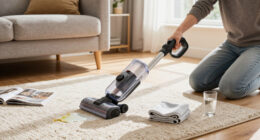
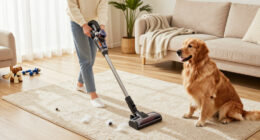
A glass of juice hits the rug, the dog tracks mud across the stairs, and the nearest outlet is nowhere close. A cordless handheld carpet cleaner can get to that mess quickly, before it dries into the fibers.
These small machines have real limits: they need recharging, their tanks fill quickly, and they work best on local spots. Here’s how they clean, what to check before you buy, and how to use one without leaving your sofa or carpet soggy.
Treat cordless handheld cleaners as spot tools for spills, upholstery, stairs, rugs, and car interiors.
Compare runtime, clean and dirty tank access, weight when full, and brush reach.
Use only a cleaning solution approved by the machine maker and safe for the fabric.
Blot first, test a hidden area, use short passes, and suction up as much liquid as possible.
Rinse the dirty-water tank and clean removable parts after every job.
What a cordless handheld carpet cleaner can clean
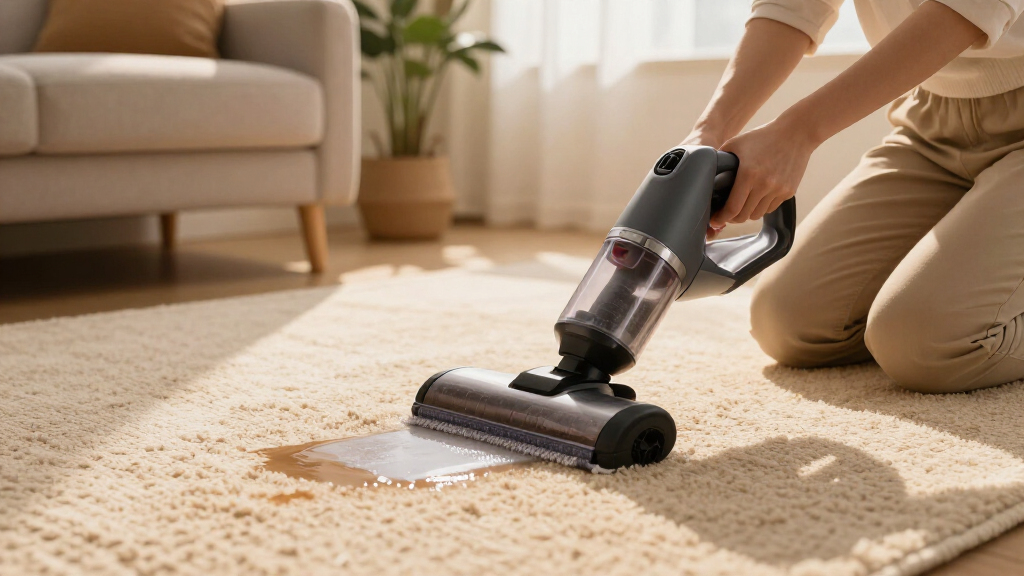
A cordless handheld carpet cleaner is a compact, battery-powered machine that applies cleaning solution to fabric and suctions up liquid and loosened dirt. It’s built for spots and small surfaces, such as upholstery, stairs, rugs, and car seats, rather than whole rooms. That size changes the kind of job it can do: it can focus liquid and brushing on a small patch, but its limited tank and battery make covering a broad area slow and interruption-prone.
Most cleaners spray, brush, and extract in a short sequence. The solution loosens soil, the brush helps lift it from the fibers, and suction recovers the dirty liquid. Each step matters: too little solution may leave soil behind, while too much can push moisture deeper than the machine can recover. Access to the stain and the ability to make controlled passes therefore matter as much as advertised suction. A fresh muddy paw print on one stair is a sensible job because you can target the mark and extract the dampness. An entire carpeted hallway means repeated passes, refills, and likely battery breaks, so a larger extractor is usually more practical.
Some products called portable carpet cleaners plug into the wall; others are cordless spot cleaners. The power source affects where you can work and how long you can keep going, while tank size affects how often you stop to refill or empty. Check those details instead of relying on the word portable. [1]
Where cordless cleaners save you time—and where they fall short
Cordless handheld carpet cleaners save setup time when a small spill happens away from an outlet, and they fit into places a full-size machine can’t reach easily. For a car seat with a splash of coffee, carrying a compact unit outside beats dragging an extension cord across the driveway. That convenience can make prompt treatment more likely; with a fresh stain, acting sooner may be easier than trying to remove dried residue later. It pays off most when the affected area is small enough to clean in one short session.
The trade-off is limited runtime and tank capacity. Battery life sets how long you can work before recharging, while small tanks can force a refill or emptying stop even sooner. A lighter unit is easier to lift onto a stair or bench, but comfort also depends on its balance, grip, and hose reach. If a job takes several passes, interruptions can erase the time saved by cordless access. Cordless models usually suit occasional spot treatment better than repeated cleaning across a large area.
They can reduce a stain without fully removing it, especially if it has set into the material. The fabric determines how much moisture and brushing it can tolerate; the stain and treatment time affect how readily soil lifts; and technique determines whether loosened residue is extracted or left behind. This means a cleaner is a tool for treating a spot, not a guarantee of a particular result. Even an experienced cleaner can’t safely promise that every mark will disappear. [1]
5 checks that reveal whether a model fits your home
Choose a cordless cleaner by checking runtime, tank handling, comfort, cleaning access, and upkeep. These details determine whether the machine is ready when a spill happens and practical to put away afterward. A long feature list can sound impressive, but a brush that is hard to position or tanks that are awkward to rinse may make you put off using the cleaner—or skip the cleanup that keeps it working well.
- Look at runtime and charging. Battery life depends on the model and how continuously you spray and suction. Longer runtime helps with several spots in one session, but it does not increase tank capacity; you may still stop to refill or empty. Treat a manufacturer’s figure as a reference, and look for reviews that explain how they measured it. A removable battery helps only if a compatible spare is available and the time saved matters for your routine.
- Check both tanks. Small tanks keep cleaners compact and easier to carry, but mean more refills and trips to the sink. That can be a minor inconvenience for one spill and a real drag when cleaning several seats or stairs. Check whether you can remove and rinse the clean and dirty tanks without awkward fiddling.
- Try the handling on paper. Consider the cleaner’s weight when full, hose reach, grip, and brush attachment. A tool that feels manageable empty can become tiring when filled and held away from your body. If you plan to clean a car, think about reaching across a seat without straining your wrist.
- Confirm the cleaning solution. Use only products approved in the manual. A solution must suit both the machine and the fabric: household detergent may foam too much for the suction system, leave residue in the fibers, harm components, or affect the fabric.
- Check parts and cleanup. After each job, tanks, hoses, filters, and brushes may need rinsing. Cleanup takes time, but skipping it can leave residue that causes odors or clogs, making the machine less ready for the next spill. Confirm which replacement parts are available and read the warranty terms before you buy.
For instance, if you mainly clean car interiors, an easy-to-reach brush and removable tanks may make each job more comfortable and quicker to reset than a headline runtime number. [1]
How to treat a spill without soaking the fabric
Cordless handheld carpet cleaners work best when you follow the fabric label, use an approved solution, and apply only as much liquid as the stain needs. Extraction removes some of the moisture you add, but it cannot guarantee a dry result; extra liquid can travel into padding or upholstery layers that are harder to reach and slower to dry. Before starting, check the care label and test a hidden area. Some delicate fabrics, natural fibers, or items marked dry-clean-only may need a professional cleaner.
- Blot first. Lift excess liquid with a clean cloth; don’t rub a fresh spill deeper into the fibers. Removing liquid before using the machine reduces how much moisture it needs to handle.
- Test quietly. Apply the approved cleaner to a hidden spot and check for color change or damage. A small test helps reveal a fabric reaction before it affects the visible area.
- Work in short passes. Follow the machine instructions, and use the brush gently if the fabric allows it. Treating a small section at a time lets you see whether soil is lifting and avoid repeatedly wetting an area that may be sensitive.
- Make a suction pass. Recover liquid without adding more solution, then ventilate the area so it can dry. This removes moisture the machine can reach; ventilation helps the rest evaporate.
- Clean the machine. Empty and rinse the dirty-water tank; wash removable parts as directed and let them dry before storage. This prevents dirty residue and trapped moisture from lingering in the cleaner between jobs.
For a fresh juice splash on a rug, blotting first and making careful passes can limit how much liquid enters the pile. Over-wetting can slow drying and damage some materials, so stop if the fabric reacts badly. [1]
What to expect with pet odors and old stains
Cordless handheld carpet cleaners can extract some liquid from pet accidents, but odor removal depends on how far the accident soaked into the material. The machine can reach the surface and recover some contaminated liquid; it may not reach what has seeped into padding or deeper layers. Visible soil is only part of the mess, so a spot that looks clean may still smell as it dries.
A compatible enzymatic treatment may help with pet odor when you use it as directed and the fabric allows it. Enzymes need the contact time and application specified by the product to work, so a quick machine pass may not substitute for those directions. Follow the product instructions, check compatibility with your machine, and don’t mix cleaning chemicals. If a dog has repeatedly used the same patch of rug, contamination may extend beyond one surface spot, and one quick pass may not remove the odor completely.
Older stains can be harder to shift because residue has had more time to settle into fibers or react with the material. Pretreatment or repeat cleaning may help, but each wet treatment adds moisture and aggressive scrubbing can harm fabric or spread dye. Persistent odor or a stain on delicate upholstery may be a job for a professional who can assess the material and how deeply the problem has penetrated. [1]
Which cleaning tool makes sense for your mess?
Cordless handheld carpet cleaners suit small, mobile jobs; corded extractors and full-size machines are better fits when you need a longer session or broader coverage. The main trade is access versus capacity: cordless models are easy to bring to a spot, while tools with larger tanks and sustained power reduce interruptions on bigger jobs. Match the tool to the space you’ll clean most often, not the rarest disaster.
| Tool | Works well for | Trade-off |
|---|---|---|
| Cordless handheld | Quick spills, stairs, car seats, and upholstery | Shorter sessions and frequent tank attention |
| Corded portable extractor | Longer spot-cleaning jobs near an outlet | Needs a plug and space for its cord |
| Full-size machine | Broad carpeted areas and deep cleaning sessions | Bulkier to store and move |
| Professional service | Delicate materials, persistent odors, or difficult stains | Requires scheduling and usually costs more than a quick DIY pass |
If you live in a small apartment and mostly deal with spills on one rug and the sofa, cordless access may justify the smaller tanks because you can bring the machine to either spot without setting up a larger one. If you clean several rooms at once, frequent charging and tank stops can make the same compact size a disadvantage; renting a larger machine or hiring a professional may be more practical. [1]
Keep the cleaner ready for the next spill
Rinse the dirty-water tank after every use and clean the hose, filter, brush, and removable parts according to the manual. Dirty water can leave residue and odor, while debris left in the hose or brush can restrict flow or transfer grime during the next job. Emptying and rinsing promptly makes the routine easier and helps keep the cleaner ready to use.
Some models offer a self-cleaning rinse for the hose or cleaning path. That cycle can help flush residue from internal passages, but it does not replace emptying and washing tanks or removable parts where dirty water and debris collect. Think of it as rinsing a coffee maker’s pipe, not washing the mug.
Before buying, check whether the battery, brush, and hose can be replaced and how warranty coverage works. Replaceable parts may extend the useful life of a machine, while unclear warranty terms can make a repair difficult to plan. Model lineups, prices, and features change, so confirm current details with the manufacturer or retailer rather than assuming an advertised feature works the same way across brands. [1]
Frequently Asked Questions
Are cordless carpet cleaners as powerful as corded ones?
Cordless models trade sustained use and larger capacity for portability, so they’re handy for local spots but less suited to long sessions. A corded extractor or full-size machine is usually a better fit for larger areas.
How long does a cordless handheld cleaner’s battery last?
Runtime varies by battery, operating mode, and how continuously you spray and suction. Treat the manufacturer’s figure as a guide, and check reviews that describe their test conditions.
Can I use one on a sofa, mattress, or car seat?
Only if the machine’s instructions allow it and the material’s care label permits wet cleaning. Test a hidden spot first and avoid soaking the fabric.
Can I use regular carpet shampoo or detergent?
Use it only if the machine manual says it’s compatible. The wrong product can create excess foam, leave residue, damage components, or harm the fabric.
Will a cordless cleaner remove pet odors?
It can extract some contaminated liquid, but odor removal depends on how deeply the accident penetrated and which cleaner you use. A compatible enzymatic treatment may help when used as directed; a persistent smell may need repeat treatment or professional cleaning.
Conclusion
Buy a cordless cleaner if you often face small spills in awkward places, and judge it by how easily you can use and clean it. Check the fabric label, test a hidden spot, and let a larger machine or professional handle broad areas or delicate materials.
A good spot cleaner waits quietly in the cupboard—until the next muddy paw print gives it a reason to earn its space.
Fall Picks
fall essentials
As an affiliate, we earn on qualifying purchases.