TL;DR

Get cleaning gear delivered free — and shop member deals
- Fast, free delivery on millions of items
- Access to Prime Big Deal Days deals on October 6–7
- Prime Video, Amazon Music and more included
An electric mop uses powered brushes, rotating pads, vibration, or steam to help loosen and remove floor grime with less manual scrubbing than a traditional mop. It handles dried spills and greasy residue well on compatible floors like sealed tile and vinyl, but it won’t sanitize automatically, and hardwood, laminate, and unsealed stone need careful checking first. The best results come from matching the machine type to your floor, pre-sweeping, and rinsing tanks and rollers after every use.
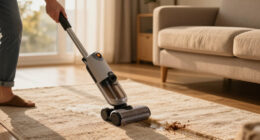
Last weekend I spent 25 minutes on my knees with a spray bottle and a scrub brush, attacking a dried spaghetti sauce stain near the stove. The sauce won. Three days later, a cordless wet-dry mop took the same stain off in one pass, squeegeeing the dirty water into a tank I never had to touch the floor to empty.
That’s the promise of an electric mop for deep cleaning: powered agitation doing the scrubbing your arms used to do. But “electric mop” covers a whole category — spinning pads, roller scrubbers, steam mops, vacuum-mop hybrids — and picking the wrong one for your floor can turn a cleaning upgrade into a damaged hardwood nightmare.
Here’s what actually matters: how these machines deep clean, which floors they’re safe on, what maintenance nobody tells you about, and how to choose without overpaying.
An electric mop deep cleans by using powered brushes, pads, or steam to loosen grime from floor texture — something a manual mop physically can’t do.
Sealed tile, vinyl, and some sealed stone are safe for most wet electric mops; hardwood, laminate, and unsealed stone require manufacturer checks, and steam ca…
Always vacuum or sweep first — debris left under a powered pad turns into streaky mud.
Rinse tanks, rollers, and filters after each use and let them dry fully; self-cleaning cycles reduce but don’t eliminate this maintenance.
Compare total cost of ownership — replacement rollers, pads, solution, and batteries can add $40–$100+ per year beyond the purchase price.
What an Electric Mop Actually Does That a Regular Mop Doesn’t
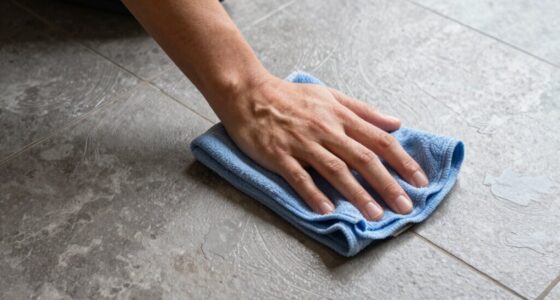
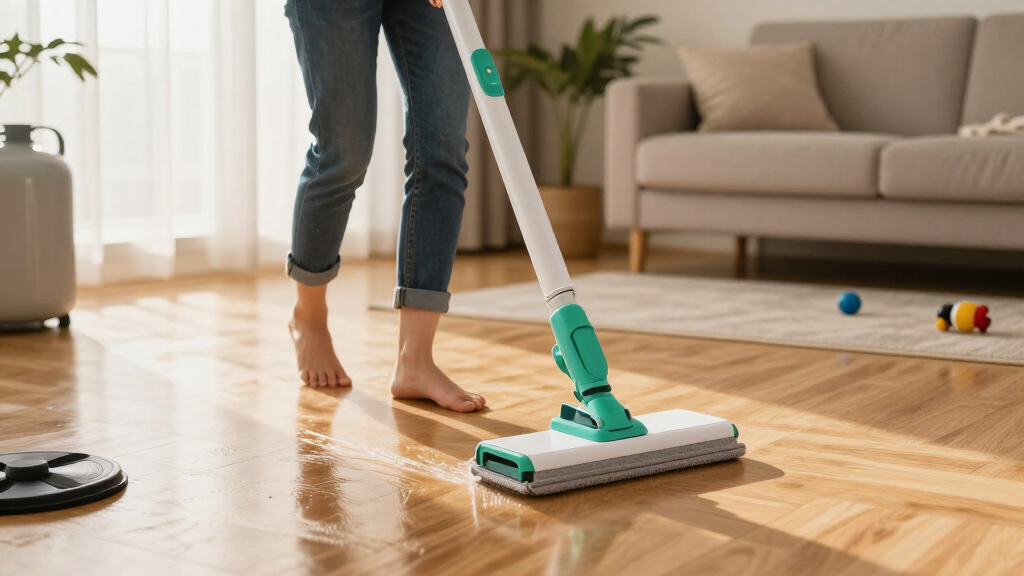
An electric mop uses powered brushes, rotating pads, vibration, or steam to help loosen and lift grime from your floor, instead of relying on your arm pressure and a soaked string mop. The powered agitation reaches into floor texture — grout lines, embossed vinyl, textured tile — where a flat mop just glides over the top. That’s the core difference, and it’s why electric mops clean heavily soiled floors more consistently than manual ones.
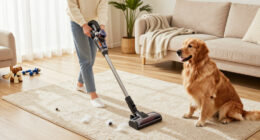
Think about your kitchen after a week of cooking. Grease mist settles near the stove and bonds to the floor. A regular mop tends to smear that film around. A powered roller or brush physically breaks the grease loose, and on wet-dry models, suction pulls the dirty liquid into a separate tank instead of leaving it to dry back onto the floor [1].
One honest qualification, though: “deep cleaning” here means deep cleaning, not automatic sanitizing. Powered scrubbing lifts dirt; it doesn’t guarantee germ kill unless you’re using a steam mop at proper temperature or an approved disinfectant process. Results still depend on the device, the floor, and the mess.
Wet-Dry, Powered Pad, or Steam: Which Type Deep Cleans Best
The three main types of electric mop clean differently, and the best pick depends on your mess. Here’s how they stack up for deep cleaning:
| Type | How It Cleans | Best For | Watch Out For |
|---|---|---|---|
| Wet-dry vacuum mop | Dispenses solution, scrubs with rollers, vacuums dirty water in one pass | Dried spills, sticky messes, pet households | Highest cost; roller maintenance after each use |
| Powered pad mop | Spinning or vibrating pads scrub with light moisture | Weekly maintenance cleaning on smooth floors | Weaker on dried-on, heavy soil |
| Steam mop | Heated vapor loosens grime and sanitizes surfaces | Sealed tile, grout, chemical-free cleaning | Can damage hardwood, laminate, and some coatings [1] |
Why does the difference matter so much? It comes down to agitation plus recovery. A powered pad mop agitates but leaves the dirty liquid on the floor to air-dry — fine for light soil, but on heavy grime you’re partially redepositing what you loosened. A wet-dry model solves this by recovering the water, which is why it wins on genuinely dirty floors: the mess leaves the building instead of drying back on. Steam works differently again — heat breaks the bond between grime and surface, and the temperature is what enables sanitizing, not scrubbing force.
The tradeoff is maintenance and money. Wet-dry models demand roller rinsing after every single use (skip it and you’ll smell why within a week). Steam mops are low-maintenance but high-risk on the wrong floor. Pad mops are the cheapest and easiest, but they’re upkeep tools, not restoration tools — if your baseline floor is already dirty, a pad mop will maintain the problem rather than fix it.
My kitchen-sauce story? That was a wet-dry model, and that’s the type I’d recommend for genuine deep cleaning. Steam is superb on sealed tile and grout — the vapor gets into lines a pad can’t reach — but it’s the riskiest choice if you have mixed flooring.
Rule of thumb: heavier and older grime favors powered scrubbing or steam; routine upkeep favors a spinning pad mop.
Will It Wreck Your Floors? The Compatibility Check Most People Skip
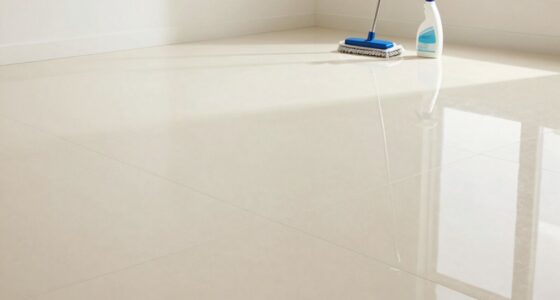
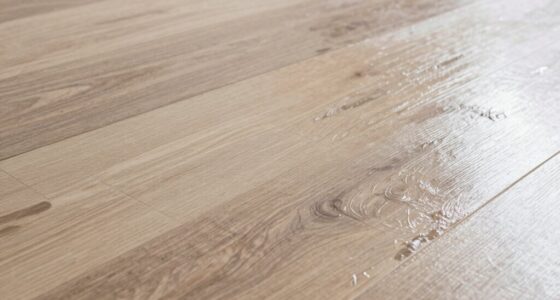
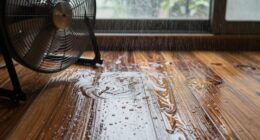
Electric mops are safe on sealed tile, vinyl, and some sealed stone, but hardwood, laminate, and unsealed surfaces are where good machines go bad. The danger is moisture: excess water seeps into seams and under finishes, causing swelling, warping, and finish damage that no cleaning can undo [1]. Steam adds a second risk — heat and vapor can cloud coatings and open joints on floors that look sealed but aren’t.
Here’s why this bites so many people: damage isn’t immediate or obvious. One mopping won’t visibly ruin a floor. Moisture creeps into seams over weeks and months, so by the time edges swell or boards cup, owners blame humidity or “cheap flooring” — not the mop. And because the harm is cumulative, warranty claims often fail; manufacturers can point to repeated moisture exposure as user error. That’s why the two minutes of checking matter more than any other step in this article.
It also cuts both ways: a floor that’s genuinely sealed (most modern vinyl plank, porcelain tile, sealed concrete) can take a wet-dry mop weekly for years with zero issues. The risk is concentrated in the ambiguous middle — hardwood labeled “water-resistant,” engineered wood with unknown core quality, laminate, natural stone that was sealed years ago and may have worn through. When in doubt, less water and no steam, always.
Before your first pass, do this:
- Find your flooring manufacturer’s approved cleaning methods (check the warranty docs, not the mop box).
- Confirm the mop manual lists your floor type as compatible.
- Test in an inconspicuous corner — behind a door, under a rug.
- Check whether your hardwood is sealed or engineered with a waterproof core; the answer changes everything.
Real-world example: a neighbor ran a steam mop over laminate that looked like tile. Six weeks later, the seams along the traffic path had puffed up like pastry edges. The flooring wasn’t covered — moisture damage voided the warranty.
Never use an electric mop on unsealed wood or unsealed stone. Water marks and mineral staining are often permanent.
The 6-Step Routine That Gets a Genuinely Deep Clean
A deep clean with an electric mop takes about 20–30 minutes for an average kitchen and living area — if you follow the sequence. The order matters more than the effort. Each step either protects the machine, protects the floor, or protects the result; skip one and you usually pay for it in streaks, sticky residue, or redistributed grime.
- Vacuum or sweep first. Wet-dry vac models can pick up loose debris, but dust and crumbs left under a pad turn into mud streaks. The logic: powered agitation grinds dry debris into your cleaning solution, so you’re mopping with mud instead of water.
- Fill with the right solution. Use only approved cleaner where the manual requires it. Excess detergent leaves a sticky film that actually attracts dirt faster [1] — more soap is a common instinct that backfires, making floors dirty again days sooner.
- Work in small sections, letting the powered brush dwell a few seconds on dried spots instead of pushing harder. Dwell time is what dissolves the bond between grime and floor; force mostly just wears out the pad and your arms.
- Go slow along edges and corners. Roller width and head shape limit how close you get to baseboards — overlap your passes there. This is the gap between a clean floor and a floor that looks clean until the sun hits it at an angle.
- Check the dirty tank. If the recovered water is black, empty and refill; you’re just redistributing grime. Think of it like rinsing a dish in dirty water — the solution stops working once it’s saturated.
- Let the floor air-dry — most machines leave floors dry in 5–15 minutes, but high humidity can stretch that. Walking on damp floors tracks the residue right back through the house.
Can it handle greasy stains and dried-on dirt? Yes — powered agitation is exactly what lifts those. Old set-in stains that have chemically bonded to the surface, though, may need a targeted pre-treatment. Every machine has limits, and knowing them keeps you from blaming (or returning) a machine that’s actually doing its job.
The Maintenance Nobody Mentions Until the Smell Starts
Tanks, rollers, pads, and filters on an electric mop need rinsing or cleaning after nearly every use, and washable parts must dry fully before storage — that’s the difference between a machine that lasts five years and one that smells like a damp basement by month three [1]. Newer models with self-cleaning cycles and heated roller drying help, but they don’t replace manual care.
Here’s the uncomfortable truth: an electric mop trades arm effort for discipline. A string mop needs nothing after use; a wet-dry mop needs five minutes, every time. That’s the real cost of powered cleaning, and it’s why some machines get abandoned in closets within a year — not because they stopped working, but because the upkeep felt optional until the smell made it undeniable. The smell, if you’re wondering, comes from dirty water sitting in channels and rollers overnight, where bacteria set up shop within a day or two. At that point you’re not just dealing with odor; you’re mopping with a bacteria farm pressed against your floor.
One friend stored her wet-dry mop with a damp roller sealed in its dock; a week later the whole closet had a sour funk that took three vinegar rinses to fix. The implication: storage design matters as much as cleaning. A roller sealed wet in a dock is a terrarium; the same roller on an open rack dries in hours.
Your post-cleaning routine takes five minutes:
- Empty and rinse both the clean and dirty tanks.
- Rinse the roller or pads under running water; check for hair wrapped around the brush.
- Rinse filters if your model has them.
- Air-dry all parts fully before reassembling or docking.
Budget for the long game too. Replacement rollers, pads, filters, and solution can run $40–$100+ per year depending on the brand — and battery replacement is a real cost on cordless models. What that means in practice: a $250 machine with $80/year in consumables costs more over three years than a $400 machine with $30/year. The sticker price is only part of the math — check consumable prices before you buy, not after [1].
How to Pick One Without Overbuying
The right electric mop depends on your floor material and your mess profile, not the feature list on the box. According to the buying criteria flooring and appliance experts recommend, judge any model on seven things: machine type, approved floor types, performance on dried messes and edges, runtime and tank size, maintenance frequency, replacement part costs, and warranty support [1].
But the criteria only help if you know which ones actually matter for you. Here’s the interpretation most buying guides skip: floor compatibility is non-negotiable — it’s a pass/fail gate, not a preference. Edge and dried-mess performance is the biggest real-world differentiator, because marketing machines demo on open floor centers while your messes live against baseboards and in corners. Maintenance frequency is the honesty check: it’s the number that predicts whether you’ll still love the machine in six months. And warranty support matters disproportionately on wet-dry hybrids, because pumps and rollers are the parts most likely to fail — a cheap machine with no parts supply becomes e-waste after one broken roller.
Cordless versus corded is your first fork. Cordless models glide anywhere — stairs landings, around furniture — but typically run 20–45 minutes per charge. The tradeoff is rarely advertised clearly: that runtime figure assumes light soil on a hard floor. Deep-cleaning a heavily soiled kitchen in max mode can drain a battery in half the stated time, which matters if your home is bigger than one floor. Corded models never die mid-room but drag a tail behind you.
For a small apartment with mostly smooth vinyl, a simple spinning-pad mop under $150 may be all you need — the implication being that buying a $500 hybrid there isn’t “better,” it’s paying for recovery power you’ll never use. For a house with kids, pets, and textured tile, a wet-dry vac-mop hybrid earns its $300–$600 price fast, because suction recovery is what keeps pet residue from drying back into grout. And if your main goal is chemical-free sanitizing on sealed tile, steam still holds its ground against fancier machines — nothing else sanitizes without chemicals.
One last tip: look for independent test results, not brand marketing. Feature names like “edge-cleaning design” and “smart sensors” vary wildly in real performance between brands — the label describes intent, not outcome.
Frequently Asked Questions
Can an electric mop remove dried-on dirt and greasy stains?
Yes, in most cases. Powered brushes and rollers provide the agitation needed to break loose dried spills and grease films that a regular mop smears around. Very old, chemically bonded stains may still need a targeted pre-treatment, and results vary by machine and floor texture.
Is a steam mop better for deep cleaning?
Steam mops are excellent on sealed tile and grout because heated vapor gets into texture and sanitizes without chemicals. But steam can damage hardwood, laminate, and some coatings. If your home has mixed flooring, a wet-dry powered mop is usually the safer all-around choice.
Do I need to sweep or vacuum before using an electric mop?
Generally yes, unless you own a wet-dry vacuum-mop hybrid designed to pick up loose debris while washing. Even then, large crumbs and hair work better removed first. Dust left under a powered pad turns into streaky mud — this is the most common cause of disappointing results.
Can I use regular floor cleaner, vinegar, or disinfectant in the tank?
Only use solutions the manufacturer approves. Ordinary detergent in excess leaves a sticky residue, and unapproved products like vinegar or disinfectants can damage internal components, affect surfaces, or void the warranty. Check the manual before anything goes in the tank.
How wet will the floor be, and how long does drying take?
Most electric mops use far less water than a bucket mop, leaving floors dry in roughly 5–15 minutes. Wet-dry vacuum models leave floors nearly dry immediately since they suction up the dirty water. High humidity can extend drying time.
Conclusion
Match the machine to your floor, not the marketing. If you take one thing from this: check floor compatibility before the first pass, sweep before you scrub, and give the machine five minutes of care after every use. Those three habits matter more than any feature on the box.
Because the real luxury isn’t the mop — it’s kneeling next to a dried sauce stain, pressing a trigger, and watching it disappear while you stand there holding your coffee.
Fall Picks
fall essentials
As an affiliate, we earn on qualifying purchases.