
Travertine floors need gentler daily cleaning than you might think because their natural stone surfaces are easily scratched and damaged. Using soft brushes and pH-balanced cleaners helps preserve their beauty and integrity. Harsh chemicals can disrupt the floor’s pH balance, leading to discoloration. Regular maintenance with mild soap and gentle techniques not only keeps your floors looking stunning but also extends their lifespan. If you’re curious about the best methods to protect your investment, there’s more to explore.

Get cleaning gear delivered free — and shop member deals
- Fast, free delivery on millions of items
- Access to Prime Big Deal Days deals on October 6–7
- Prime Video, Amazon Music and more included
Key Takeaways
- Travertine is a natural stone that can be easily damaged by harsh cleaning tools and chemicals.
- Gentle cleaning methods prevent wear and tear, preserving the stone’s integrity and beauty.
- Regular maintenance with soft brushes and pH-balanced cleaners reduces the need for aggressive cleaning later.
- Harsh chemicals can disrupt the pH balance, leading to discoloration and deterioration over time.
- Investing in gentle daily care extends the life and luster of travertine floors significantly.
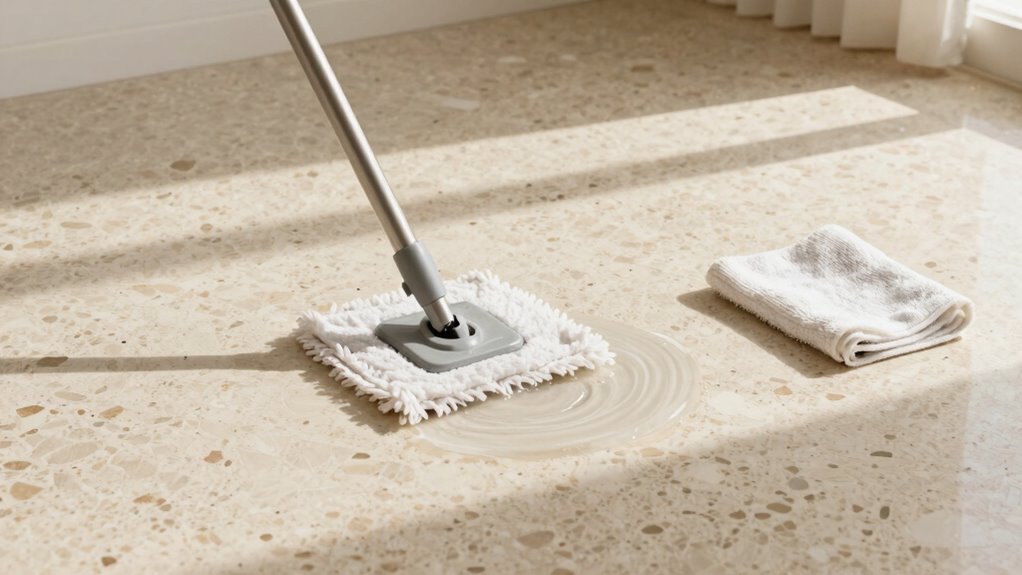
When you do this, make sure to use a vacuum with a soft brush attachment. This way, you won’t risk damaging the stone. If you prefer sweeping, opt for a broom with soft bristles. Both methods are effective and protect your travertine from wear and tear. Using appropriate cleaning techniques tailored for natural stone surfaces helps maintain their integrity over time. Additionally, avoiding harsh cleaning products ensures that the surface remains undamaged and retains its natural beauty.
Next, when it’s time for deeper cleaning, think about the cleaning solution you use. Many commercial cleaners contain acids or harsh chemicals that can disrupt the pH balance of your floors, leading to dullness and potential damage over time. Instead, consider a mixture of warm water and a few drops of a pH-balanced, mild soap. This solution will gently clean without harming the stone. Test it in a small, inconspicuous area first to verify it doesn’t cause any discoloration.
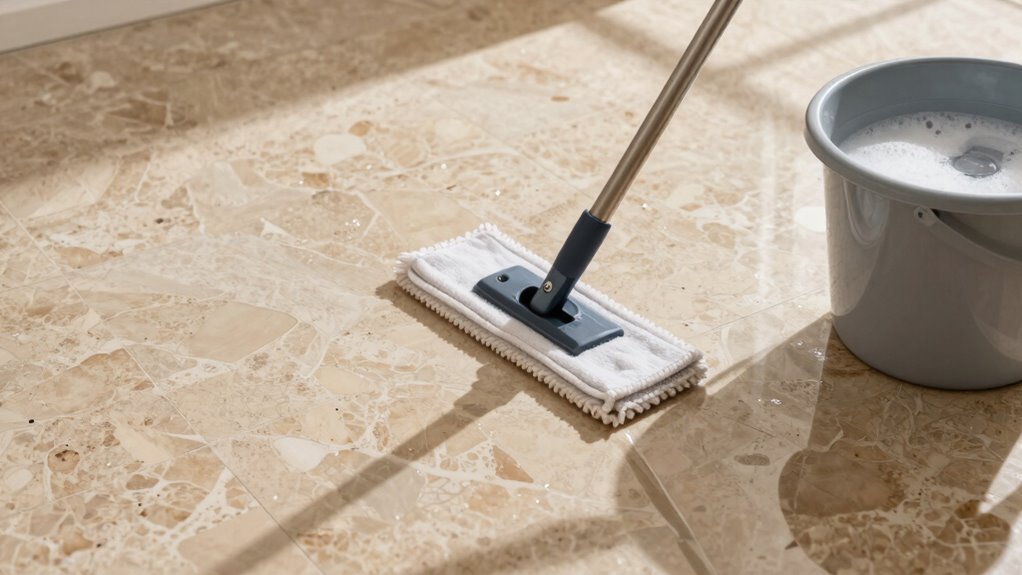
When you apply the cleaning solution, use a soft cloth or mop. Avoid scrubbing with rough materials, as they can scratch the surface of your travertine. Instead, let the cleaning solution sit for a few minutes to break down any stubborn stains. Afterward, gently wipe it away with the cloth or mop. It’s essential to rinse the floor with clean water afterward to remove any soap residue, which can also disrupt the pH balance. Incorporating gentle cleaning methods from the start can significantly reduce the need for more aggressive cleaning in the future. Remember that regular maintenance is key to preserving the stone’s natural beauty and durability.
You’ll find that a gentler approach to daily cleaning not only extends the life of your travertine floors but also preserves their natural luster. By sticking to soft brushes and pH-balanced cleaners, you’re guaranteeing that your beautiful floors remain a focal point in your home. Remember, travertine is an investment, and treating it with care will pay off in the long run. So, take the time to clean thoughtfully, and you’ll enjoy the stunning look of your travertine for years to come.
soft bristle broom for natural stone floors
As an affiliate, we earn on qualifying purchases.
As an affiliate, we earn on qualifying purchases.
Frequently Asked Questions
Can I Use Vinegar to Clean Travertine Floors?
No, you shouldn’t use vinegar to clean travertine floors. The acidity in vinegar can cause acid damage, leading to etching and dullness. Instead, opt for vinegar alternatives like pH-neutral cleaners or a mild soap solution. These gentler options effectively clean without harming your beautiful floors. Always remember to mop with water afterward to remove any residue. Taking this approach keeps your travertine looking its best without the risk of damage.
How Often Should I Clean Travertine Floors?
You should clean your travertine floors regularly, ideally daily for light maintenance. This daily maintenance helps prevent dirt buildup and keeps the surface looking fresh. However, you don’t need to deep clean every day; a gentle sweep or damp mop suffices. For deeper cleaning, aim for every couple of weeks, adjusting the cleaning frequency based on foot traffic and any spills. Remember, gentle care goes a long way in preserving their beauty!
What Are the Best Tools for Cleaning Travertine?
For cleaning travertine, use a soft mop, microfiber cloths, and a pH-balanced natural cleaner. Did you know that over 70% of homeowners damage their stone floors with harsh chemicals? To avoid this, stick to gentle maintenance tips. Regularly sweep or vacuum to remove dirt and debris, and mop with a natural cleaner diluted in water. This way, you’ll keep your travertine looking stunning without risking any damage.
Will Travertine Floors Scratch Easily?
Travertine floors can scratch, but they’re generally durable. To prevent scratches, you’ll want to use soft cleaning tools and avoid harsh chemicals. Regular maintenance, like sweeping or vacuuming, helps keep dirt away, reducing the risk of scratches. Placing mats at entryways and using furniture pads can also protect your floors. With a little care, your travertine can maintain its beauty and withstand daily wear and tear effectively.
Is Sealing Travertine Floors Necessary?
Yes, sealing travertine floors is necessary. Imagine you’ve just installed beautiful travertine tiles in your living room. Without sealing, they’re vulnerable to stains and moisture damage. Sealing benefits include protecting against spills and dirt, making daily cleaning a breeze. You can choose from various sealing methods, like penetrating sealers that soak into the stone or topical sealers that create a protective layer. Either way, sealing keeps your floors looking stunning for years to come.
As an affiliate, we earn on qualifying purchases.
Conclusion
To sum up, caring for your travertine floors is like nurturing a delicate plant; it requires gentle attention to thrive. By opting for milder cleaning methods, you’ll preserve their natural beauty and longevity. Remember, harsh chemicals can strip away their charm, just as too much sunlight can scorch a fragile flower. So, treat your travertine with kindness, and it’ll continue to enhance your home for years to come. Keep it simple, and let its elegance shine!
mild soap for travertine cleaning
As an affiliate, we earn on qualifying purchases.
As an affiliate, we earn on qualifying purchases.
gentle mop for natural stone floors
As an affiliate, we earn on qualifying purchases.
As an affiliate, we earn on qualifying purchases.
Fall Picks
fall essentials
As an affiliate, we earn on qualifying purchases.