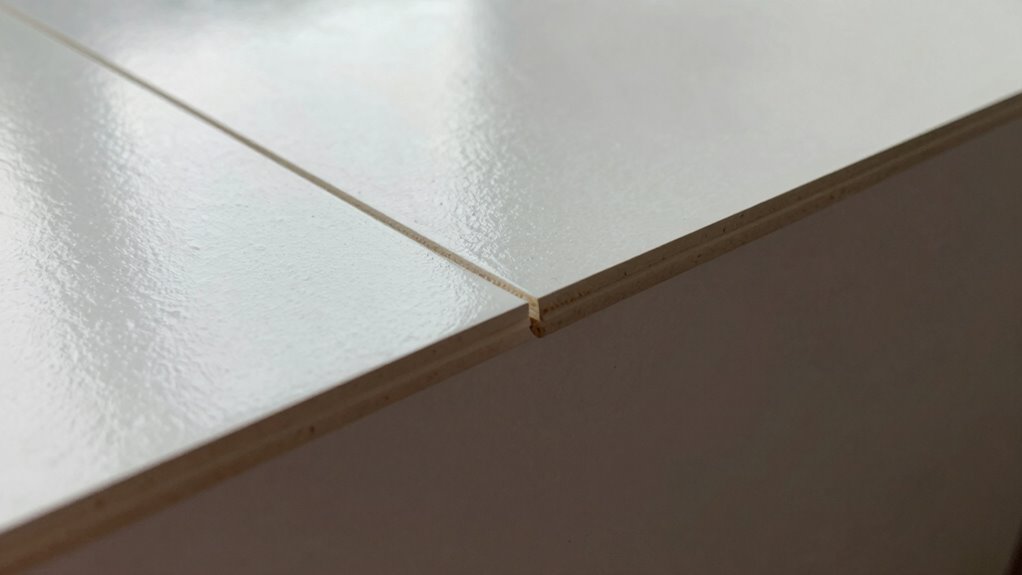

If you notice seams in your laminate flooring lifting, bubbling, or feeling soft, these are early signs of water damage. High humidity, spills, or leaks often cause swelling, so act quickly to dry and identify the moisture source. Regularly checking for these signs and sealing seams properly can prevent major damage. Staying vigilant and addressing issues early helps keep your floors looking great longer—continue to discover how to protect your laminate effectively.
Key Takeaways
- Regularly inspect seams for lifting, bubbling, or gaps indicating moisture intrusion.
- Keep indoor humidity levels between 35-55% to prevent material expansion.
- Immediately dry spills and leaks to stop moisture from seeping into seams.
- Use moisture barriers and sealants during installation to protect seams from future swelling.
- Address plumbing or appliance leaks promptly to minimize water damage and prevent swelling.

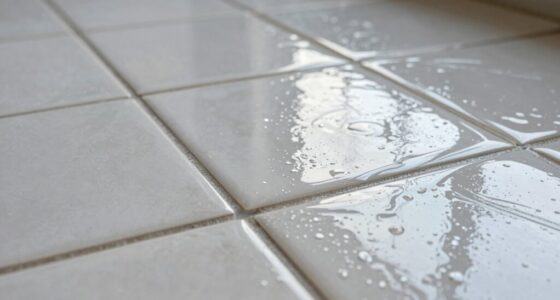
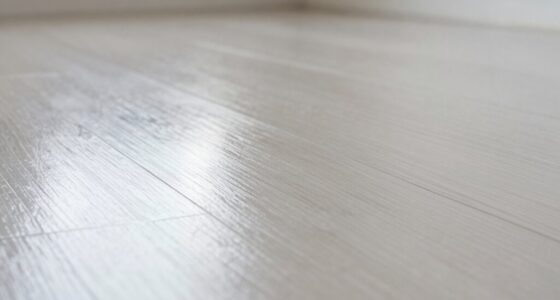
Laminate seam swelling occurs when moisture seeps into the joints between laminate panels, causing the seams to lift or bubble. This issue often signals underlying problems with your flooring’s integrity. Understanding the causes of laminate seam swelling can help you identify early warning signs and take steps to prevent further damage. The main causes of laminate seam swelling include water spills, high humidity, inadequate sealing, or leaks from appliances or plumbing. If water penetrates the seams, it causes the core material beneath the laminate to expand, leading to the lifting or bubbling of the seams. Sometimes, improper installation or a lack of proper underlayment also contribute to seam swelling, especially if moisture gets trapped underneath. Recognizing these causes early can help you prevent extensive damage and avoid costly repairs down the line. Proper ventilation and humidity control are also crucial to reduce the risk of moisture buildup beneath the flooring.
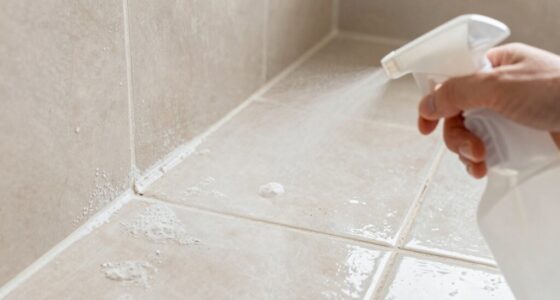
Fixing laminate seam swelling isn’t always straightforward, especially if moisture has been allowed to penetrate deeply. If you notice seams lifting or bubbling, you should first identify the source of moisture. Fixing laminate seam swelling involves removing the moisture source and drying out the affected area as quickly as possible. For small, localized swelling, you might be able to carefully lift the swollen seam, dry out the area with a heat gun or fan, and then reseal the joint with an appropriate laminate adhesive or sealant. However, if the swelling is extensive or persistent, replacing the damaged panels might be necessary. When you fix laminate seam swelling, your goal is to eliminate the moisture, reinforce the joint, and prevent future issues. This might include applying a moisture barrier or sealing the seams with a high-quality sealant designed for laminate floors.
Prevention plays a key role in avoiding laminate seam swelling altogether. Regularly cleaning spills immediately and avoiding excessive water use on your floors helps keep moisture levels in check. You should also ensure proper installation by using a vapor barrier or moisture-resistant underlayment. Maintaining consistent indoor humidity levels—ideally between 35-55%—can also prevent the expansion of the core material beneath your laminate. If you have plumbing or appliance leaks nearby, address them promptly to prevent water from seeping into the seams. By staying vigilant and proactive, you can considerably reduce the risk of laminate seam swelling, prolonging the lifespan of your flooring and avoiding the hassle of repairs. Remember, early intervention is your best defense against water damage and costly replacements in the future.
Frequently Asked Questions
Can Laminate Seam Swelling Be Completely Reversed Once It Occurs?
Seam swelling in laminate can sometimes be reversed with proper seam repair, especially if caught early. The swelling causes often involve moisture or trapped air, which can be addressed by carefully resealing or drying the area. However, if the swelling is extensive or persistent, complete reversal may not be possible. Regular maintenance and prompt attention to seam issues help prevent long-term damage and improve the chances of effective seam repair.
Does Frequent Cleaning Contribute to Laminate Seam Swelling?
Frequent cleaning can contribute to laminate seam swelling if you use harsh chemicals or overly wet cloths, which may weaken the adhesive. To prevent this, stick to gentle cleaning frequency and follow proper maintenance tips. Always use a damp cloth instead of soaking, and avoid abrasive cleaners. Regular, careful cleaning helps preserve the seams, reducing swelling risks and keeping your laminate surfaces looking their best over time.
Are Certain Laminate Brands More Prone to Seam Swelling?
Some laminate brands are more prone to seam swelling due to their lower durability and seam design. Think of it like a reputation that precedes them—brands with superior durability and thoughtful seam design tend to resist swelling better. You should research brands known for high-quality materials and innovative seam construction. Choosing the right brand can save you headaches later, ensuring your laminate flooring stays sleek and swelling-free longer.
How Long Does It Typically Take for Swelling to Become Visible?
Swelling from seam expansion usually becomes visible within a few months after installation, but it can vary depending on moisture exposure and quality. You might notice early signs as small seam gaps or slight bulging. Keep an eye on the swelling timeline, especially in high-humidity areas, since delayed expansion can occur over time. Addressing issues early can prevent further damage and ensure your laminate stays looking great.
Can Improper Installation Cause Laminate Seam Swelling?
Yes, improper installation can cause laminate seam swelling. If you make installation mistakes, such as not allowing enough space for material expansion or failing to secure the planks properly, the laminate can absorb moisture or expand unevenly. This leads to swelling along the seams. To prevent this, guarantee you follow proper installation guidelines, leave adequate expansion gaps, and handle materials carefully during installation.
Conclusion
Just like Pandora’s box, ignoring laminate seam swelling can unleash bigger problems down the line. Stay vigilant for early signs, act swiftly, and prevent costly repairs. Think of your laminate as a trusted friend—treat it with care, and it’ll serve you well, resisting the chaos of swelling and damage. By catching issues early, you keep your space beautiful and resilient, turning potential disaster into a smooth, seamless victory.