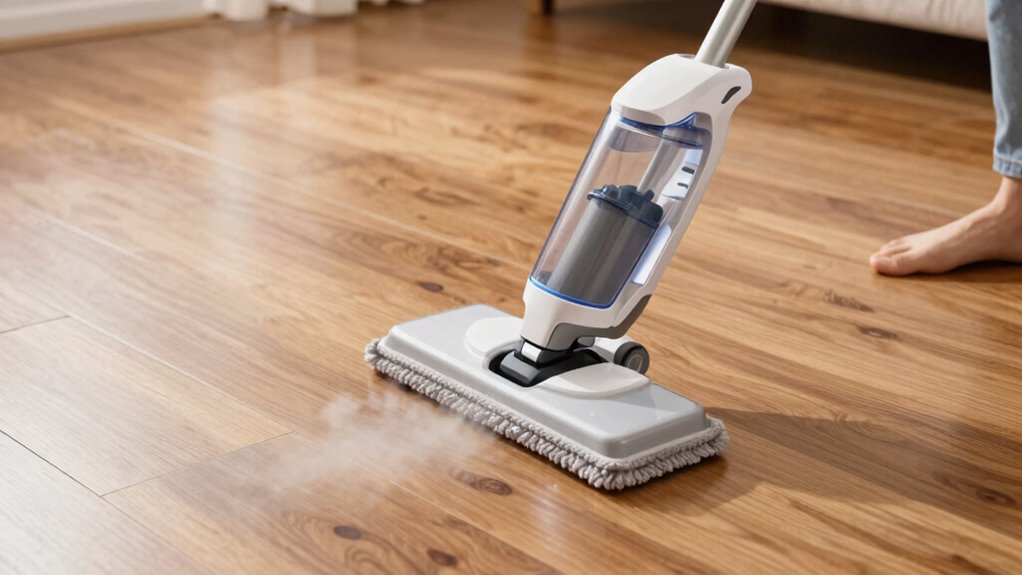

To clean sealed hardwood floors safely with a steam mop, first guarantee the water tank is clean and filled with distilled water to prevent mineral buildup. Use the lowest steam setting or adjustable options, and keep the mop moving constantly to avoid excess moisture. Avoid staying in one spot, and use gentle, smooth motions. Afterward, wipe down the mop and store it properly. For more tips on protecting your hardwood, explore additional best practices.

Get cleaning gear delivered free — and shop member deals
- Fast, free delivery on millions of items
- Access to Prime Big Deal Days deals on October 6–7
- Prime Video, Amazon Music and more included
Key Takeaways
- Use the lowest steam setting to prevent excess moisture from damaging the sealed hardwood.
- Keep the mop moving constantly to avoid pooling water and potential warping.
- Ensure the floor is dry and free of debris before mopping to prevent scratches.
- Regularly clean and replace the mop pads to avoid spreading dirt or residues.
- Wipe the floor immediately if any excess moisture appears to protect the wood surface.
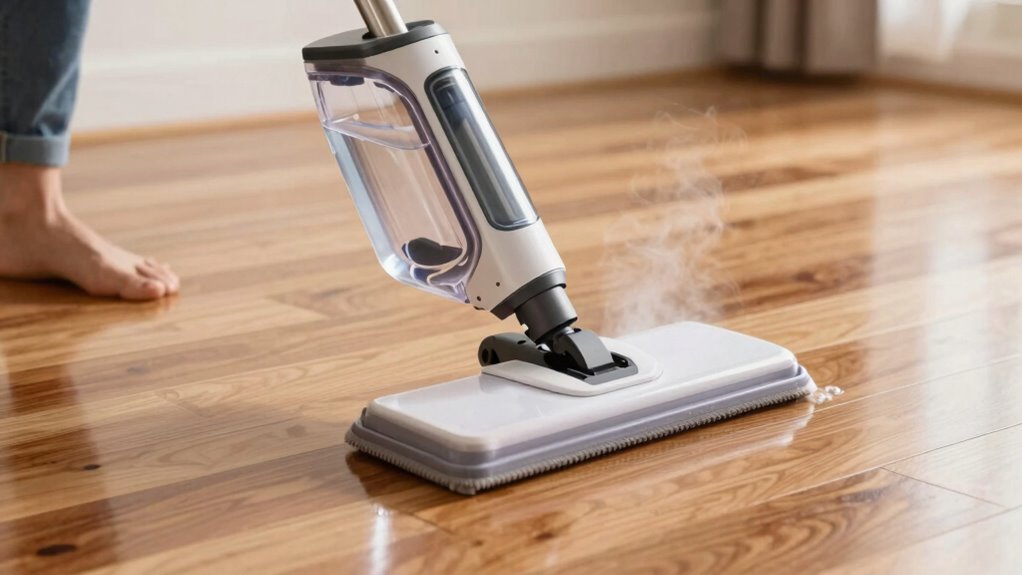
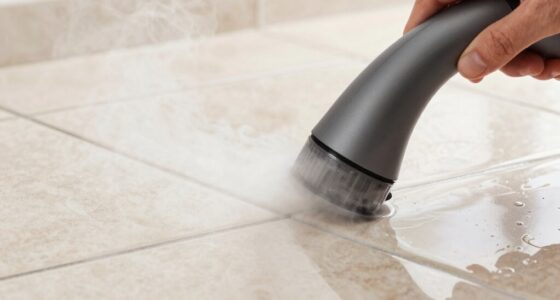
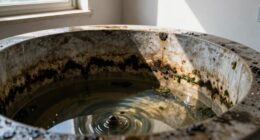
Using a steam mop on sealed hardwood floors can be an effective way to clean without harsh chemicals, but it’s essential to do so safely to protect your flooring. Proper steam mop maintenance is crucial to ensure it functions correctly and doesn’t accidentally damage your hardwood surface. Before each use, check that the mop’s water tank is clean and free of mineral buildup, which can leave residue or streaks on your floors. Using distilled water instead of tap water can help prevent mineral deposits, ensuring your steam mop operates smoothly and prolongs its lifespan. When you’re ready to clean, always start with a dry sweep or vacuum to remove loose dirt and debris. This step helps prevent scratching the surface when you pass the steam mop over the floor.
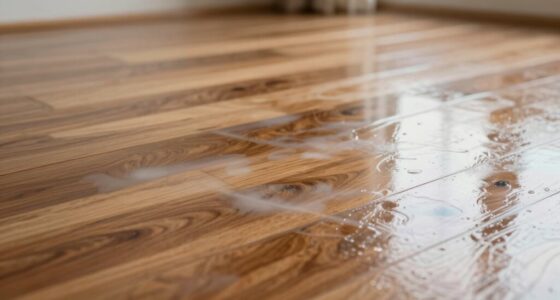
During mopping, keep the steam mop moving continuously; staying in one spot for too long can cause excess moisture to seep into the seams or edges of your hardwood, risking warping or damage. It’s vital to follow the manufacturer’s instructions regarding the amount of steam output, as too much steam might compromise your hardwood surface protection. Opt for a steam mop with adjustable steam settings, so you can lower the heat for more delicate surfaces. After use, empty the water tank and wipe down the mop’s head and handle to prevent mold or bacteria buildup, which promotes good steam mop maintenance practices. Regularly inspecting your steam mop’s pads or cloths and replacing or cleaning them helps prevent dirt from being redistributed onto your floors. Ensuring proper steam mop maintenance can extend the life of your equipment and protect your floors from potential damage.
Maintaining the right balance in your cleaning routine plays a significant role in protecting your hardwood floors. Excessive moisture is one of the main threats, so avoid using too much water or letting the mop sit in one area for too long. Additionally, periodically inspect your steam mop’s pad or cloth—replace or clean it regularly to prevent dirt from being redistributed onto your floors. Proper steam mop maintenance isn’t just about keeping the equipment in good shape; it directly impacts your hardwood surface protection by reducing the risk of scratches, warping, or residual water damage. Mineral buildup can also impair the effectiveness of your steam mop and should be managed carefully. Being aware of household products that might leave residues can help you choose the best cleaning practices for your floors, including using safe cleaning solutions.
best steam mop for hardwood floors
As an affiliate, we earn on qualifying purchases.
As an affiliate, we earn on qualifying purchases.
Frequently Asked Questions
Can I Use a Steam Mop on Sealed Hardwood Daily?
You can use a steam mop on sealed hardwood daily if you’re cautious. It offers eco-friendly cleaning, reducing chemical use. However, it’s essential to make sure the steam isn’t too intense, as excessive moisture can damage the wood. For a gentler approach, consider alternative mopping methods like microfiber mops or dry dusting. Always follow manufacturer instructions and test in a small area to prevent potential damage.
What Temperature Settings Are Safest for Sealed Hardwood?
You’ll be surprised to learn that the safest temperature for hardwood when using a steam mop is actually quite low—around 110°F to 130°F. Ironically, cranking it higher might seem more effective, but it risks damaging your sealed hardwood. Prioritize steam mop safety by sticking to these gentle hardwood temperatures, ensuring you clean effectively without warping or harming your floors. Always check your mop’s settings for the best results.
How Long Should I Steam Each Section of the Floor?
You should steam each section of your sealed hardwood floor for about 15-20 seconds. Keep the steam mop moving steadily to prevent excess moisture, which can damage the wood. Regularly check your steam mop’s maintenance to verify it’s functioning properly. Using proper hardwood cleaning techniques, avoid lingering steam in one spot and always follow the manufacturer’s instructions for safe, effective cleaning.
Is It Okay to Use Steam Mops on Newly Sealed Hardwood?
Using a steam mop on newly sealed hardwood is generally okay if you take precautions. Think of it like gently watering a new plant—you want to avoid overwhelming it. Steam can help clean without chemical residue, but make certain your floor is properly sealed and dry afterward. Always prioritize pet safety by avoiding excessive heat or moisture that could damage the finish or harm your furry friends.
What Are the Signs of Damage From Steam Mopping?
You’ll notice signs of damage from steam mopping if your hardwood surface care shows warping, cupping, or cracks. You might see the finish wearing off or the wood looking dull and uneven. To prevent this, focus on proper steam mop maintenance, like using it on the lowest setting and avoiding excessive moisture. Regularly check your hardwood surface for signs of wear to keep it looking its best and avoid damage.
adjustable steam mop with low setting
As an affiliate, we earn on qualifying purchases.
As an affiliate, we earn on qualifying purchases.
Conclusion
By following these gentle guidelines, you’ll find your sealed hardwood floors remain both radiant and resilient. Embrace the subtle art of care, allowing your steam mop to serve as a refined tool that preserves the beauty beneath your feet. With a touch of mindfulness, every cleaning session becomes a graceful dance, ensuring your cherished hardwood stays gleaming and timeless. Ultimately, a delicate balance of cleaning and caution will keep your floors looking exquisite for years to come.
steam mop replacement pads for hardwood
As an affiliate, we earn on qualifying purchases.
As an affiliate, we earn on qualifying purchases.
As an affiliate, we earn on qualifying purchases.
Fall Picks
fall essentials
As an affiliate, we earn on qualifying purchases.