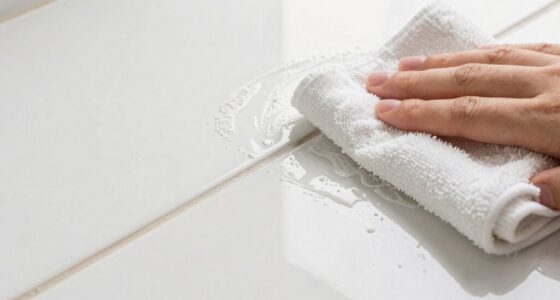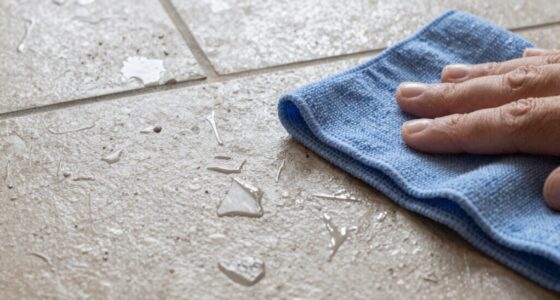
Water spots on sealed wood floors often result from spills, humidity, or tracked-in moisture, causing discoloration or dull patches. You can try simple fixes like using a mixture of vinegar and water, baking soda paste, or a dab of non-gel toothpaste to lift stains. Be sure to test on a small area first. For deeper spots or persistent issues, professional help might be needed. Keep exploring to discover effective home solutions and prevention tips.
Key Takeaways
- Use diluted vinegar or baking soda paste to gently lift water stains and restore shine.
- Apply non-gel whitening toothpaste with a soft cloth to remove superficial water spots safely.
- Dab a small amount of olive oil on the stain and buff to blend discoloration and add natural protection.
- Always test remedies on a hidden area first to prevent damage to the finish.
- Promptly clean spills, use mats, and maintain sealant to prevent future water spots and damage.
What Causes Water Spots on Sealed Wood Floors and How Do They Look?
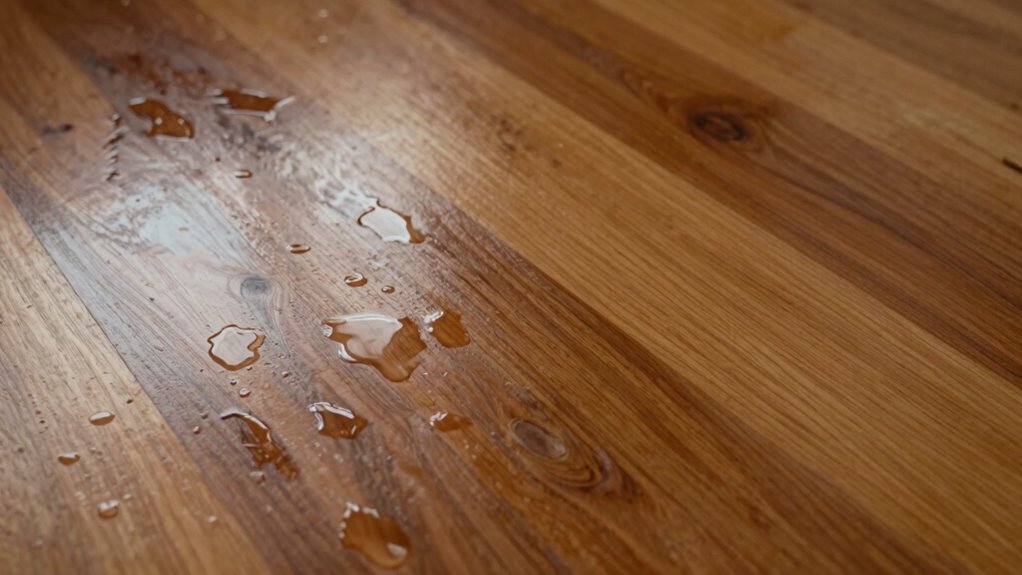
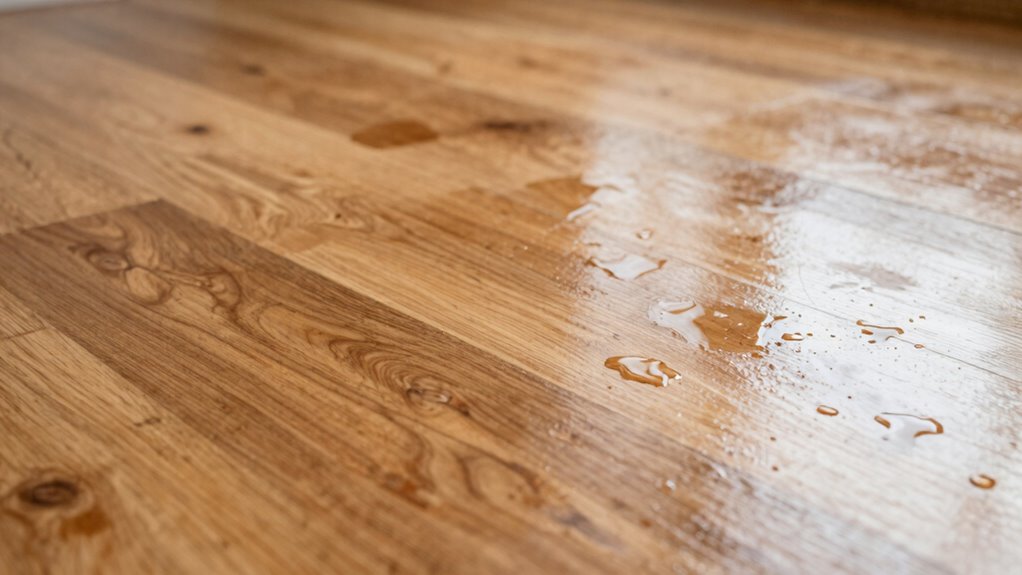
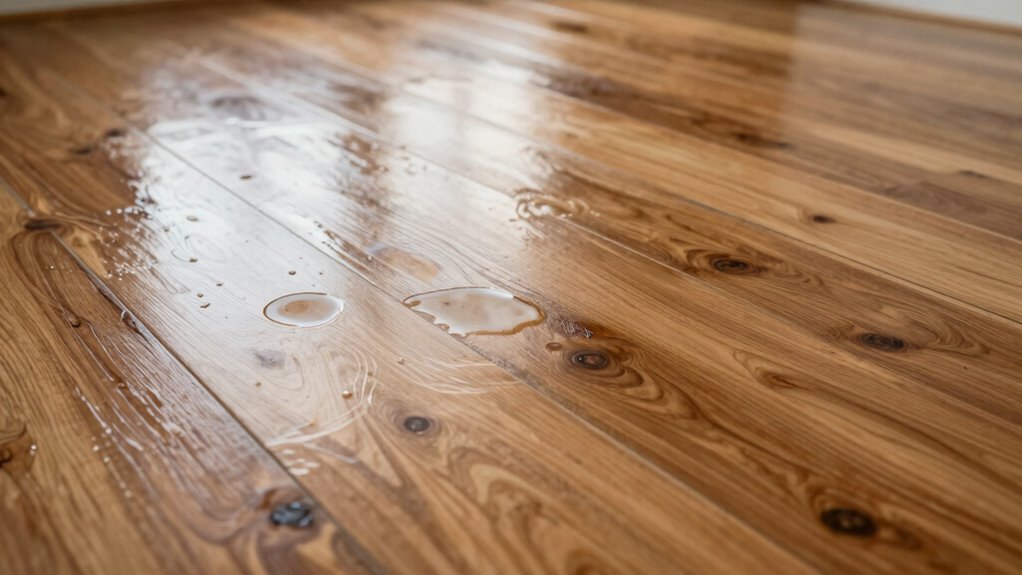
Water spots on sealed wood floors occur when moisture seeps into the surface, often from spills, humidity, or tracked-in water. This water can cause water damage, leading to discoloration and swelling of the wood. Over time, the finish deteriorates as it battles against repeated exposure to moisture, leaving behind unsightly spots. These spots typically appear as dull, cloudy patches or rings that stand out against the glossy surface. Sometimes, they have a brownish or yellowish hue, especially if the water has been present for a while. The damage isn’t always obvious immediately but can worsen with continued exposure, compromising both the appearance and integrity of your floor. Recognizing these signs early helps prevent further finish deterioration and more costly repairs. Proper moisture management and early intervention are key to maintaining the beauty of your wood floors. Understanding the role of moisture in *free floating* flooring can help you better manage and prevent water spots, especially since proper sealing can reduce the likelihood of moisture penetration. Additionally, sealing techniques can be applied to existing floors to help minimize future water damage.
How to Tell What Kind of Water Spot You Have and How Serious It Is?
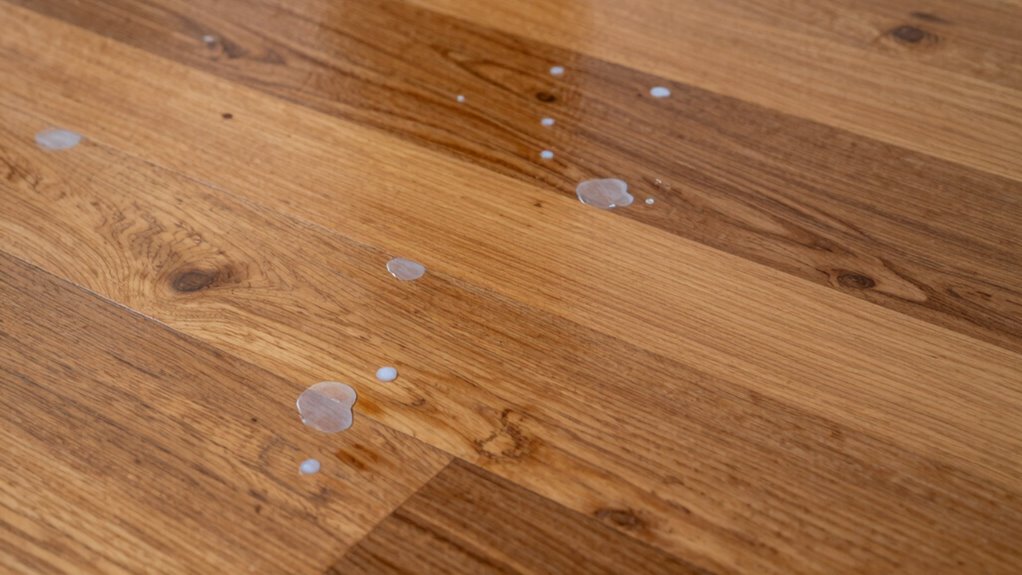
To assess your water spots, it’s important to identify their type and how deep they’ve penetrated the finish. Look for signs like discoloration or swelling to gauge their severity. Understanding these differences helps you decide whether they’re minor issues or require professional treatment. Voiceover techniques can often help you manage minor spots before they worsen. Additionally, knowing the water spot types can guide you in choosing the appropriate at-home remedies for removal. Recognizing the contrast ratio of your floor’s finish can also influence how visible the spots are and how effective your cleaning methods might be. Being aware of innovative cloud solutions can also inspire more sustainable approaches to home maintenance and repairs.
Water Spot Types
Identifying the type of water spot on your sealed wood floor is essential for determining how to address it effectively. Water spots often appear as cloudy or discolored areas, but their look can vary based on wood grain patterns and finish types. Some spots look like white rings or rings with a cloudy center, indicating mineral deposits or moisture trapped beneath the finish. Others may seem darker or more localized, suggesting surface-level damage. Recognizing these differences helps you decide whether simple home remedies or professional repair is needed. Keep in mind that certain finish types, like polyurethane or varnish, respond differently to cleaning methods. Understanding the water spot’s appearance and how it interacts with your floor’s finish can save you time and avoid unnecessary damage. Proper identification of water spots is crucial for choosing the right cleaning or repair method. Additionally, knowing the type of water deposit can help determine the severity and the appropriate remedial steps. Being aware of the finish compatibility with cleaning solutions ensures you do not inadvertently cause further harm to your flooring.
Severity Indicators
Determining the severity of a water spot is essential for choosing the right repair approach. Start by inspecting the extent of surface discoloration—if the spot appears light and superficial, it’s likely minor surface discoloration with minimal water damage. However, if the discoloration is dark, deep, or causes the wood to bubble or swell, the water damage is more serious, potentially affecting the wood’s structure. Light spots that don’t penetrate the finish can often be fixed with simple cleaning or polishing. In contrast, severe water damage may require more extensive repairs or professional help. Remember, the more the surface discoloration and damage deepen, the higher the chances that the water has penetrated beneath the surface, making DIY fixes less effective. Additionally, understanding the severity indicators can help prevent further damage and determine whether professional intervention is necessary. Proper filtration and maintenance of your cleaning tools can also help in preventing future water spots and damage to your floors. Regularly checking for signs of water penetration can inform timely repairs and avoid extensive damage. Being aware of early warning signs can save you from costly repairs down the line.
DIY Home Remedies to Remove Water Spots and Discoloration
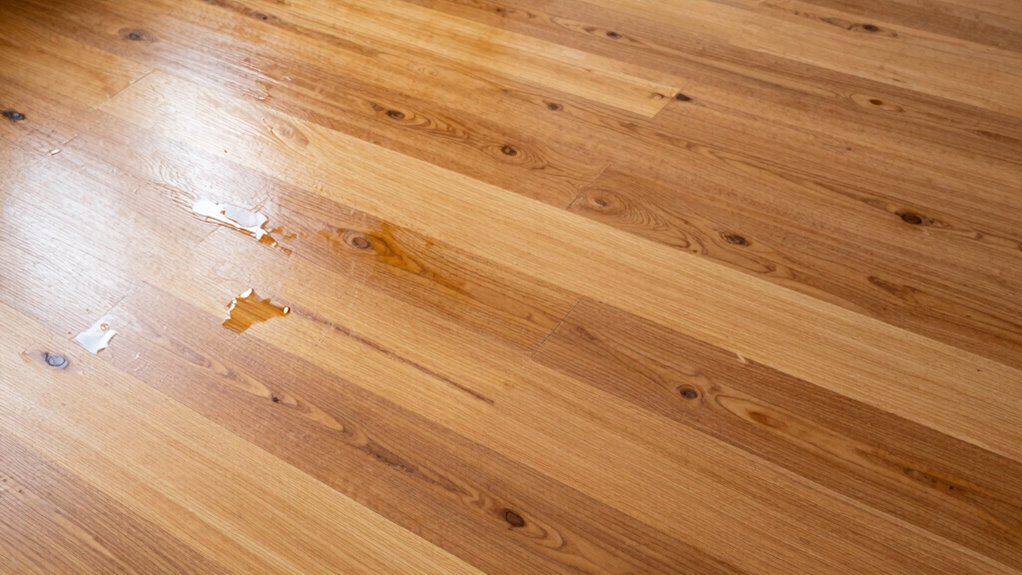
You can often improve water spots and discoloration on your sealed wood floors with simple DIY remedies. Using vinegar solutions, baking soda, or olive oil can help lift stains and restore shine. These easy methods might be just what you need to refresh your floors without professional help. Additionally, maintaining good indoor air quality with air purifiers can reduce the buildup of airborne particles that may contribute to surface discoloration over time. Proper floor maintenance practices, such as regular cleaning and prompt spill cleanup, can also prevent water spots from forming in the first place. Incorporating preventative measures like using coasters and mats can further protect your floors from future water damage. Consistent surface protection is essential in maintaining the appearance and durability of sealed wood floors over time, especially when combined with proper ventilation to reduce moisture buildup.
Vinegar Solutions for Stains
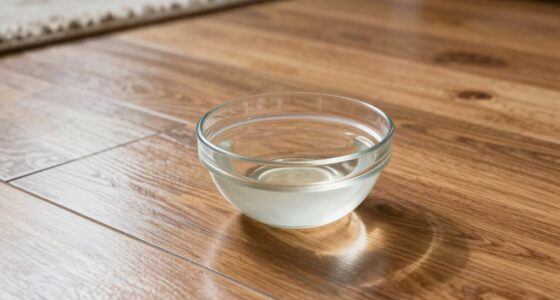
Vinegar is a popular DIY remedy for removing water spots and discoloration from sealed wood floors because of its natural acidity and cleaning power. When tackling stains, you can use simple cleaning techniques that involve diluting vinegar with water—typically a 1:1 ratio—and applying it gently with a soft cloth. This DIY solution helps break down mineral deposits and light stains without harsh chemicals. Be sure to test a small, inconspicuous area first to prevent any damage. For more stubborn spots, let the vinegar solution sit briefly before wiping it away. Using vinegar as part of your cleaning techniques offers an affordable, eco-friendly way to restore your floor’s appearance. Proper airflow around the area can also help in the drying process and prevent future water spots. Ensuring good ventilation helps moisture evaporate more quickly, reducing the chance of new spots forming. Additionally, understanding water stains on wood can help you choose the most effective cleaning methods. Always follow up with a dry cloth to remove excess moisture.
Baking Soda Blot Removal
Baking soda is an effective, inexpensive home remedy for tackling water spots and discoloration on sealed wood floors. To use it, make a paste by mixing baking soda with a small amount of water. Gently rub the paste onto the affected area using a soft cloth, following the grain pattern to avoid damaging the finish sheen. This helps lift the water stain without scratching or dulling the surface. Let the paste sit for a few minutes, then wipe clean with a damp cloth. Be careful not to scrub too hard, as excessive force can harm the finish sheen or alter the grain pattern. Repeat if necessary, but always test on a small, hidden area first to ensure safe and effective removal.
Olive Oil Polishing
When water spots and discoloration mar the surface of sealed wood floors, applying olive oil can help restore their natural shine. Olive oil polishing is a simple, cost-effective way to achieve natural wood restoration at home. To use, dab a small amount of olive oil onto a soft cloth and gently rub it into the affected area in circular motions. This will help blend discoloration and bring back the wood’s luster. For best results, follow with a clean cloth to buff the surface. Keep in mind that olive oil is best suited for minor water spots and dullness. Use it regularly to maintain a polished, natural look. Here’s a quick overview:
| Step | Action | Result |
|---|---|---|
| 1 | Apply olive oil sparingly | Protects and conditions |
| 2 | Rub gently in circles | Distributes evenly |
| 3 | Buff with a clean cloth | Restores shine |
| 4 | Repeat if necessary | Enhances natural beauty |
Using Toothpaste, Baking Soda, and Other Household Items Safely
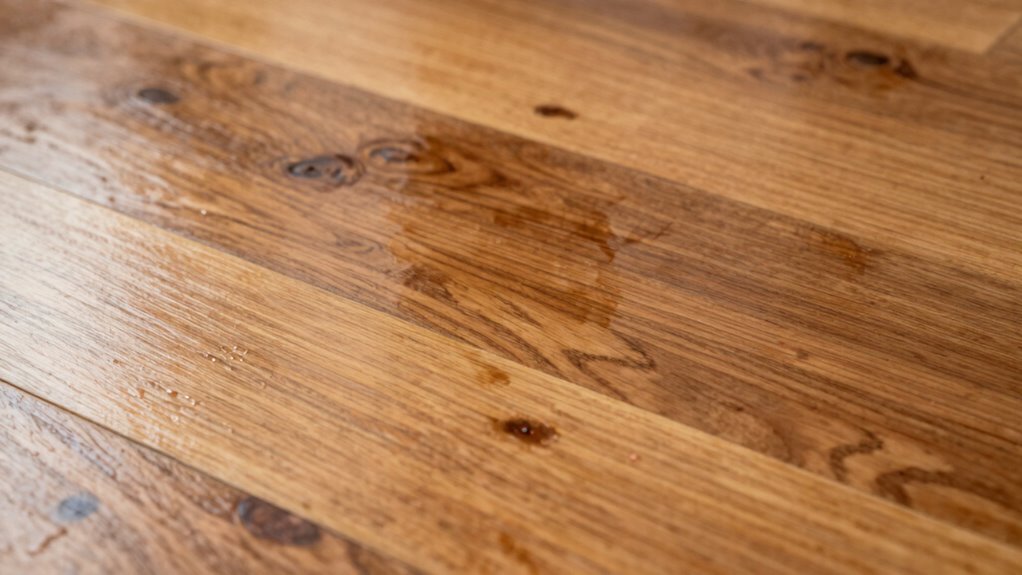
Many common household items, like toothpaste and baking soda, can help remove water spots from sealed wood floors when used carefully. These DIY remedies are inexpensive and easy to apply as part of your household cleaning routine. For toothpaste, choose a white, non-gel variety, and gently rub it onto the water stain with a soft cloth. Let it sit for a few minutes before wiping clean with a damp cloth. Baking soda can be made into a paste with water and applied similarly to target stubborn spots. Always test a small area first to guarantee no damage occurs. Remember to avoid harsh abrasives or overly aggressive scrubbing. Using household items safely ensures you can maintain your floors without risking further damage or voiding warranties.
When to Call a Professional for Water Spot Repairs?
While minor water spots can often be handled with household remedies, some damage requires professional attention. If your efforts don’t produce results or the water stain worsens, it’s time to seek a professional assessment. Experts can accurately diagnose the extent of the damage and determine whether the spot has penetrated the seal or damaged the wood beneath. Ignoring severe spots can lead to more costly repairs later. Additionally, if you’re unsure about the best approach or if your attempts don’t improve the appearance, calling a professional can save time and prevent further damage. Be prepared for repair costs, which vary based on the severity of the stain and the repair method needed. Ultimately, professional help ensures your floors look their best without risking additional harm.
Tips to Prevent Water Spots and Protect Your Sealed Wood Floors
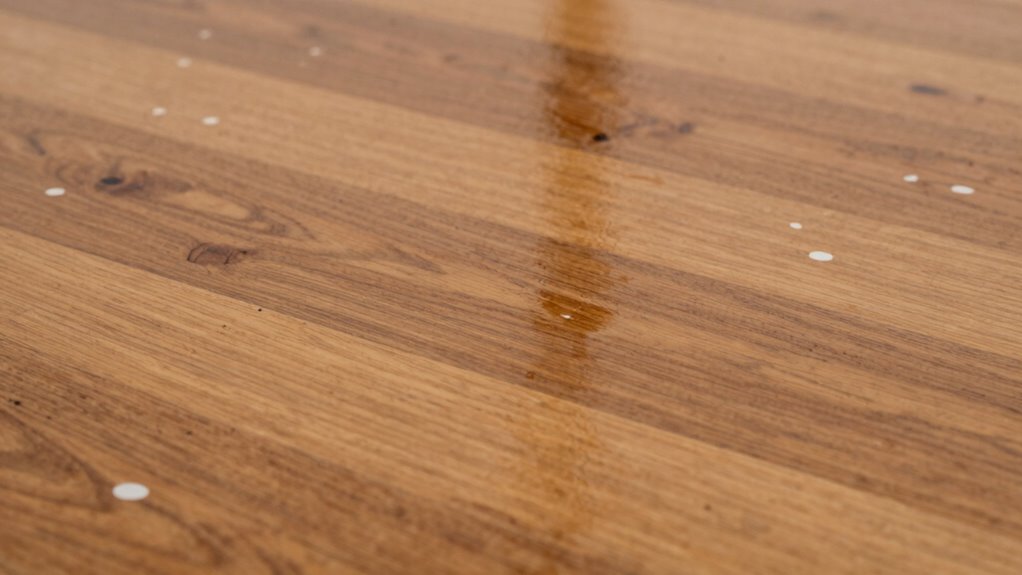
Protecting your sealed wood floors from water spots begins with proactive habits and careful maintenance. To prevent water damage, promptly wipe up spills using a soft cloth to avoid prolonged moisture contact. Use proper cleaning techniques—dampening a cloth with water or a gentle cleaner, then drying thoroughly—to reduce the risk of water seeping into the sealant. Place mats or rugs at entry points to catch water and dirt before they reach your floors. Avoid excessive moisture and never use harsh chemicals that can break down the sealant. Regularly inspect your floors for signs of water damage, and maintain the sealant as recommended. These simple steps help preserve the beauty of your wood floors and prevent water spots from forming.
Frequently Asked Questions
Can Water Spots Cause Permanent Damage to Sealed Wood Floors?
Water spots can cause permanent damage to sealed wood floors if water penetrates the finish and reaches the wood. When water seeps through the sealant, it can lead to finish deterioration and even warping or staining the wood underneath. To prevent this, wipe up spills promptly and use protective pads. Regular maintenance helps guarantee the seal remains intact, reducing the risk of long-term damage from water penetration.
Are There Specific Cleaning Products to Avoid on Sealed Wood Floors?
You should definitely avoid chemical cleaners and abrasive agents on sealed wood floors—they’re the perfect recipe for disaster. These harsh products can strip the sealant, cause scratches, or dull the finish. Instead, opt for gentle, pH-neutral cleaners, or just plain water and a soft cloth. It’s ironic how some products meant to clean can actually damage your floors, so always read labels and test first.
How Long Does It Typically Take to See Results After DIY Treatments?
You’ll usually see visible results within a few hours to a couple of days after applying DIY treatments, depending on the severity of the water spots. The treatment duration varies, but patience is key. For minor spots, expect quick improvements, while stubborn stains may take longer. Keep monitoring the area, and if you don’t notice progress, consider reapplying or trying a different method to enhance the results.
Do All Water Spots Require Professional Repair or Only Severe Cases?
Think of your wood floors as a delicate painting; minor water spots are like small smudges you can gently erase with DIY solutions, while severe stains resemble deep scratches needing professional repair. Not all water spots demand expert intervention—most minor ones respond well to home remedies like baking soda or vinegar. However, if spots persist or worsen, it’s wise to consult a professional to prevent further damage and restore your floor’s beauty.
Can Humidity Levels in My Home Influence Water Spot Formation?
Yes, humidity levels in your home can influence water spot formation on sealed wood floors. When humidity is high, it increases moisture in the air, which can lead to water spots or damage. You should practice humidity control by using dehumidifiers and guarantee moisture barriers are properly in place. These steps help maintain a consistent environment, reducing the risk of water spots and protecting your floors from excess moisture.
Conclusion
Just like a wise old oak guards its secrets, your floors deserve protection. With a little care and the right home remedies, you can keep water spots at bay and preserve your floors’ beauty. Remember, patience is key—sometimes even the best plans need a touch of expert help. By staying vigilant, you’ll ensure your home’s foundation remains as timeless as the stories etched into ancient trees. Keep your floors shining bright and tell your own tales of care.