
TL;DR

Get cleaning gear delivered free with Prime
- Fast, free delivery on millions of items
- Prime Video, Amazon Music and more included
- Member-only deals all year
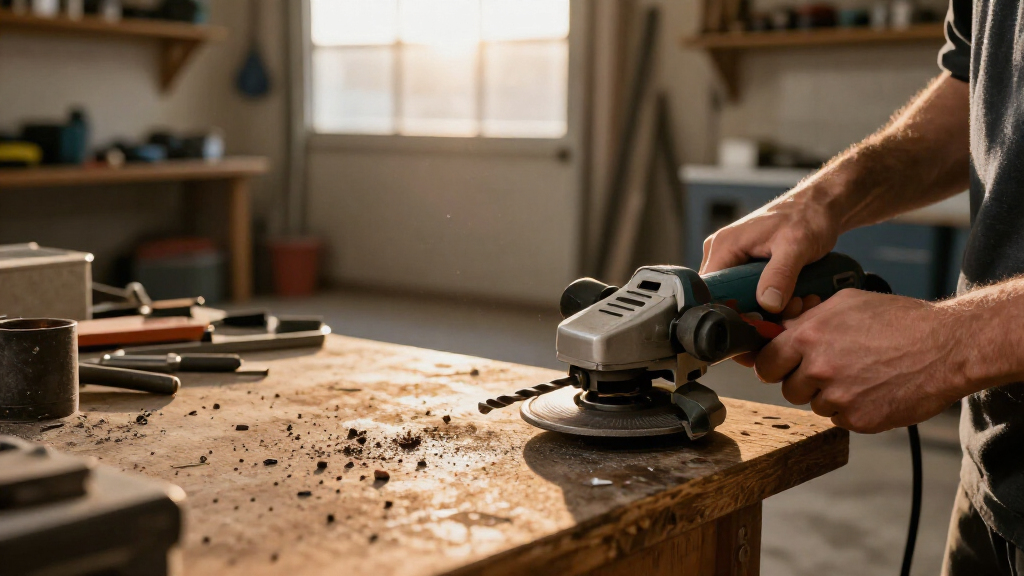
A Hunker report describes using a Dremel rotary tool to sharpen twist drill bits as an alternative to a bench grinder. It recommends securing the bit, bracing the tool hand, matching the existing cutting angle and removing only a small amount of metal; the method requires care and eye protection.
Hunker has outlined a method for sharpening twist drill bits with a Dremel rotary tool, offering a bench-grinder alternative for people who already own one. The instructions call for clamping the bit, supporting the hand holding the tool and lightly grinding both cutting edges while following the bit’s existing angle.
The report says the drill bit should be secured in a vise with about a quarter-inch or less exposed, leaving its cutting edges accessible. For freehand sharpening, the user holds the Dremel in one hand and uses the other to grasp and brace the tool wrist against the vise. That support is intended to help control the grinding motion.
Hunker identifies 118 degrees as a common point angle for twist bits used on wood, plastic and composite materials, and 135 degrees as common for drilling metal. It says users do not need to reproduce those angles exactly, but should approximate the angle already ground onto the bit. The instructions advise removing only a small amount of metal, keeping the point centered and grinding both cutting edges.
The article also describes aftermarket sharpening jigs that hold the bit and guide the tool to reduce freehand guesswork. Hunker says it could not find a Dremel-branded attachment for this purpose, while noting that the company sells a separate dedicated machine. The report does not identify a specific tested product or provide comparative performance results.
A Sharpening Option for Home Workshops
For home users with a rotary tool but no bench grinder, the method may offer a way to maintain some twist bits without buying another powered tool. A sharp bit can make drilling easier, while restoring a worn bit may help avoid discarding it prematurely. Those are practical benefits of the technique, not measured outcomes from a test described in the report.
The approach also has limits: it depends on steady hand control and careful attention to the bit’s point geometry. A poorly centered point or uneven cutting edges can affect how the bit drills. A jig may help guide the work, but the source does not establish that every attachment is compatible with every rotary tool or bit.
Dremel rotary tool drill bit sharpener
As an affiliate, we earn on qualifying purchases.
As an affiliate, we earn on qualifying purchases.
Angles and Setup for Twist Bits
The instructions apply to twist drill bits, not every kind of drill bit. The report notes that bits come in multiple designs, so its angle guidance and sharpening steps should not be assumed to apply to masonry, spade or other specialty bits.
Its cited 118-degree and 135-degree angles are common points for different materials, but the article advises following the geometry already on the bit rather than treating those figures as mandatory targets. The core setup is the same: secure the bit, keep the cutting edges exposed and stabilize the hand holding the rotary tool.
““You should approximate them as you sharpen.””
— Hunker report
As an affiliate, we earn on qualifying purchases.
Limits of the Freehand Method
The report does not provide a controlled comparison of Dremel sharpening against a bench grinder, specify how long the process takes in typical use or quantify how much bit life it may restore. Its claim that the method can be done quickly is not supported by test measurements in the supplied material.
It is also unclear which aftermarket jigs work with particular Dremel models, accessories or bit sizes. The source offers general safety advice, but does not detail protective equipment beyond gloves and eye protection or address every possible workshop hazard. Users should follow the rotary tool and accessory manufacturers’ instructions and avoid using damaged or unsuitable equipment.
drill bit sharpening attachment for Dremel
As an affiliate, we earn on qualifying purchases.
As an affiliate, we earn on qualifying purchases.
Check Tool Guidance Before Grinding
The report describes a DIY technique rather than announcing a product release or formal testing program. Anyone considering it should first confirm that the bit is a twist bit, secure it firmly, wear eye protection and protective gloves, and follow the tool maker’s operating guidance. A suitable jig may be an option for users who want more control, but compatibility and safe use should be checked before purchase or use.
As an affiliate, we earn on qualifying purchases.
Key Questions
Can a Dremel sharpen drill bits?
Hunker says a Dremel rotary tool can be used to sharpen twist drill bits. Its method involves securing the bit and lightly grinding both cutting edges while following the existing point angle.
What angle should a twist drill bit have?
The report gives 118 degrees as common for wood, plastic and composites, and 135 degrees as common for metal. It advises approximating the angle already on the bit rather than aiming for exact measurements.
How should the bit be held?
Clamp it in a vise with about a quarter-inch or less exposed and the cutting edges accessible. The report also recommends bracing the hand holding the Dremel against the vise while grinding.
Are there alternatives to freehand sharpening?
Hunker describes aftermarket jigs that guide the bit and rotary tool. The report says it could not find a Dremel-branded attachment for this task, and does not verify compatibility for specific accessories.
What safety precautions does the report recommend?
It recommends wearing eye protection and protective gloves. Users should also secure the bit and follow the instructions for their rotary tool and grinding accessory.
Source: rss
Halloween Picks
halloween
As an affiliate, we earn on qualifying purchases.