
When choosing between bagged and bagless vacuums for allergies, focus on filtration and dust containment. Bagged models with sealed systems and HEPA filters trap allergens better and prevent dust from escaping during disposal. Bagless vacuums require diligent maintenance to avoid releasing dust. If you want the best indoor air quality, prioritize a sealed, HEPA-filtered bagged vacuum. To discover which options suit your sensitivities best, explore the key factors further.
Key Takeaways
- Bagged vacuums with sealed systems and HEPA filters better contain allergens during use and disposal.
- Bagless models require regular filter cleaning and maintenance to prevent allergen escape.
- Proper disposal of dust bins in bagless vacuums minimizes exposure to airborne dust.
- HEPA filtration enhances dust removal effectiveness in both bagged and bagless vacuums.
- For allergy sufferers, sealed bagged vacuums generally offer superior dust containment and air quality benefits.
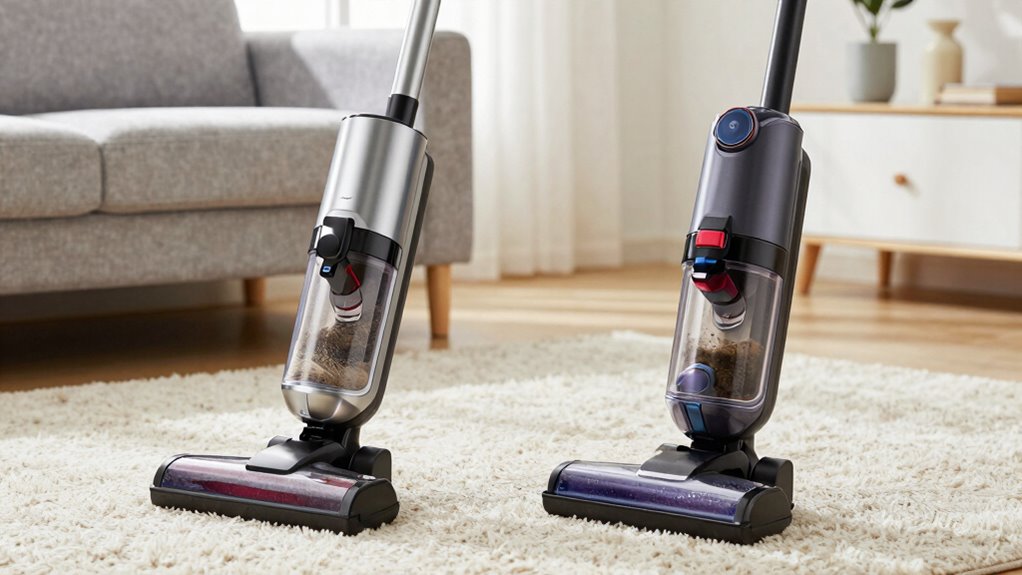
If you suffer from allergies, regular vacuuming can make a significant difference in your indoor air quality. The effectiveness of your vacuum cleaner depends on its ability to improve air filtration and reduce dust buildup. Choosing between a bagged or bagless vacuum isn’t just about convenience; it directly impacts how well you can control allergens and maintain a healthier environment. Bagged vacuums typically feature sealed systems that trap dust and allergens more effectively, preventing those tiny particles from escaping back into the air during disposal or use. This enhanced dust mitigation helps keep airborne allergens at bay, which is vital if you’re sensitive to pollen, pet dander, or dust mites. On the other hand, bagless models often appeal because they eliminate the need for replacement bags, making it easier to see when the bin is full and reducing ongoing costs. However, their dust filtration capabilities can sometimes fall short, especially if they lack HEPA filters. Without proper filtration, smaller allergen particles can escape during emptying or cleaning, diminishing the vacuum’s ability to improve indoor air quality.
Your choice should hinge on how well the vacuum manages air filtration and dust mitigation. A bagged vacuum with a HEPA filter creates a sealed environment that traps microscopic particles, preventing them from re-entering your living space. This is especially important for allergy sufferers because it reduces the amount of airborne allergens, easing symptoms and promoting cleaner indoor air. Bagless vacuums can also be effective if equipped with high-quality filters, but they require more diligent maintenance, like regular filter cleaning and timely emptying of the dust bin. If not maintained properly, even the best bagless models risk releasing allergens back into the air.
Another factor to consider is how each type handles dust mitigation during disposal. Bagged vacuums contain dust more securely, limiting exposure when you change the bag. With bagless models, you might be exposed to dust particles when emptying the bin, which can aggravate allergies unless you take precautions such as wearing a mask or emptying outside. Overall, if your priority is minimizing airborne allergens and ensuring superior air filtration, a sealed, HEPA-filtered bagged vacuum generally offers the best dust mitigation. It’s designed to contain allergens completely, giving you peace of mind that you’re actively improving your indoor air quality. While both options can work, your choice should align with your allergy sensitivities and your willingness to perform regular maintenance to keep allergens at bay.
Frequently Asked Questions
How Often Should I Vacuum to Reduce Allergy Symptoms Effectively?
You should vacuum at least twice a week to effectively reduce allergy symptoms. Maintaining a regular vacuuming schedule helps remove dust, pet dander, and allergens that trigger your allergies. Use a vacuum with a HEPA filter for better allergy symptom reduction. If you have pets or high pollen counts, consider vacuuming more often, like every other day, to keep allergens at bay and improve your indoor air quality.
Are HEPA Filters Necessary for Allergy-Friendly Vacuuming?
Think of HEPA filters as your allergy-fighting shield—necessary for true allergy prevention. They trap tiny particles like pollen, dust mites, and pet dander, preventing them from recirculating into the air. Without HEPA filtration, your vacuum may just stir up allergens instead of removing them. If you want cleaner air and relief from allergy symptoms, investing in a vacuum with HEPA filters is a smart move.
Can Vacuuming Alone Eliminate All Indoor Allergens?
Vacuuming alone can’t completely eliminate indoor allergens like dust mites and pet dander, but it markedly reduces them. You should vacuum regularly with a HEPA filter to trap tiny particles, and consider washing bedding, curtains, and upholstery often. Using air purifiers and maintaining low humidity levels also helps. Combining these steps creates a healthier environment, minimizing allergy symptoms and improving overall indoor air quality.
Do Robotic Vacuums Perform as Well as Traditional Models for Allergies?
Robotic vacuums are like tiny precision pilots, but they often don’t match traditional models for allergy control. While robotic accuracy has improved, they can miss hidden dust and allergens in corners or under furniture. However, they excel in vacuuming convenience, maintaining regular cleaning schedules. If allergies are your main concern, supplement robotic vacuums with hand cleaning or choose high-efficiency models to guarantee thorough allergen removal.
What Additional Measures Can Complement Vacuuming to Improve Air Quality?
You can improve air quality by using air purifiers with HEPA filters to trap airborne allergens. Additionally, controlling humidity levels between 30-50% helps prevent mold and dust mites from thriving. Regularly cleaning your home, washing bedding, and avoiding carpets can also reduce allergens. Combining these measures with consistent vacuuming creates a healthier environment, making it easier to breathe and reducing allergy symptoms effectively.
Conclusion
In the end, choosing between bagged and bagless vacuums depends on your allergy needs. While some believe bagged models trap more allergens, recent studies suggest that proper maintenance matters more than design. Regularly changing filters and emptying your vacuum can markedly reduce allergens, regardless of type. So, don’t just focus on the system—you’ll get better results by staying vigilant with cleaning routines, proving that consistent care often outweighs the initial vacuum choice.