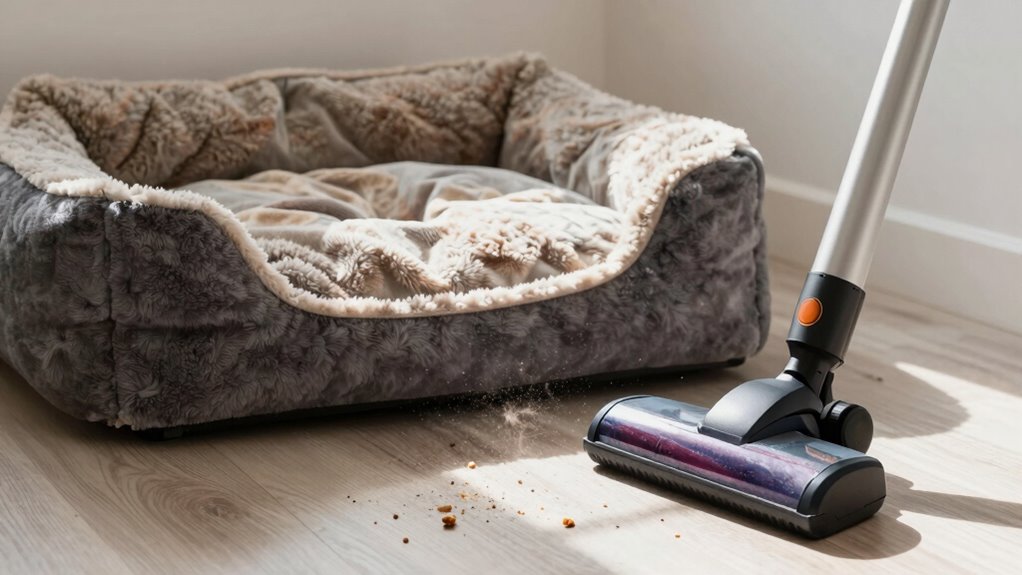
To clean your pet beds and the area around them, start by removing loose fur with a rubber glove or lint roller, then vacuum the surface thoroughly. Spot treat stains with pet-safe cleaners or a mild detergent solution, letting them sit before blotting. Wash washable beds in hot water with pet-safe detergent and vinegar, then dry thoroughly. Don’t forget to sweep or vacuum the surrounding floor and wipe it down to prevent allergens and odors from spreading—more tips are just ahead.
Key Takeaways
- Regularly vacuum or sweep around the pet bed, focusing on corners and underneath furniture.
- Use a lint roller or rubber glove to remove pet hair from the bed surface before cleaning.
- Wash the pet bed with hot water and pet-safe detergent, adding white vinegar to neutralize odors.
- Deep clean the surrounding floor area with a damp mop or cloth to pick up remaining fur and dust.
- Maintain hygiene by cleaning both the bed and the surrounding area frequently, reducing allergens and odors.
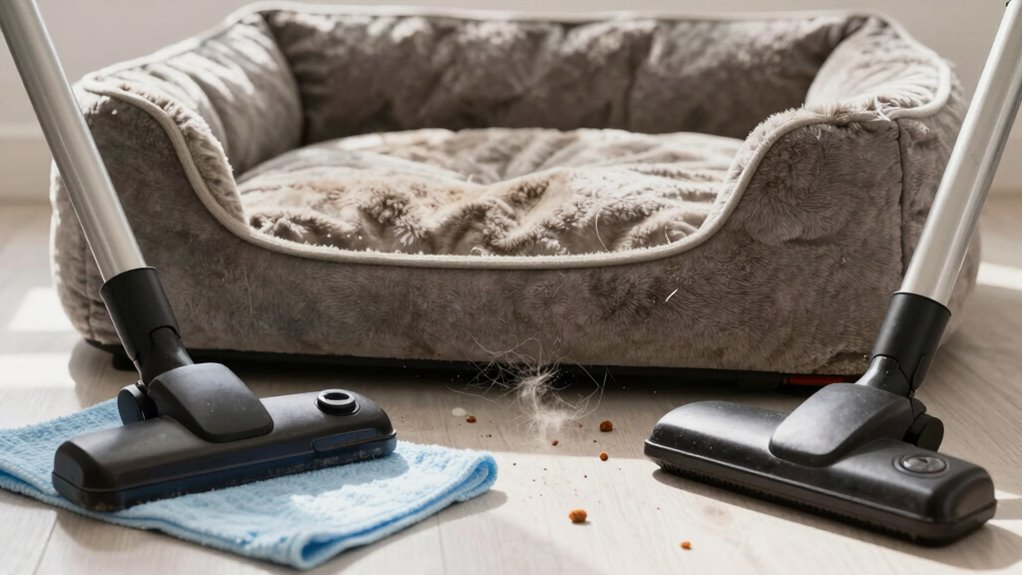
Keeping your pet’s bed clean is vital for their health and your home’s freshness. Regularly cleaning your pet’s bed not only keeps it inviting but also reduces the risk of allergies and skin irritations. One of the first steps is pet hair removal. Pet hair tends to cling to fabric surfaces, making it appear unkempt and contributing to airborne allergens. To tackle this, use a rubber glove or a lint roller to lift hair efficiently. A damp cloth can also help gather stubborn fur, especially in those hard-to-reach seams. For more thorough removal, a vacuum with a brush attachment works wonders, especially if your pet sheds heavily. Removing pet hair regularly prevents it from spreading around your home, especially onto nearby furniture and floors.
Regular pet hair removal keeps your home clean and allergy-free.
Dealing with stains on pet beds is another vital aspect of cleaning. Accidents happen, and stains can quickly become stubborn if not treated promptly. When faced with a stain, start by blotting the area with a clean cloth or paper towel to absorb as much of the liquid as possible. Avoid rubbing, as this can spread the stain or embed it deeper into the fabric. Next, treat the stain with a gentle yet effective stain remover designed for pet fabrics or use a mixture of mild detergent and water. Let the solution sit for a few minutes before blotting again. For organic stains like urine or vomit, enzyme-based cleaners break down the proteins, eliminating odor and preventing stain setting. Always test any stain treatment on a small, inconspicuous area first to guarantee it won’t damage the fabric.
Cleaning your pet bed isn’t just about removing pet hair and stains; it’s also about maintaining overall hygiene. Many pet beds are machine washable, making it easy to give them a deep clean. Use hot water when possible, as it helps kill bacteria and dust mites. Add a pet-safe detergent and consider including a cup of white vinegar in the rinse cycle to help neutralize odors. After washing, ensure the bed is thoroughly dried—either air dry in a well-ventilated space or tumble dry on a low setting. Proper drying prevents mold and mildew growth, which can cause unpleasant odors and health issues. Additionally, understanding how often to clean pet beds can help prevent buildup and extend the lifespan of the bed.
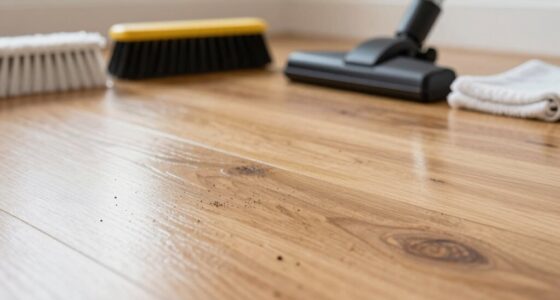
Finally, don’t forget to clean the surrounding area, especially the floor around the pet bed. Regular sweeping or vacuuming keeps pet hair, dirt, and dander from accumulating. Pay special attention to corners and underneath furniture where pet hair can hide. Wiping the floor with a damp mop or cloth can pick up lingering fur and dust, making the space even cleaner. By maintaining both your pet’s bed and the surrounding floor, you create a healthier environment for your furry friend and a fresher home for everyone.
Frequently Asked Questions
How Often Should I Replace My Pet’s Bed?
You should replace your pet’s bed every 1 to 2 years, depending on its pet bed lifespan and usage. Regularly check for wear, tears, or persistent odors, which indicate it’s time for a new one. Frequent washing extends its life, but replacement frequency is essential for your pet’s comfort and hygiene. Keep an eye on signs of deterioration to ensure your furry friend always has a clean, supportive resting spot.
What Eco-Friendly Cleaning Options Are Safe for Pets?
You can opt for eco-friendly cleaning options like biodegradable cleaners and natural disinfectants that are safe for pets. These products break down naturally, reducing environmental impact, and avoid harsh chemicals that could harm your furry friend. When cleaning pet beds and floors, look for natural disinfectants like vinegar or baking soda, and always rinse thoroughly. This way, you keep your pet safe and your home spotless without compromising eco-friendliness.
Can I Machine Wash Memory Foam Pet Beds?
Yes, you can machine wash memory foam pet beds, but check the care label first. Remove the memory foam core if possible, as most foam isn’t machine washable. Use a gentle cycle with pet-safe detergent and cold water. For best results, air dry the foam and the cover separately. This way, you keep the memory foam clean and maintain its shape without damage.
How Do I Remove Pet Hair From the Floor Effectively?
Did you know that pet hair makes up 30% of household dust? To remove pet hair effectively, start with vacuum techniques that include a brush attachment or a rubber nozzle to loosen hair. Use pet hair removers or lint rollers for stubborn spots. Regularly vacuum your floors, and you’ll keep pet hair under control, making your home cleaner and healthier for both you and your furry friend.
Are There Specific Cleaning Tips for Beds With Removable Covers?
Yes, there are specific tips for beds with removable covers. You should remove the cover and use a lint roller or tape to eliminate pet hair before washing. Washing removable covers regularly helps remove dirt and hair buildup. Use a gentle cycle with pet-safe detergent, and dry the cover thoroughly. This ensures your pet’s bed stays clean, fresh, and free of pet hair.
Conclusion
Think of your pet’s bed and the surrounding floor as the heart of their world—cleaning them is like clearing away the dust from a treasured painting. When you take the time to tidy this forgotten zone, you’re not just removing dirt; you’re restoring a safe, cozy haven for your furry friend. A spotless space symbolizes love and care, turning everyday chores into a heartfelt act that keeps your bond strong and your home warm.