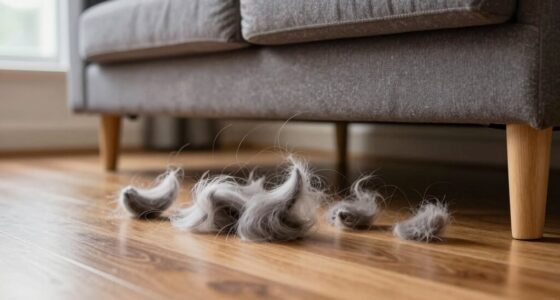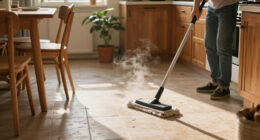
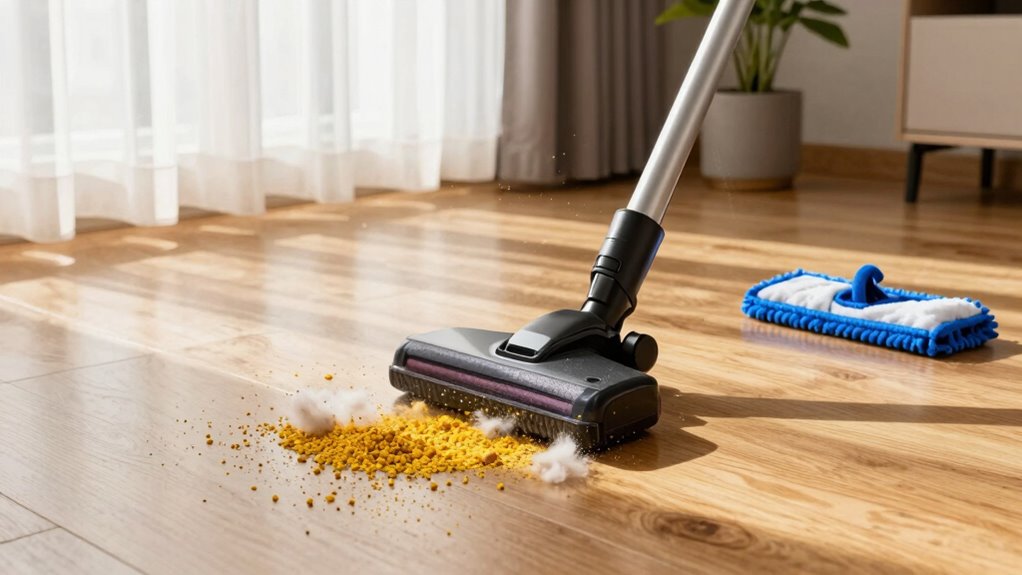

To clean floors effectively during shedding and pollen season, vacuum at least once a week, using a HEPA filter vacuum for the best results. Make sure to utilize the brush roll for pet hair and a damp microfiber mop to trap dust and particles. Focus on high-shedding areas and maintain a consistent cleaning schedule. Keeping an eye on indoor humidity can further reduce allergens. There’s more you can do to keep your home fresh and allergen-free.

Get cleaning gear delivered free with Prime
- Fast, free delivery on millions of items
- Prime Video, Amazon Music and more included
- Member-only deals all year
Key Takeaways
- Use a high-quality vacuum with a HEPA filter to effectively capture pet hair and pollen particles from floors.
- Vacuum floors in a slow, zigzag pattern to ensure thorough debris pickup and minimize allergens.
- Follow vacuuming with a damp microfiber mop to trap remaining dust and pollen effectively.
- Incorporate regular sweeping to remove loose hair and dust before mopping for enhanced cleanliness.
- Maintain consistent cleaning routines and monitor indoor humidity to control allergen levels throughout the season.
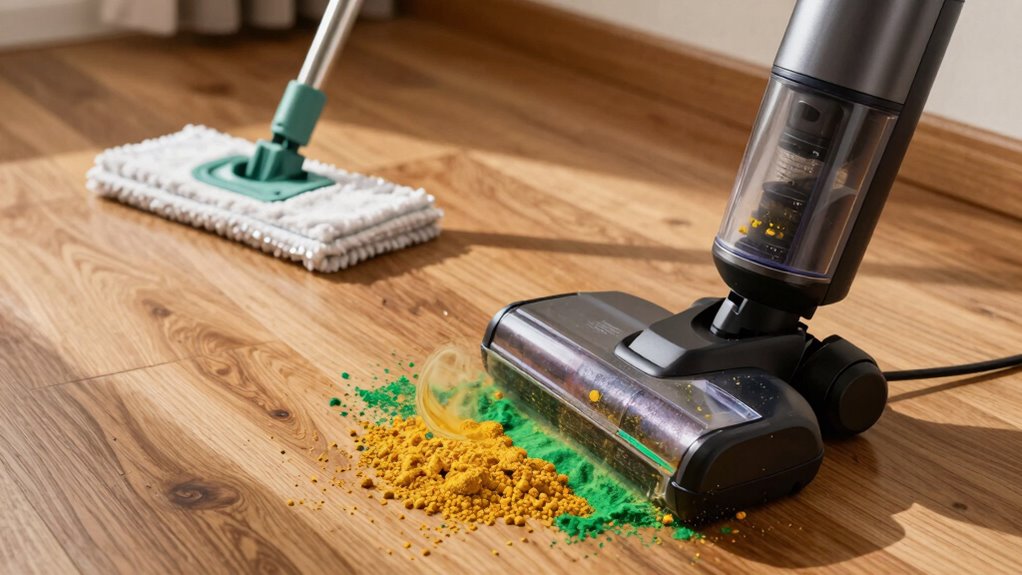
As the seasons change, shedding pets and blooming pollen can turn your floors into a dusty mess. If you’re not careful, these allergens can quickly build up, making your home uncomfortable and triggering allergies. The good news is that with the right approach, you can tackle both pet hair and pollen effectively, keeping your space clean and healthy.
Start by focusing on your vacuuming techniques. A high-quality vacuum cleaner with a HEPA filter is crucial for trapping fine particles like pollen. Make sure you use the right attachments too. The brush roll is great for picking up pet hair, while a crevice tool can help you reach those corners where dust tends to accumulate. When you vacuum, go slowly. This gives your vacuum a chance to pick up more debris. Consider using a zigzag pattern instead of straight lines; this method can help you cover more ground and guarantee you’re picking up everything.
Focus on your vacuuming techniques: use a HEPA filter, the right attachments, and a slow, zigzag pattern for optimal results.
Don’t forget to vacuum your furniture and any fabric surfaces. Pet hair loves to cling to couches and chairs, so running the vacuum over these areas can considerably reduce allergens in your home. Additionally, you might want to invest in a pet hair attachment specifically designed for this purpose. Regularly vacuuming these surfaces will help you manage allergy triggers effectively. Moreover, maintaining a cleaning routine is essential for ongoing allergen control. Incorporating effective cleaning techniques can further improve your results and reduce allergen buildup.
Once you’ve vacuumed, it’s time to tackle hard floors. Sweep or use a microfiber mop to collect any leftover dust and hair. Microfiber mops are excellent because they attract and trap dust rather than just pushing it around. When you’re mopping, consider using a damp mop to help capture pollen particles that might be floating around. Incorporating proper cleaning techniques can make a significant difference in allergen control. Using a dehumidifier can also help reduce airborne pollen and pet dander by lowering indoor humidity levels.
You should also clean your air filters and vacuum filters regularly. A clogged filter can spread allergens back into the air, defeating your cleaning efforts. Replace or clean them according to the manufacturer’s instructions to maintain peak performance. Additionally, using a vacuum with a HEPA filter can significantly improve your indoor air quality by trapping tiny particles like pollen and pet dander.
Finally, don’t overlook the importance of routine cleaning. Aim to vacuum at least once a week, and more often during shedding season. Keeping a consistent cleaning schedule helps you stay ahead of allergens, making allergy management easier.
Products Worth Considering

Dreame L50 Ultra Robot Vacuum and Mop

Dreame L40 Ultra Gen 2 Robot Vacuum and Mop

Levoit Vital 100S-P Air Purifier with Washable Pre-Filter
As an affiliate, we earn on qualifying purchases.
Frequently Asked Questions
How Often Should I Clean My Floors During This Season?
You should clean your floors at least twice a week during this season. Frequent cleaning helps manage allergens and pet hair effectively. If you notice an increase in pollen or shedding, consider daily vacuuming or sweeping, especially in high-traffic areas. Remember, seasonal cleaning is all about keeping your home comfortable and healthy. By following these frequency recommendations, you’ll make a big difference in your indoor air quality and overall cleanliness.
Are There Specific Cleaning Products Recommended for Pet Hair?
Did you know that 67% of pet owners struggle with pet hair removal? To tackle this, use products like microfiber cloths or rubber brooms, which effectively lift hair from surfaces. For floors, consider a vacuum with a pet hair attachment or specialized cleaning solutions that target pet dander. Combine these cleaning techniques with regular sweeping to keep your space fur-free and fresh, making your home a more comfortable environment for everyone.
Can I Use a Vacuum on Hardwood Floors?
Yes, you can use a vacuum on hardwood floors, but choose the right vacuum types. Opt for vacuums designed specifically for hardwood care, like those with soft bristles or a hard floor setting. These minimize scratches and protect your flooring. Regular vacuuming helps remove dust and pet hair without damaging the surface. Just make sure to avoid vacuums with beater bars, as they can harm your hardwood finish. Happy cleaning!
What Tools Are Best for Picking up Pollen?
To effectively pick up pollen, you’ll want a vacuum with a HEPA filter, as it traps allergens while you clean. Microfiber mops are also great for floor maintenance, capturing fine particles without spreading them around. Regularly dusting surfaces with a damp cloth helps, too. If you suffer from pollen allergies, consider cleaning during low pollen times, like early morning or after rain, to minimize exposure while maintaining clean floors.
Is It Safe to Use Essential Oils While Cleaning?
When you breathe in a invigorating scent, like lavender on a summer day, you might wonder if using essential oils while cleaning is safe. Yes, it can be, as long as you choose high-quality oils and use them in moderation. The essential oil benefits, such as antimicrobial properties, enhance your cleaning routine. Just remember to keep your space ventilated and avoid oils that irritate your skin or respiratory system for ideal cleaning safety.
Conclusion
As the shedding fur and swirling pollen dance through your home, don’t let them settle in. By staying proactive with regular vacuuming and damp mopping, you can keep your floors as fresh as a spring breeze. Embrace the battle against dust and dander, and watch your space transform into a sanctuary. With these simple steps, you’re not just cleaning; you’re reclaiming your home, turning it from a chaotic whirlwind into a peaceful haven.