
TL;DR

Get cleaning gear delivered free with Prime
- Fast, free delivery on millions of items
- Prime Video, Amazon Music and more included
- Member-only deals all year
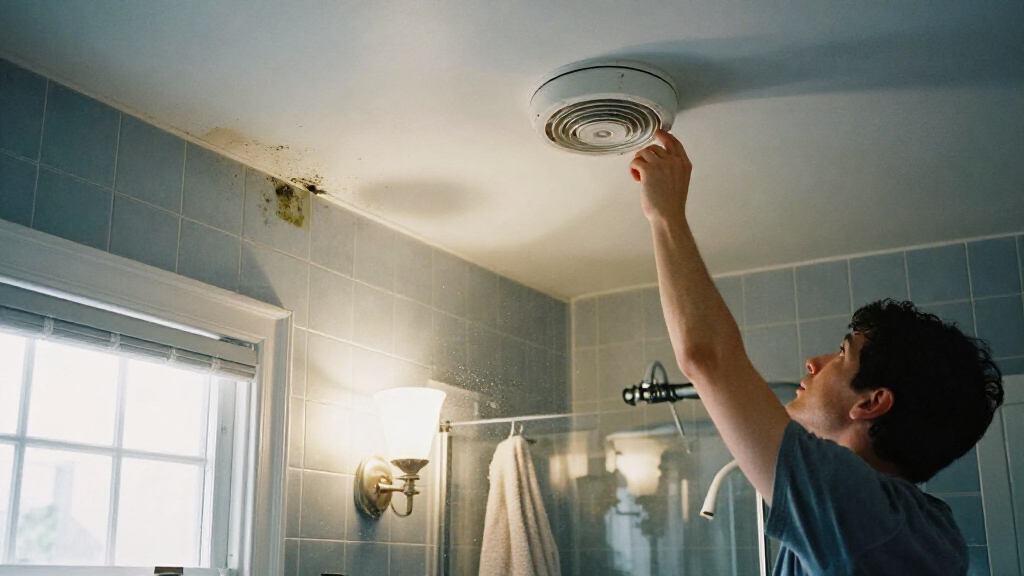
A Hunker home-improvement report identifies turning off the bathroom exhaust fan too soon after showering as a possible contributor to lingering moisture and mold growth. It recommends running the fan before and during a shower, then for at least 30 to 50 minutes afterward, while noting that fan sizing and airflow also matter.
A Hunker report says turning off a bathroom exhaust fan too soon after showering can leave moisture in the room, potentially contributing to mold growth. The report recommends running the fan before and during a shower and for at least 30 to 50 minutes afterward, while stressing that adequate ventilation depends in part on whether the fan is sized for the bathroom.
Bathrooms are prone to moisture buildup because hot showers release water vapor into a space that may have limited airflow. Hunker says steam can condense on cooler surfaces, and moisture can become trapped around materials such as drywall and tile grout. The article identifies that lingering dampness—not simply whether the fan was switched on during the shower—as the problem its advice addresses.
The report recommends starting the fan before turning on the water, keeping it running during the shower, and leaving it on for at least 30 to 50 minutes afterward. That period is presented as practical guidance for removing residual moisture, not as a guarantee that mold will be prevented in every bathroom. The source does not cite a test or study establishing that the same run time is suitable for all room sizes, fans, or conditions.
Hunker also says the fan needs to be properly sized for the space and that the bathroom door should remain closed while it runs. It says occupants should be able to feel air being drawn through the gap beneath the door. Timers or moisture-sensing fans may help keep ventilation running after someone leaves, according to the report, but it does not provide product comparisons or evidence that a particular model will solve an existing mold problem.
Why Fan Run Time Matters
For residents, the advice draws attention to a common gap in bathroom ventilation: a fan may run during a shower yet stop before the room has dried. Residual humidity can persist after the water is off, leaving moisture on surfaces and in porous materials. Extending fan use is a relatively simple step that may help reduce damp conditions, particularly when paired with effective airflow.
The report does not establish that short fan run times are the cause of mold in any particular home. Mold can have multiple contributing conditions, and the supplied source does not assess other possible moisture sources, such as leaks or persistent building dampness. If mold is already present or keeps returning, running a fan longer may not address the underlying cause. The practical takeaway is to treat fan operation as one part of moisture management, not as a diagnosis or a guaranteed remedy.
Products Worth Considering

Dyson V8 Cyclone Cordless Vacuum

Bose TV Speaker (2nd Gen) Compact Soundbar with Bluetooth and HDMI-ARC, Black

Shark Navigator Lift-Away Upright Vacuum (NV360)
As an affiliate, we earn on qualifying purchases.
How the Report Frames Ventilation
The Hunker article focuses on the period after a shower, rather than advising readers to run an exhaust fan only while water is flowing. Its explanation is that moisture remains in the air and on surfaces after showering, so stopping ventilation immediately can leave dampness behind. The article says a functioning exhaust fan redirects moisture outdoors, but its effectiveness depends on the unit being appropriate for the room and on air being able to move into the bathroom.
The source suggests mechanical timers, programmable controls, and moisture-sensing fans as ways to avoid switching a fan off too early. It also mentions older mechanical timers as a possible retrofit option. These are suggestions from the report, not evidence that a specific device is necessary or that a timer alone will correct inadequate ventilation.
“Run your exhaust fan before, during, and after showering.”
— Hunker report
Limits of the Moisture Advice
The supplied report does not identify a specific fan model, bathroom size, humidity level, or measurement used to support its recommended 30-to-50-minute run time. It also does not establish that moisture trapped in drywall or grout will cause mold within a fixed period in every home. Its statement that mold growth can take place within 24 hours is presented in the article without supporting research details in the supplied material.
It remains unclear whether any individual bathroom’s fan is properly sized, whether it vents outdoors, or whether mold is being driven by another source of moisture. The article’s suggestions should not be read as a guarantee of mold prevention or as a substitute for investigating recurring dampness or existing mold.
Steps Homeowners Can Take
Residents following the report’s advice can run the fan before, during, and after showering, then observe whether the bathroom dries and whether air is drawn through the space beneath the door. A timer or humidity-sensing control may help keep the fan on for longer. The source recommends checking that the fan is appropriate for the room, but it does not provide sizing instructions.
If dampness or mold continues despite ventilation, the cause may require further investigation. The supplied report does not set out a remediation process or address when professional help is needed. Homeowners should avoid assuming that a longer fan cycle will resolve a leak, a ventilation fault, or mold that has already developed.
Key Questions
How long does the Hunker report recommend running the fan after a shower?
It recommends leaving the fan on for at least 30 to 50 minutes after showering, as well as running it before and during the shower. The report does not establish that this timing suits every bathroom.
Why might turning the fan off right after showering matter?
According to the report, moisture remains in the room after the shower ends. If ventilation stops, humidity and condensation may linger on surfaces or in materials such as drywall and grout.
Does running the fan longer guarantee that mold will not grow?
No. The report presents longer fan use as a way to help remove moisture, not a guarantee. It also says the fan must be sized to ventilate the bathroom properly; other moisture sources may still need attention.
Can a timer help keep the fan running?
Yes. Hunker suggests mechanical timers, programmable controls, and moisture-sensing fans as options for extending operation after a shower. It does not compare products or claim that a timer will fix inadequate ventilation.
Source: hunker.com