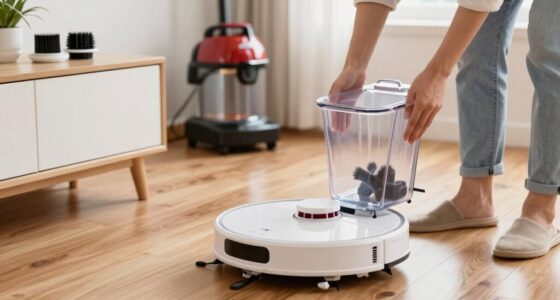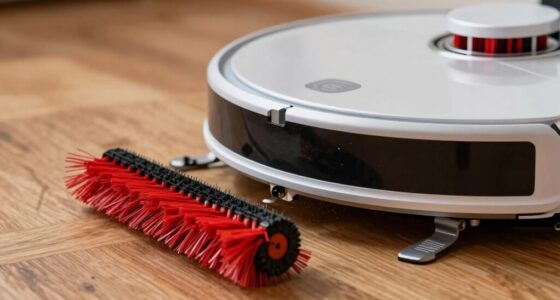
Robot vacuum brushes come in various types, mainly rubber, bristle, and hybrid designs, each suited for different floors and dirt types. Rubber brushes are flexible, durable, and resist hair tangles, making them great for pet hair and long strands. Bristle brushes excel on carpets but tend to tangle easily with hair, requiring frequent cleaning. Understanding how these brushes work and why hair tangles happen can help you choose the right one for your needs—keep exploring to learn more.
Key Takeaways
- Rubber brushes are flexible, durable, and resist hair tangling, making maintenance easier and more efficient.
- Bristle brushes excel on carpets but tend to trap hair and debris, requiring frequent cleaning.
- Combining rubber side brushes with central bristle brushes optimizes cleaning but may increase tangling risks.
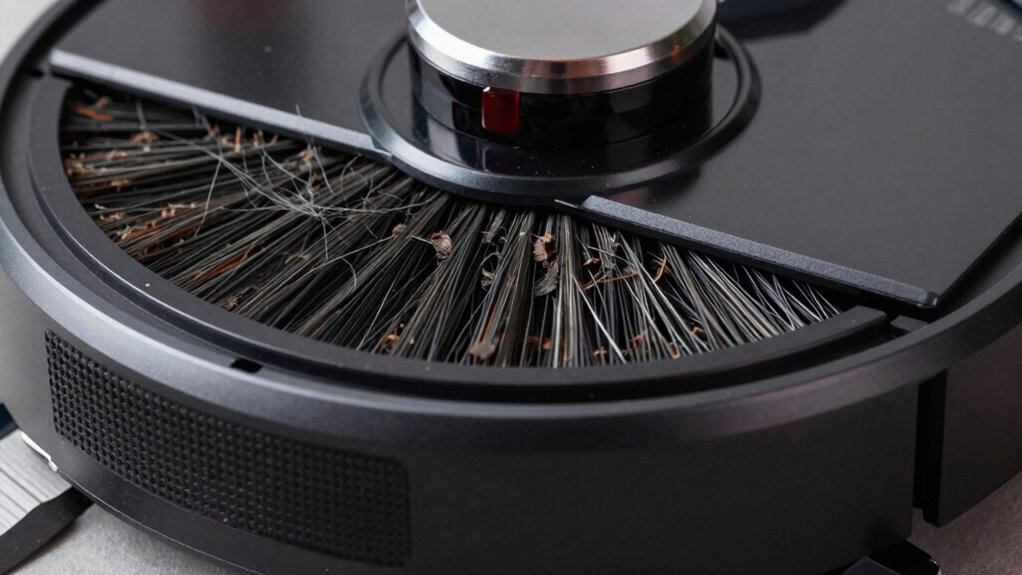
- Hair and pet fur are more prone to wrapping around bristle brushes, causing clogs and reducing performance.
- Choosing the right brush material based on floor type and pet presence minimizes hair tangling and maintenance needs.
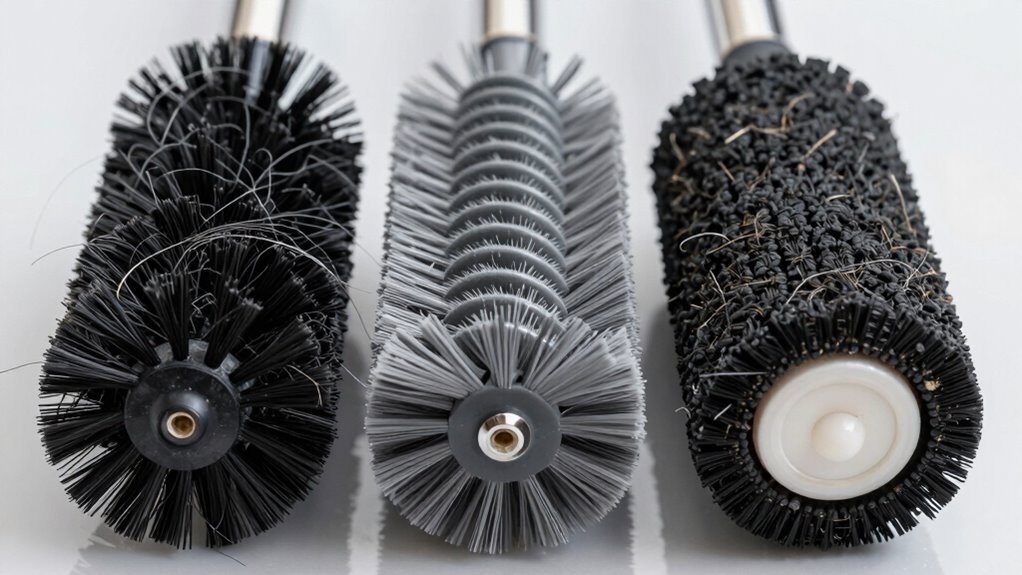
Choosing the right brush type is essential for maximizing your robot vacuum’s cleaning performance. The brush material you select directly influences how effectively your device can pick up dirt, debris, and pet hair. Different brushes use various materials, each designed to work with specific cleaning mechanisms and floor types. For instance, rubber brushes are known for their flexibility and durability, making them ideal for handling pet hair and long strands that tend to tangle. Meanwhile, bristle brushes, often made of nylon or other stiff fibers, excel at agitating dirt from carpets and rugs but can be more prone to hair tangling. Understanding how these materials interact with your vacuum’s cleaning mechanisms helps you choose a brush that complements your home environment.
Choosing the right brush material enhances cleaning efficiency and simplifies maintenance.
Your robot vacuum’s cleaning mechanisms are closely tied to the type of brush it uses. Some models feature a combination of brushes—like a side brush to sweep debris into the main suction path and a central brush that agitates and lifts dirt. When selecting a brush material, consider how it interfaces with these mechanisms. Rubber brushes tend to spin smoothly and are less likely to get clogged with hair, reducing maintenance needs. On the other hand, bristle brushes, while effective at loosening debris on carpets, can get tangled easily if hair or fibers wrap around the bristles. This tangling can hinder the cleaning process, requiring frequent cleaning of the brushes themselves. That’s why understanding the interaction between brush material and cleaning mechanisms helps in maintaining ideal performance and reducing downtime.
Another factor to contemplate is how the brush material impacts maintenance. Rubber brushes generally require less frequent cleaning because they resist hair tangling better than bristle brushes. The smooth surface of rubber brushes allows hair and fibers to slide off easily, preventing buildup that can impair suction and movement. Conversely, bristle brushes tend to trap hair and fibers, necessitating regular removal of tangled hair to keep your vacuum functioning properly. Choosing a brush with the right material not only improves cleaning efficiency but also reduces the time you spend on maintenance. Additionally, some brushes are designed with anti-tangle features or special coatings to further minimize hair wrapping, which is particularly beneficial if you have pets or long-haired inhabitants.
In addition, considering the type of flooring and the presence of pets can help determine which brush material will perform best and reduce issues like hair tangling and buildup.
In essence, selecting the appropriate brush material aligned with your vacuum’s cleaning mechanisms ensures better dirt pickup, less maintenance, and longer-lasting performance. Keep in mind the types of floors you have, the amount of pet hair present, and how much effort you’re willing to put into upkeep. A well-chosen brush type makes your robot vacuum more effective and less of a chore to maintain, ultimately delivering cleaner floors with less hassle.
Frequently Asked Questions
How Often Should I Replace My Robot Vacuum Brushes?
You should replace your robot vacuum brushes every 6 to 12 months, depending on the brush material and usage. If you notice tangled hair or decreased cleaning performance, it’s time for a replacement. Synthetic brushes tend to last longer, while natural fiber brushes may need more frequent swaps. Regularly check and clean the brushes to extend their lifespan, ensuring your vacuum performs efficiently and maintains peak cleaning power.
Do Certain Brush Types Work Better on Specific Flooring?
Imagine you have hardwood floors and thick carpet in your home. You’ll find that a soft brush works best on hardwood for gentle cleaning, while a rubber or silicone brush is more compatible with carpets, providing better debris pickup. Different flooring types require specific brush compatibility to guarantee efficient cleaning. Choosing the right brush type improves performance, prevents tangles, and extends your robot vacuum’s lifespan, making your cleaning routine more effective.
Can Hair Damage or Wear Out the Brushes Quickly?
Hair can damage or wear out your robot vacuum brushes faster, especially if the brush material isn’t resilient. Hair accumulation can cause tangling, putting extra strain on the brushes and motor. To prevent this, regularly check and remove hair buildup, and consider brushes with durable, hair-resistant materials. Keeping your brushes clean helps maintain their effectiveness and extends their lifespan, ensuring your vacuum continues to perform well over time.
Are There Brushes Specifically Designed for Pet Hair?
Yes, there are brushes specifically designed for pet hair. You should look for pet hair tools that are compatible with your robot vacuum’s brush system. These brushes often have rubber blades or tangle-free designs that help prevent hair from wrapping around the brush and clogging the vacuum. Make sure to verify brush compatibility with your model to ensure effective cleaning and easy maintenance, especially if you have pets shedding frequently.
How Do I Clean and Maintain My Robot Vacuum Brushes Effectively?
Think of your robot vacuum brushes as the heart of its cleaning power. To keep it beating strong, regularly remove hair and debris from the brush material and check the brush shape for tangled strands. Use a small brush or scissors to carefully trim hair, especially around bristles. This routine maintenance ensures peak performance and prevents clogs, keeping your vacuum running smoothly and efficiently for a longer time.
Conclusion
Understanding the different robot vacuum brush types helps you choose the right one for your home. If you opt for a brush suited to your flooring, you’ll notice less hair tangling and more efficient cleaning. Remarkably, studies show that homes with pets experience up to 30% more hair accumulation, making the right brush choice even more essential. By selecting the appropriate brush, you’ll keep your device running smoothly and maintain a cleaner, hair-free space effortlessly.