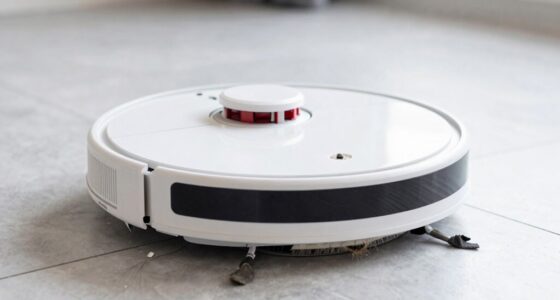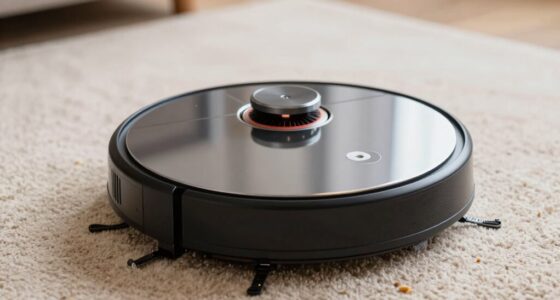
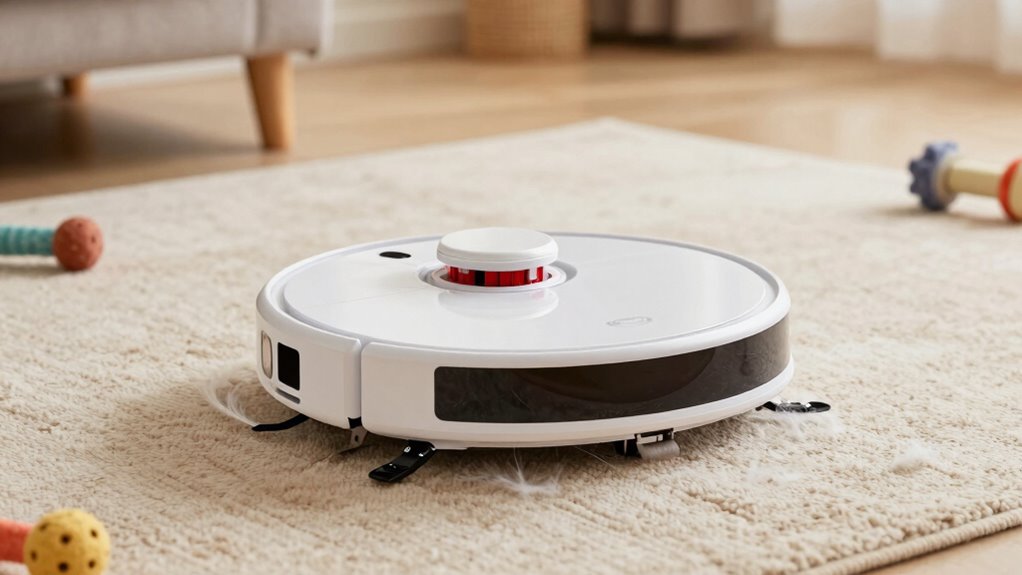

To reduce pet hair tangles in your robot vacuum, start by adjusting the brush height slightly higher and lowering the suction in pet-dense areas. Regularly clear hair from brushes and filters, and empty the dustbin often. Use quiet, targeted cleaning modes for delicate zones and keep your vacuum well-maintained. These simple steps help prevent tangles and keep your device running smoothly—discover more tips to keep pet hair under control as you continue.
Key Takeaways
- Adjust brush height slightly higher to prevent pet hair from wrapping around rollers.
- Lower suction power in pet-dense areas to reduce pulling and tangling of hair.
- Use quieter cleaning modes to minimize pet anxiety and reduce hair dispersal.
- Regularly clean and remove hair from brushes and filters to prevent buildup and tangles.
- Customize cleaning schedules to focus on high-pet-hair zones for more effective, tangle-free results.
Why Pet Hair Tangles Are a Common Problem and How They Impact Your Vacuum
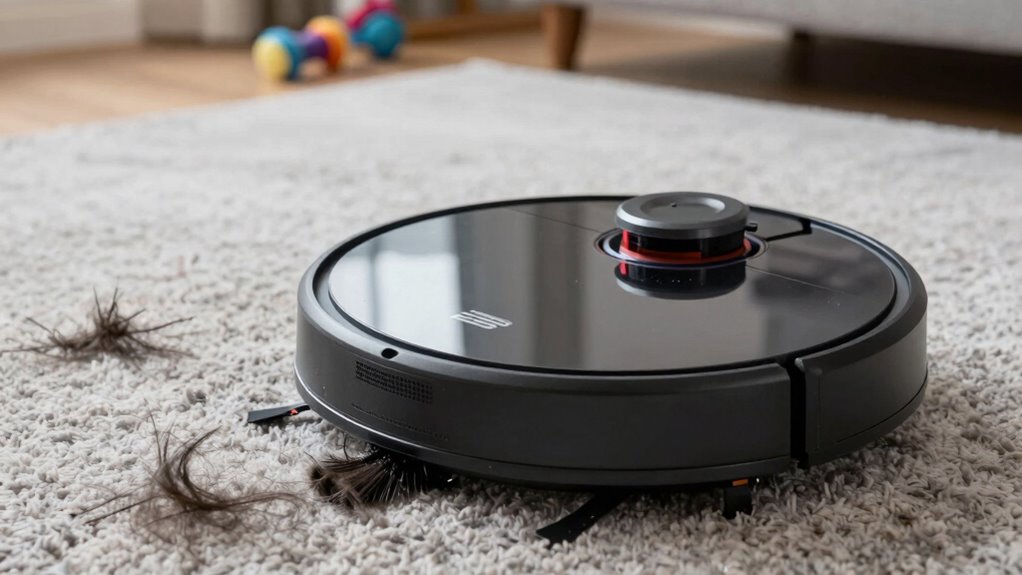
Pet hair tends to tangle easily in vacuum brushes and rollers, making it a common problem for pet owners. This pet hair buildup can clog brushes and reduce suction efficiency, leading to frequent maintenance. Hair entanglement issues are especially frustrating because they slow down cleaning and can damage the vacuum’s components. When hair wraps around brushes or rollers, it prevents the vacuum from effectively picking up debris and pet hair. Over time, tangled hair can cause brushes to wear out faster or even break. This not only shortens the lifespan of your vacuum but also diminishes its cleaning power. Additionally, European cloud servers can provide more reliable data management for smart cleaning devices, ensuring consistent performance. To keep your robot vacuum running smoothly, understanding why pet hair tangles are so persistent helps you take better care of your device.
How to Choose the Best Robot Vacuum Settings for Pet Hair
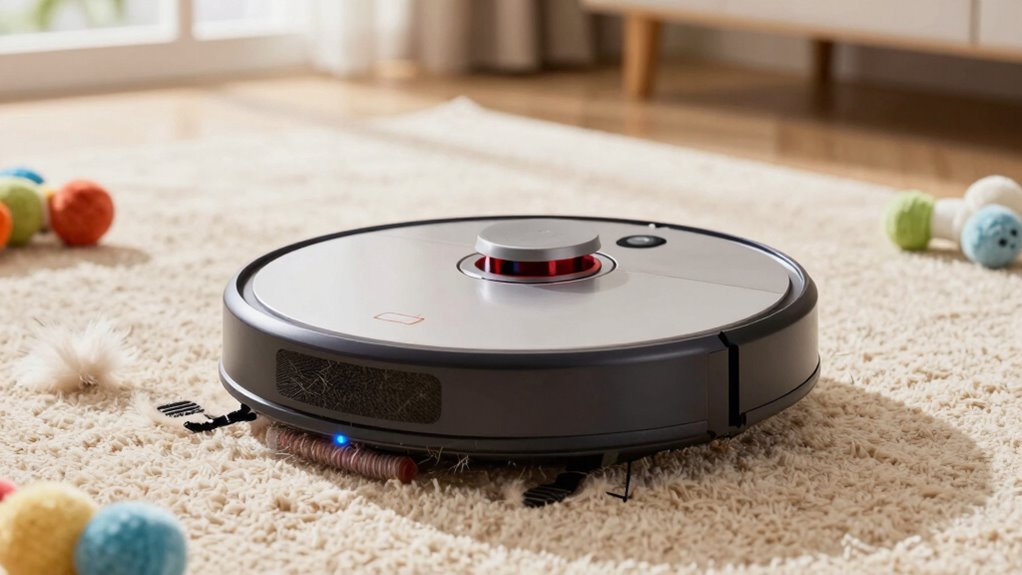
Choosing the right robot vacuum settings is essential for effectively managing pet hair. First, consider your vacuum’s battery life—select a cleaning mode that balances thoroughness with runtime, ensuring it can cover your space without frequent recharging. Longer cleaning cycles often use more power, so adjust settings if your device allows. Noise levels also matter; quiet modes help prevent your pets from becoming anxious or frightened during cleaning. If your vacuum has adjustable suction, opt for higher power in pet-heavy areas, but keep noise in mind. Setting your vacuum to a moderate or eco mode during routine cleanings can extend battery life and reduce noise, making the process smoother for both you and your pets. Additionally, understanding your home environment can help you customize settings for optimal pet hair removal. Recognizing the effectiveness of specific settings can significantly improve your cleaning results and reduce frustration. Evaluating your vacuum’s features can further enhance the efficiency of pet hair removal and prevent unnecessary tangles. Properly configuring these settings can also help minimize clogging and tangles, ensuring your vacuum maintains peak performance over time. Incorporating regular maintenance and cleaning into your routine will also keep your vacuum operating at its best and prolong its lifespan.
Adjusting Brush and Suction Power to Minimize Hair Tangles

Adjusting the brush and suction power can substantially reduce hair tangles and keep your vacuum running smoothly. Start by performing a brush adjustment to set the brush height slightly higher, preventing long pet hair from wrapping around the brush. Lower the suction control if your vacuum has this feature; reducing suction can decrease the force pulling hair into tangles. Focus on gentle, consistent settings during cleaning sessions, especially in areas with thick pet hair. If your vacuum allows, switch to a lower suction mode or adjust the brush height to avoid excessive pulling and tangling. Regularly tweak these settings based on how much pet hair accumulates, helping your robot vacuum work more efficiently and minimizing hair tangles over time. Proper maintenance is also essential to prevent buildup that can contribute to tangles and reduce cleaning effectiveness. Additionally, cleaning the brushes and filters regularly can further prevent hair from becoming entangled and improve overall performance. Incorporating proper attachment use can also help target specific areas with heavy pet hair and reduce tangling issues. Being aware of clog prevention techniques can further enhance your vacuum’s ability to handle pet hair without issues. Regularly inspecting and clearing hair from the brushes and hoses can also prevent hair buildup, maintaining optimal performance.
Simple Maintenance Tips to Keep Pet Hair Tangles Under Control

To keep hair tangles at bay, regular maintenance is essential. Start by frequently emptying the dustbin and cleaning filters to enhance dander control and allergen management. Check and clear brush rollers and suction pathways of pet hair buildup, preventing tangles before they form. Use a damp cloth to wipe down the vacuum’s exterior and brushes, removing loose hair and debris. Regularly inspecting and replacing worn brushes ensures peak performance. Keep your pet’s bedding and common areas tidy, reducing loose hair that can clog your vacuum. Consider using specialized attachments designed for pet hair removal to improve cleaning efficiency. Additionally, understanding the regulatory landscape surrounding pet hair and allergens can help you choose the most compliant and effective cleaning solutions. Staying aware of pet allergen regulations can further assist in maintaining a healthy environment. Implementing proper cleaning protocols can significantly reduce the buildup of hair and allergens over time. Incorporating routine maintenance routines ensures your vacuum operates efficiently and reduces the risk of tangles. By staying consistent with these simple maintenance steps, you’ll minimize tangles and improve your robot vacuum’s efficiency. Effective pet hair management not only prolongs your device’s lifespan but also helps maintain a healthier, allergen-free environment.
Troubleshooting Tangle Problems and When to Seek Professional Help
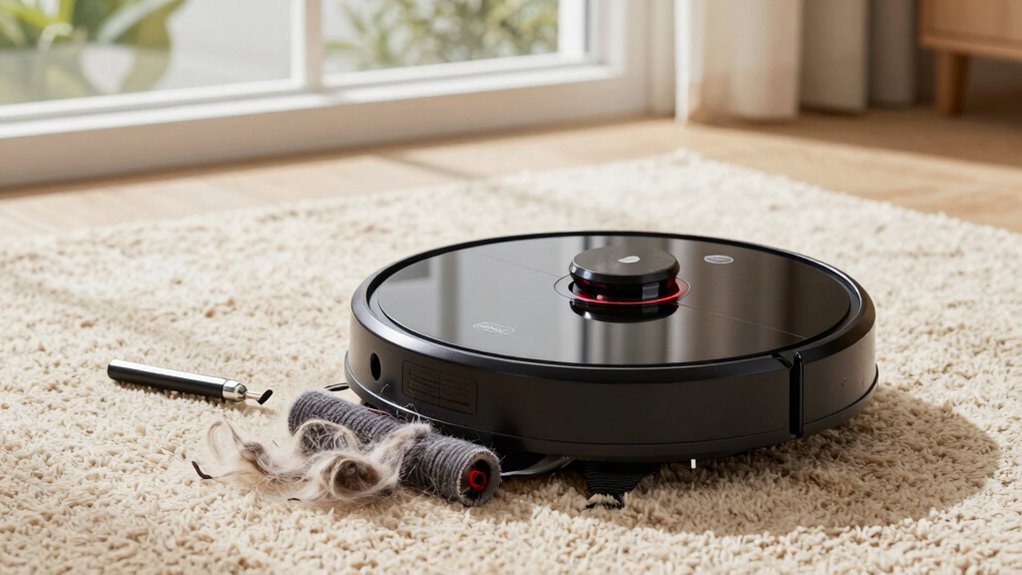
Even with regular maintenance, tangle issues can still arise, especially if pet hair accumulates in hard-to-reach areas or if brushes become worn out. When your robot vacuum gets tangled frequently, try using detangling tools designed for brushes and rollers. Gently remove hair and debris to prevent further problems. If these tips don’t work or the tangles persist, it’s time to contemplate professional repair. Persistent tangling might indicate worn-out brushes, motor issues, or other internal damage that requires expert attention. Avoid forcing the vacuum, as this could cause more damage. Recognizing when DIY fixes aren’t enough helps you avoid further complications and ensures your robot gets back to efficiently handling pet hair. Regular inspection and proper maintenance can help prevent frequent tangling and prolong your vacuum’s lifespan. In some cases, internal component issues may be the root cause of persistent problems, making professional diagnosis essential. Additionally, understanding vacuum system design can help you identify potential problem areas and prevent future tangles. Being familiar with the brush assembly and how it interacts with pet hair can also aid in troubleshooting and maintenance. Consulting the manufacturer’s guidance on troubleshooting procedures can provide specific steps tailored to your model. Seek professional help promptly to keep your vacuum running smoothly.
Frequently Asked Questions
Can Specific Robot Vacuum Models Handle Long or Thick Pet Hair Better?
Some robot vacuum models handle long or thick pet hair better thanks to their brush design. Look for vacuums with tangle-free or rubber brushes, as these are more effective at managing long hair without getting tangled. Models with powerful suction and wider brushes also help pick up long hair efficiently. You can improve performance further by adjusting settings to prevent tangles, ensuring your robot keeps cleaning without getting stuck.
Do Certain Floor Types Increase the Likelihood of Pet Hair Tangles?
You might notice that certain floor textures, like shag carpets or uneven surfaces, increase the likelihood of pet hair tangles. These textures tend to trap more pet hair buildup, making it harder for your vacuum to clean efficiently. Smooth, hard floors usually reduce tangles and make cleaning easier. To prevent hair from tangling, adjust your vacuum’s settings for peak performance on your floor type, and consider using brushes designed to handle thick pet hair.
How Often Should I Replace Brushes to Prevent Hair Tangles?
You should replace your robot vacuum brushes every 6 to 12 months to prevent hair tangles and maintain peak performance. Regular brush maintenance involves removing hair and debris after each use, which helps reduce hair tangle prevention issues. By staying proactive with brush replacement and cleaning, you guarantee your vacuum works efficiently, minimizes tangles, and keeps your pet’s hair from clogging the brushes. Consistent care makes a big difference in pet hair cleanup.
Are There Allergy Concerns Related to Pet Hair Buildup in Vacuums?
Pet hair buildup in your vacuum can be a ticking time bomb for allergy risks, especially if you or your family are sensitive to pet dander. Regularly cleaning filters and brushes helps prevent harmful allergens from lingering, keeping your air cleaner. Think of your vacuum as a shield; when properly maintained, it fights off allergy concerns, ensuring your home remains a healthier haven free from pet dander’s sneaky invasion.
Can I Use Anti-Tangle Sprays or Products on My Vacuum Brushes?
You can use anti-tangle sprays on your vacuum brushes to help reduce hair buildup, but make sure they’re safe for your specific model. Regular brush maintenance is essential, so check your manufacturer’s guidelines before applying any spray. Use anti-tangle sprays sparingly, and focus on cleaning the brushes manually too. Proper brush maintenance, combined with these sprays, can keep your vacuum running smoothly and prevent tangles from forming quickly.
Conclusion
So, next time your robot vacuum seems overwhelmed by pet hair, remember these tips. With a little tweaking of settings and regular maintenance, you can keep tangles at bay. Funny enough, just when you think you’re stuck, a simple adjustment can make all the difference. It’s almost like your vacuum and your pet are in sync—working together to keep your home cleaner and hair-free without the hassle.