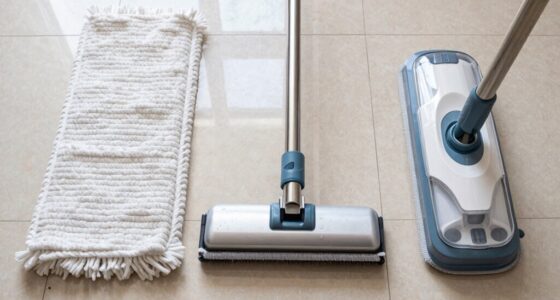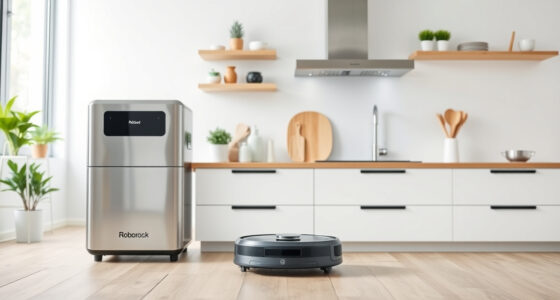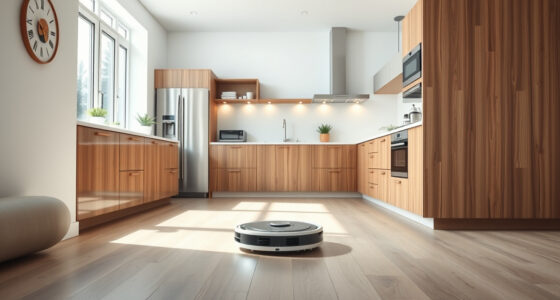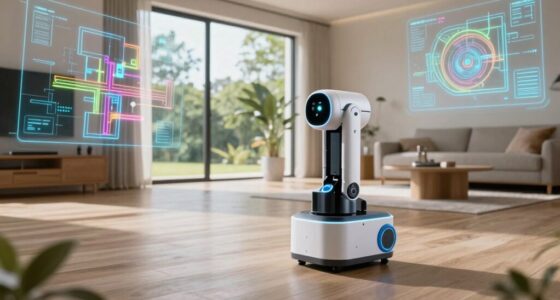

Robot vacuums can spread fine cat litter instead of removing it because of their lower suction power and design limitations. They often push litter around rather than effectively sucking it up, especially for tiny granules that cling to cat paws. If the dustbin fills quickly, it can also hinder performance. Regular maintenance and a combination of cleaning methods can help tackle this issue. Let’s explore more ways to manage litter tracking effectively.

Get cleaning gear delivered free with Prime
- Fast, free delivery on millions of items
- Prime Video, Amazon Music and more included
- Member-only deals all year
Key Takeaways
- Robot vacuums often have lower suction power, making it difficult to effectively capture fine litter granules.
- The design of robot vacuums can allow fine particles to escape, worsening litter tracking issues.
- Limited dustbin capacity requires frequent emptying, causing interruptions in cleaning efficiency.
- Clogged brushes from litter or fur can hinder performance, leading to more litter being spread around.
- Relying solely on robot vacuums may overlook the need for traditional cleaning methods to address litter tracking.
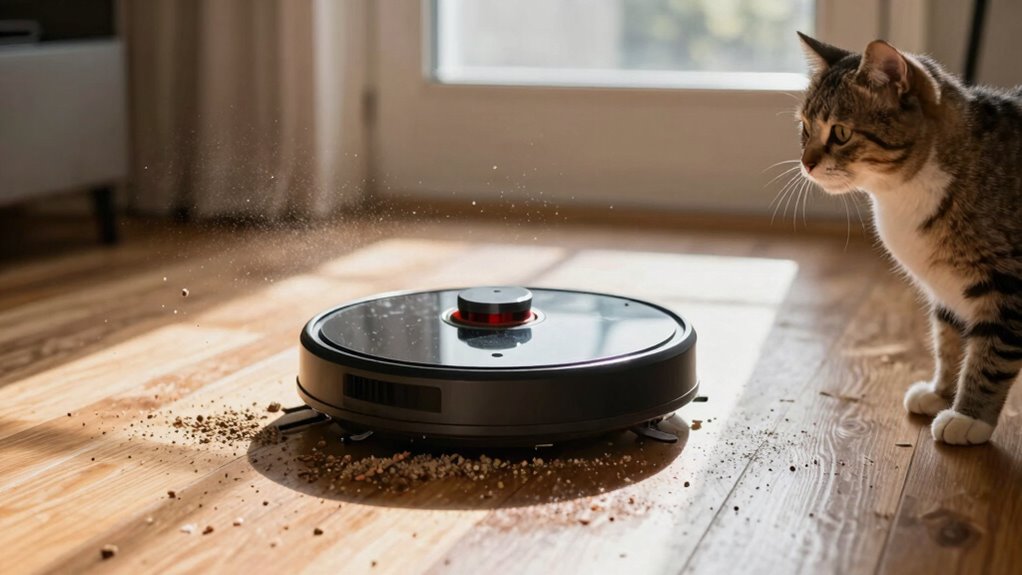
While you might love your feline friend, cleaning up after them can be a hassle. You know how it goes: one moment, your cat’s happily using their litter box, and the next, there’s a fine layer of litter scattered all over your floor. It’s frustrating, and you might think a robot vacuum is the perfect solution to keep your home tidy. However, you might be surprised to learn that these devices can sometimes spread fine cat litter instead of effectively removing it.
The design of robot vacuums can contribute to litter tracking. When your cat hops out of the litter box, it’s easy for those tiny granules to stick to their paws and be carried around the house. If you’re relying solely on a robot vacuum to handle this mess, you may find it’s not as effective as you hoped. These vacuums usually have a limited suction power compared to traditional ones, and that can mean they don’t pick up all the litter, especially the finer particles. Instead of capturing every little piece, they might just push it around, giving the impression that they’re doing the job when they’re not. Additionally, vacuum design can influence how well the device handles fine particles like cat litter. A dustbin capacity that’s too small can also lead to frequent emptying, which might cause the vacuum to lose efficiency during use. Poor filtering capabilities can also allow fine particles to escape back into the air, worsening the tracking problem.
Robot vacuums may push litter around rather than effectively picking it up, leaving you with more tracking than you bargained for.
You also need to take into account vacuum maintenance. If you’re not regularly emptying the dustbin or cleaning the brushes, the vacuum can become less efficient over time. If the brushes get clogged with litter or fur, it can create a situation where the vacuum isn’t able to pick up anything at all. Neglecting maintenance can lead to more litter being spread around rather than removed, and that’s the last thing you want. Proper vacuum maintenance is crucial to ensure optimal performance and prevent more messes. So, while you might think you’ve invested in a high-tech solution, you could end up with more litter tracking than you bargained for. Understanding the limitations of robot vacuums can help you develop a more effective cleaning routine. If you really want to keep your home clean, you might need to complement your robot vacuum with a traditional one. This way, you can tackle litter tracking more effectively. After all, a combination of both could guarantee you’re picking up all those fine particles. Don’t let litter become a constant battle in your home. By understanding the limitations of robot vacuums and embracing a more thorough cleaning routine, you can keep your space fresh and free from the mess your cat inevitably leaves behind.
robot vacuum for pet hair and fine litter
As an affiliate, we earn on qualifying purchases.
As an affiliate, we earn on qualifying purchases.
Frequently Asked Questions
Can Robot Vacuums Handle Different Types of Cat Litter?
Yes, robot vacuums can handle different types of cat litter, but their efficiency varies. If you’ve got fine litter, some models might struggle and spread it around instead of picking it up. Opt for a vacuum designed for various litter types; it’ll enhance your cleaning experience. Regularly check filters and brushes to maintain vacuum efficiency, ensuring it performs well with whatever litter you choose for your feline friend.
How Often Should I Empty My Robot Vacuum’s Dustbin?
You should empty your robot vacuum’s dustbin after every use, especially if you’re dealing with fine cat litter. Most robot vacuums have limited dustbin capacity, and litter types can affect how quickly it fills up. If you’ve got a larger space or multiple pets, consider checking the dustbin halfway through your cleaning session. Regularly emptying it guarantees peak performance and prevents clogs, keeping your vacuum working efficiently.
Will a Robot Vacuum Damage My Hardwood Floors?
A robot vacuum won’t damage your hardwood floors, but its effectiveness can vary. While some models feature hardwood floor protection, ensuring gentle cleaning, others might not be as careful. It’s essential to choose a vacuum designed specifically for hard surfaces, balancing powerful suction with soft brush materials. Regular maintenance and proper use will keep your floors safe while enjoying the convenience of automated cleaning. So, you can relax while it works!
Are There Specific Robot Vacuums Designed for Pet Owners?
Yes, there are specific robot vacuums designed for pet owners. These models often feature stronger suction power and specialized brushes to tackle pet hair effectively. They usually have improved vacuum efficiency, reducing litter tracking around your home. Many come with scheduling options, allowing you to increase cleaning frequency to keep your floors clean. Look for models with high-capacity bins to handle the extra debris that comes with having pets.
How Do I Maintain My Robot Vacuum for Optimal Performance?
To maintain your robot vacuum for peak performance, you’ve got to treat it like royalty—because, let’s face it, it’s the only one doing the dirty work. Regularly check and replace the filter, or it’ll start treating your floors like a landfill. Also, verify the debris detection sensors are clean; otherwise, it’ll miss all the crumbs from your gourmet snack sessions. A little TLC goes a long way in keeping it happy and efficient!
vacuum cleaner with strong suction for cat litter
As an affiliate, we earn on qualifying purchases.
As an affiliate, we earn on qualifying purchases.
Conclusion
In the end, it’s clear that while robot vacuums promise convenience, they can sometimes turn your cat’s litter into a fine dust storm instead of cleaning it up. It’s like expecting a friend to help you tidy up, only to find them creating more mess! So, if you’ve got a furry friend, keep an eye on that tiny cleaning companion. After all, the last thing you want is a litter spreader in your home, not a litter remover!
vacuum filters for fine dust and litter
As an affiliate, we earn on qualifying purchases.
As an affiliate, we earn on qualifying purchases.
brush cleaning tool for robot vacuums
As an affiliate, we earn on qualifying purchases.
As an affiliate, we earn on qualifying purchases.
Halloween Picks
halloween
As an affiliate, we earn on qualifying purchases.