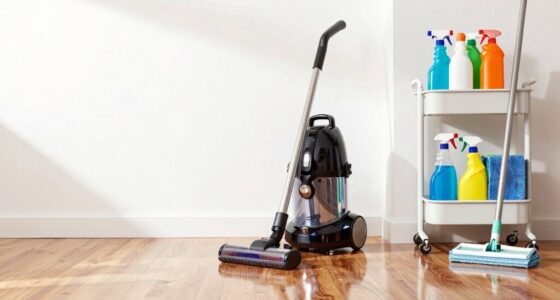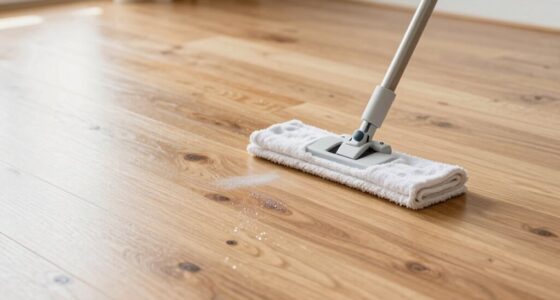

When setting up for a new baby, many overlook the importance of frequent, thorough floor cleaning with safe products. Don’t forget to vacuum regularly, especially if you have pets, and mop with baby-friendly disinfectants to eliminate germs and dust. Using soft rugs in play areas and sanitizing toys also help reduce allergens and hazard risks. Paying attention to these overlooked steps creates a safer space for your little one—discover how to perfect your routine for complete protection.
Key Takeaways
- Regularly sweep and mop floors with baby-safe disinfectants to eliminate dirt, dust, and germs that can harm infants.
- Focus on cleaning and vacuuming areas where pets and allergens may settle to reduce respiratory risks.
- Use soft, non-slip rugs in play zones and keep them clean to trap dirt and prevent slips.
- Sanitize toys and furniture frequently, especially those mouthed by babies, to prevent germ transmission.
- Maintain a consistent cleaning schedule and choose non-toxic cleaning products to ensure ongoing floor hygiene.

Bringing a new baby home is an exciting milestone, but it can also feel overwhelming. You want everything to be perfect — from the safe toys your little one will play with to the nursery furniture that provides comfort and security. While decorating the nursery and choosing the right clothes might take priority, there’s one essential aspect that often gets overlooked: floor hygiene. Many new parents don’t realize how important it is to keep the floors, especially in your baby’s play and rest area, impeccably clean. A clean floor isn’t just about appearance; it directly impacts your baby’s health and safety.
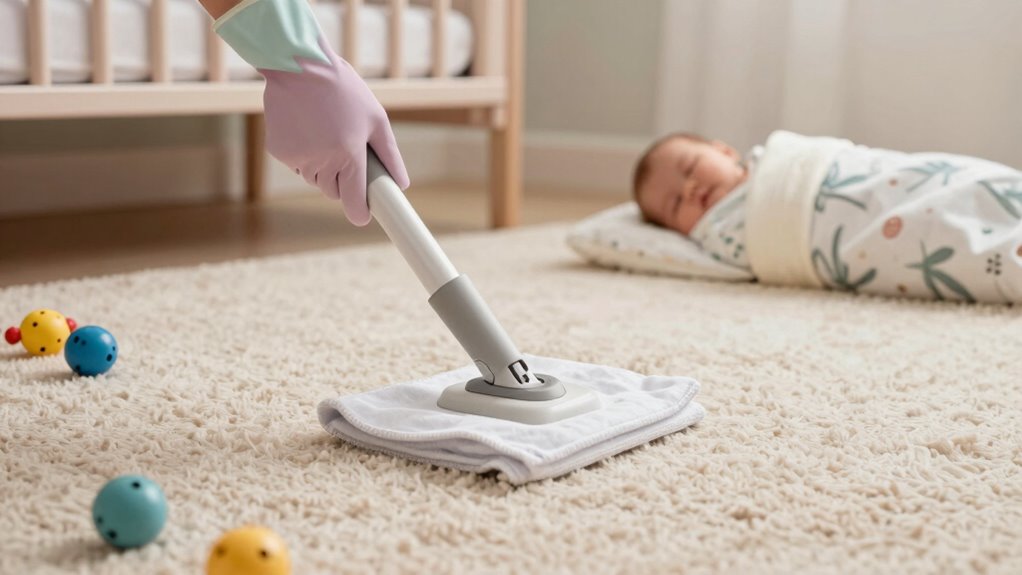
Babies spend a lot of time on the floor, whether they’re playing, crawling, or just resting. That makes it critical to pay close attention to floor hygiene routines. Even if you keep your home tidy, dust, dirt, pet hair, and allergens can settle on the floor and become a health hazard for your baby. Regular sweeping and mopping are your first line of defense, but you should go a step further by using safe cleaning products. Harsh chemicals can irritate your baby’s sensitive skin and respiratory system, so opt for natural or baby-safe disinfectants. You want to eliminate germs without exposing your little one to harmful residues.
Prioritize safe cleaning products to keep your baby’s floor hygienic and free from harmful residues.
Additionally, focus on the materials and placement of your nursery furniture. Choose nursery furniture made from non-toxic, eco-friendly materials, and ensure they are sturdy and well-constructed. Properly assembled furniture reduces the risk of accidents, and rounded edges are safer for curious babies. When it comes to safe toys, select those made from BPA-free plastics, natural wood, or organic fabrics. These toys are less likely to contain harmful chemicals that could be absorbed through your baby’s skin or ingested during play. Regularly sanitize toys, especially if your baby tends to mouth them, to prevent the spread of germs.
Don’t forget about the flooring itself. Consider installing a soft, non-slip rug or mat in play areas. These not only provide a comfortable surface for crawling and tummy time but also help trap dirt and allergens, making cleanup easier. Vacuuming thoroughly and frequently is indispensable, especially if you have pets that share your space. Keep pet hair and dander under control, as they can cause allergies or respiratory issues. Additionally, understanding floor hygiene and maintaining it diligently is crucial for safeguarding your baby’s developing immune system.
In the end, maintaining a clean, safe floor environment is an ongoing process that protects your baby’s health. Combining regular cleaning routines with well-chosen nursery furniture and safe toys creates a secure space where your baby can explore and grow without unnecessary risks. Paying attention to these details ensures that you’re creating a healthy, nurturing environment from the very start.
Frequently Asked Questions
How Often Should I Sanitize the Baby’s Nursery Floor?
You should sanitize the baby’s nursery floor at least once a week to maintain good floor cleaning and guarantee baby safety. Regular vacuuming and mopping with child-safe disinfectants help remove dirt and germs that can harm your little one. Keep an eye out for spills or dirt in between, and do quick spot cleans as needed. Consistent floor hygiene creates a safe, healthy environment for your baby to crawl and play.
Are Natural Cleaning Products Safe for Baby Floor Areas?
Natural cleaning products are generally safe for baby floor areas because they prioritize chemical safety and ingredient transparency. You should check labels carefully to guarantee they avoid harmful chemicals like sulfates or synthetic fragrances. By choosing products with clear ingredient lists, you minimize risks and create a healthier environment for your little one. Always follow manufacturer instructions, and consider testing a small area first to confirm safety before full use.
Should I Vacuum or Mop First in Baby Zones?
You should vacuum first to get rid of loose dirt and debris, then mop for a thorough clean. Think of it as hitting two birds with one stone—vacuuming techniques help lift dust, while quality mopping tools guarantee a spotless surface. By starting with vacuuming, you prevent dirt from spreading when mopping. This simple step keeps your baby’s floor safe and hygienic, giving you peace of mind.
How Can I Prevent Allergens From Accumulating on the Floor?
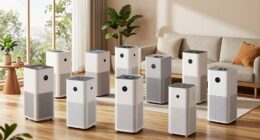
To prevent allergens like airborne dust and pet dander from accumulating on your floors, vacuum regularly with a HEPA filter to trap tiny particles. Use a damp mop after vacuuming to pick up remaining dust and dander. Keep pets out of baby zones, and wash their bedding frequently. Good airflow and air purifiers can also help reduce airborne allergens, creating a safer environment for your little one.
What’s the Best Way to Clean Spills Quickly Around the Baby?
When a spill occurs around your baby, act fast by grabbing a clean cloth or paper towel to blot the liquid immediately. Use a gentle cleaner suitable for baby-proofing, and make certain you dry the area thoroughly. To prevent future accidents, consider baby proofing tips like placing non-slip rugs in high-traffic areas. This not only keeps your floor safe but also minimizes slipping hazards for your little one.
Conclusion
Bringing a new baby home is like planting a delicate seed—you need to nurture it carefully. By keeping your floors clean and germ-free, you’re creating a safe, nurturing environment for your little sprout to grow strong. Don’t let overlooked spots become weeds in your home’s garden of health. Stay vigilant, stay consistent, and watch your baby thrive in a clean, safe space. Your diligent routine is the sunshine that helps your family flourish.