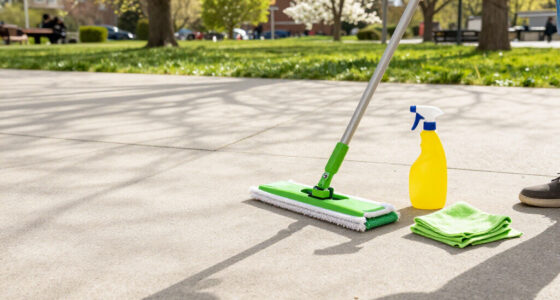
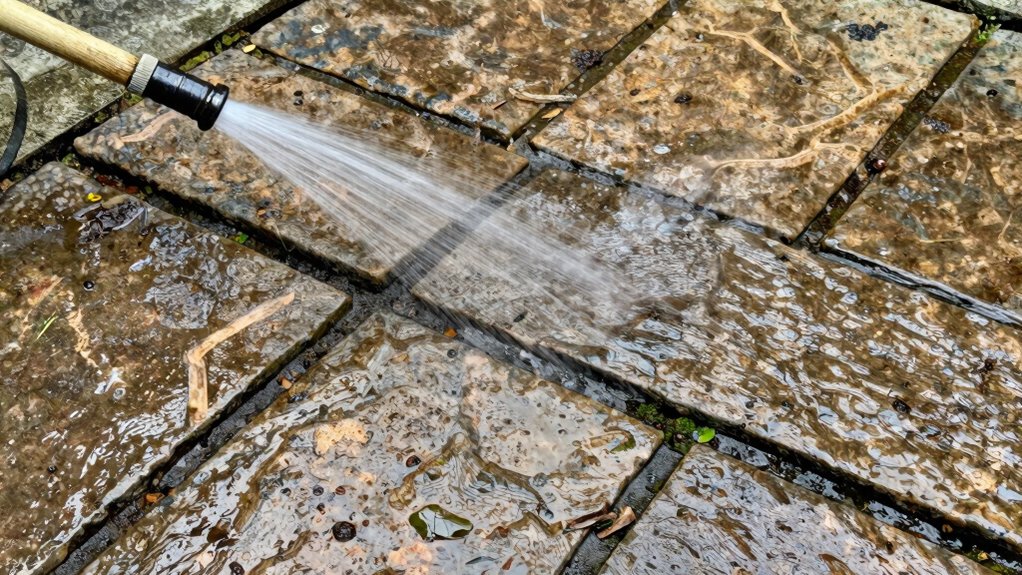

To clean your stone patio without blasting out the joints, use gentle techniques like sweeping to remove debris, then rinse with a garden hose fitted with a soft spray nozzle. For tougher stains or moss, mix warm water with mild soap or white vinegar and scrub gently with a soft-bristle brush. Avoid high-pressure washers, as they can damage the stones and joints. If you want to keep your patio looking its best and avoid costly repairs, you’ll find helpful tips below.

Get cleaning gear delivered free with Prime
- Fast, free delivery on millions of items
- Prime Video, Amazon Music and more included
- Member-only deals all year
Key Takeaways
- Use a soft-bristle brush and gentle cleaning solutions instead of power washers to protect joints.
- Rinse thoroughly with a garden hose on a low-pressure setting to avoid dislodging stones.
- Apply vinegar or mild soap mixtures carefully with a sponge or soft brush for targeted cleaning.
- Avoid high-pressure water or aggressive scrubbing that can damage mortar joints.
- Regularly inspect and maintain the patio to prevent buildup that requires harsh cleaning methods.
Stone patios can transform your outdoor space, but dirt and stains can quickly diminish their appeal. To keep your patio looking its best, you need to incorporate regular garden maintenance and seasonal cleaning into your routine. Proper care prevents grime buildup and preserves the natural beauty of the stones without damaging the joints or the surface. When you approach cleaning, focus on methods that remove dirt and stains without blasting out the mortar or grout lines, which can lead to costly repairs down the line.
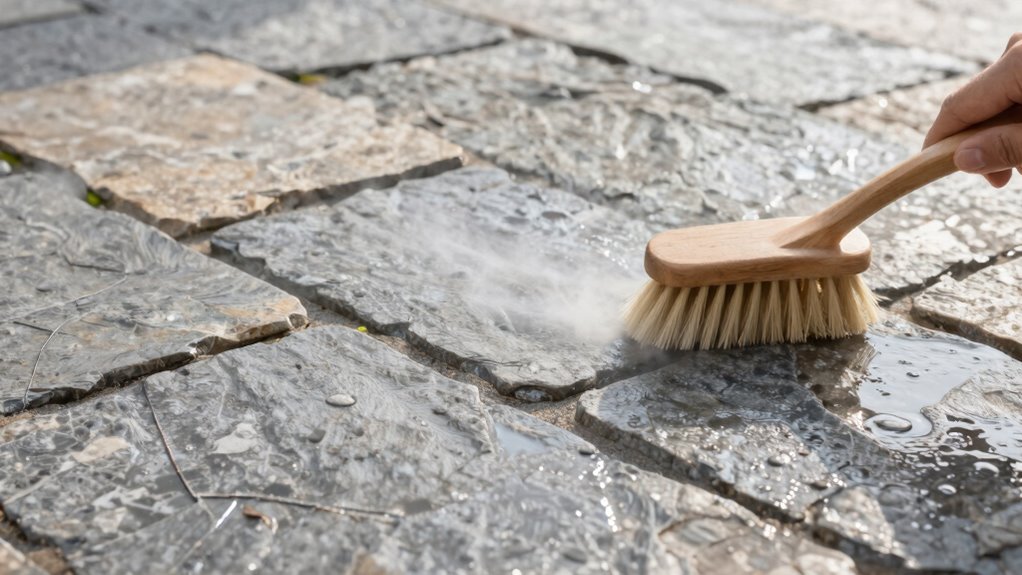
Start by sweeping your patio thoroughly to remove loose debris like leaves and dirt. This simple step prepares the surface for deeper cleaning and prevents particles from settling into the joints. For stubborn stains or moss, you can use a mixture of warm water and a mild soap or stone-safe cleaner. Avoid harsh chemicals that could erode the mortar or stain the stone. When scrubbing, use a soft-bristle brush rather than a wire brush, which might scratch or damage the surface. Work gently but thoroughly, paying special attention to stained or discolored areas. Additionally, proper cleaning techniques can help prevent damage and extend the lifespan of your patio. Regularly inspecting your patio and addressing minor issues early is also essential for preventing costly repairs.
Seasonal cleaning plays a critical role in maintaining your stone patio’s integrity. During spring and fall, take the opportunity to give your patio a more intensive clean. This not only removes accumulated dirt and moss but also helps you spot any signs of damage or wear. For example, if you notice loose or cracked mortar, you’ll be able to address it before it worsens. Use a garden hose with a gentle spray nozzle to rinse off soap residue after scrubbing, ensuring you don’t use high pressure that could loosen the joints or dislodge stones. Understanding the importance of proper maintenance can help you avoid costly repairs and preserve the natural beauty of your outdoor space. Additionally, maintaining proper drainage around your patio can prevent water accumulation, which contributes to joint deterioration and weed growth.
For tougher stains or algae growth, consider using a mixture of water and white vinegar, which is effective and safe for natural stone surfaces. Apply the solution with a soft brush or sponge, and rinse thoroughly. If you’re dealing with persistent stains or mold, avoid power washing, as the high pressure can damage the stone and joints. Instead, opt for gentle, repeated cleaning sessions over time. Regular garden maintenance, like trimming nearby plants that might trap moisture or debris, also helps keep your patio looking pristine. A little effort each season prevents dirt from becoming ingrained and keeps stains at bay. Incorporating appropriate cleaning methods into your routine can make a significant difference in the longevity and appearance of your stone patio. By combining gentle cleaning techniques with routine maintenance, you preserve your stone patio’s natural charm without risking damage to the joints. This approach ensures your outdoor space remains beautiful, durable, and inviting year-round.
garden hose with soft spray nozzle
As an affiliate, we earn on qualifying purchases.
As an affiliate, we earn on qualifying purchases.
Frequently Asked Questions
Can I Use a Power Washer on Natural Stone Patios?
You can use a pressure washer on natural stone patios, but you need to be cautious. Use a low-pressure setting to avoid damaging the stone or blasting out the joints. Combine pressure washing with gentle chemical cleaners to remove dirt and stains effectively. Always test a small area first, and keep the spray moving to prevent concentrated force in one spot, ensuring your patio stays intact and looks great.
How Often Should I Clean My Stone Patio?
You should clean your stone patio at least twice a year, ideally during seasonal cleaning, to keep it looking its best. Regular cleaning prevents dirt buildup and preserves the stone’s appearance. After cleaning, consider sealing techniques to protect the surface from stains and weather damage. If you notice moss, algae, or stubborn stains, clean more often to maintain your patio’s durability and aesthetic appeal.
Are There Eco-Friendly Cleaning Options for Stone Patios?
Yes, there are eco-friendly solutions for cleaning your stone patio. You can use natural cleaning methods like a mixture of baking soda and water, or white vinegar diluted with water, which effectively remove dirt and stains without harsh chemicals. These natural cleaning methods are safe for the environment and your family. Regularly scrubbing with these eco-friendly solutions helps maintain your patio’s appearance while protecting nature.
What Stains Are Most Difficult to Remove From Stone Surfaces?
Chemical stains and organic discoloration are like stubborn weeds in a garden—difficult to uproot. You’ll find chemical stains from oils, paints, or rust hard to remove, often requiring specialized cleaners. Organic discoloration, such as mold, algae, or moss, can cling fiercely, especially in damp areas. To combat these, use eco-friendly solutions tailored for stone, and always test in a small spot to avoid damaging the surface.
How Do I Prevent Joint Erosion Over Time?
To prevent joint erosion over time, focus on joint preservation and erosion prevention. Regularly sweep your patio to remove debris that can cause deterioration. Seal the joints with a high-quality, breathable sealant to protect against moisture and chemicals. Avoid using harsh pressure washers that can damage the joints. Additionally, fill joints with appropriate jointing materials to prevent water infiltration, which accelerates erosion. Consistent maintenance keeps your stone patio looking great longer.
As an affiliate, we earn on qualifying purchases.
Conclusion
So, next time you’re tempted to blast away dirt with a power washer, remember: your stone patio isn’t just a canvas for your high-pressure art project. It’s a delicate ecosystem that deserves gentle care—like a fine wine or a toddler’s first drawing. Clean wisely, preserve its charm, and maybe, just maybe, resist the siren call of the jet stream. After all, beauty isn’t about brute force; it’s about patience, finesse, and knowing when to hold back.
soft-bristle patio cleaning brush
As an affiliate, we earn on qualifying purchases.
As an affiliate, we earn on qualifying purchases.
vinegar for outdoor stone cleaning
As an affiliate, we earn on qualifying purchases.
As an affiliate, we earn on qualifying purchases.
Columbus Day / Indigenous Peoples' Day Picks
long weekend sales
As an affiliate, we earn on qualifying purchases.