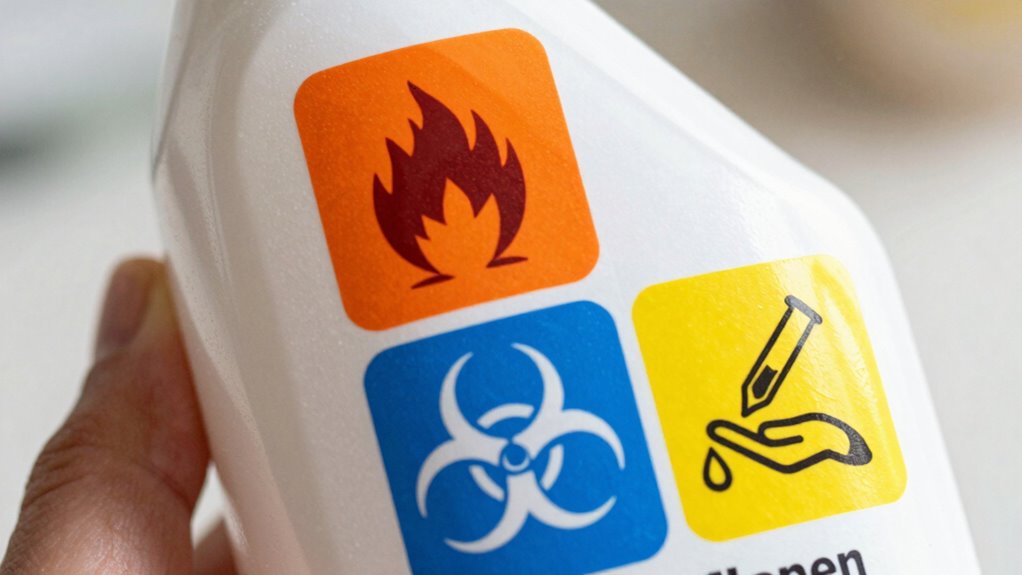

To quickly understand hazard symbols on cleaning chemical labels, focus on recognizing common icons like flames for flammability, skull and crossbones for toxicity, and corrosive symbols for burns. Pay attention to signal words like “Danger” or “Warning,” along with hazard and precautionary statements that give specific safety info. Familiarizing yourself with these symbols and label details helps you act swiftly to prevent accidents. Keep reading to discover more tips on ensuring safe chemical use.
Key Takeaways
- Familiarize yourself with common hazard symbols like flame, skull, and corrosive icons for quick recognition.
- Learn to identify signal words such as “Danger” or “Warning” to assess hazard severity at a glance.
- Scan labels rapidly for hazard and precautionary statements to understand risks and necessary safety measures immediately.
- Know supplementary information like first aid and storage instructions to respond swiftly to accidents.
- Practice quick label reading regularly to develop the habit of promptly identifying hazards and implementing safety actions.
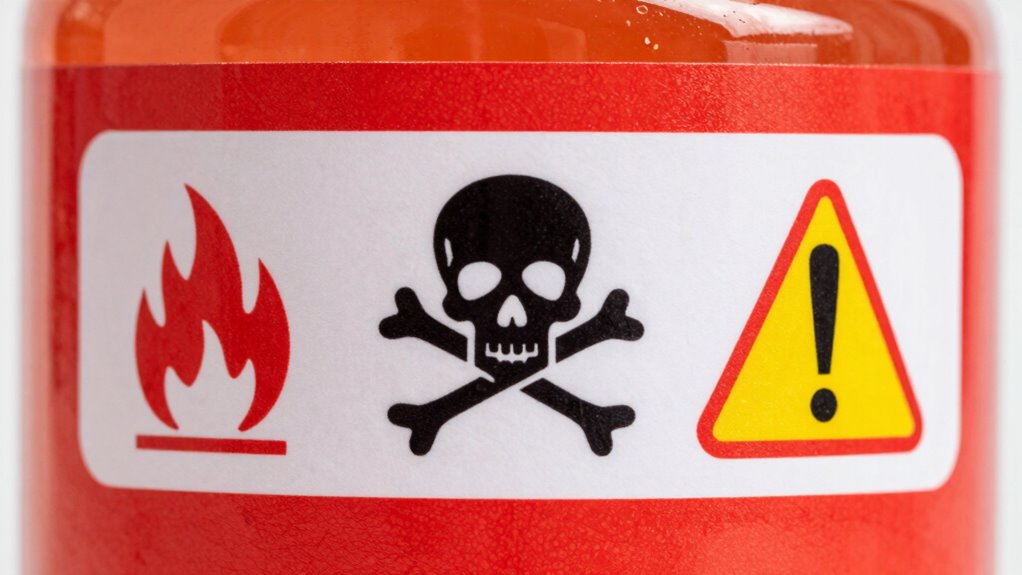
Cleaning chemical labels are essential tools that provide vital information about safe and effective use. When you encounter a chemical product, your first priority should be understanding the safety precautions indicated on its label. Proper label interpretation ensures you handle chemicals correctly, minimizing risks to yourself, others, and the environment. Hazard symbols are designed to communicate danger quickly, often through visual cues that transcend language barriers. Recognizing these symbols allows you to respond promptly and appropriately, especially in situations where reading detailed instructions might not be feasible. Developing the skill to interpret hazard symbols fast can prevent accidents, injuries, or exposure to harmful substances.
To effectively interpret labels, familiarize yourself with the common hazard symbols used worldwide. For example, a flame symbol indicates flammability, warning you to keep the chemical away from heat or open flames. A skull and crossbones signal toxicity, alerting you to handle the product with extra care and use personal protective equipment. Corrosive symbols warn that the chemical can cause burns or damage surfaces, so you should wear gloves and eye protection. Recognizing these symbols quickly helps you implement safety precautions without delay, especially in busy cleaning environments.
When reading a chemical label, pay close attention to the accompanying signal words, such as “Danger” or “Warning,” which highlight the severity of the hazard. These words guide you on how carefully you need to handle the product. The label’s hazard statements provide further details about the potential risks, while precautionary statements list safety measures to prevent accidents. Combining your knowledge of these elements with quick label interpretation allows you to take immediate safety precautions, like ventilating the area, wearing protective gear, or avoiding mixing incompatible substances. Additionally, understanding hazard communication standards can enhance your ability to quickly grasp the severity of different chemical risks.
Another key aspect is understanding the supplementary information on the label, such as first aid measures, storage instructions, and disposal procedures. Efficient label interpretation means you can respond swiftly if accidental exposure occurs, knowing whether to rinse with water, seek medical attention, or evacuate the area. The more familiar you are with common hazard symbols and their meanings, the faster you’ll recognize the risks and implement safety precautions effectively. This proactive approach keeps your workspace safe and ensures you’re prepared to handle any emergencies that arise from chemical use.
Frequently Asked Questions
How Do Hazard Symbols Differ Internationally?
International standards influence how hazard symbols differ worldwide. You’ll notice variations in symbols, colors, and shapes depending on the country. For example, European symbols follow the CLP regulation, while the US uses OSHA labels. These symbol variations can be confusing, so it’s important to familiarize yourself with regional standards. Recognizing these differences helps you quickly identify hazards, ensuring safe handling across different countries and regulatory environments.
Are There Any Symbols That Indicate Non-Toxicity?
Think of it as finding a needle in a haystack—some symbols clearly indicate non-toxicity. Look for the green circle with a white checkmark or a white label with a green leaf, which are common non-toxic indicators. These symbols offer safety reassurance, showing the chemical is safe for use and handling. Recognizing these symbols quickly helps you make informed decisions and stay safe in your cleaning routine.
What Should I Do if a Label Is Damaged?
If a label is damaged, you should avoid using the chemical until it’s properly labeled again. For label repair, carefully affix a new, clear label over the damaged area, ensuring all hazard symbols and information are visible. If the original label can’t be restored, use an alternative labeling method, like a durable tag or marker, to accurately communicate the chemical’s hazards. Always follow your workplace protocols for safety and documentation.
Can Hazard Symbols Change Over Time?
Think of hazard symbols as the silent guardians of safety, quietly evolving over time. While some chemical label updates bring changes to hazard symbols, most aim for consistency to avoid confusion. Symbols can change due to new regulations or improved understanding of hazards, so always stay informed. Regularly check for updates to ensure you recognize the latest symbols, maintaining safety and understanding in your cleaning routines.
How Do I Interpret Multiple Hazard Symbols on One Label?
When you see multiple hazard symbols on a chemical label, you should understand that each one represents a different risk, and their meanings are part of chemical label terminology. Look closely at each hazard symbol, noting variations in color, shape, or pictograms, which indicate hazard symbol variation. This helps you quickly assess the overall risks. Always read the accompanying safety instructions for proper handling, storage, and emergency measures.
Conclusion
Now that you can decipher hazard symbols in seconds, it’s amusing how often we ignore them, isn’t it? After all, reading labels carefully might be the most exciting part of cleaning—who knew safety could be so thrilling? So go ahead, confidently handle those chemicals with a newfound flair, all while secretly wondering if ignoring symbols ever truly comes with consequences. Sometimes, the biggest hazard is just ignoring what those symbols are trying to tell you.