

To ventilate safely while cleaning in winter, open windows briefly during the warmest part of the day or during mild weather, and keep them open just 5-10 minutes to prevent heat loss. Use exhaust fans near cleaning areas and seal gaps around windows and doors with weatherstripping or plastic film to keep the cold out. Choosing low-VOC products and adding air purifiers can also reduce the need for prolonged airing. If you want more tips, you’ll find helpful strategies ahead.

Get cleaning gear delivered free — and shop member deals
- Fast, free delivery on millions of items
- Access to Prime Big Deal Days deals on October 6–7
- Prime Video, Amazon Music and more included
Key Takeaways
- Open windows briefly for 5-10 minutes during milder weather to refresh indoor air without significant heat loss.
- Seal gaps around windows and doors before opening to prevent cold air drafts and minimize heat escape.
- Use exhaust fans near cleaning sources and run them during cleaning to efficiently remove pollutants with minimal heat loss.
- Ventilate during warm parts of the day or when outdoor temperatures are higher to balance air exchange and warmth retention.
- Prioritize low-VOC cleaning products and use air purifiers to reduce indoor pollutants, decreasing the need for prolonged ventilation.
As an affiliate, we earn on qualifying purchases.
Why Ventilating Safely During Winter Cleaning Matters
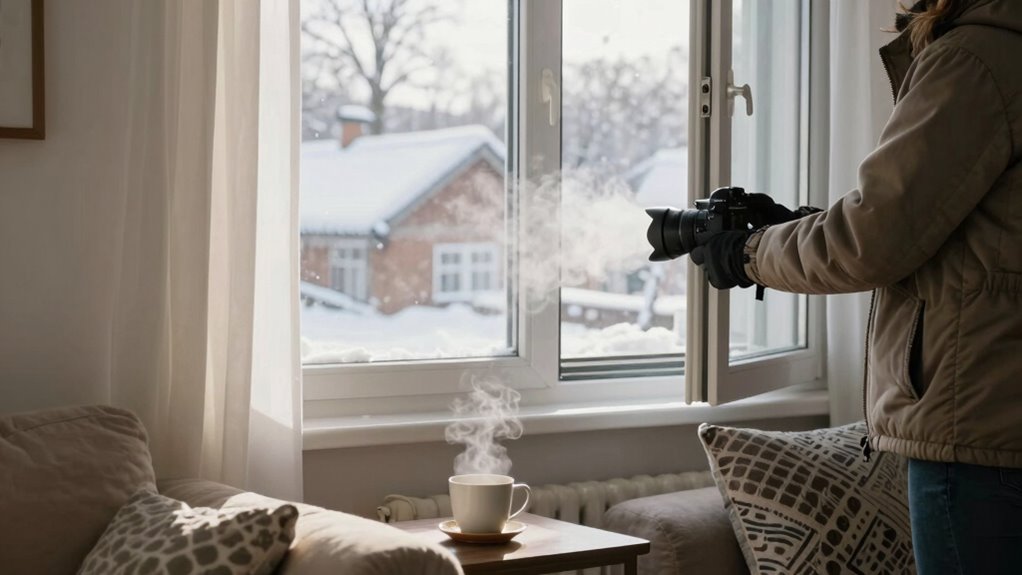
Have you ever thought about why safe ventilation is essential during winter cleaning? Poor air quality can trap indoor pollutants like dust, mold spores, and cleaning chemicals, which can cause health issues. Ventilating helps remove these harmful substances, improving air quality and creating a safer environment. During winter, it’s tempting to keep windows closed, but inadequate ventilation allows indoor pollutants to accumulate, making the air stale and potentially dangerous. Properly ventilating while cleaning ensures fresh air circulates, diluting pollutants and reducing respiratory risks. You want to protect yourself and your family from airborne irritants. By understanding the importance of safe ventilation, you can keep your home healthier, even in the cold months, without sacrificing comfort or safety. Utilizing ventilation strategies can help maintain good indoor air quality without compromising warmth. Additionally, incorporating air exchange methods can optimize airflow while conserving heat, especially when using mechanical ventilation systems designed for winter conditions. Employing energy-efficient ventilation solutions is also crucial to balance safety and warmth during cold weather. Implementing proper maintenance of ventilation equipment ensures it functions effectively and safely year-round.
electric exhaust fan for bathroom
As an affiliate, we earn on qualifying purchases.
As an affiliate, we earn on qualifying purchases.
What Are the Risks of Ventilating Without Heating in Cold Weather?

Why is ventilating without heating in cold weather risky? When you open windows or vents without heating, the indoor air quality can decline because cold air brings in pollutants and reduces the effectiveness of moisture control. Without proper heating, the house can quickly lose warmth, making it uncomfortable and increasing the risk of pipes freezing. Additionally, cold, unheated air can cause condensation to form inside walls and windows, leading to mold growth and structural damage over time. Ventilating in this way might seem helpful for freshening the air, but it can backfire by creating cold drafts and moisture issues. Proper ventilation techniques involve balancing fresh air intake with adequate heating to avoid these problems and maintain a healthy, comfortable home environment. In colder climates, incorporating humidity control can also help prevent condensation and related issues. Using controlled ventilation systems can further optimize airflow while maintaining warmth. Moreover, understanding the effects of air exchange rates can help you balance fresh air and warmth effectively. It is also important to consider air filtration methods to reduce indoor pollutants during ventilation.
air purifiers for indoor air quality
As an affiliate, we earn on qualifying purchases.
As an affiliate, we earn on qualifying purchases.
How to Ventilate Your Home Without Losing Too Much Warmth
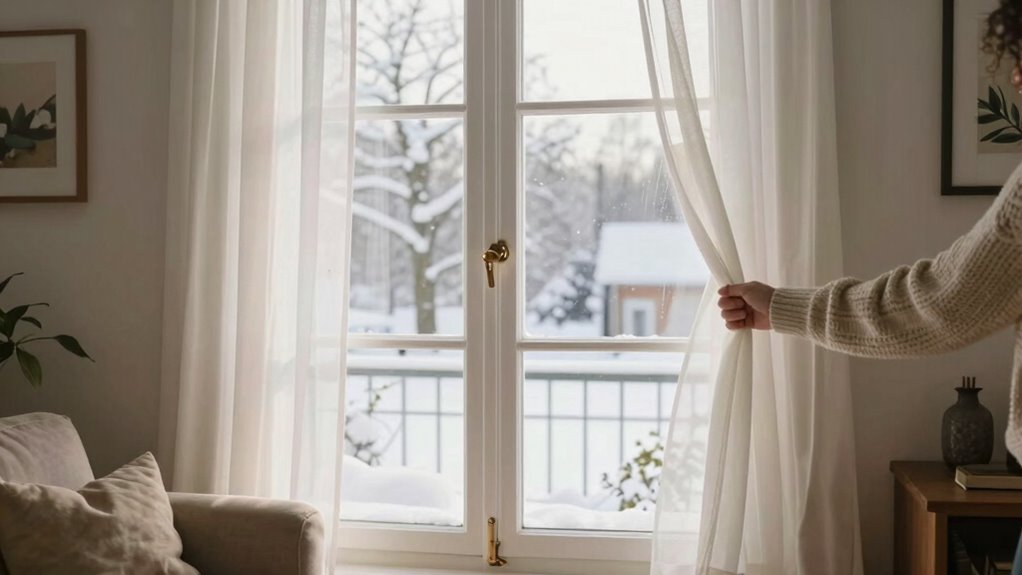
To ventilate without losing too much warmth, keep your windows open for short periods instead of all day. Choose warm, dry days when outside air won’t chill your home quickly. Also, seal gaps around windows and doors before opening them to minimize heat escape. Implementing proper ventilation strategies can help maintain indoor comfort while reducing potential heat loss during cleaning. Additionally, ensuring your home has good insulation can further prevent heat from escaping during these brief ventilation periods. Incorporating energy-efficient windows can also help retain heat while allowing fresh air to circulate. Using smart home technology to monitor indoor air quality can optimize ventilation timing, ensuring comfort and energy efficiency. Employing ventilation controls can further help balance fresh air intake with heat retention.
Use Short Ventilation Periods
Even when you’re cleaning, you can ventilate effectively without letting your home cool down too much by keeping your windows open for just short periods. Limiting ventilation time helps maintain indoor air quality while conserving warmth. Aim for bursts of 5 to 10 minutes, several times a day, to refresh the air without significant heat loss. During these intervals, open windows fully to maximize ventilation efficiency, allowing stale air to escape quickly and fresh air to enter. This method *guarantees* pollutants and humidity are reduced, improving indoor air quality, without letting the temperature drop too much. Incorporating proper ventilation techniques can also help prevent moisture buildup that leads to mold and other issues. Using short ventilation periods with proper timing ensures you strike a balance between air exchange and warmth retention, making your cleaning routine both thorough and comfortable. Additionally, controlling indoor humidity is essential to prevent mold growth and maintain a healthy environment. Understanding the impact of ventilation on indoor temperature can further help you optimize your cleaning routine for comfort and efficiency. Being mindful of free-floating pollutants can also improve indoor air quality and overall home comfort.
Opt for Warm, Dry Days
On warm, dry days, you can ventilate your home more effectively without losing too much heat. These days allow you to open windows longer, improving air quality and reducing indoor pollutants. During this time, consider placing indoor plants near windows; they naturally filter air and boost oxygen levels. Ventilating on warm, dry days helps remove humidity and odors, creating a healthier environment. Additionally, simple systems can help you maintain good airflow without opening windows excessively. Limiting ventilation duration to prevent heat loss, especially in colder months, is also important. Taking advantage of pleasant weather ensures you refresh your home efficiently without sacrificing warmth or comfort. Incorporating proper ventilation techniques can further optimize indoor air quality while maintaining energy efficiency.
Seal Gaps During Venting
Sealing gaps around windows and doors is essential when ventilating your home, as it helps prevent warm air from escaping and cold drafts from entering. Proper gap sealing creates a barrier that reduces heat loss during ventilation, making it easier to maintain a comfortable temperature. Use draft blocking materials like weatherstripping or draft stoppers to close gaps effectively. Before opening windows or vents, inspect your home for leaks around edges, sills, and frames. Draft blocking not only keeps the cold out but also ensures fresh air circulates without substantially lowering your indoor warmth. Effective sealing techniques are crucial for maximizing energy efficiency during ventilation. By focusing on gap sealing during venting, you can improve airflow while minimizing heat loss, making your cleaning routine more energy-efficient and comfortable. Additionally, consulting a home energy efficiency guide can help identify the most effective sealing techniques for your space. Proper airflow management can further enhance ventilation without sacrificing warmth.
As an affiliate, we earn on qualifying purchases.
Best Tips for Using Exhaust Fans and Localized Ventilation
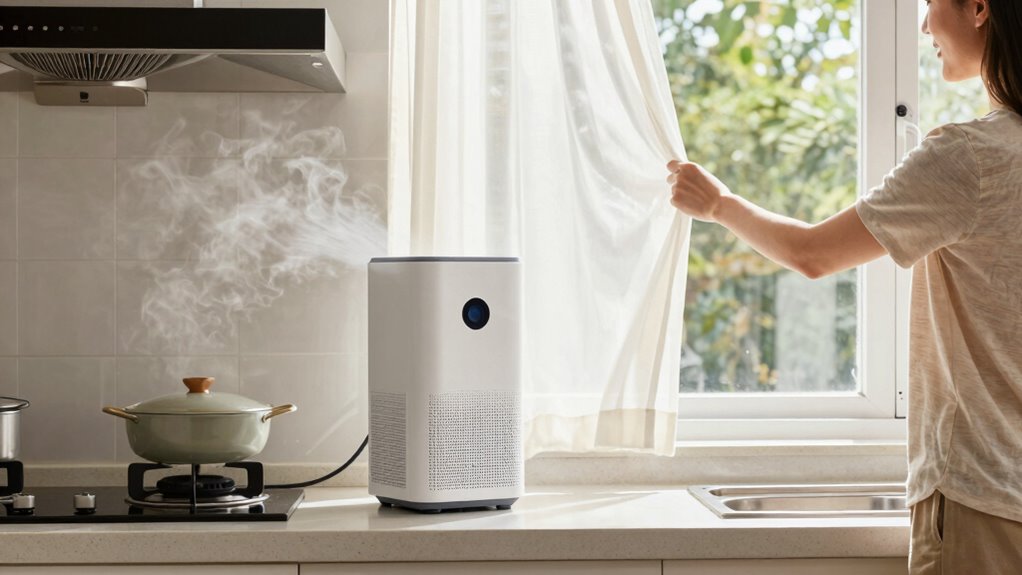
To effectively reduce indoor air pollutants while cleaning, you should prioritize using exhaust fans and localized ventilation systems. These tools boost air exchange and improve indoor airflow, helping to remove dust, fumes, and odors quickly. When using exhaust fans, turn them on before starting your cleaning and keep them running until fumes dissipate. Position fans near sources of pollutants, such as the kitchen or bathroom, for maximum effectiveness. Additionally, open windows briefly to enhance ventilation without risking a cold house. Remember, good airflow ensures pollutants don’t linger and helps maintain a healthier environment. Properly utilizing exhaust fans and localized ventilation makes cleaning safer and more efficient during colder months.
Use exhaust fans and open windows briefly for safer, cleaner indoor air during cleaning.
- Use fans continuously during cleaning tasks
- Keep windows open for short bursts
- Place fans strategically near pollution sources
How to Seal Your Home Temporarily to Keep Cold Air Out

To keep cold air out while ventilating, you can use temporary sealing materials like weatherstripping or plastic film. Be sure to seal all drafty openings around windows and doors to prevent heat loss. These simple steps help maintain a comfortable temperature during cleaning efforts.
Use Temporary Sealing Materials
Have you ever needed a quick fix to keep cold air out while ventilating your home? Temporary sealing materials are your best option for creating barriers that block drafts without long-term commitment. Using simple sealing techniques, you can effectively reduce heat loss during short-term ventilation.
Try these methods:
- Use heavy-duty plastic sheeting or painter’s tape to cover gaps around windows and vents.
- Fill cracks with foam sealant or weatherstripping for an easy, removable fix.
- Place draft stoppers or rolled towels at door bottoms and window sills to prevent cold air infiltration.
These temporary barriers are affordable and easy to install, helping you stay warm without sacrificing fresh air. Keep in mind, quick sealing techniques are perfect for short-term needs and can be removed or adjusted easily.
Seal Drafty Openings
When you notice cold air sneaking in around windows, doors, or other openings, sealing them temporarily can make a noticeable difference in keeping your home warmer. Start by identifying drafty gaps around windows and use weatherstripping or draft stoppers to block these leaks. For larger gaps, consider using plastic film or temporary window sealing kits to improve insulation quickly. Pay special attention to areas where drafts are most prominent, like near window frames or door thresholds. These simple measures help prevent cold air from entering while still allowing you to ventilate effectively. Window sealing is a cost-effective way to boost your home’s warmth temporarily, making your cleaning process more comfortable without risking freezing temperatures indoors.
When and How to Air Out Your Home for Best Results
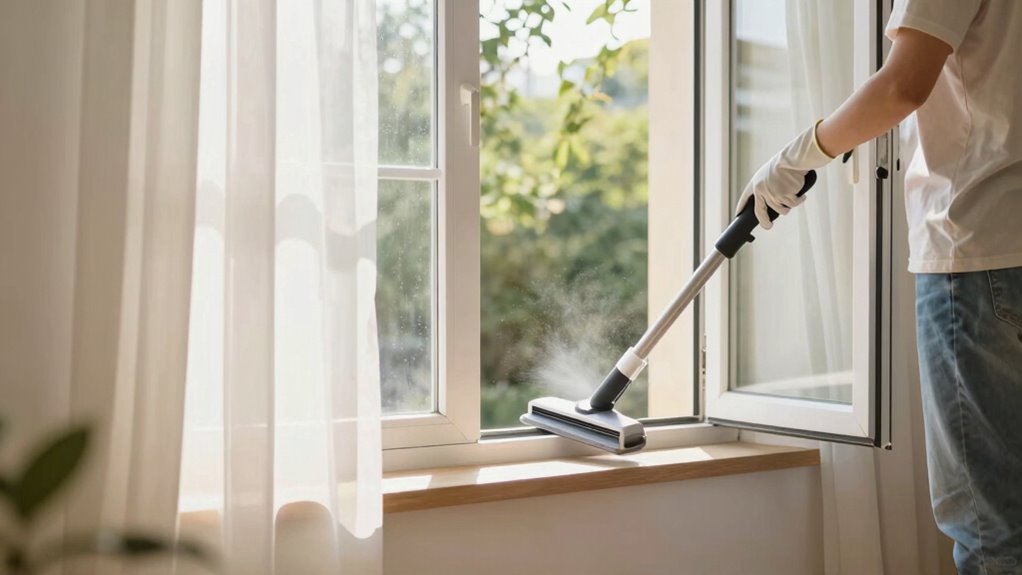
A well-timed airing can considerably improve your home’s indoor air quality, especially after cleaning. Knowing when and how to air out your home helps maximize fresh air flow without losing too much heat. The key is to choose the right ventilation timing—preferably during the warmest parts of the day or when outdoor air quality is good. Open windows and doors briefly to create cross-ventilation, which quickly replaces stale indoor air. Avoid airing out during cold drafts or extreme weather. Consider these tips for ideal results:
- Ventilate for 5-10 minutes to refresh indoor air without cooling down your house
- Time your airing during mild weather or sunny days
- Use exhaust fans to help draw in fresh air efficiently
This approach maintains indoor air quality while keeping your home cozy.
Quick Tips to Ventilate Without Making Your House Too Cold
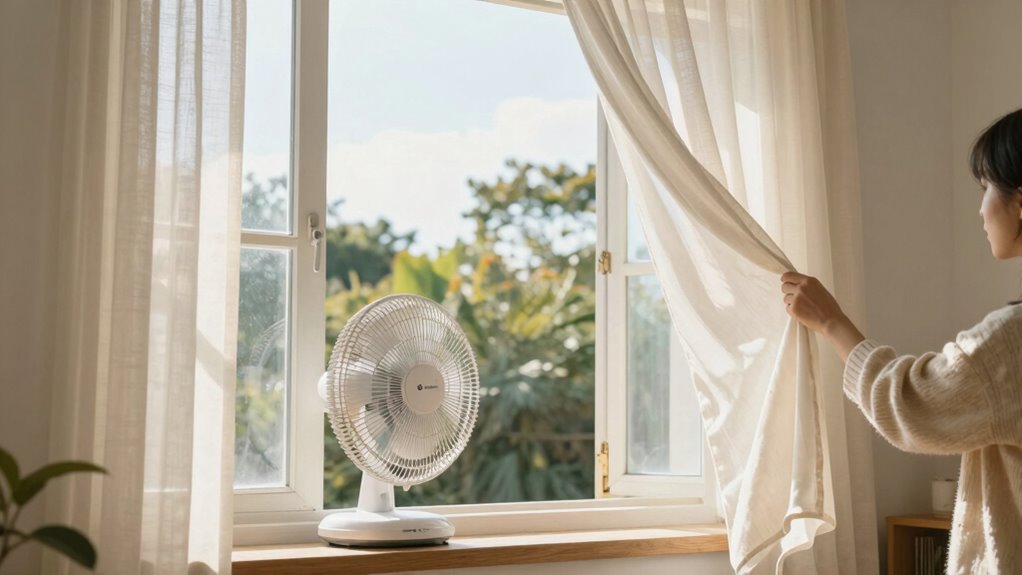
To ventilate effectively without cooling your home too much, try opening windows in short bursts rather than all at once. Strategically open windows during milder parts of the day to maximize airflow without losing warmth. Be mindful of timing so you get fresh air without making your house uncomfortably cold.
Use Short Bursts
Instead of opening windows wide and letting all the warm air escape, try ventilating in short bursts. This technique maintains better air quality and helps control humidity without cooling your house too much. By opening windows briefly, you allow fresh air to circulate, reducing indoor pollutants. It also prevents excessive moisture buildup, which can cause mold and discomfort.
Here are some tips:
- Open windows for 5-10 minutes, then close to trap warm air inside.
- Ventilate during the warmest part of the day for maximum benefit.
- Use exhaust fans alongside short bursts of fresh air to improve humidity control.
This method keeps your home comfortable while ensuring good air quality and proper humidity levels.
Open Windows Strategically
Strategically opening windows allows you to freshen your home’s air without cooling it down too much. To maximize airflow control, consider window placement carefully. Open windows on opposite sides of your home to create a natural cross-breeze, which quickly exchanges stale air for fresh air. Avoid opening windows during the coldest parts of the day or when outdoor temperatures are much lower than inside. Instead, open windows briefly and at strategic times for effective ventilation.
| Window Placement | Best Time | Effect |
|---|---|---|
| Front and back doors | Mid-morning or afternoon | Promotes airflow control |
| Upper and lower floors | When outdoor temp is mild | Enhances cross-ventilation |
| Opposite sides of rooms | During moderate weather | Prevents house from cooling too much |
| Basement and main level | During mild weather | Improves indoor air quality |
| Windows near vents | When outside air is fresh | Boosts ventilation efficiency |
Time Ventilation Carefully
Timing your window openings carefully can make a big difference in maintaining comfortable indoor temperatures while still invigorating the air. To improve air quality and control moisture, plan your ventilation during the warmest parts of the day, like late morning or early afternoon. Limit your window opening to short bursts, such as 10-15 minutes, to prevent heat loss. Consider using fans to circulate fresh air more efficiently without prolonged exposure to cold. Keep an eye on the weather forecast—avoid opening windows during cold or windy conditions that could drop indoor temperatures or introduce moisture issues. Proper timing helps balance fresh air intake with thermal comfort, ensuring your home stays warm enough while reducing indoor humidity and maintaining good air quality.
Which Cleaning Products Reduce the Need for Excessive Ventilation
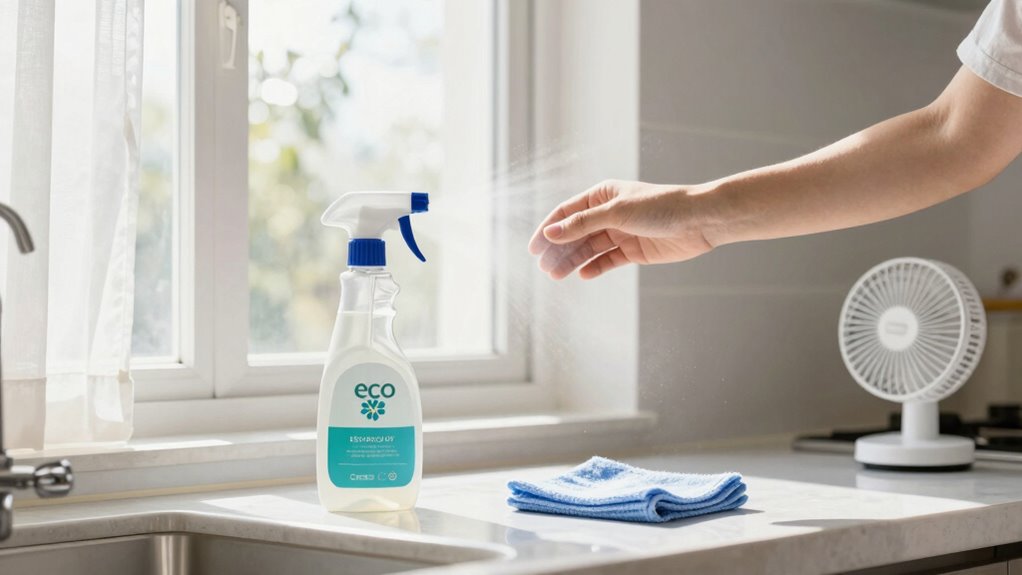
Using cleaning products with low or no volatile organic compounds (VOCs) markedly reduces the need for excessive ventilation. Low emission cleaners release fewer fumes, making your space safer and easier to ventilate without risking temperature drops. Look for products labeled as low VOC or eco-friendly, which minimize airborne pollutants. An air purifier equipped with a HEPA filter can further improve indoor air quality by capturing residual particles and scents from cleaning agents. These tools allow you to clean effectively while reducing the frequency and intensity of ventilation needed to clear out fumes. By choosing the right products and using an air purifier, you can maintain a healthier indoor environment and avoid the discomfort of freezing temperatures caused by over-ventilating.
How to Use Natural Ventilation Strategies in Winter

After selecting low-VOC cleaning products and using air purifiers, you can further improve indoor air quality by harnessing natural ventilation strategies during winter. Opening windows briefly during warm parts of the day allows fresh air in without causing significant heat loss. To maximize benefits, consider placing indoor plants near vents—they naturally filter pollutants and boost air quality. Also, use cross-ventilation by opening windows on opposite sides of your home to create airflow without chilling the house too much. Keep curtains open during the day to facilitate air movement and help disperse indoor pollutants. Remember, short, strategic ventilation sessions can refresh your indoor environment while maintaining warmth, especially when combined with indoor plants that support ongoing air quality improvements.
Troubleshooting Common Winter Ventilation Challenges
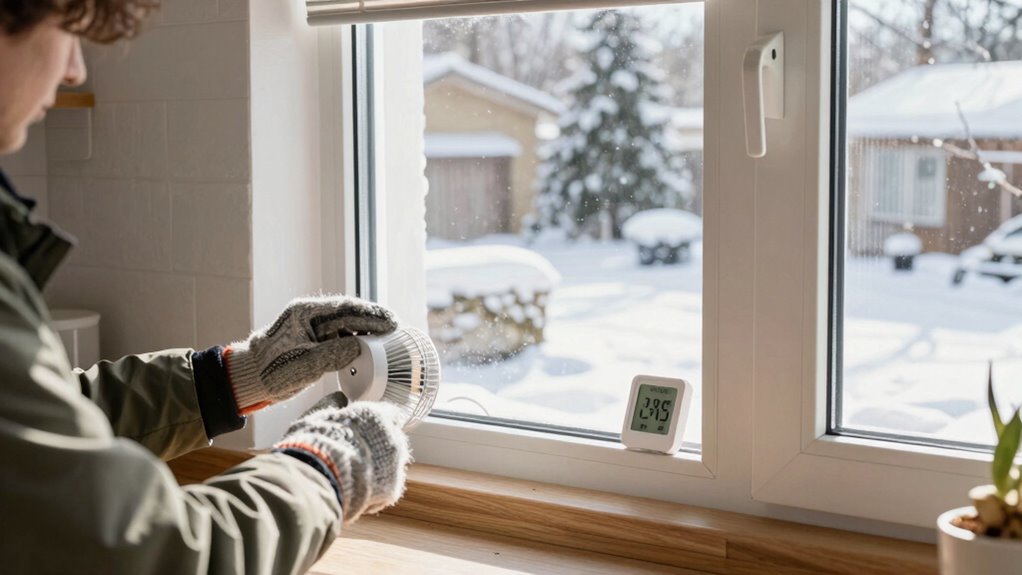
Winter ventilation often presents challenges, especially when cold temperatures make it difficult to open windows without losing too much heat. This can impact your air quality and indoor airflow, leading to stuffy rooms and increased indoor pollutants. To troubleshoot, start by ventilating during the warmest parts of the day or using short, controlled bursts of fresh air. Consider using exhaust fans or air purifiers to improve air quality without sacrificing warmth. Make sure your vents and filters are clean and unobstructed to maximize airflow. If freezing windows or drafts occur, use draft stoppers or weatherstripping to seal gaps. Balancing ventilation and warmth is vital—by adjusting your approach, you can maintain good indoor airflow and air quality even during the coldest months.
Frequently Asked Questions
Can I Ventilate During Winter Without Increasing My Heating Costs?
Yes, you can ventilate during winter without boosting your heating costs. To maintain indoor air quality and energy efficiency, open windows briefly for short periods, ideally during milder weather or when outdoor wind helps exchange air quickly. Use exhaust fans in kitchens and bathrooms to improve airflow without losing much heat. This way, you refresh indoor air without sacrificing your home’s warmth or increasing energy bills.
What Are Effective Ways to Prevent Drafts While Ventilating?
To prevent drafts while ventilating, focus on strategic ventilation strategies that improve indoor air quality without causing temperature drops. Use exhaust fans in bathrooms and kitchens, and open windows briefly during peak heating times. Seal gaps around windows and doors with weatherstripping or draft stoppers, ensuring fresh air circulates without excessive heat loss. This way, you maintain good indoor air quality while minimizing drafts and keeping your home warm.
How Long Should I Leave Windows Open for Safe Ventilation?
You should leave your windows open for about 10-15 minutes to guarantee proper air exchange during ventilation. This window timing allows fresh air to circulate and helps clear out any airborne particles or odors from cleaning. Keep an eye on outdoor conditions, especially if it’s very cold, and adjust the duration accordingly. Regularly ventilating for this period balances effective air exchange with maintaining a comfortable indoor temperature.
Are There Specific Ventilation Devices Suitable for Cold Weather?
Think of cold weather solutions as your house’s cozy shield. You can opt for ventilation device options like heat recovery ventilators (HRVs) or energy recovery ventilators (ERVs) that bring in fresh air without chilling your home. These devices are designed for cold climates, providing efficient airflow while maintaining warmth. Using them guarantees you get proper ventilation during cleaning, keeping your house fresh without risking freeze-ups.
How Do I Ensure Proper Airflow Without Causing Ice Buildup?
You should manage airflow carefully by opening windows and vents slightly, allowing fresh air in without causing drastic temperature drops. Use exhaust fans or dehumidifiers to promote moisture control, reducing humidity that leads to ice buildup. Keep doors open strategically to encourage air circulation, but avoid prolonged drafts in cold weather. Regularly monitor indoor conditions and adjust ventilation to maintain a balance between airflow management and preventing ice formation.
Conclusion
By balancing smart ventilation with warmth, you protect your home and stay comfortable. Imagine cleaning your kitchen’s grease without freezing—using a vent fan and sealing drafts just enough. When Sarah tried this during her winter deep clean, she avoided icy drafts and finished faster. With these tips, you can breathe fresh air without sacrificing warmth, making winter cleaning safer and more comfortable for you and your family.
Fall Picks
fall essentials
As an affiliate, we earn on qualifying purchases.