After deep cleaning, improve air quality by opening windows and doors to let fresh air in and push out airborne dust and chemicals. Use high-efficiency air purifiers with HEPA and activated carbon filters to trap particles and absorb odors. Run exhaust fans in kitchens and bathrooms, and keep ventilation systems well-maintained. Regularly cleaning with low-VOC products and maximizing airflow speeds up the process. Discover more tips to clear your indoor air swiftly and effectively.
Key Takeaways
- Increase ventilation by opening windows and doors to dilute indoor pollutants quickly.
- Use HEPA air purifiers during and after cleaning to trap airborne dust and particles.
- Run exhaust fans in kitchens and bathrooms to expel contaminants and improve air flow.
- Choose low-VOC or natural cleaning products to reduce chemical fumes and VOC buildup.
- Maintain and upgrade ventilation systems for continuous removal of indoor air pollutants.

After a thorough deep cleaning, you might expect your indoor air to be fresher and healthier, but in reality, certain cleaning activities can temporarily impact air quality. Dust, chemicals from cleaning products, and airborne particles can linger in the air, making it feel stuffy or irritating your respiratory system. To clear the air faster, you need effective strategies that eliminate these pollutants quickly and restore freshness.
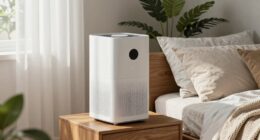
One of the most effective tools you can use is an air purifier. A quality air purifier with a HEPA filter traps airborne particles like dust, pollen, pet dander, and mold spores. Running it during and after cleaning helps reduce the amount of lingering debris that causes poor air quality. Keep it positioned in the room where you spend most of your time, and run it continuously until the air feels noticeably cleaner. Some models also feature activated carbon filters that absorb odors and chemical fumes, which are common after deep cleaning with strong cleaning agents.
Use a HEPA air purifier during and after cleaning to quickly improve indoor air quality and remove airborne pollutants.
Equally important is improving your ventilation system. If your home has an operable window, open it up to allow fresh air to enter and push out contaminated air. Fresh air dilutes indoor pollutants and speeds up the clearing process. If windows aren’t an option, turn on exhaust fans in kitchens and bathrooms to help remove airborne contaminants generated during cleaning. Consider upgrading your ventilation system if it’s outdated or poorly maintained; a well-functioning system actively circulates indoor air and expels pollutants outside, making it easier to recover from deep cleaning activities.
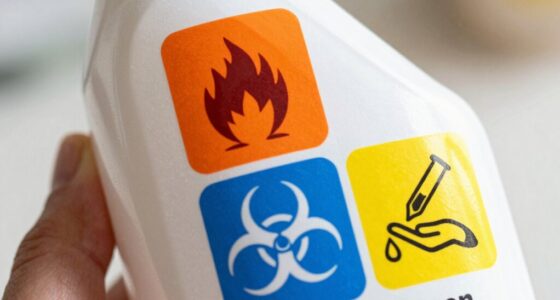
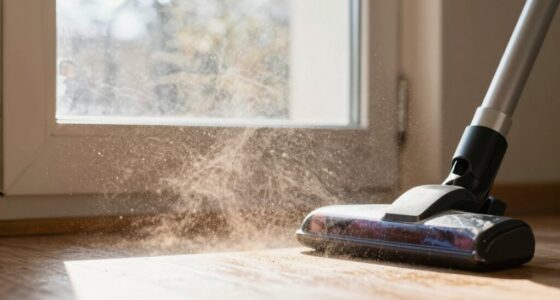
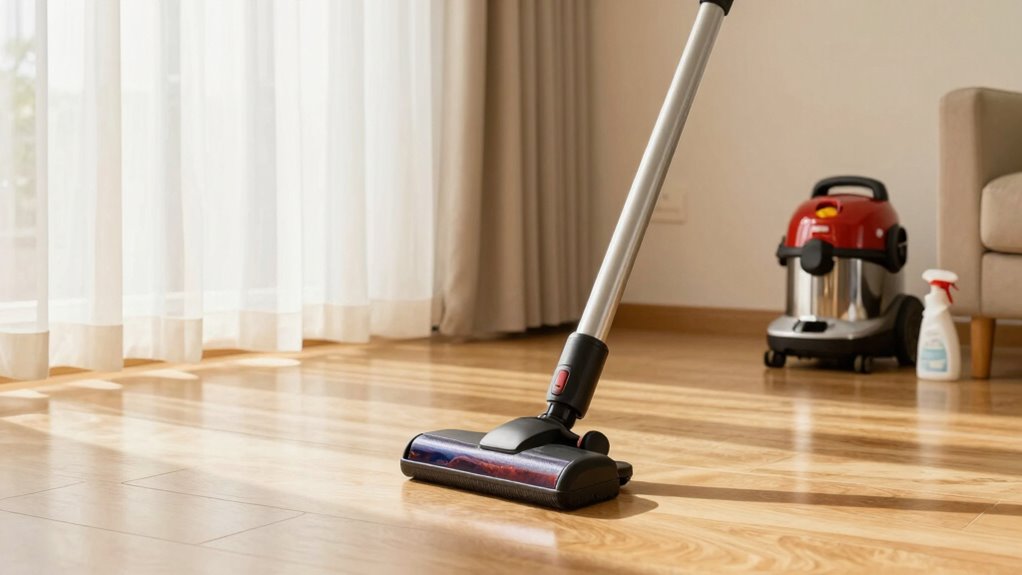
You should also take practical steps to support air quality. Avoid using harsh, chemical-laden cleaning products that can release volatile organic compounds (VOCs). Instead, opt for natural or low-VOC cleaners, which produce fewer fumes and residues. During and after cleaning, keep the area well-ventilated by opening windows or doors, especially if you’re using products with strong odors. Regularly dust and vacuum to remove settled particles, but do so with a vacuum equipped with a HEPA filter to prevent redistributing dust into the air. Additionally, maintaining your ventilation system ensures continuous removal of airborne pollutants and supports overall indoor air quality.
Frequently Asked Questions
How Long Does It Typically Take for Indoor Air to Clear After Deep Cleaning?
It typically takes about 2 to 4 hours for indoor air to clear after deep cleaning. During this time, air exchange helps remove pollutants and speeds up dissipation. To improve the process, open windows and doors to increase ventilation, use fans to circulate air, and consider air purifiers. These steps help reduce airborne pollutants quickly, making your indoor air fresher and safer in less time.
Are There Specific Air Purifiers Recommended for Post-Cleaning Air Quality?
You should look for air purifiers with HEPA filters and activated charcoal to improve post-cleaning air quality. HEPA filters effectively trap dust, allergens, and small particles, while activated charcoal neutralizes odors and volatile organic compounds. Choose a purifier with both features for all-inclusive air cleaning. Place it in high-traffic areas or rooms where cleaning was intensive, and run it continuously until the air feels fresh and clean.
Can Deep Cleaning Worsen Indoor Air Quality Temporarily?
Yes, deep cleaning can temporarily worsen indoor air quality due to cleaning fumes and dust stirred up during the process. You can reduce this by increasing air circulation, opening windows, and using fans to help disperse fumes quickly. Additionally, consider running an air purifier with activated carbon filters to absorb odors and airborne chemicals, speeding up the clearing process and ensuring your indoor air remains fresh and safe.
What Natural Methods Can Speed up Indoor Air Clearing?
You can speed up indoor air clearing naturally by using air purifying plants like snake plants or pothos, which absorb toxins and improve air quality. Additionally, open windows and doors to promote natural ventilation, allowing fresh air to flow in and push out lingering indoor pollutants. Combining these methods enhances air circulation and helps refresh your indoor environment quickly after deep cleaning.
How Do Cleaning Chemicals Impact Indoor Air After Deep Cleaning?
Did you know that indoor air can be up to five times more polluted than outdoor air? Chemical fumes from cleaning products can linger, impacting your indoor air quality. To clear it faster, guarantee proper air filtration by opening windows and using air purifiers. These chemicals release volatile organic compounds (VOCs), which can cause respiratory issues, so ventilation helps disperse fumes and improves your indoor air quality quickly after deep cleaning.
Conclusion
After deep cleaning, freshening the air helps you breathe easier faster. Open windows, use fans, and consider air purifiers to speed up the process. Did you know that indoor air can be up to five times more polluted than outdoor air? By taking these simple steps, you can markedly reduce pollutants and enjoy a healthier home sooner. Breathe easy—clean air is just a few quick actions away!