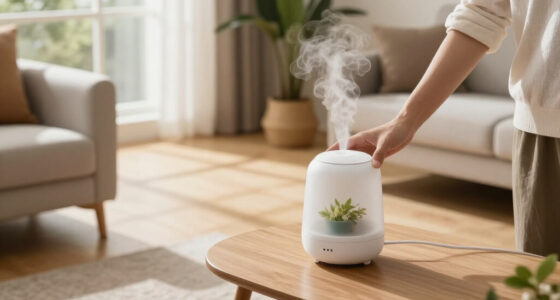
To guarantee your dehumidifier works effectively, place it away from walls, furniture, and curtains to allow proper airflow. Position it near moisture sources like basements or laundry areas, and elevate it slightly for easier maintenance. Keep doors and windows closed and avoid drafts to prevent energy waste. Match its capacity to your room size, and check the air filter regularly for peak performance. If you want to learn more about strategic placement, keep exploring these tips.

Get cleaning gear delivered free with Prime
- Fast, free delivery on millions of items
- Prime Video, Amazon Music and more included
- Member-only deals all year
Key Takeaways
- Place the dehumidifier in a central, open area away from walls and furniture to ensure proper airflow.
- Position near moisture sources like basements or laundry rooms for targeted humidity control.
- Elevate the unit on a sturdy platform to improve air circulation and facilitate maintenance.
- Keep doors and windows closed during operation to maintain consistent humidity levels.
- Match the unit’s capacity to room size to prevent overworking and ensure effective moisture removal.
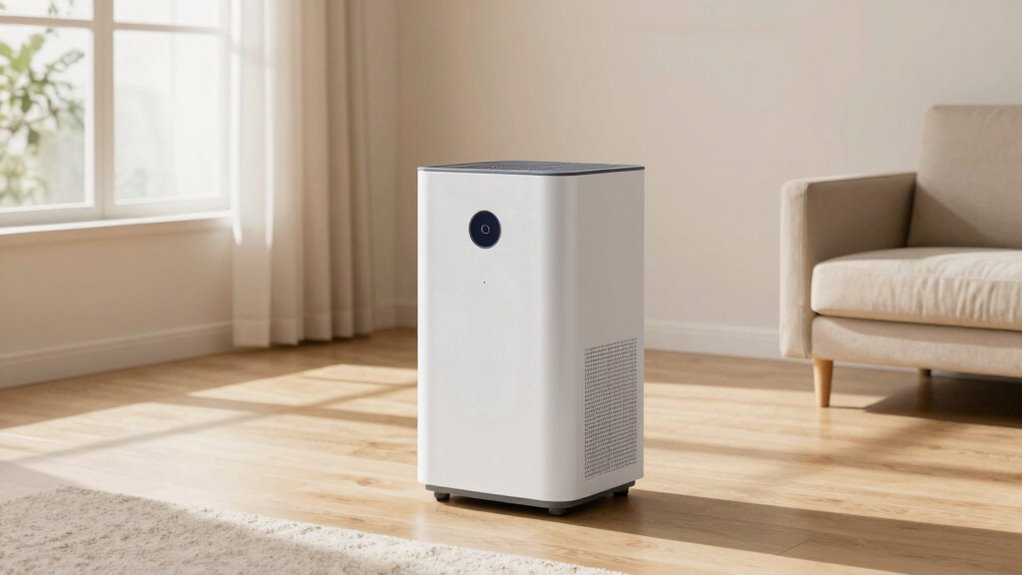
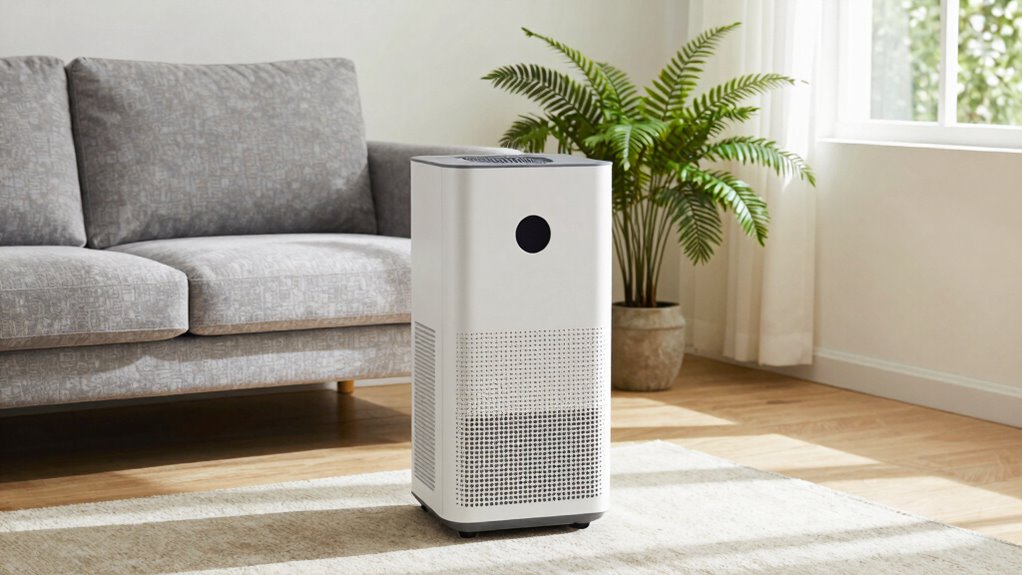
Have you ever wondered how to position a dehumidifier for maximum efficiency? Proper placement is essential to ensure your device works effectively and lasts longer. When you set up your dehumidifier, think about its location in relation to the room’s layout. Keep it away from walls, furniture, or curtains that could block airflow. A good rule of thumb is to place it in the center of the space or slightly away from walls, so air can circulate freely around it. This maximizes moisture removal and prevents damp spots from lingering.
Another key point for dehumidifier placement is proximity to sources of excess moisture. For example, if your basement tends to be damp, position the unit closer to the most humid areas, such as near a sump pump or laundry area. Avoid placing it directly on carpet or soft surfaces, which can obstruct airflow and cause issues with dehumidifier maintenance over time. Elevating the unit slightly off the ground on a sturdy platform can help prevent dust and debris from hindering its operation and make cleaning easier. Proper placement also contributes to energy efficiency, reducing operational costs and prolonging the lifespan of your device.
Energy efficiency tips come into play when you consider how the placement influences the dehumidifier’s workload. If it’s placed near a vent or draft, it might cycle on and off more frequently, wasting energy. Instead, aim for a stable, draft-free spot that keeps the room’s humidity consistent. Additionally, closing doors and windows while running the dehumidifier helps it operate more efficiently, reducing unnecessary energy use. Keep the air filter clean and check it regularly—this simple dehumidifier maintenance step ensures the unit doesn’t work harder than necessary, saving you energy and extending its lifespan. Proper placement can also help maximize efficiency by reducing the workload on the device.
Furthermore, understanding how to optimize placement can significantly impact the overall humidity control and energy consumption in your space. You should also think about the size of the space and the capacity of your dehumidifier. A smaller unit in a large room will struggle to keep humidity levels low, which leads to overworking the device and higher energy bills. For optimal results, match the dehumidifier’s capacity to the room’s size and humidity level. If you notice that the device runs constantly without significantly reducing moisture, it might be time to upgrade or reposition it for better airflow. Additionally, considering room layout can help you determine the most effective placement for your dehumidifier. Knowing the humidity level of your space can also guide you toward the best location to achieve optimal moisture control.
Products Worth Considering

Philips Hue Starter Kit with Bridge Pro and 4 Retrofit LED Recessed Downlights

Bose SoundLink Flex Bluetooth Speaker (2nd Gen), Black

Dyson Big Ball Multi Floor Canister Vacuum, Yellow
As an affiliate, we earn on qualifying purchases.
Frequently Asked Questions
Can I Place a Dehumidifier Near a Window?
Yes, you can place a dehumidifier near a window, but consider placement tips for maximum moisture control. Keep it a few inches away from the window to prevent it from pulling in excess moisture from outside or blocked airflow. Avoid placing it directly in front of the window, which can hinder efficiency. Proper placement ensures your dehumidifier effectively reduces humidity, improving air quality and preventing mold growth in the room.
How Close Should a Dehumidifier Be to Walls?
Like a knight seeking the perfect spot, you should keep your dehumidifier at least 6-12 inches away from walls. This distance guarantees proper air circulation, preventing overheating and maintaining efficiency. Remember, safety precautions matter—placing it too close might block vents or restrict airflow. By giving your dehumidifier space, you help it work effectively, keeping your room dry and safe without risking damage or hazards.
Is It Better to Leave Doors Open or Closed?
It’s better to leave doors open to promote better air circulation and humidity control. When doors are open, the dehumidifier can evenly distribute dry air throughout the room, preventing damp spots and reducing overall humidity. Closed doors can trap moisture, making the dehumidifier work harder and less effectively. For ideal results, guarantee good airflow so the dehumidifier can do its job efficiently and keep your space comfortable.
Can I Place It on Carpet or Does It Need a Hard Surface?
Placing your dehumidifier directly on carpet is a recipe for disaster, risking damage and reduced efficiency. For maximum performance, it needs a sturdy, hard surface—think tile, wood, or concrete—that offers stability and proper airflow. Carpet placement can cause vibrations and hinder the unit’s operation, so always elevate it on a hard surface. This ensures your dehumidifier works effectively, protecting your space from excess moisture and mold.
How Often Should I Reposition My Dehumidifier?
You should reposition your dehumidifier every few months to maintain ideal placement and guarantee it works efficiently. Regular dehumidifier maintenance, like cleaning filters and checking for obstructions, also helps. If you notice humidity levels aren’t dropping as expected, move it closer to problem areas or away from walls and furniture. Repositioning keeps airflow perfect, prevents mold buildup, and prolongs the device’s lifespan.
Conclusion
So, you’ve mastered the art of placement, ensuring your dehumidifier works like a charm. Who knew that the secret to a truly dry room was just a matter of strategic positioning? Ironically, despite all the fuss, sometimes the simplest spot does the trick, proving that even tech needs a little human guidance. Now, sit back and enjoy that perfectly balanced humidity—because in the end, it’s the little details that make all the difference.