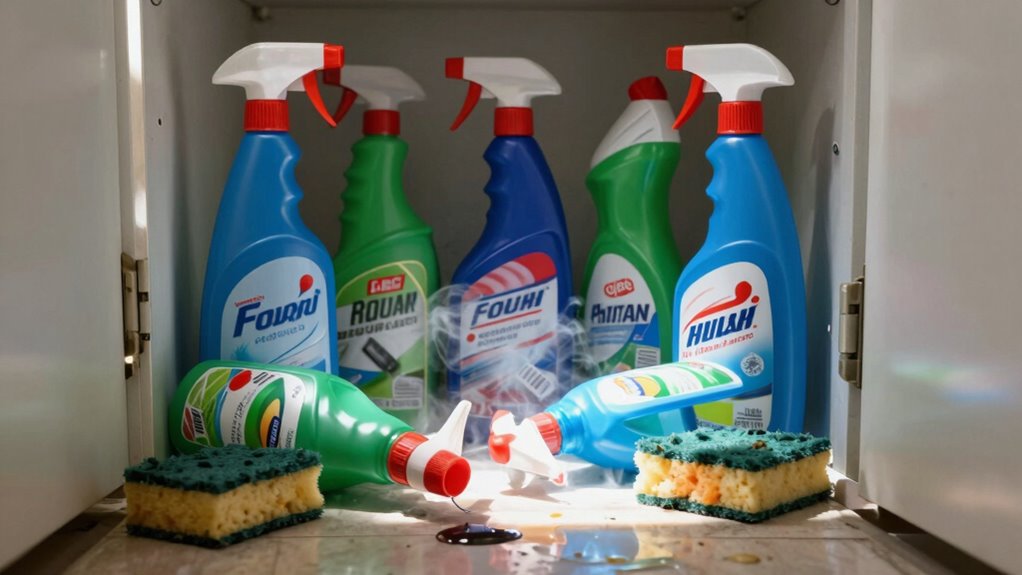

Mixing floor cleaning products without realizing it can be risky for both your health and your floors. Chemical reactions might create toxic fumes or leave residues that damage surfaces. For instance, combining ammonia and bleach produces hazardous chloramine vapors. Plus, not every product is safe for all flooring types, which can void warranties. It’s vital to know which cleaners work together and which don’t. Discovering the right practices can help you maintain your floors in great condition.

Get cleaning gear delivered free with Prime
- Fast, free delivery on millions of items
- Prime Video, Amazon Music and more included
- Member-only deals all year
Key Takeaways
- Mixing cleaning products can produce toxic fumes, especially when combining ammonia with bleach, posing serious health risks.
- Incompatible cleaners can damage specific flooring types, leading to irreversible harm and costly repairs.
- Unpredictable chemical reactions may result in sticky residues or dull finishes, undermining cleaning effectiveness.
- Using the wrong products can void warranties, leaving you responsible for repair costs.
- Always consult manufacturer guidelines and avoid mixing products to ensure safe and effective floor care.
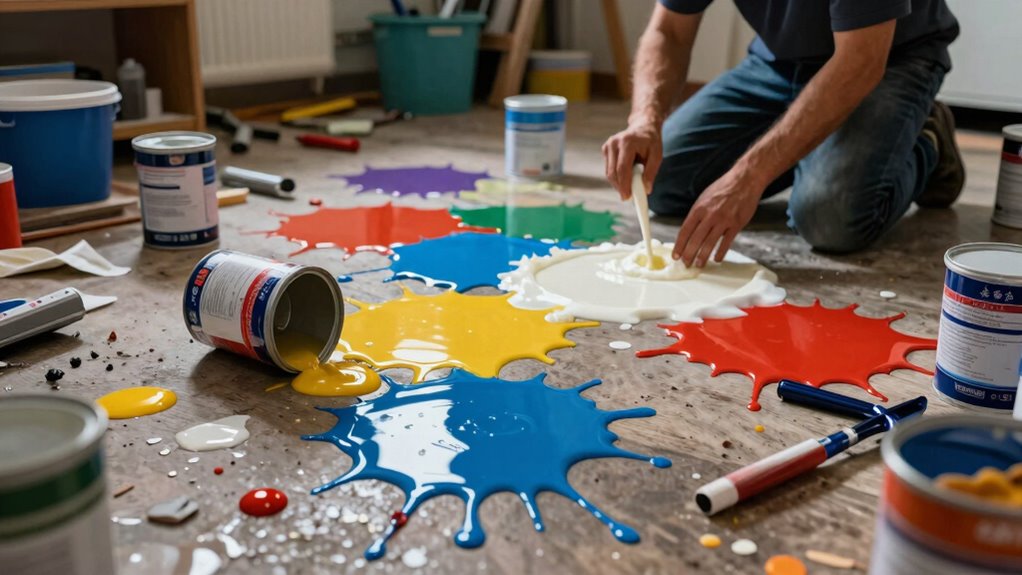
When you’re tackling a flooring project, mixing different cleaning products might seem like a time-saver, but it can lead to serious risks. You might think that combining products will enhance their effectiveness, yet you could be setting yourself up for trouble. Chemical reactions can occur that not only reduce the cleaning power but also create hazardous fumes or residues. Imagine spending hours scrubbing your floors, only to find out that the combination you’ve used has caused more problems than it solved.
Understanding product compatibility is vital. Not all cleaning solutions are designed to work together. For instance, mixing ammonia with bleach creates toxic chloramine vapors, which can be harmful to your health. Even mild cleaners can react unpredictably with stronger products, leading to maintenance challenges that you didn’t foresee. Instead of achieving a sparkling clean floor, you might end up with a sticky residue or a dull finish that won’t budge, leaving you frustrated and out of pocket. Being aware of chemical interactions can help you prevent such dangerous situations. Additionally, understanding product chemistry can help you recognize which combinations are especially risky. Knowing how different chemicals behave can also help you identify dangerous reactions before they happen, saving you from accidents and costly damage.
Understanding product compatibility is crucial; mixing cleaners can lead to harmful reactions and unexpected maintenance challenges. Choose wisely for sparkling results.
Surface damage is another major concern. Different flooring materials require specific care, and using the wrong products—especially in combination—can lead to irreversible harm. Hardwood, laminate, tile, and vinyl all have unique needs. A cleaner meant for tiles could strip the finish off your hardwood, leaving it vulnerable to scratches and moisture. Once you notice the damage, it might be too late to reverse it without costly repairs. Being aware of flooring material properties can help you select the appropriate cleaning methods and avoid unintended damage.
Moreover, warranty issues can arise from using incompatible products. Many flooring manufacturers specify which cleaners are safe to use; violating those guidelines could void your warranty. If you ever need to file a claim for damage, you might find yourself in a tough spot, having to pay out of pocket for repairs or replacements that could’ve been covered had you followed the recommended care instructions. To prevent this, always read labels carefully and follow manufacturer guidelines to ensure your warranty remains intact.
To avoid these pitfalls, always read labels and consult manufacturer guidelines before attempting to mix any floor cleaning products. Stick to one product at a time, and if you’re unsure about compatibility, err on the side of caution. It’s better to spend a little extra time on your cleaning routine than to risk damaging your floors or compromising your warranty. Your floors deserve the best care, and by being mindful of what you mix, you’ll keep them looking great for years to come. Additionally, understanding cleaning product interactions can help you prevent unintended chemical reactions that compromise your flooring or your health.
floor cleaning product compatibility guide
As an affiliate, we earn on qualifying purchases.
As an affiliate, we earn on qualifying purchases.
Frequently Asked Questions
What Are Common Floor Product Types That Should Not Be Mixed?
You shouldn’t mix laminate floors with vinyl tiles, as their different compositions can lead to uneven wear. Hardwood finishes don’t pair well with tile adhesives either; the chemicals can damage the wood’s surface. Each product has unique properties that require specific care, so sticking to one type per area is best. Mixing them might seem convenient, but it often results in complications you’d rather avoid down the line.
How Can I Identify Incompatible Floor Products?
To identify incompatible floor products, start by checking labels, reading ingredients, and noting warnings. Look for terms like “not for use with” or “do not mix.” Compare the product types—cleaners, finishes, or sealants—and their compatibility. You’ll find that identifying floor products is vital for maintaining your floors. By guaranteeing floor product compatibility, you can avoid damaging your surfaces and secure a clean, safe environment. Always do a little research before mixing!
Are There Safe Mixing Practices for Floor Products?
Yes, there are safe mixing practices for floor products. Always follow mixing guidelines provided by manufacturers to guarantee compatibility. Before mixing, read labels carefully and check for any specific safety precautions. Consider testing a small area first to avoid unexpected reactions. Keep your workspace well-ventilated and use appropriate personal protective equipment. By staying informed and cautious, you can safely combine floor products without compromising quality or safety.
What Symptoms Indicate a Problem With Mixed Floor Products?
If you’ve ever wondered what happens when two worlds collide, mixing floor products can lead to serious symptoms. You might notice a foul odor, discoloration, or a sticky residue—clear signs of problematic chemical reactions. Performance issues like reduced durability or uneven finish can also arise, making your hard work seem pointless. Trust your instincts; if something feels off, it’s better to reassess your choices than to risk a bigger headache down the line.
How Can I Safely Dispose of Mixed Floor Products?
To safely dispose of mixed floor products, first check local regulations for disposal methods. You might need to take them to a hazardous waste facility. Always wear safety precautions like gloves and a mask when handling these products. Don’t mix them further, as that can be dangerous. If unsure, consult with professionals who can guide you on the safest way to dispose of these materials without risking your health or the environment.
ammonia and bleach safer alternatives
As an affiliate, we earn on qualifying purchases.
As an affiliate, we earn on qualifying purchases.
Conclusion
To sum up, mixing floor products can create a chemical cocktail that’s more dangerous than a lion in a library! You might think you’re saving time or money, but the risks far outweigh the benefits. Protect your home and health by sticking to compatible products and following manufacturer guidelines. Remember, a little caution goes a long way in keeping your space safe and clean. Don’t gamble with your floors—keep them happy and hazard-free!
floor cleaner for hardwood and tile
As an affiliate, we earn on qualifying purchases.
As an affiliate, we earn on qualifying purchases.
non-toxic floor cleaning solutions
As an affiliate, we earn on qualifying purchases.
As an affiliate, we earn on qualifying purchases.
Fall Picks
fall essentials
As an affiliate, we earn on qualifying purchases.