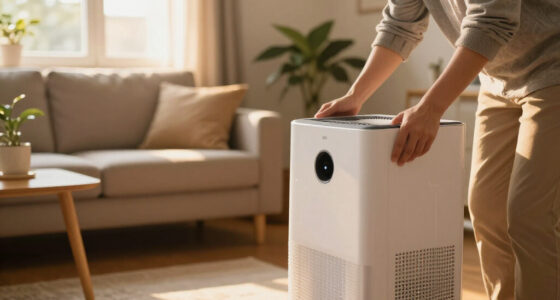

To support a cleaner-feeling home with your air purifier, regularly check and replace filters according to the manufacturer’s guidance, using only specified filters to avoid performance issues. Place the device in a central, unobstructed spot for effective air circulation, and keep windows and doors closed during operation. Make certain filters are clean, avoid placing the purifier near moisture or heat sources, and consider multiple units for larger spaces. Keep learning how proper use enhances air quality.

Get cleaning gear delivered free with Prime
- Fast, free delivery on millions of items
- Prime Video, Amazon Music and more included
- Member-only deals all year
Key Takeaways
- Properly position air purifiers in central, unobstructed areas to maximize airflow and coverage.
- Regularly check and replace filters as indicated by the device to ensure optimal performance.
- Keep windows and doors closed during operation to prevent outside pollutants from entering.
- Use manufacturer-approved filters and follow maintenance guidelines to maintain efficiency and warranty.
- Place units away from moisture and heat sources to avoid damage and ensure consistent air purification.

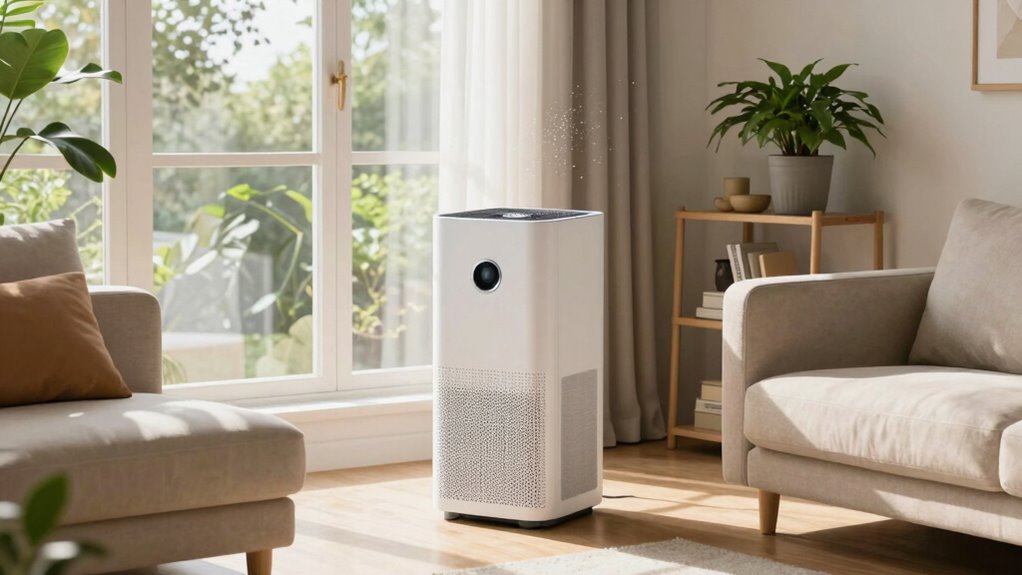
Air purifiers can considerably improve your indoor air quality, but only if you use them correctly. The key to maximizing their benefits lies in understanding how to maintain them properly and where to position them within your space. Regular filter maintenance is vital to keep your purifier functioning at peak performance. Over time, filters collect dust, pollen, pet dander, and other airborne particles, which can clog the system and reduce its efficiency. To avoid this, you should check the manufacturer’s guidelines for filter replacement or cleaning intervals and stick to those recommendations. Some purifiers have indicator lights that tell you when it’s time to change the filter. Ignoring this can lead to decreased air cleaning and even damage to the device. When replacing filters, make sure to use the correct type specified for your model, as using an incompatible filter can impair performance and may even void your warranty. Proper filter maintenance ensures your air purifier continues to remove pollutants effectively, helping you breathe cleaner air every day. Additionally, understanding the importance of air exchange rates can help you choose the most effective purifier for your space and ensure optimal air quality. You should also pay attention to filter replacement indicators, which can help you maintain the device’s efficiency without guesswork. A good understanding of air quality standards can further assist you in selecting the right device for your needs. Regularly monitoring air quality levels can also provide insight into how well your purifier is performing and whether additional measures are needed. Implementing proper placement of your air purifier can significantly enhance its effectiveness, as positioning directly impacts airflow and filtration efficiency. Room placement also plays a vital role in how well your air purifier works. You want to position it in a location where it can circulate air freely without obstructions. Avoid placing it behind furniture, inside corners, or near curtains, as these can hinder airflow and reduce its effectiveness. Ideally, set the purifier in the room where you spend the most time, such as your bedroom or living area, to maximize its impact. Keep it away from sources of moisture or heat, like bathrooms or near radiators, since these can affect the device’s performance or cause damage. For larger spaces, consider using multiple units or a model designed for a bigger area. It’s also advantageous to keep windows and doors closed while the purifier is operating to prevent outside pollutants from entering and overwhelming the system. If you’re using the purifier in a shared space, make sure it’s centrally located to cover the entire area evenly. Proper room placement not only enhances air purification but also minimizes noise disturbances and guarantees you get the most out of your device.
Products Worth Considering

Levoit Core 600S-P Smart Air Purifier for Large Rooms

LEVOIT Vital 100S-P Smart Air Purifier with Washable Pre-Filter

Blueair Blue Pure 211i Max Air Purifier
As an affiliate, we earn on qualifying purchases.
Frequently Asked Questions
Can Air Purifiers Eliminate All Types of Airborne Viruses?
Air purifiers can considerably reduce many airborne viruses through virus filtration, but they can’t eliminate all types completely. Their effectiveness depends on the device’s quality, filter type, and room size. While high-efficiency filters like HEPA can trap most viruses, some tiny particles may still escape. So, your air purifier helps improve air quality, but it shouldn’t replace other precautions like good hygiene and ventilation.
How Often Should I Replace the Filters in My Air Purifier?
You should replace your air purifier filters every 6 to 12 months, depending on usage. Did you know that filters can trap up to 99% of airborne particles? The filter lifespan varies based on factors like air quality and filter type. To keep your purifier working efficiently, monitor the replacement frequency suggested by the manufacturer and replace filters promptly when they become clogged or dirty.
Are Air Purifiers Effective Against Mold and Bacteria?
Yes, air purifiers can be effective against mold and bacteria when properly maintained. Regular air purifier maintenance and replacing filters within their recommended filter lifespan guarantee peak performance. HEPA filters, specifically, trap mold spores and bacteria effectively. Keep an eye on your filter’s lifespan, and change it as needed to maintain the purifier’s ability to improve air quality, especially in areas prone to mold or bacterial growth.
Can Air Purifiers Help With Symptoms of Allergies or Asthma?
Imagine breathing easier each day—air purifiers can help with allergy and asthma symptoms by reducing indoor allergens like dust, pollen, and pet dander. They filter out irritants that trigger your respiratory issues, providing relief and supporting your respiratory health. With consistent use, you’ll notice fewer sneezing fits, less congestion, and a more comfortable environment, making your home a sanctuary from allergy and asthma discomfort.
Do Air Purifiers Increase Electricity Bills Significantly?
Air purifiers do increase your electricity bills, but their energy consumption is usually modest, especially with energy-efficient models. You’ll notice a small rise in costs compared to your regular electricity use. For a clear cost comparison, check the device’s wattage and run time. Choosing a high-efficiency purifier can help keep energy expenses low while maintaining cleaner indoor air. Overall, the added cost is generally minimal for the benefits of improved air quality.
Conclusion
With a little know-how, you can keep your space spotless and fresh. Proper placement, regular maintenance, and mindful use make your air purifier a powerhouse against pollutants. By blending these basics into your daily routine, you’ll breathe easier and enjoy a cleaner, calmer home. Remember, small steps lead to a considerably fresher space. So step confidently, set correctly, and let your air purifier be your home’s hero—helping you breathe better and live brighter every day.