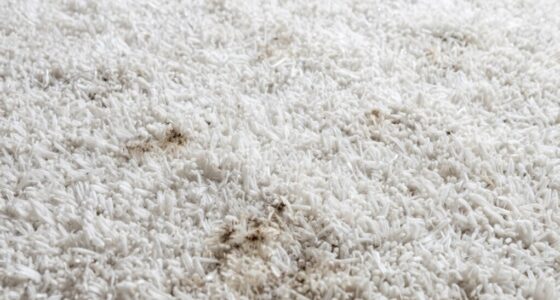
Protein stains and food stains behave differently because of their unique compositions. Protein stains, like those from meat or dairy, bond tightly to fabric fibers, making quick treatment essential. If you wait, the stain sets in, especially with heat. In contrast, most food stains are water-soluble and can be treated with warm water and dish soap. Understanding these differences helps you choose the right cleaning methods. Discover more tips to tackle those stubborn stains.

Get cleaning gear delivered free with Prime
- Fast, free delivery on millions of items
- Prime Video, Amazon Music and more included
- Member-only deals all year
Key Takeaways
- Protein stains bond tightly to fabric fibers, making them harder to remove compared to food stains that are often more easily lifted.
- Delayed treatment of protein stains makes them more difficult to eliminate, while food stains can often be treated more flexibly.
- Cold water is recommended for protein stains to prevent setting, while warm water effectively dissolves many food stains.
- Enzymatic cleaners specifically target proteins, enhancing removal, whereas general detergents are usually sufficient for food stains.
- Food stains typically contain sugars and acids, which are more water-soluble, allowing for easier removal than the greasy nature of some protein stains.
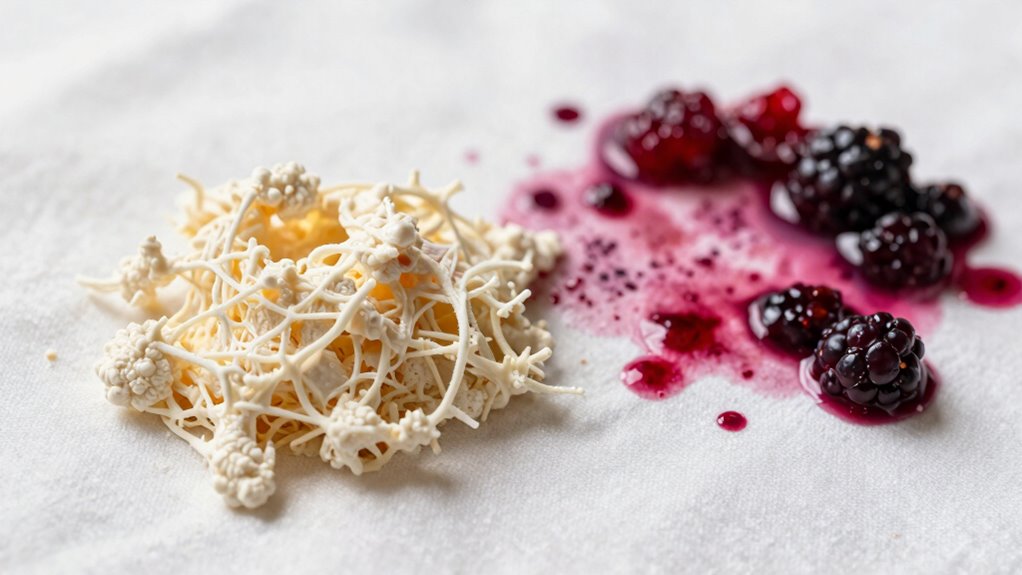
When it comes to tackling stains, understanding the difference between protein stains and food stains can save you time and frustration. Protein stains typically come from sources like meat, dairy, and blood, while food stains can be anything from sauces to fruits. Knowing how these stains behave differently can make all the difference in effective stain removal.
When you think about protein stains, remember that they’re primarily caused by proteins that bond tightly to fabric fibers. This means that if you spill something like egg yolk or yogurt on your clothes, it’s essential to act quickly. The longer you wait, the more difficult it’ll be to remove the stain. For effective stain removal, you’ll want to use cold water initially to rinse out as much of the protein as possible. Hot water can actually cook the proteins, setting the stain in place.
On the other hand, food stains often contain sugars and acids, which can break down differently. For example, tomato sauce or fruit juice might stain your fabric, but since these stains are often water-soluble, they can be treated with warm water and a bit of dish soap. Knowing the source of the stain helps you choose the right method for removal.
Another key difference lies in the cleaning agents you use. Enzymatic cleaners are particularly effective on protein stains because they target the proteins directly, breaking them down and allowing for easier removal. You might want to let the cleaner sit for a few minutes before rinsing. For food stains, a general laundry detergent often does the trick, especially if you treat the stain promptly.
Additionally, some protein stains can be more stubborn than others. For instance, dairy-based stains can leave a greasy residue that requires more than just a rinse with water. You might need to use a stain remover specifically designed to break down fats. Meanwhile, food stains like ketchup may lift out easily with a simple soak.
enzyme stain remover for protein stains
As an affiliate, we earn on qualifying purchases.
As an affiliate, we earn on qualifying purchases.
Frequently Asked Questions
How Can I Prevent Protein Stains on Fabrics?
To prevent protein stains on fabrics, start with these stain prevention tips: always treat spills immediately by blotting, not rubbing. Use cold water for rinsing, as heat can set protein stains. Choose fabrics that are stain-resistant, and consider applying a fabric protector. Regularly check your laundry for any stains before drying, since heat can make them permanent. With proper fabric care, you can keep your clothes looking clean and fresh!
Are Protein Stains More Difficult to Remove Than Other Stains?
Yes, protein stains are generally more difficult to remove than other stains. This is because their protein structure can bond tightly with fabric fibers, making them stubborn. The stain composition often includes complex molecules that resist standard cleaning methods. You’ll find that using cold water and specific enzymatic detergents can help break down these bonds more effectively. So, tackling protein stains quickly increases your chances of successful removal.
Do Protein Stains Have a Specific Scent?
Yes, protein stains often have a distinct scent. Notably, around 60% of people notice that these stains tend to emit stronger odors compared to typical food stains. This difference lies in their stain characteristics, which involve decomposing proteins that can produce unpleasant scent profiles. When you encounter a protein stain, the odor can signal the need for prompt cleaning to prevent lingering smells and further staining.
Can Heat Set Protein Stains Permanently?
Yes, heat can set protein stains permanently. When you apply heat, like through washing in hot water or using a dryer, it activates the proteins in the stain, making them bond to the fabric. This makes stain removal much more difficult. To avoid this, always treat protein stains with cold water first, then use an appropriate stain remover before applying any heat. By doing so, you increase your chances of successfully removing the stain.
What Common Foods Contain Protein That Can Stain?
Common foods that contain protein and can stain include egg whites, dairy products, meat juices, and legumes. When you spill these items, they can leave behind stubborn marks on fabrics. For instance, if you drop some raw egg or a bit of milk, you’ll want to act quickly to prevent permanent stains. Remember, using the right cleaning methods can help you tackle these protein stains effectively before they set in.
As an affiliate, we earn on qualifying purchases.
Conclusion
In the battle of stains, protein stains and food stains play by different rules. While protein stains cling tightly to fabrics, making them tougher to remove, food stains often respond better to treatment due to their water-soluble nature. So, when you’re tackling spills, remember that not all stains are created equal. You’ve got to know the game to win it. With the right approach, you’ll be on your way to a cleaner wardrobe in no time!
fabric stain remover for grease and protein
As an affiliate, we earn on qualifying purchases.
As an affiliate, we earn on qualifying purchases.
laundry stain remover for food and protein stains
As an affiliate, we earn on qualifying purchases.
As an affiliate, we earn on qualifying purchases.
Halloween Picks
halloween
As an affiliate, we earn on qualifying purchases.