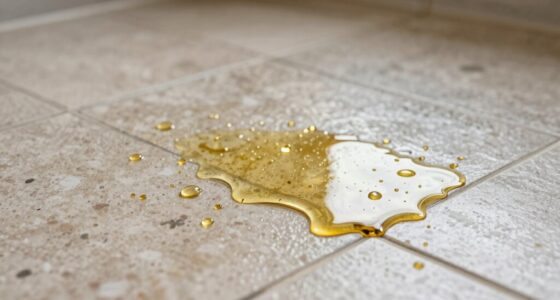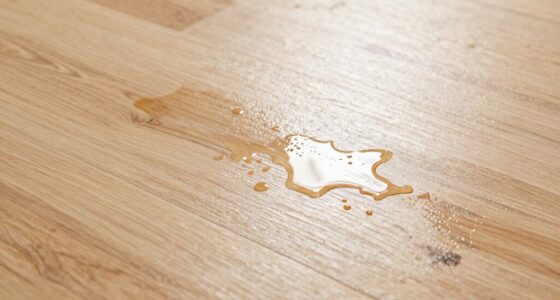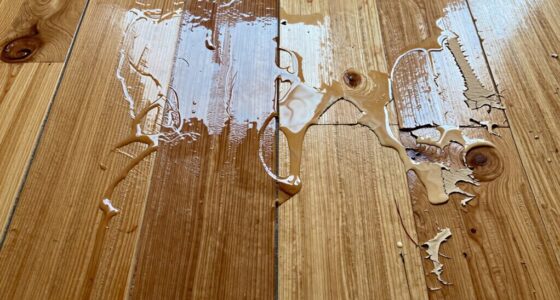
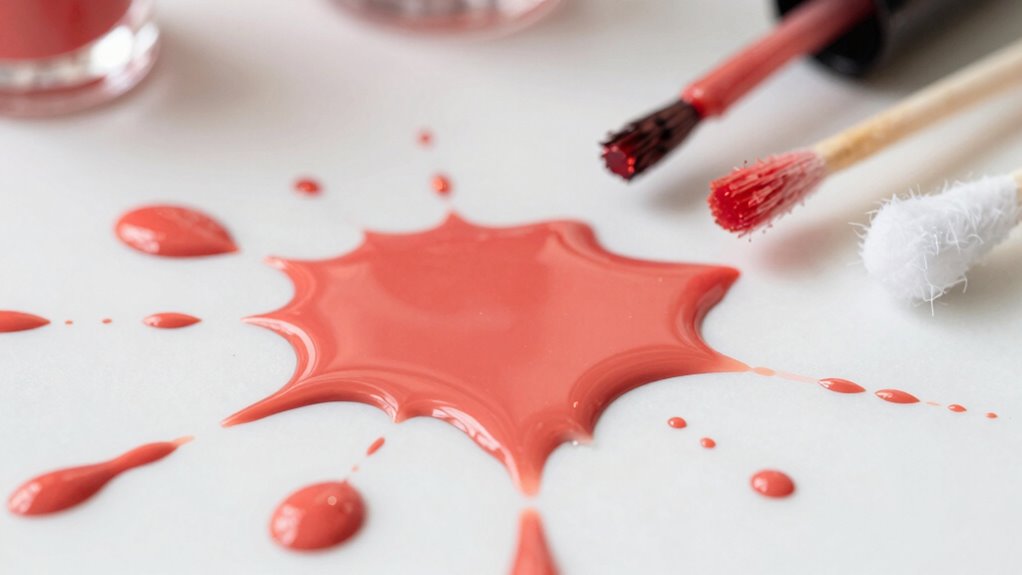
If you spill nail polish, act quickly to prevent it from spreading or setting. Blot the excess gently with a paper towel or cloth, avoiding rubbing. Use acetone-based remover on hard surfaces, but test first on delicate materials. For fabric or carpet, dab with a dish soap and water mixture. Keep a cleanup kit nearby and work carefully to contain the spill early on. If you want to know more, you’ll find helpful techniques below.
Key Takeaways
- Act immediately to blot excess polish with a clean cloth or paper towel, avoiding rubbing to prevent spreading.
- Use acetone-based nail polish remover on a cotton ball or soft cloth to gently dab and lift the stain.
- For fabrics or carpets, apply a dish soap and cold water mixture, blot gently, and test on a small area first.
- Keep nail polish bottles tightly capped and work over protected surfaces to prevent accidental spills.
- Maintain a cleanup kit nearby with acetone, cotton swabs, and paper towels for swift response.
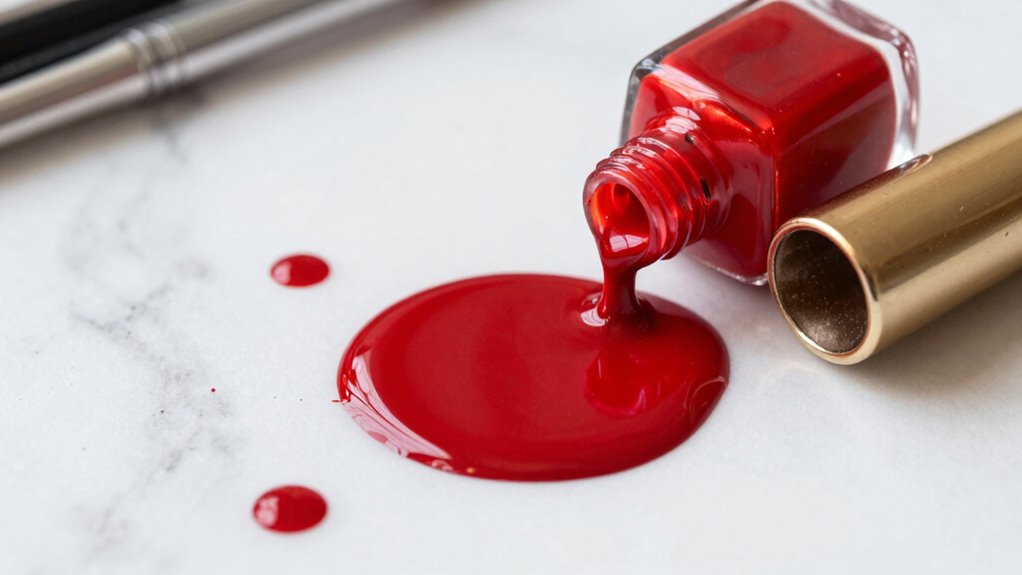
Have you ever experienced the chaos of a nail polish spill? It can happen in an instant—one wrong move, and suddenly, your favorite shirt or carpet is stained. When this happens, quick action is essential to minimize damage. Knowing effective removal techniques can make all the difference in preserving your belongings. First, act fast. Grab a clean cloth or paper towel to gently blot the excess polish without spreading it further. Avoid rubbing, as this can push the polish deeper into fibers or onto surfaces, making cleanup more difficult later.
Once you’ve absorbed as much as possible, the next step involves choosing the right removal techniques. For surfaces like plastic or glass, nail polish remover containing acetone works efficiently. Dampen a cotton ball or soft cloth with a small amount of acetone-based remover and gently dab the stain. Be cautious with delicate surfaces, as acetone can cause damage or discoloration. For fabrics or upholstery, it’s best to test a small, hidden area first to confirm the remover won’t harm the material. If safe, apply a bit of remover and lightly blot the stain, then rinse with cold water. For carpets, a mixture of dish soap and cold water can help lift the stain—apply it with a clean cloth, then blot gently. Additionally, understanding color accuracy and the properties of different materials can help you choose the safest and most effective cleaning method for each surface.
Prevention tips are equally important. Keep nail polish bottles capped tightly when not in use to prevent accidental spills. When applying or transporting polish, do so over a protected surface, like a tray or old newspaper. Always work in a well-ventilated area to avoid inhaling fumes and to have ample space to clean up immediately if a spill occurs. Consider wearing gloves or old clothing to avoid staining your skin or clothes. Having a small cleanup kit nearby with acetone, cotton swabs, and paper towels can save precious time. Additionally, practicing careful application techniques reduces the risk of drips or spills. Use a steady hand and work slowly toward the edges to contain the polish.
Frequently Asked Questions
Can Nail Polish Spills Be Removed From Clothing Without Staining?
You can often remove nail polish from clothing without staining if you act quickly. To do this, gently blot the spill with a clean cloth or paper towel to remove excess polish. Use rubbing alcohol or nail polish remover on a cotton ball to carefully remove the stain, then wash the fabric promptly. This process helps with removing polish and stain prevention, increasing your chances of avoiding permanent stains.
What Household Items Are Best for Cleaning Dried Nail Polish?
To clean dried nail polish, you can try household solutions like acetone or nail polish remover, but use them carefully on delicate fabrics. Natural remedies such as rubbing alcohol or olive oil can also help loosen the polish if acetone isn’t suitable. Gently dab the solution onto the stain with a cloth, then wash the item as usual. Always test a small area first to prevent damage.
How Long Does It Take for Nail Polish to Fully Dry?
Nail polish generally takes about 10 to 20 minutes to dry to the touch, but full drying can take up to two hours. Think of it like a seed growing — environmental factors like humidity and temperature can either speed up or slow down the process. To guarantee it’s completely dry and won’t smudge, give it ample time and avoid touching or bumping your nails during this drying window.
Is It Safe to Use Acetone on All Types of Surfaces?
Using acetone isn’t safe on all surfaces; you need to contemplate surface compatibility first. Acetone safety varies—it’s great for glass and metal but can damage plastics, painted surfaces, or finished wood. Always test a small, hidden area first to avoid harm. If you’re unsure, opt for gentler alternatives. Remember, using acetone properly prevents damage and keeps your surfaces intact.
Can Nail Polish Spills Damage Certain Materials Permanently?
Think of nail polish as a vivid splash of color that can stain and carve into materials like a painter’s brush into canvas. Yes, it can cause material damage and lead to stain permanence on porous surfaces like fabric or wood. Once it soaks in, removing it becomes a struggle, leaving behind a lasting mark. Act quickly to blot and treat, or you risk permanent damage and stubborn stains.
Conclusion
Act fast when you notice a nail polish spill; quick action can save your surfaces from stains. Remember, solvents like acetone can quickly break down the polish, preventing it from spreading further. Did you know that 78% of people who respond promptly manage to remove nail polish stains effectively? So, keep a small cleanup kit nearby and act swiftly to protect your belongings. Quick response makes all the difference in nail polish spill situations.