When cleaning paint drips from flooring, whether the paint is wet or dried changes your approach. For wet paint, you can wipe it away quickly with a damp cloth or sponge, using soap and water for water-based paints, or solvents like mineral spirits for oil-based paints. Dried paint requires scraping with tools like a putty knife and possibly applying specialized paint removers. Knowing these differences helps you choose the right method—continue to explore effective techniques for both situations.
Key Takeaways
- Wet paint can usually be wiped away easily with water and soap before it dries.
- Dried paint requires scraping or specialized removers, making cleanup more time-consuming.
- The choice of solvent depends on whether the paint is water-based or oil-based.
- Immediate action is crucial for wet paint to prevent permanent staining or damage.
- Protective coatings can prevent paint drips from bonding strongly, easing future cleanup efforts.
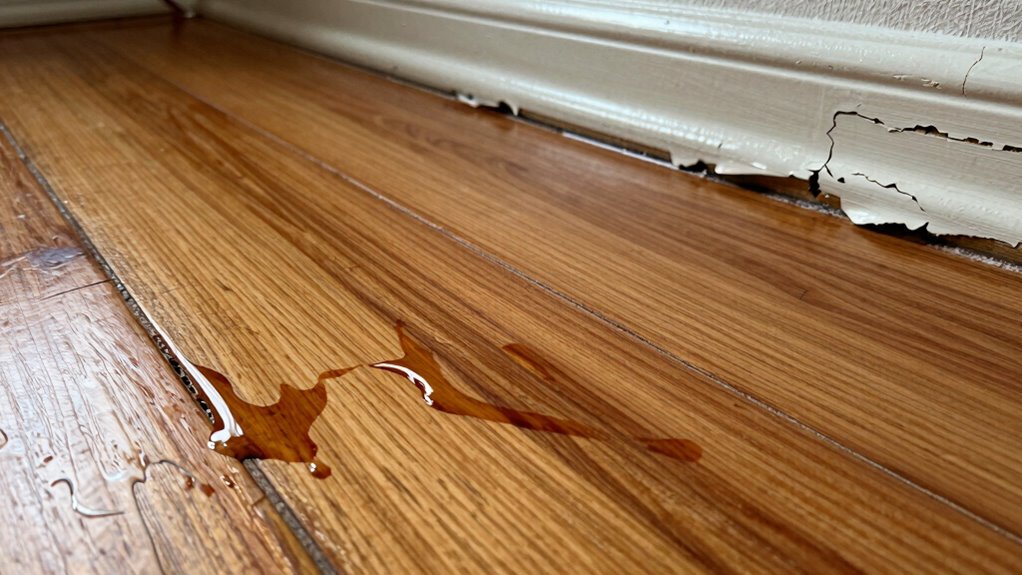
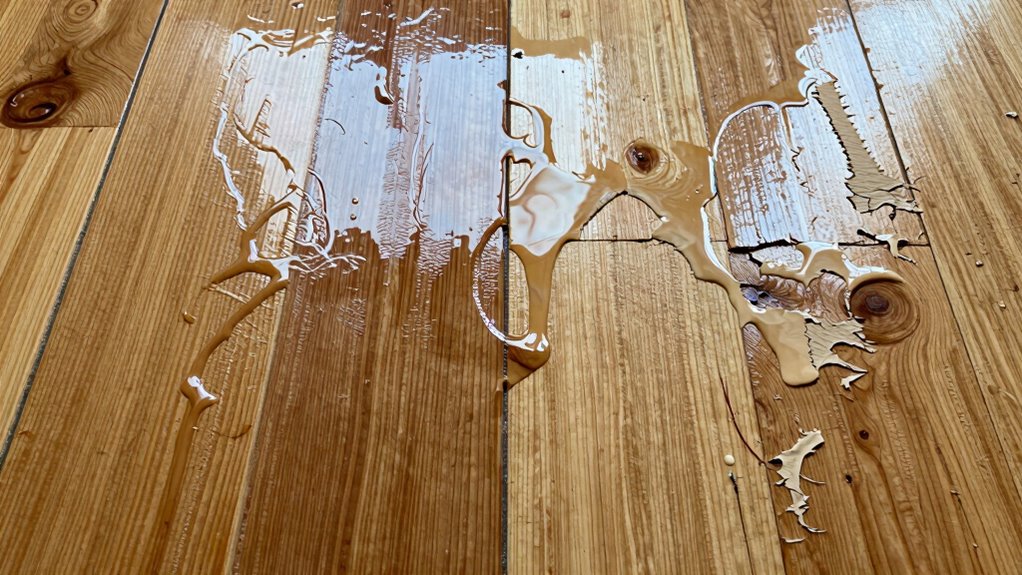
Accidents happen, and paint drips on flooring can quickly turn a DIY project into a frustrating cleanup. Whether you’re painting a room or adding a fresh coat to furniture, drips are almost inevitable. The key to minimizing damage and ensuring a professional look lies in understanding how to handle both dried and wet paint. When you notice paint dripping onto your flooring, your first priority should be to assess whether it’s wet or dried, as this dramatically changes your approach.
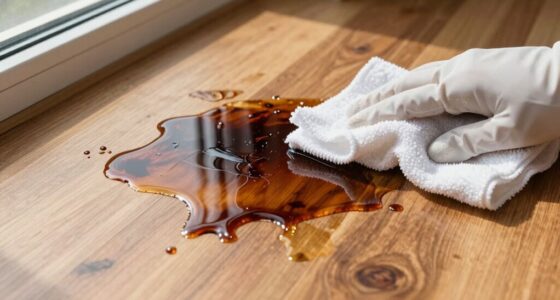
If the paint is still wet, cleanup is straightforward. You can often wipe it away easily with a damp cloth or sponge before it has a chance to set. Acting quickly allows you to preserve the integrity of your flooring and avoid staining. For water-based paints, a simple soap and water solution usually suffices. For oil-based paints, you might need a solvent like mineral spirits, but always test a small area first to prevent any damage. When dealing with wet paint, it’s also an opportunity to contemplate color matching if some drips have already dried or smudged, especially if you’re touching up areas later. Keeping a small amount of the original paint on hand helps you blend any mistakes seamlessly, ensuring a uniform finish. Applying protective coatings over the painted surface once it’s dry can also safeguard your flooring from future accidents, making cleanup easier next time. Additionally, understanding the type of paint involved—whether water-based or oil-based—can influence the cleanup method, as each has specific solvents suitable for removal.
Once paint has dried, cleanup becomes more challenging. Dried paint forms a stubborn film that resists removal with just water or mild cleaners. You might need a scraper or putty knife to gently lift dried drips without scratching your flooring. For stubborn spots, specialized paint removers or solvents can help, but always follow manufacturer instructions and test in an inconspicuous area first. If your goal is to prevent future drips from causing lasting damage, consider applying a protective coating over the painted surface. This layer acts as a barrier, making it easier to clean up accidental drips in the future and helping to match the original appearance of the floor. When removing dried paint, you need patience and the right tools to avoid damaging the flooring beneath.
In both cases—wet or dried—the goal is to act promptly and carefully. For wet paint, quick action is your best defense, while for dried paint, patience and the right tools are essential. Protecting your flooring with a suitable coating can make cleanup less stressful down the line. By understanding these differences and using the right techniques, you’ll keep your floors looking their best despite occasional mishaps. Recognizing the importance of paint chemistry can also guide you in selecting the most effective removal methods and protective measures.
Frequently Asked Questions
Can Dried Paint Be Removed Without Damaging the Floor?
Yes, dried paint can be removed without damaging your floor. For effective paint removal, you should use gentle methods like scraping carefully with a plastic scraper or applying a paint remover suitable for your floor type. Always protect your floor by testing in a small area first and using floor protection like painter’s tape or drop cloths. This approach guarantees safe, effective clean-up without risking damage to your flooring.
What Safety Precautions Are Needed During Cleanup?
Imagine you’re steering a stormy sea; safety gear is your sturdy boat. Wear gloves, goggles, and a mask to protect yourself from fumes and splashes. Make sure proper ventilation by opening windows and doors to keep the air fresh. These precautions prevent health risks, like inhaling fumes or skin irritation, making your cleanup safer and more effective. Stay prepared, and your task becomes a smooth voyage to a spotless floor.
Are There Eco-Friendly Options for Cleaning Paint Drips?
You can use eco-friendly options like biodegradable solvents and natural cleaning agents to remove paint drips safely. Biodegradable solvents break down easily, reducing environmental impact, while natural agents like vinegar or baking soda are effective for cleaning spills without harmful chemicals. These options are safe for your flooring and the planet, making your cleanup more sustainable. Always test a small area first to make certain of compatibility with your flooring type.
How Long Should I Wait Before Attempting to Clean Wet Paint?
You should wait at least 15-30 minutes before attempting to clean wet paint, depending on the drying time specified on the paint’s label. Rushing too early can make cleaning more difficult and damage the surface. Incorporate this into your cleaning schedule by monitoring the paint’s consistency. Once the paint feels tacky but isn’t fully dry, gently wipe it with a damp cloth to avoid spreading it further.
Will Cleaning Methods Vary for Different Types of Flooring?
You’ll find cleaning methods vary for different flooring materials, and choosing the right cleaning solutions is essential. For hardwood, use gentle, water-based cleaners to avoid damage. For tile, you can apply more robust solutions like mild solvents. Carpet requires blotting and specialized cleaners. Always tailor your approach, assess the flooring type, and select cleaning solutions accordingly to prevent harm and effectively remove paint drips.
Conclusion
So, whether your paint takes a little longer to settle or dries in the blink of an eye, remember that patience and gentle care are your best allies. A little extra effort now can turn a potential mishap into a charming story of perseverance. Embrace the journey of cleanup with a calm spirit, and you’ll find that even the most stubborn drips can become a subtle reminder of your creative adventure.