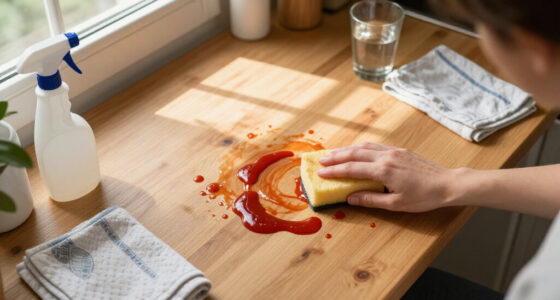
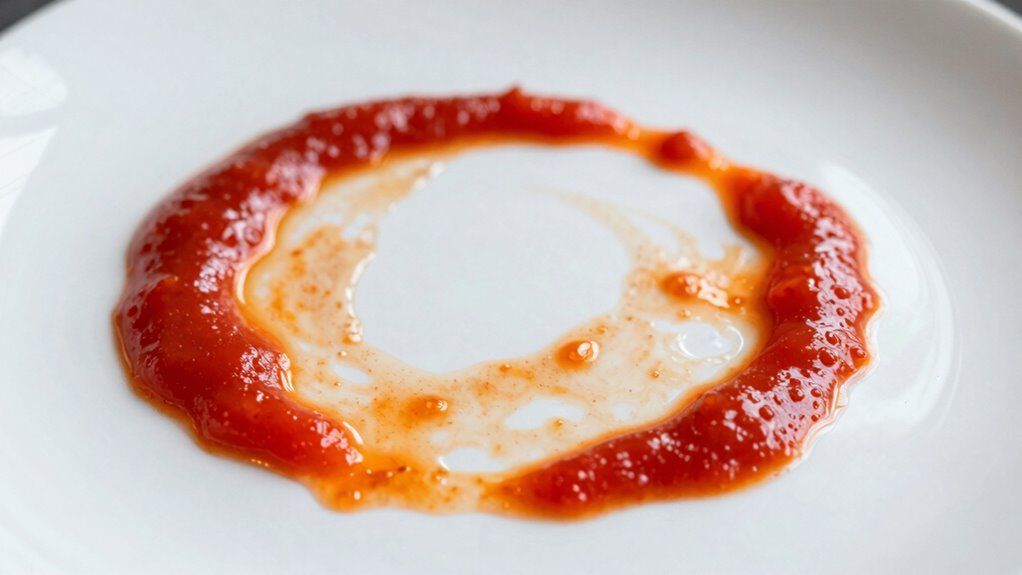

Tomato sauce stains turn orange because the acids and pigments in the sauce react with fabric fibers over time, especially if you delay cleaning or use wrong methods. Acting quickly helps prevent the stain from setting and develops an orange hue. To stop this, rinse the fabric with cold water immediately and avoid rubbing. Proper treatment and prompt action are key, and you’ll discover helpful tips to keep your fabrics looking their best as you continue.

Get cleaning gear delivered free — and shop member deals
- Fast, free delivery on millions of items
- Access to Prime Big Deal Days deals on October 6–7
- Prime Video, Amazon Music and more included
Key Takeaways
- Tomato sauce stains turn orange when they oxidize upon exposure to air and light.
- Immediate cold water rinse prevents oxidation, reducing orange hue development.
- Using the right stain removal techniques quickly can stop the stain from setting and discoloring.
- Applying baking soda paste or hydrogen peroxide can help eliminate stubborn orange stains.
- Proper pre-treatment and avoiding heat drying prevent the stain from becoming more stubborn and discolored.
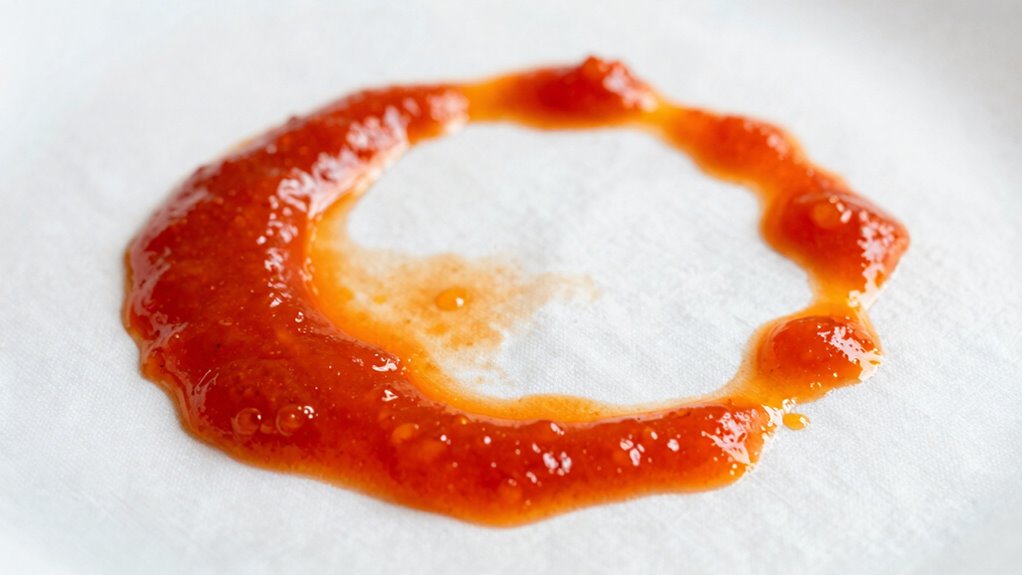
Tomato sauce stains can be stubborn, but acting quickly increases your chances of removing them completely. When you notice a spill on your clothing or tablecloth, don’t delay; prompt action is key. Knowing whether your fabric is colorfast can help determine the best approach. Colorfast fabrics won’t bleed or fade when you treat stains, making them safer to handle with stronger solutions. If you’re unsure, test the stain removal techniques on a small, hidden area first. This step prevents accidental damage or color loss, especially on delicate or non-colorfast fabrics.
To start, gently scrape off any excess sauce with a spoon or dull knife—be careful not to spread the stain further. Blot the area with a clean cloth to absorb as much of the liquid as possible. Avoid rubbing, which can push the stain deeper into the fibers and make removal more difficult. Next, rinse the fabric with cold water from the back side of the stain if possible. Cold water helps prevent the stain from setting and minimizes the orange hue that often develops as the stain ages. For colorfast fabrics, you can proceed with a stain removal technique using a mixture of dish soap and cold water, applied directly to the stain. Let it sit for a few minutes before gently blotting or rinsing again.
Gently scrape excess sauce, blot with a clean cloth, and rinse with cold water from the back of the stain.
If the stain persists, consider using a stain remover or a paste made from baking soda and water. These stain removal techniques are effective on most fabrics, but always check the care label first. For more stubborn stains, applying a small amount of hydrogen peroxide can help break down the pigment. Be cautious with peroxide, especially on darker or delicate fabrics, and always do a patch test beforehand. Remember, some fabrics may react poorly to certain chemicals, so understanding your fabric type is essential. With patience and proper techniques, you can prevent the orange discoloration from setting in, which often happens when stains sit too long or are exposed to heat. Additionally, understanding fabric care properties can help you choose the most suitable stain removal method and avoid damage.
Another tip is to avoid drying the fabric until you’re confident the stain is gone. Heat can set the stain permanently, making removal impossible. Instead, air dry the fabric after treatment and inspect for any remaining discoloration. If the stain persists, repeat the process or try a specialized stain remover designed for removing tomato-based stains. By combining knowledge of your fabric’s properties with effective stain removal techniques, you’ll improve your chances of restoring your clothes and linens to their original state, avoiding the frustrating orange hue that often appears with delayed or improper treatment.
Top picks for "tomato sauce stain"
As an affiliate, we earn on qualifying purchases.
Frequently Asked Questions
Can Baking Soda Remove Tomato Sauce Stains Effectively?
Yes, baking soda can effectively remove tomato sauce stains. Its efficacy lies in its gentle abrasiveness and ability to neutralize acids, helping lift stains. To use it, create a paste with baking soda and water, then apply it directly to the stain. Let it sit for a few minutes before rinsing. For best stain removal tips, repeat if necessary and always test on a small area first.
Do Synthetic Fabrics Stain Differently From Natural Fabrics?
Synthetic fabrics tend to stain more stubbornly than natural ones because they often contain fewer fabric dyes and less stain resistance. You might think they’re invincible, but nope—those shiny fibers absorb stains like a sponge, making cleanup a chore. Natural fabrics, with their better stain resistance, usually surrender more easily. So, if you want stain-free clothes, choose your fabrics wisely; otherwise, prepare for a colorful surprise.
How Long Do Tomato Sauce Stains Typically Last?
Tomato sauce stains usually last from a few days to a week, depending on how quickly you treat them. If you act fast, stain fading happens faster, and the stain may disappear completely. The longer the stain sits, the more stubborn it becomes, making stain longevity increase. For best results, use stain removers promptly and wash with hot water to help shorten stain fading time.
Are There Natural Remedies to Prevent Stain Setting?
You can use natural herbal remedies like lemon juice or vinegar as stain prevention tips. Before applying tomato sauce, dab a mixture of these herbal remedies onto the fabric to create a barrier. This helps prevent stain setting and keeps your clothes from turning orange. Always test a small area first, and act quickly to treat spills. Regularly using these natural remedies can considerably reduce stain chances and keep your fabrics looking fresh.
Does the Type of Tomato Sauce Affect Stain Removal?
Imagine splashing a vibrant, thick tomato sauce onto your shirt—different sauces have varying compositions, which can influence stain removal. Thicker, oil-rich sauces with added spices tend to be tougher to clean than smoother, water-based ones. The type of sauce affects how deeply it penetrates fabric, and storage temperature can alter its stain-causing properties. So, choose your sauces wisely and store them properly to make cleanup easier.
Conclusion
Just as a painter’s brush can transform a blank canvas, your choices can prevent tomato sauce stains from turning orange. By acting swiftly and avoiding prolonged exposure, you’re steering clear of the stubborn discoloration that haunts many. Remember, with a little care, you can keep your fabrics as pristine as a Renaissance masterpiece—timeless and vibrant. So, embrace these tips, and let your linens remain as vivid and lively as a Van Gogh sunset.
Fall Picks
fall essentials
As an affiliate, we earn on qualifying purchases.