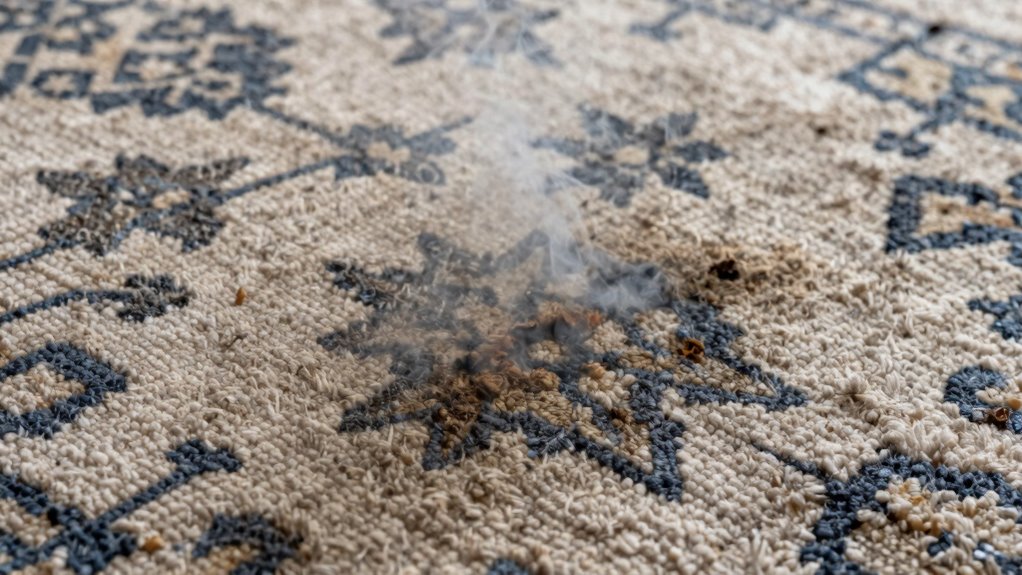

To eliminate smoke smell from your rug, start with thorough vacuuming to remove loose particles. Then, deep clean using suitable cleaning agents like mild detergents or enzyme-based cleaners, making sure to dry the rug completely afterward. Neutralize odors with baking soda or natural deodorizers, and apply targeted treatments for stubborn smells. Keep your rug well-ventilated during and after cleaning. For detailed steps, stay tuned—you’ll discover effective tips to restore freshness easily.
Key Takeaways
- Thoroughly vacuum the rug to remove loose smoke particles and surface debris.
- Use appropriate cleaning agents, like enzymatic cleaners or vinegar solutions, tailored to rug material.
- Apply odor absorbers such as activated charcoal or specialized deodorizers post-cleaning.
- Ensure complete drying with fans, sunlight, or dehumidifiers to prevent mold and residual smells.
- Maintain ventilation and regular cleaning to prevent smoke odor from re-accumulating.
Why Smoke Odor Gets Trapped in Rugs
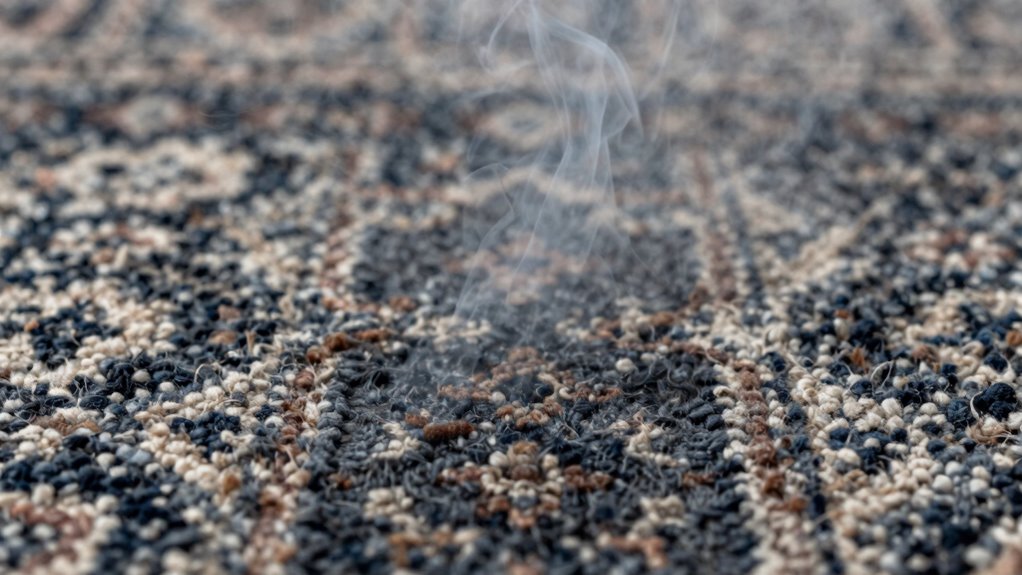
Smoke odor easily gets trapped in rugs because their fibers are porous and absorbent. When smoke lingers, tiny smoke particles settle into these fibers, attaching to the material. These particles contain odor molecules that are small and lightweight, allowing them to seep deep into the rug’s structure. As a result, the smell becomes embedded, making it difficult to remove with simple airing out. The fibers act like a sponge, soaking up both smoke particles and odor molecules, which then release slowly over time or with exposure to heat or moisture. This absorption process is why smoke odor persists even after the smoke has cleared. To effectively deodorize, you need to target these trapped particles and molecules directly. Understanding air purifier technology can help you choose effective solutions for removing residual odors from your home. Additionally, using ozone generators or specialized deodorizing treatments can help break down these odor molecules at a molecular level, providing a more thorough cleaning. Incorporating advanced filtration systems can further enhance odor removal by capturing microscopic particles more efficiently. Recognizing the porous nature of rug fibers is essential for selecting the most effective deodorizing methods. Employing proper cleaning techniques tailored to porous materials can significantly improve deodorization results.
Gather Supplies and Inspect Your Rugs for Damage
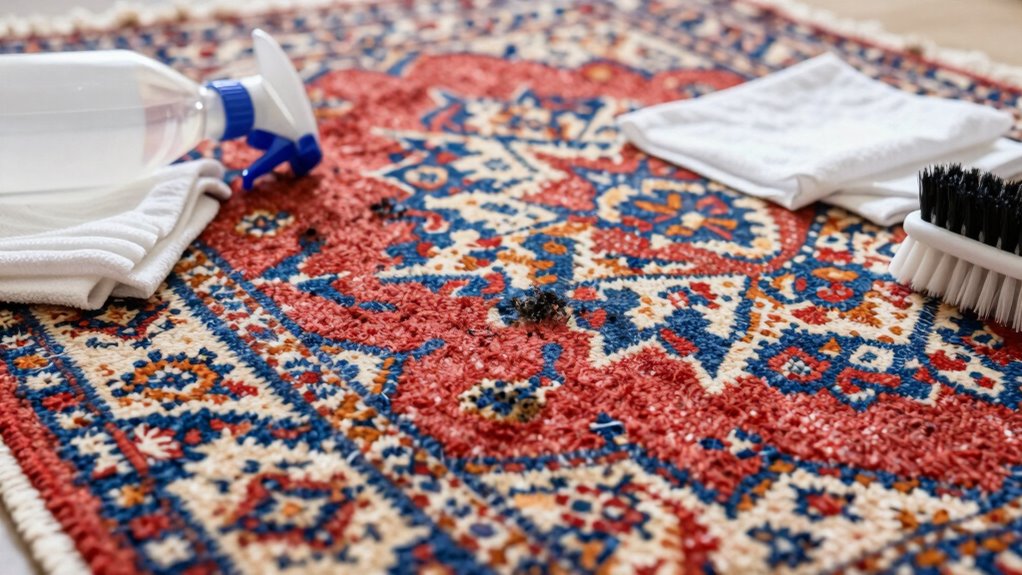
Before you begin cleaning, gather all the supplies you’ll need and carefully inspect your rugs for any damage. Consider rug material considerations, as different fabrics require specific cleaning methods—wool, synthetic, or natural fibers may react differently to cleaning solutions. Use stain detection techniques to identify any spots or areas needing extra attention, which can help target smoke-related residues. Check for fraying, tears, or loose fibers that could worsen during cleaning. Having your supplies ready—such as vacuum, cleaning agents, and protective gear—ensures a smooth process. Inspecting for damage beforehand prevents accidental worsening of issues and helps you plan the appropriate cleaning approach for your rug’s specific needs. Being aware of youngster choice trends and influences can also guide you in choosing effective deodorizing methods suited to your rug type. Additionally, understanding wave and wind effects can assist in choosing the best time and environment for airing out your rugs, which enhances deodorizing efforts. Proper ventilation and air circulation can significantly improve the effectiveness of your deodorizing process, preventing lingering smoke smells. Incorporating Suprem fabric options into your cleaning routine can also offer eco-friendly and durable solutions for your rugs. Recognizing vetted dog names can also inspire you to create a cozy and welcoming environment that complements your cleaning efforts. This prep work sets the stage for effective deodorizing and restoration.
Deep Clean Your Rugs to Remove Surface Smoke Residue
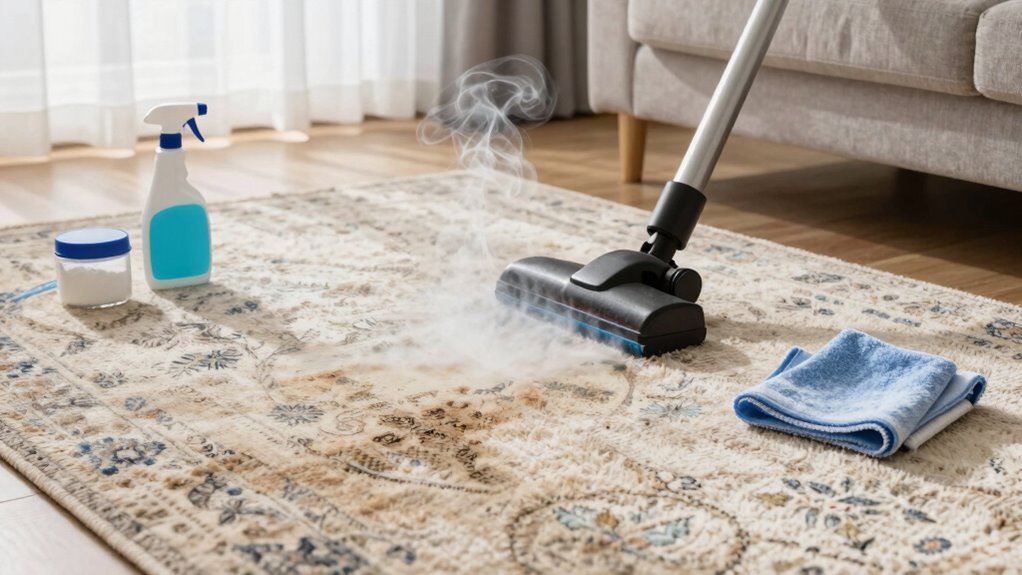
To effectively remove surface smoke residue, you need to start by removing loose particles with a thorough vacuuming. Then, use cleaning agents suited for your rug’s material to lift lingering odors and stains. Additionally, understanding the science of odor absorption can help you choose the most effective deodorizing methods. Employing porous materials for absorption can further enhance odor removal by trapping smoke particles more efficiently. Incorporating AI-powered tools can optimize your cleaning process by suggesting tailored solutions based on your rug’s specific needs. Recognizing the importance of proper drying techniques can prevent mold growth and future odors from developing. Using appropriate drying methods, such as air circulation and dehumidification, ensures your rug dries evenly and thoroughly. Finally, make sure to dry your rug completely to prevent mold and future odors from developing.
Remove Surface Particles
Start by thoroughly vacuuming your rug to remove loose surface particles and dust. This initial step is crucial for effective surface cleaning and particle removal. Use a vacuum with a strong suction and a brush attachment to guarantee you pick up as many surface particles as possible. Focus on all areas, including edges and corners, where dust and soot tend to accumulate. Regular vacuuming prevents particles from settling deeper into the fibers and helps reduce the smoky smell. Be sure to go over the rug multiple times, adjusting your vacuum height for maximum pickup. Removing surface particles not only improves the appearance but also lays the groundwork for deeper cleaning. This step is a necessary part of your overall deodorizing plan to restore freshness to your rug. Incorporating low light office plants can also help improve air quality in the space, aiding in odor removal and creating a fresher environment. Additionally, understanding the Mental Wellbeing Index can encourage a more mindful approach to maintaining a clean, fresh space that supports mental health. For example, off-road vehicle speeds can vary greatly, but understanding the capabilities of your equipment can help you operate more safely and effectively. To enhance your deep-cleaning process, consider exploring cleaning techniques for different fiber types to tailor your approach for optimal results. Being aware of your best vacuum options can further ensure you select the most effective tool for removing surface particles.
Use Appropriate Cleaning Agents
Using the right cleaning agents is essential for effectively removing smoke residue from your rug’s surface. Choose cleaning agents formulated for delicate fibers and tough stains. Look for products labeled as odor neutralizers, which help eliminate lingering smoke smells. Before applying, test a small area to ensure compatibility. For best results, consider a combination of mild detergents and specialized odor neutralizers designed for smoke. Here’s a quick guide:
| Cleaning Agent Type | Purpose | Application Tips |
|---|---|---|
| Mild Detergent | Surface dirt and residue | Dilute and gently scrub |
| Odor Neutralizers | Neutralize smoky odors | Spray evenly and let sit |
| Enzymatic Cleaners | Break down organic odors | Use for stubborn smells |
| Vinegar Solution | Natural deodorizer | Mix with water for gentle cleaning |
Additionally, choosing appropriate cleaning agents can help protect the integrity of your rug while effectively removing smoke odors. Proper selection of cleaning products is also influenced by understanding the content quality and the specific material of your rug, which can impact the cleaning process.
Dry Thoroughly After Cleaning
After cleaning your rug, it’s essential to dry it thoroughly to prevent lingering moisture that can trap smoke odors or promote mold growth. Place your rug in a well-ventilated area with plenty of sunlight exposure, as sunlight helps kill bacteria and speeds up drying. If possible, lift the rug off the floor to allow airflow underneath, especially if it has carpet padding. Be sure to check the padding, as moisture trapped there can cause persistent odors and mold. Use fans or a dehumidifier to accelerate drying, ensuring no damp spots remain. A completely dry rug and padding prevent smoke smell from lingering and reduce the risk of future issues, leaving your rug fresh and odor-free. Proper air circulation is also crucial for thorough drying and odor removal. Ensuring good airflow throughout the drying process enhances evaporation and helps eliminate residual odors more effectively. Additionally, paying attention to moisture levels helps prevent problems caused by trapped dampness.
Use Baking Soda and Natural Deodorizers to Neutralize Odors
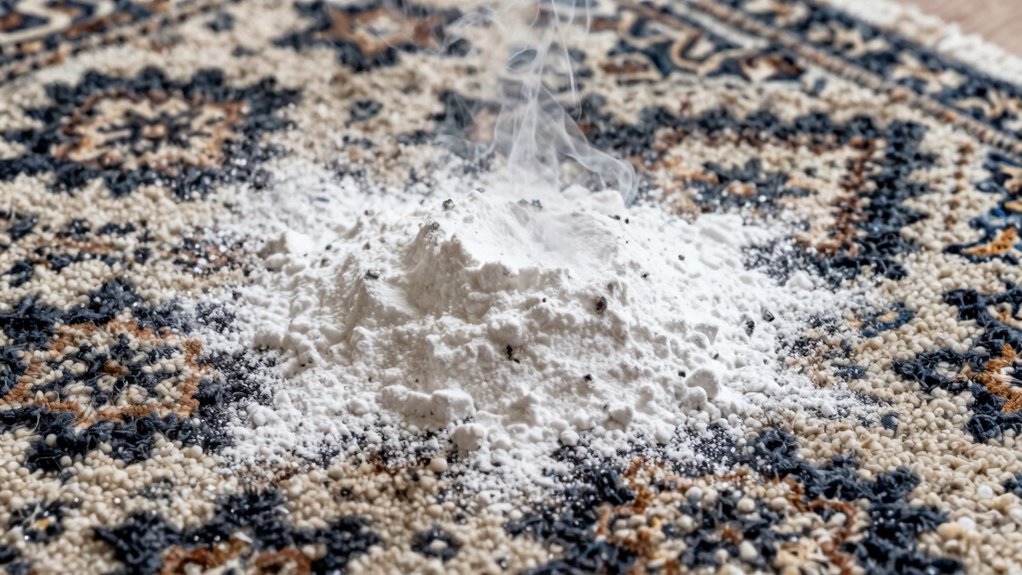
Baking soda is a simple yet powerful tool for neutralizing smoke odors in rugs. Its uses as a natural deodorizer make it a popular choice for freshening up your space. To use it, generously sprinkle baking soda over the entire rug, focusing on areas with lingering smells. Let it sit for several hours or overnight to absorb odors effectively. Afterward, vacuum thoroughly to remove all the baking soda residue. Besides baking soda, natural deodorizer options include activated charcoal, which traps odors, and essential oils like lavender or eucalyptus, which leave a pleasant scent. These options work well together or separately to help eliminate smoke smells without harsh chemicals. Using baking soda and natural deodorizers is a safe, eco-friendly way to refresh your rug and improve indoor air quality.
Apply Targeted Treatments for Persistent Smoke Smells
When stubborn smoke smells stick around, targeted treatments like deep cleaning techniques can make a big difference. Using odor-absorbing agents, such as activated charcoal or specialized deodorizers, helps pull out lingering odors. These methods guarantee your rug smells fresh and clean once again.
Deep Cleaning Techniques
Persistent smoke odors can be stubborn, but targeted deep cleaning techniques can effectively eliminate them from your rugs. Start by evaluating your rug’s fiber types, as different fibers require specific cleaning methods to prevent damage. Regular cleaning schedules, such as deep vacuuming and periodic steam cleaning, help maintain freshness and prevent odors from setting in. For persistent smells, consider hot water extraction or professional steam cleaning to reach deep fibers. Use the table below to choose appropriate techniques based on fiber type:
| Fiber Type | Deep Cleaning Method |
|---|---|
| Wool | Gentle steam cleaning, avoid harsh chemicals |
| Synthetic | Hot water extraction, regular maintenance |
| Cotton | Mild detergents, thorough rinsing |
| Silk | Professional cleaning, avoid excessive moisture |
Odor Absorbing Agents
After thoroughly cleaning your rug, some smoke odors may still linger, especially in fibers where odors tend to embed deeply. This is when odor absorbing agents become essential. These targeted treatments work by drawing out remaining odors from the fibers, helping to restore freshness. You can use natural options like baking soda, which is highly air purifying and absorbs odors effectively. Sprinkle it generously over the rug, let it sit for several hours or overnight, then vacuum thoroughly. Commercial odor absorbing agents are also available, designed specifically for deep odors. These products enhance air purifying effects and can notably reduce stubborn smoke smells. Applying these agents ensures that residual odors are neutralized, leaving your rug smelling clean and fresh.
Dry Your Rugs Properly and Keep Ventilated
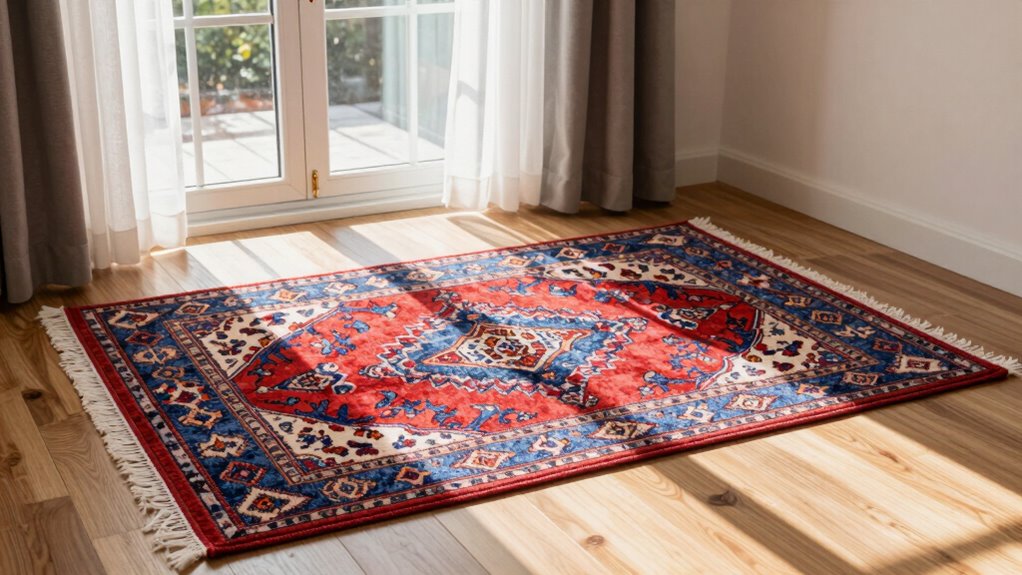
To effectively eliminate smoke smells from your rugs, it’s essential to dry them thoroughly and guarantee good ventilation. Proper ventilation practices allow fresh air to circulate, helping to dissipate lingering odors. Use fans or open windows to increase airflow around the rug, speeding up the drying process. When drying, employ effective drying techniques such as hanging the rug outdoors or laying it flat in a well-ventilated area. Avoid leaving the rug damp, as moisture can trap odors and promote mold growth. Ensure the rug is completely dry before placing it back inside. This not only reduces smoke smells but also prevents new odors from settling in. Consistent airflow and proper drying are vital steps in restoring your rug’s fresh scent.
Tips to Maintain Your Rugs and Prevent Future Smoke Odors
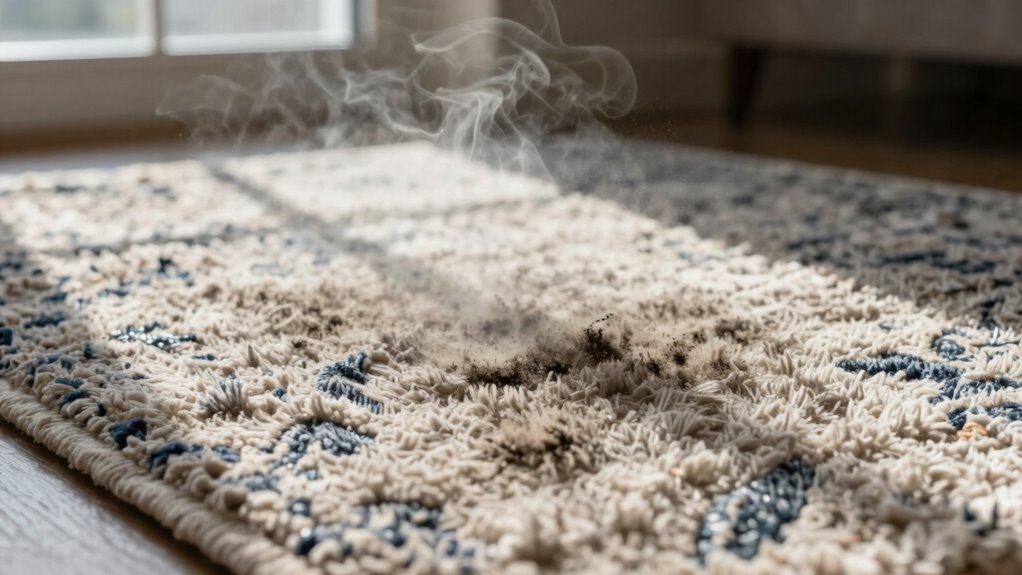
Maintaining your rugs regularly can help prevent smoke odors from settling in again. Preventive maintenance and regular inspections are key to keeping your rugs fresh. Here are three tips to help you stay ahead:
Regular rug maintenance prevents smoke odors from returning. Stay proactive with routine cleaning and inspections.
- Schedule routine vacuuming to remove dust and particles that trap odors.
- Perform regular inspections for stains or areas needing spot cleaning to prevent odor buildup.
- Rotate your rugs periodically to ensure even wear and prevent areas from trapping more smoke residues.
Frequently Asked Questions
How Long Does It Usually Take to Fully Deodorize a Smoky Rug?
It usually takes about 24 to 72 hours to fully deodorize a smoky rug, depending on the severity of smoke residue and odor absorption. You should regularly air out the rug and use deodorizing techniques like baking soda or specialized cleaners. Keep in mind, persistent odors might require multiple treatments or professional cleaning. Patience is key to effectively removing the smoke smell and restoring your rug’s freshness.
Can Professional Cleaning Completely Remove Stubborn Smoke Odors?
Think of stubborn smoke odors as uninvited guests who refuse to leave. Professional cleaning can often completely remove these tough smells by using advanced odor elimination methods. Experts target deep fibers and hidden residues, giving your rug a fresh start. While some odors may linger, professional treatments markedly boost your chances of total odor removal, making your home smell clean and welcoming once again.
Are There Specific Rug Materials More Resistant to Smoke Odor Absorption?
Synthetic fibers like nylon and polyester tend to resist smoke odor absorption better than natural materials such as wool or cotton. Natural materials are more porous, making them more prone to trapping smoke smells. To protect your rug, choose synthetic options if possible, and regularly clean and deodorize it. For natural fibers, prompt treatment and deep cleaning help reduce odor absorption and keep your rug smelling fresh longer.
Is It Safe to Use Commercial Odor Removers on Delicate Rugs?
Are commercial odor removers safe for delicate rugs? It depends on the product and your rug’s material. Always check the label and test a small, hidden area first to verify rug safety. Some commercial products contain harsh chemicals that can damage delicate fibers, so opt for gentle, specially formulated odor removers. If you’re unsure, consult a professional or choose natural alternatives to protect your rug’s integrity.
How Often Should I Deep Clean My Rugs to Prevent Smoke Smell Buildup?
You should deep clean your rugs every 6 to 12 months to prevent smoke smell buildup. Regular cleaning frequency helps with odor prevention by removing dirt and smoke residues before they settle deeply. If you notice a persistent smell, increase cleaning frequency temporarily. Using gentle cleaning methods and proper ventilation also aids in odor control, ensuring your rugs stay fresh and smell-free over time.
Conclusion
By following these steps, you’ll breathe new life into your rugs and reclaim your space from lingering smoke smells. Think of your rug as a canvas, ready to be revitalized and renewed with a little effort. With patience and care, you’ll turn a smoky mess into a fresh, inviting haven — a gust of fresh air in your home’s story. Don’t let smoke fumes steal your comfort; restore your space with confidence.