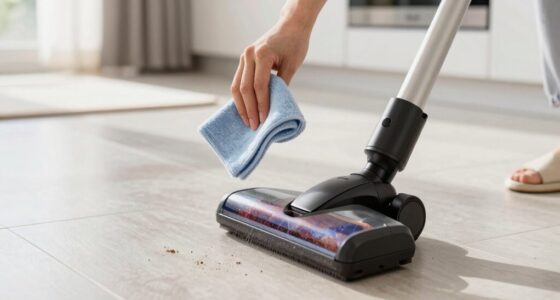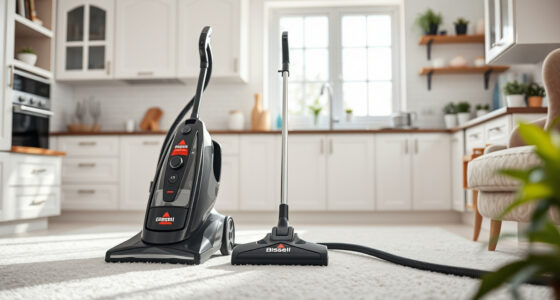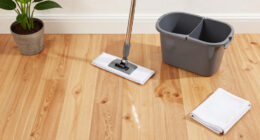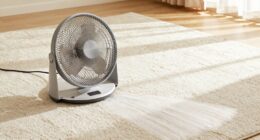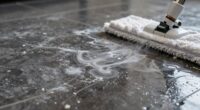
To reduce pollen tracked indoors, place doormats outside and inside each door, encouraging everyone to wipe or remove shoes before entering. Use a shoe rack near the entrance to contain footwear and prevent pollen spread. Regularly vacuum floors and carpets with a HEPA-filter vacuum, and wipe hard floors with a damp mop. Keep windows and doors closed during high pollen seasons. For more tips, learn how combining these strategies can create a healthier indoor environment.
Key Takeaways
- Place doormats outside and inside every door to catch pollen on shoes before entering.
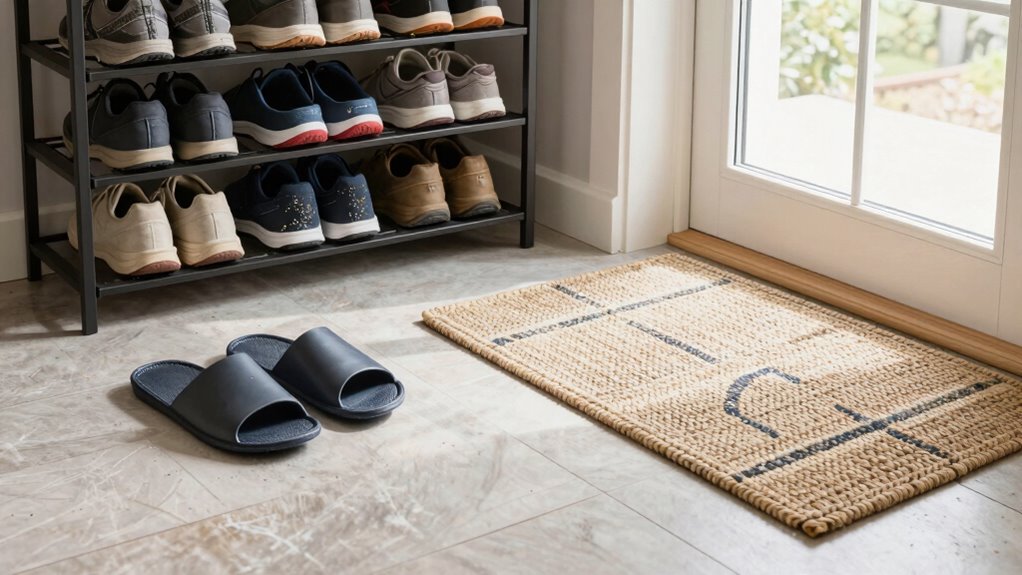
- Encourage removing shoes at the door and provide a dedicated shoe rack nearby.
- Regularly clean and vacuum floors, carpets, and rugs with HEPA-filter equipment.
- Wipe down hard floors with a damp mop to remove settled pollen effectively.
- Keep windows and doors closed during high pollen seasons to prevent outdoor pollen from entering.
Are you struggling with pollen drifting into your home and triggering allergies? Pollen can easily hitch a ride on shoes, mats, and floors, making it a persistent problem indoors. To reduce pollen tracked inside, you need a strategic approach that includes understanding the Air Purifier Effectiveness and establishing effective cleaning schedule tips. First, investing in a high-quality air purifier can markedly cut down the amount of pollen circulating in your indoor air. Look for models equipped with HEPA filters, which are proven to trap tiny pollen particles efficiently. Keep in mind that the effectiveness of your air purifier depends on proper placement—avoid obstructing airflow and position it in common areas where pollen tends to settle. Regularly changing filters and running the purifier continuously during pollen season can maximize its benefits, ensuring cleaner air and fewer allergy triggers. Proper placement and routine maintenance of your air purifier maximize its effectiveness.
Next, focus on controlling pollen at the entry points. Place doormats outside and inside each door to catch pollen on shoes before they enter your home. Encourage everyone to remove shoes at the door, and consider establishing a dedicated shoe rack near the entrance. This simple step reduces the amount of pollen tracked onto floors and carpets. When it comes to cleaning, consistency is key. Establish a cleaning schedule that emphasizes vacuuming floors, carpets, and rugs at least two to three times a week, using a vacuum equipped with a HEPA filter to trap microscopic pollen particles. Don’t forget to wipe down hard floors with a damp mop regularly, as pollen can settle there too. Cleaning mats, upholstery, and curtains helps eliminate pollen buildup in those areas.
Incorporate these cleaning tips into your routine and stay disciplined with your schedule. Regularly washing bedding, pillowcases, and any fabric-covered furniture also helps reduce pollen allergens. Additionally, keep windows and doors closed during high pollen seasons to prevent outdoor pollen from entering your home. Using a vacuum with strong suction and a sealed system ensures dust and pollen don’t escape back into the air. Remember, combining these cleaning schedule tips with a good air purifier setup creates a detailed strategy to minimize pollen indoors effectively. Staying consistent and proactive will make a noticeable difference in your allergy symptoms and overall indoor air quality. By implementing these steps, you’ll create a cleaner, healthier environment where pollen has less chance to settle and trigger allergic reactions.

Shark Navigator Lift-Away Vacuum, HEPA, Carpet and Pet Hair, Blue, NV360
- Powerful Suction: Cleans carpets and hard floors effectively
- Lift-Away Functionality: Detachable pod for above-floor cleaning
- Pet Hair Removal: Specialized tools for pet hair cleanup
As an affiliate, we earn on qualifying purchases.
As an affiliate, we earn on qualifying purchases.
Frequently Asked Questions
How Often Should I Replace My Indoor Air Filters for Pollen Reduction?
You should replace your indoor air filters every 30 to 60 days for maximum pollen reduction. Regular air filter maintenance ensures your HVAC system works efficiently and keeps pollen levels low. Consider the pollen filter types you use; HEPA filters may need more frequent replacements during high pollen seasons. Check your filters monthly, especially if you notice reduced airflow or increased allergies indoors, and replace them accordingly.
Can Indoor Plants Help or Worsen Pollen Levels Inside?
Indoor plants can be a double-edged sword when it comes to pollen levels. While pollen trapping plants, like certain ferns or peace lilies, offer indoor plant benefits by filtering air, some plants may also release pollen, slightly increasing indoor pollen. To maximize benefits, choose low-pollen or pollen-free indoor plant benefits, and keep your plants clean. This way, you enjoy cleaner air without risking pollen buildup inside.
Are There Specific Flooring Types That Trap Less Pollen?
You’ll find hardwood and tile flooring trap less pollen compared to carpets. Hardwood floors are smooth, making it easier to clean pollen particles, while tile floors are also resistant to pollen buildup. Regular sweeping and damp mopping help remove pollen from these surfaces. Avoid rugs or carpets, as they can hold pollen longer. Choosing these flooring types makes it simpler to keep indoor pollen levels low and improve air quality.
What Clothing Materials Are Best for Minimizing Pollen Transfer?
Choose clothing fabric made from tightly woven materials like polyester or nylon to minimize pollen transfer. These textile choices create a barrier that prevents pollen from sticking and spreading indoors. Avoid loose, porous fabrics like cotton or linen, which easily trap and transfer indoor pollen. By wearing these recommended fabrics, you reduce pollen transfer and keep your indoor environment cleaner and allergy-friendly.
Do Air Purifiers Completely Eliminate Indoor Pollen?
Air purifiers don’t completely eliminate indoor pollen, but they markedly improve air quality. Their effectiveness depends on pollen removal efficiency and filter quality, especially HEPA filters designed for pollen. While they reduce pollen levels, you should combine their use with other strategies like regular cleaning and keeping windows closed during high pollen seasons for best results. This way, you’ll minimize pollen exposure indoors effectively.
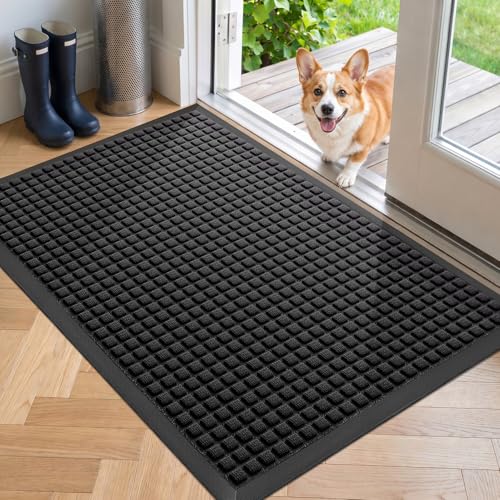
WELDUN Front Door Mat Outside Entrance, Heavy Duty Waterproof Doormat
- Dirt and Moisture Capture: Deep grooves and beveled border trap debris
- Non-Slip Rubber Backing: Sturdy TPE grips ground securely
- Weatherproof and Fade-Resistant: Durable, UV-resistant, long-lasting color
As an affiliate, we earn on qualifying purchases.
As an affiliate, we earn on qualifying purchases.
Conclusion
Now that you know how to keep pollen out of your home, isn’t it worth taking these simple steps to breathe easier? Regularly removing shoes, cleaning mats, and vacuuming floors make a big difference. Don’t let pollen take over your space—aren’t you worth a cleaner, healthier environment? Start implementing these tips today and enjoy fresher air indoors tomorrow. Your lungs will thank you for making your home a pollen-free zone!

LEVOIT Air Purifier for Home Allergies and Pets Hair Smokers in Bedroom, H13 True HEPA Filter, 24db Filtration System Cleaner Odor Eliminators, Remove 99.97% Dust Smoke Mold Pollen, Core 300, White
- AHAM Verified for Performance: Independently tested for quality and efficiency
- Powerful Filtration System: 56W motor with 143 CFM CADR
- Effective Air Cleaning: Removes 99.97% dust, smoke, mold, pollen
As an affiliate, we earn on qualifying purchases.
As an affiliate, we earn on qualifying purchases.

CLEANHOME Mops for Floor Cleaning for Hardwood, Marble, Tile Floor Mopping
- Reusable Microfiber Mop Pads: Includes 3 washable refill pads
- High Water Absorption: Chenille microfiber quickly absorbs water
- Effective Dust Removal: Twist microfiber pad removes dust and dirt
As an affiliate, we earn on qualifying purchases.
As an affiliate, we earn on qualifying purchases.