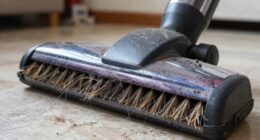
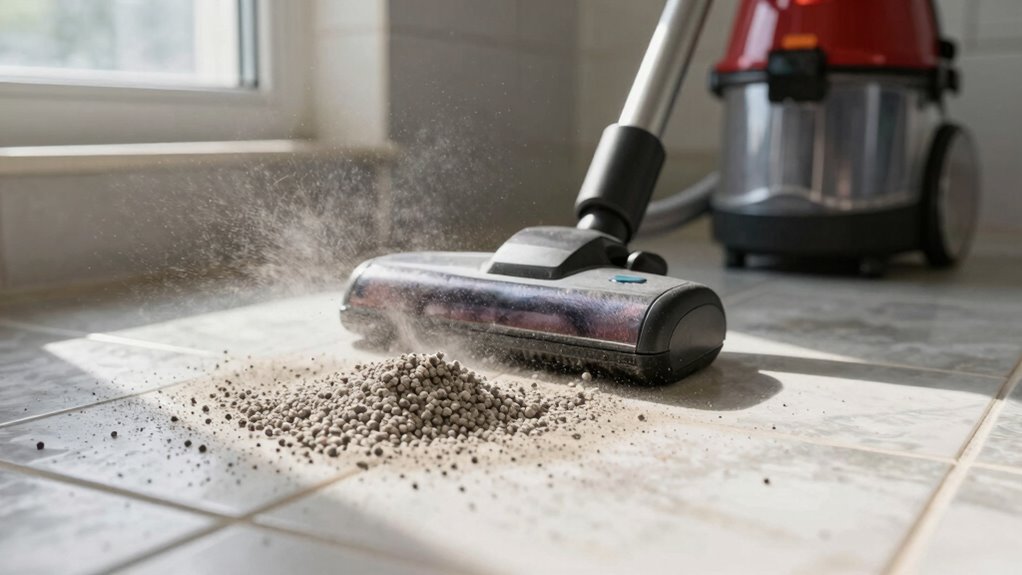

To tackle cat litter dust everywhere, start by choosing low-dust, clumping litter and a secure, high-sided box to contain it. Clean up daily with a microfiber cloth and sweep or vacuum to prevent dust from settling. Use air purifiers with HEPA filters near the litter area, and place dust-trapping mats under the box. Maintaining these habits reduces airborne particles and keeps your home cleaner. Continue exploring these tips to create a healthier environment for you and your pets.

Get cleaning gear delivered free — and shop member deals
- Fast, free delivery on millions of items
- Access to Prime Big Deal Days deals on October 6–7
- Prime Video, Amazon Music and more included
Key Takeaways
- Use low-dust, clumping cat litter and avoid scented varieties to minimize airborne particles during cleaning.
- Place litter boxes in well-ventilated areas with secure lids and dust-trapping mats to contain dust.
- Regularly scoop and change litter daily to reduce dust buildup and dispersion.
- Employ HEPA-filter air purifiers near litter zones to capture airborne dust particles.
- Clean surrounding surfaces frequently with microfiber cloths and vacuum to prevent dust accumulation.
As an affiliate, we earn on qualifying purchases.
Why Cat Litter Dust Is a Home Health Issue
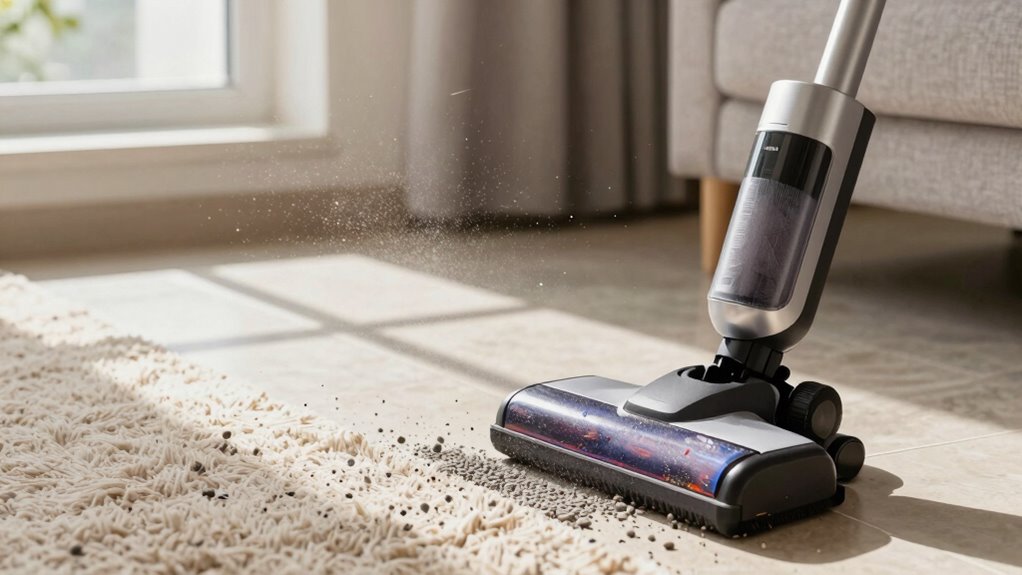
Although it may seem harmless, cat litter dust can pose serious health risks inside your home. Breathing in this fine dust regularly can compromise your respiratory health, especially if you have existing conditions like asthma or allergies. The dust contains tiny particles that can irritate your airways, leading to coughing, sneezing, or wheezing. For allergy sufferers, litter dust acts as a potent trigger, aggravating symptoms and making breathing uncomfortable. Over time, exposure can contribute to chronic respiratory issues or worsen existing allergies. It’s essential to understand that this dust doesn’t just settle harmlessly; it becomes airborne easily, increasing inhalation risks. Implementing proper ventilation practices and using dust-free litter options can significantly reduce these health hazards and protect your respiratory well-being. Additionally, using air purifiers equipped with HEPA filters can help capture airborne dust particles, further mitigating health risks associated with litter dust.
As an affiliate, we earn on qualifying purchases.
How to Choose Low-Dust Cat Litter and the Right Box
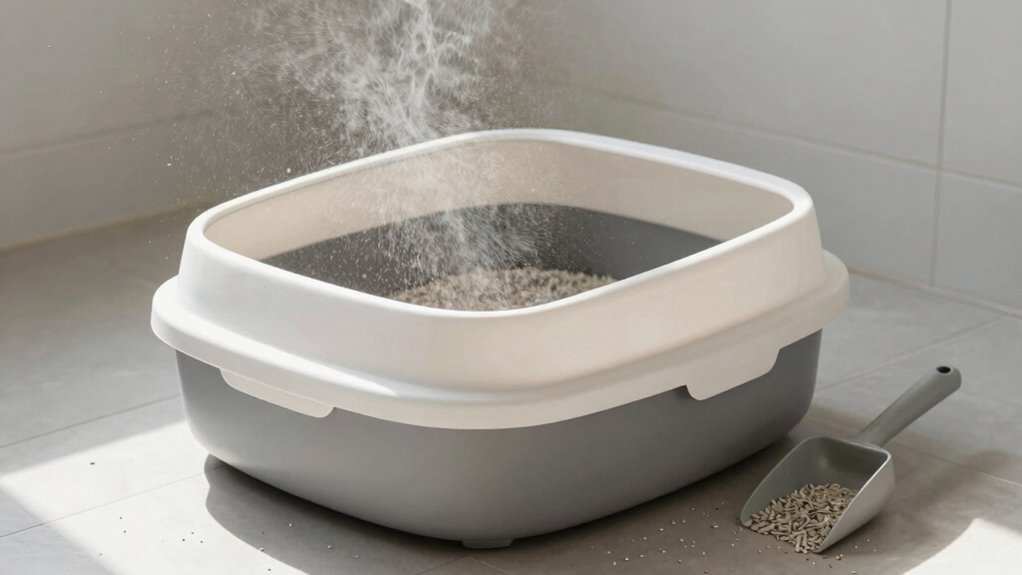
Choosing low-dust cat litter and the right box can substantially reduce airborne particles and improve your home’s air quality. Look for clumping formulas designed to produce minimal dust, which helps contain particles during scooping. These formulas make cleaning easier and decrease airborne dust. Avoid scented options if you’re sensitive to fragrances or want to minimize airborne irritants, as some scents can increase dust levels or cause allergic reactions. Select a litter box with a secure lid or high sides to contain dust during use. Ascertain the box is easy to access for cleaning and refilling. Using low-dust litters with secure, well-designed boxes makes a noticeable difference in reducing dust spread and creating a healthier environment for both you and your cat. Incorporating dust control techniques can further enhance air quality in your home. Additionally, choosing appropriate ventilation can help disperse airborne particles more effectively.
As an affiliate, we earn on qualifying purchases.
Easy Cleaning Tips to Reduce Dust in Your Home

Keeping dust levels low in your home starts with simple, regular cleaning routines. Proper litter box placement is key—place it in a well-ventilated area away from high-traffic zones to minimize dust spread. Use air purifier options with HEPA filters to trap airborne particles effectively. Incorporate these tips into your routine:
- Sweep or vacuum daily to catch dust before it settles
- Use microfiber cloths for dusting surfaces gently
- Clean litter box surroundings regularly to reduce dust buildup
- Position your air purifier near the litter box for maximum effect
- Replace or upgrade filters periodically for best performance
- Consider specialized cleaning tools designed for pet areas to further reduce dust and allergens
Staying consistent with these habits helps keep dust at bay, making your home cleaner and healthier for everyone.
cat litter box with high sides and lid
As an affiliate, we earn on qualifying purchases.
As an affiliate, we earn on qualifying purchases.
Prevention Tricks to Keep Dust Levels Down
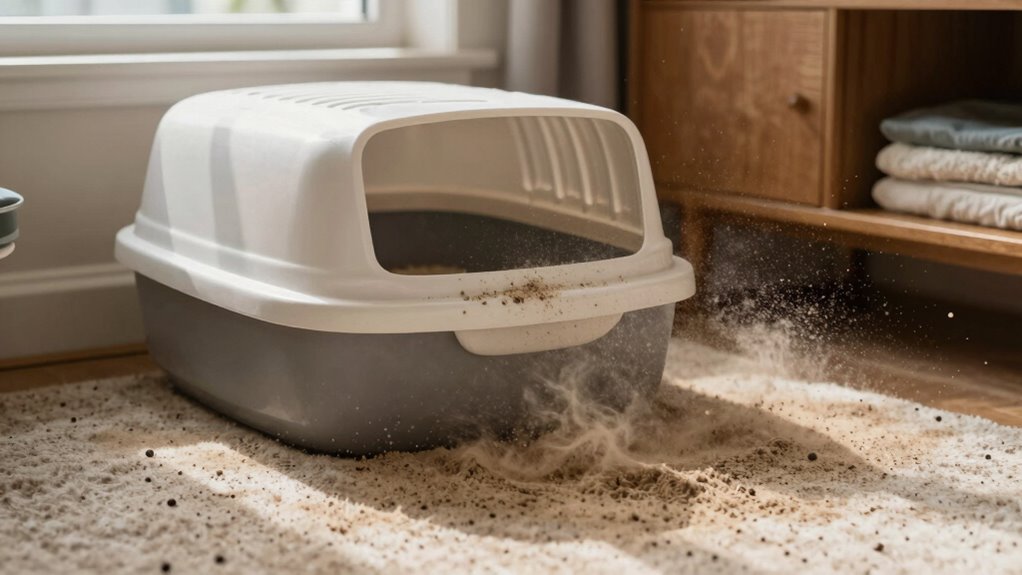
To effectively prevent dust from accumulating in your home, start by controlling its sources and limiting spread. Regular litter box maintenance is essential—scoop daily, change the litter often, and use high-quality, low-dust litter. This reduces airborne dust and keeps odors in check. Using air purifiers with HEPA filters also helps capture dust particles before they settle on surfaces, improving air quality. Place purifiers near the litter box and common areas for maximum effect. Avoid overfilling the box and consider using litter mats to trap dust at the source. Consistent cleaning routines and proper disposal of soiled litter further minimize dust dispersal. Additionally, understanding quality assessment techniques can help you select the best litter and accessories to reduce dust generation. These prevention tricks create a cleaner environment and make dust control more manageable.
Best Tools and Accessories for Dust-Free Living
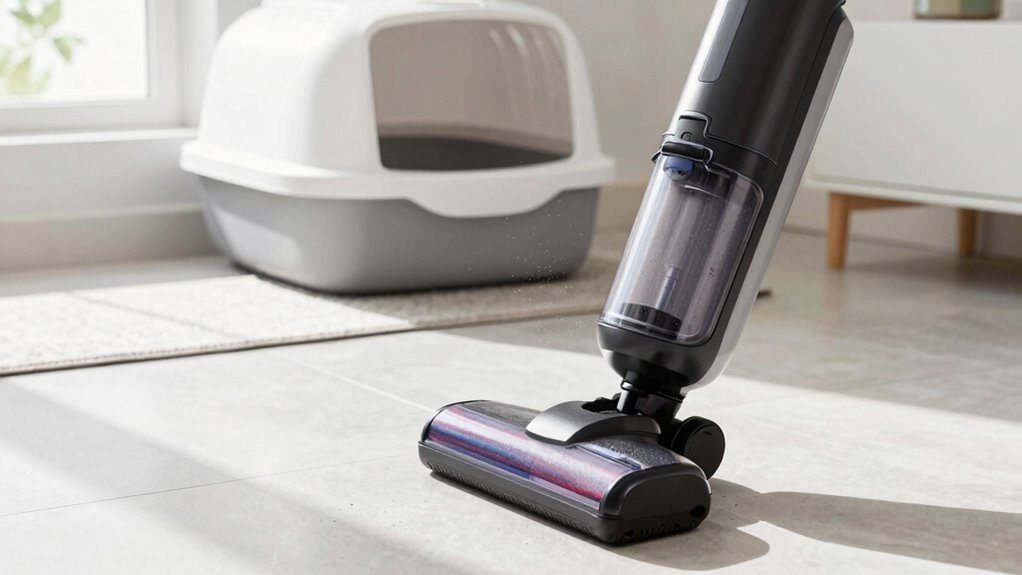
Using the right tools and accessories can make a significant difference in maintaining a dust-free home environment. Proper litter box placement minimizes dust spread, keeping it away from high-traffic areas. Air purification devices, like HEPA filters, capture airborne dust particles and reduce odors. Consider a high-quality litter mat to trap dust and prevent tracking. A scoop with a fine mesh helps remove clumps without spreading dust. Additionally, an enclosed litter box contains dust and debris. For ideal results, use a dust-reducing litter and regularly clean accessories to prevent buildup. Implementing dust control measures can further enhance cleanliness and air quality. Proper home maintenance and air filtration devices with HEPA filters can significantly improve overall air quality and minimize dust particles in your living space. Incorporating effective cleaning routines can also help reduce dust accumulation over time. These tools work together with good litter box placement and air purification to create a cleaner, healthier space for both you and your cat.
Frequently Asked Questions
Can Switching to a Different Litter Brand Reduce Dust Effectively?
Switching to a different litter brand can notably reduce dust, especially if you choose one designed for dust reduction. Look for labels that mention low dust or dust-free formulas. These litters usually use finer, more controlled particles that generate less airborne dust. By trying out various brands, you’ll likely find one that keeps your space cleaner and minimizes dust clouds, making cleanup easier and improving air quality for both you and your cat.
How Often Should I Replace Cat Litter to Minimize Dust Buildup?
Like a well-oiled machine, you should replace your cat litter every 2-3 weeks to reduce dust buildup. Regular litter box maintenance is key, and fresh litter helps keep dust levels down. Incorporate dust mitigation strategies, such as choosing low-dust litter and cleaning the box frequently. Promptly changing the litter prevents dust from accumulating, ensuring a cleaner environment for both you and your feline friend.
Are There Specific Room Types Better Suited for Litter Boxes?
You should place litter boxes in quiet, low-traffic rooms with good ventilation strategies, like bathrooms or laundry rooms. These spaces help contain dust and odors, making cleanup easier. Avoid placing them in bedrooms or near heating vents, which can spread dust throughout your home. Proper room placement and ventilation strategies keep dust levels down, creating a cleaner, more comfortable environment for both you and your cat.
Does the Type of Cat Litter Influence Allergen Levels?
You might think all cat litters cause the same allergen levels, but that’s not true. The type of litter you choose considerably impacts allergen reduction and litter dust. Clumping, silica, and natural options produce different dust amounts, affecting allergy sufferers. Switching to low-dust, hypoallergenic litter can make a big difference in reducing airborne allergens. So, selecting the right litter is essential for a cleaner, healthier environment, especially if you’re sensitive to dust.
What Are Natural Remedies to Control Dust Without Chemicals?
You can control dust naturally by using biological controls like adding beneficial bacteria to break down litter dust and reduce allergens. Regularly cleaning and replacing your litter helps minimize dust buildup. Incorporate air purification systems with HEPA filters to improve indoor air quality and capture fine particles. Switching to low-dust or natural litters also helps, and maintaining good ventilation keeps dust from settling and spreading throughout your home.
Conclusion
Now that you know the secrets to controlling cat litter dust, imagine your home staying cleaner and healthier than ever before. But there’s one final step you haven’t tried yet — a game changer that could transform your space completely. Are you ready to discover it? Stay tuned, because this last trick might just be the key to dust-free living you’ve been searching for. Don’t miss out — your spotless, healthier home is closer than you think.
Fall Picks
fall essentials
As an affiliate, we earn on qualifying purchases.