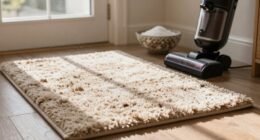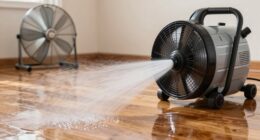
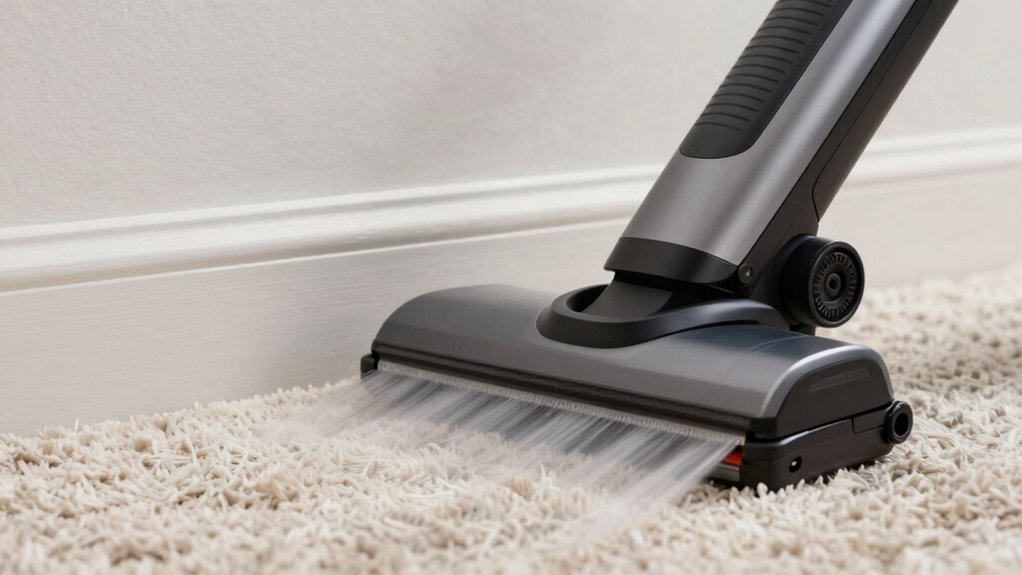
To position an air mover effectively, place it directly above or slightly to the side of the rug at an angle to promote steady airflow across its surface, avoiding edges for even drying. In corners, face the device inward to sweep air along adjacent walls while maintaining gentle circulation. For baseboards, direct airflow along the wall behind furniture, shielding from turbulence. Proper placement guarantees faster drying and mold prevention—keep exploring for more detailed tips.
Key Takeaways
- Position air movers directly above or slightly to the side of rugs, angled for steady airflow across the surface.
- Face air movers into corners, sweeping airflow along walls to promote circulation and prevent moisture stagnation.
- Direct airflow along the length of baseboards, keeping a safe distance to avoid turbulence and ensure effective moisture removal.
- Adjust air mover angles and distances to optimize airflow patterns for targeted areas.
- Ensure steady, well-directed airflow to enhance drying efficiency and prevent mold growth.
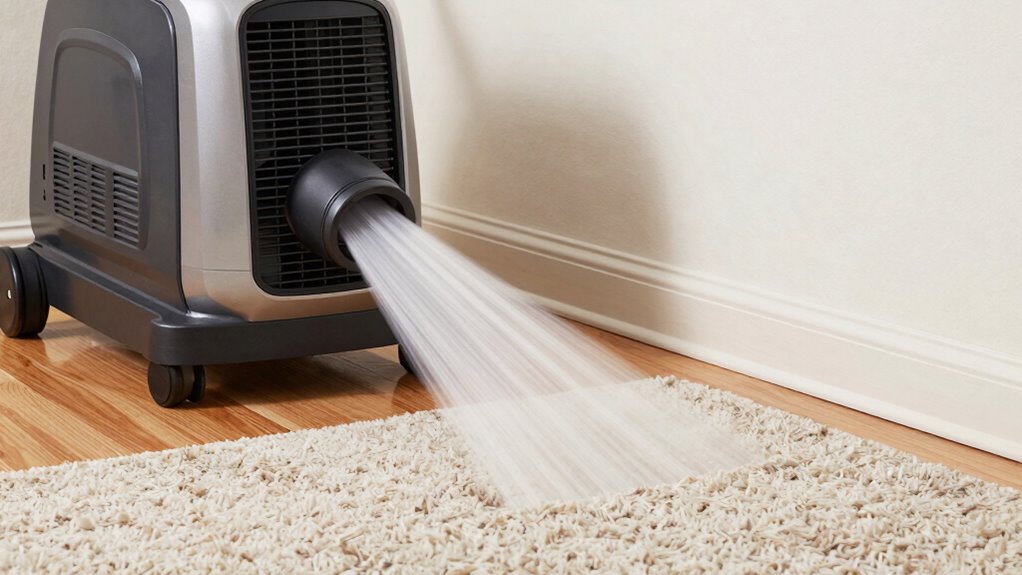
Are you wondering how to effectively position an air mover for ideal airflow? It all comes down to understanding airflow patterns and finding the optimal placement of your device. When set up correctly, an air mover can dramatically improve drying times, prevent mold growth, and promote even air distribution. To start, you need to consider the specific areas you’re targeting—rugs, corners, or baseboards—and how best to direct the airflow to these spots.
Properly positioning your air mover enhances drying, prevents mold, and ensures even airflow across targeted areas.
For rugs, positioning the air mover directly above or slightly to the side of the area is most effective. You want to create a steady flow of air that sweeps across the surface, lifting moisture and pushing it outward. Placing the device at an angle can help generate better airflow patterns, ensuring the entire rug dries evenly. Avoid placing the air mover too close to the rug’s edges, as this might cause uneven drying or even damage. Instead, aim for a balanced placement that directs air across the entire surface without creating turbulence or stagnant pockets. Proper airflow management is essential for achieving optimal drying results, especially when considering factors like air velocity and direction.
Corners are tricky because air naturally tends to stagnate in these spots. To combat this, position the air mover so that it faces directly into the corner, with the airflow sweeping along the adjacent walls. This setup encourages air circulation in the tight space and prevents moisture from lingering in the corner. Keep in mind that the goal is to establish a steady, gentle airflow that reaches into the corners without creating disruptive drafts. Adjust the angle and distance until you see a smooth, consistent airflow pattern that covers the entire area. Understanding airflow patterns is crucial to achieving effective drying results, as it helps optimize the placement and operation of your device.
When it comes to baseboards, the key is to direct airflow along the length of the wall, targeting the space behind and beneath furniture. Position the air mover so that it blows air parallel to the baseboard, helping to dry out hidden moisture. Placing the device too close can cause turbulence, while too far away might reduce effectiveness. Find the optimal placement where the airflow is strong enough to move moisture away from the baseboard and into open space, promoting even drying. You might need to experiment with angles and distances, but always keep airflow patterns in mind—steady, consistent, and directed toward the problem area. Proper airflow direction ensures the most efficient drying, especially in hard-to-reach spots.

Mounto 1/2hp Air Mover Floor Drying Blower Fan – Powerful 1/2HP Motor Carpet Dryer, 2200 CFM Air Flow, Lightweight Design, 2-Speed Settings for Drying, Cooling & Circulation
- Powerful 1/2HP Motor: Expedites drying and recovery
- 2200 CFM Air Flow: Ensures rapid moisture removal
- Dual-Speed Settings: For versatile drying and circulation
As an affiliate, we earn on qualifying purchases.
As an affiliate, we earn on qualifying purchases.
Frequently Asked Questions
Can I Use an Air Mover on Delicate or Antique Rugs?
You can use an air mover on delicate or antique rugs, but take caution to safeguard their integrity. For antique preservation and delicate fabric, place the air mover on a low setting and keep it at a safe distance to prevent damage. Avoid direct airflow, which can weaken fibers or cause fading. Always test a small, hidden area first to verify the rug’s safety before proceeding.
How Long Should I Run the Air Mover for Optimal Drying?
You should run the air mover for about 24 to 48 hours for ideal drying, depending on the rug’s thickness and humidity levels. Monitor the drying progress regularly to avoid over-drying or damage. To maximize air mover efficiency, guarantee proper positioning—aim it at the rug’s surface, corners, and baseboards—and maintain good airflow. This approach helps speed up drying time while protecting your delicate or antique rugs.
Is It Safe to Leave the Air Mover Unattended Overnight?
Leaving an air mover unattended overnight is like playing with fire—it’s risky. For electrical safety, make certain it’s properly plugged in and not near water or flammable materials. Check the noise levels to prevent disturbing neighbors or household members. While some models are designed for continuous use, it’s safest to monitor it or turn it off if you’re unsure. Always follow the manufacturer’s safety instructions to avoid accidents.
Can I Use Multiple Air Movers Simultaneously?
Yes, you can use multiple air movers simultaneously to speed up drying. Just guarantee proper equipment placement to optimize airflow, avoiding overcrowding or blocking vents. Position the air movers so they create a continuous flow across the affected area, directing air toward rugs, corners, and baseboards. This setup increases efficiency without risking equipment overheating or damage, making your drying process faster and more effective.
How Do I Prevent Mold Growth During Drying?
To prevent mold growth during drying, prioritize proper ventilation and consistent airflow. Use effective drying techniques like positioning air movers strategically to circulate air and reduce moisture. Keep humidity levels low, ideally below 60%, and monitor moisture regularly. By controlling conditions and ensuring thorough drying, you minimize mold risks. Remember, maintaining dryness directs moisture away from surfaces, making mold prevention a manageable task during the drying process.

SEEKR by Caframo Stor-Dry 9406 110V Warm Air Circulator & Dehumidifier – 75W
- Silent Operation: Operates quietly for comfort
- Low Power Consumption: Uses only 75W of power
As an affiliate, we earn on qualifying purchases.
As an affiliate, we earn on qualifying purchases.
Conclusion
Now that you know how to position your air mover properly, you’re well on your way to drying rugs, corners, and baseboards quickly and efficiently. Remember to place the mover strategically, aiming the airflow accurately, and adjust as needed for ideal results. With a little patience and these simple steps, you’ll achieve a faster, flawless finish. Follow these fundamentals, and you’ll find drying done with less effort and more ease—making your space spotless and swiftly dry!

Air Mover 1 HP 4000 CFM Portable Blower Fan Carpet Dryer, Floor Dryer Fan
- High-velocity airflow: Up to 4000 CFM with 3 speeds
- Adjustable airflow angles: 0°, 20°, 90° for targeted drying
- Built-in timer: 0–180 minutes for unattended use
As an affiliate, we earn on qualifying purchases.
As an affiliate, we earn on qualifying purchases.

Airzentti 1100 CFM 3-Speed Industrial Air Mover Floor Blower Fan with Timer
- High Airflow Capacity: 1100 CFM for fast drying and airflow
- Heavy Duty Motor: 1/4 HP bronze winding for industrial use
- Multiple Speed Settings: 3 speeds: 600, 800, 1100 CFM
As an affiliate, we earn on qualifying purchases.
As an affiliate, we earn on qualifying purchases.