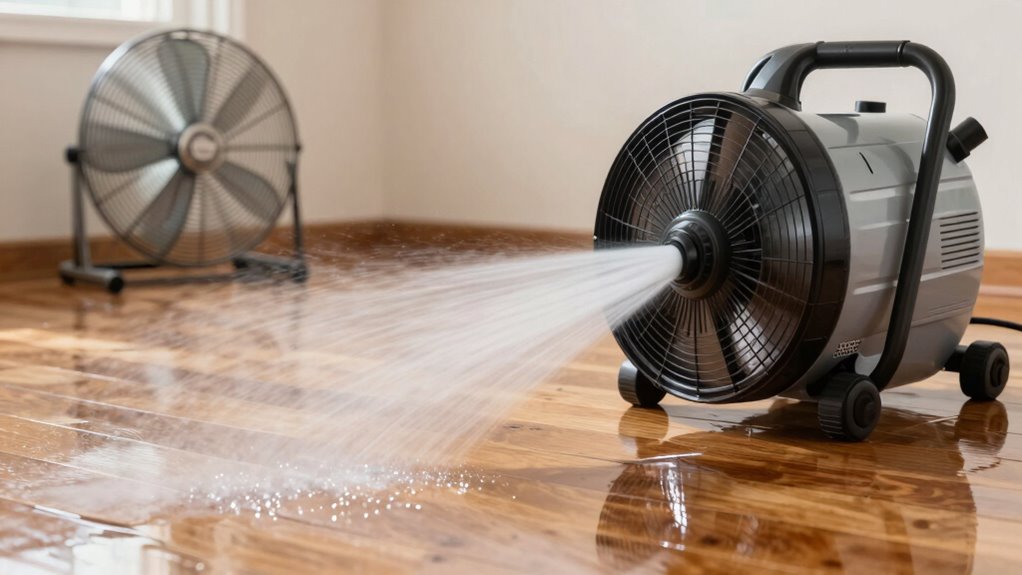
Air movers dry floors faster than ordinary fans because they are designed to direct high volumes of focused airflow directly onto wet surfaces. This targeted airflow accelerates evaporation and improves drying efficiency more effectively than standard fans, which just circulate air around a room. Proper placement and airflow management are key to speeding up the process. Keep exploring to discover how strategic use of equipment can make your drying efforts even more efficient.

Get cleaning gear delivered free — and shop member deals
- Fast, free delivery on millions of items
- Access to Prime Big Deal Days deals on October 6–7
- Prime Video, Amazon Music and more included
Key Takeaways
- Air movers are engineered to focus airflow directly on wet surfaces, increasing evaporation efficiency.
- They produce higher airflow volumes targeted at specific areas, unlike standard fans that circulate air generally.
- Proper placement of air movers optimizes airflow patterns, accelerating drying times.
- Air movers remove humid air from surfaces, replacing it with drier air to speed up evaporation.
- Combining air movers with humidity control strategies enhances overall drying speed and effectiveness.
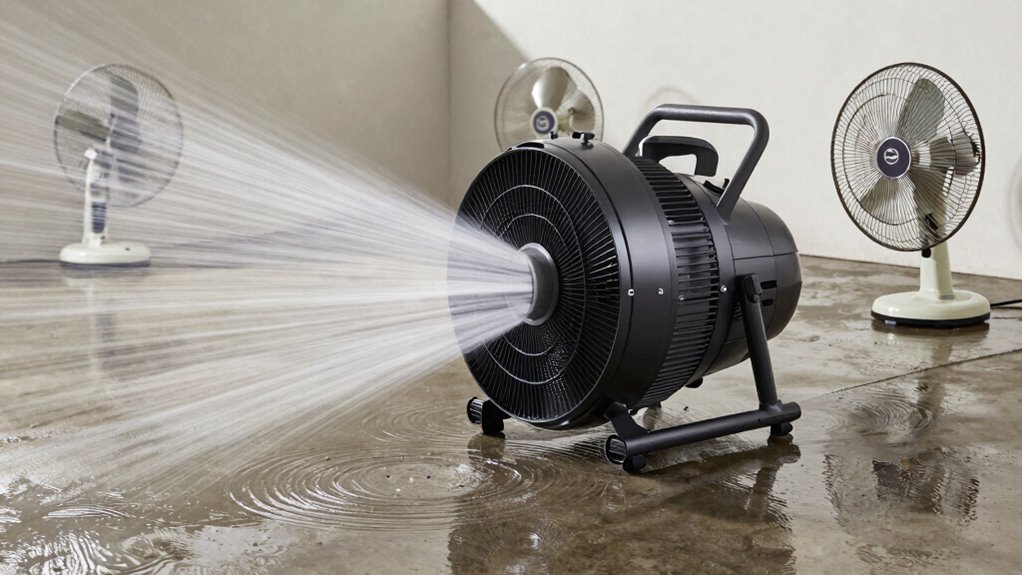
When it comes to drying wet floors quickly, air movers outperform ordinary fans because they are designed specifically to increase airflow over surfaces. Unlike standard fans, which move air generally around a room, air movers focus on directing high volumes of air directly onto the wet surface. This targeted airflow accelerates the evaporation process, making them the ideal choice for quick drying. As you work to dry a flooded or spilled area, understanding how humidity control and fan placement influence effectiveness can make a huge difference. Proper ventilation techniques and airflow management are essential for maximizing drying efficiency. Humidity control plays a critical role in drying efficiency. When moisture levels in the air are too high, evaporation slows down, and drying takes longer. Air movers help by increasing airflow, which helps remove the humid air from the surface and replace it with drier air from the surroundings. To optimize this process, you’ll want to monitor humidity levels and use dehumidifiers if needed, ensuring the air remains as dry as possible. This synergy between air movers and humidity control creates an environment where water evaporates more rapidly, significantly reducing drying time. Fan placement is equally important. Proper positioning of air movers ensures maximum airflow over the wet surface without causing turbulence or disrupting other drying efforts. You should aim to place the air mover close to the wet area, angling it slightly to direct airflow across the surface. Avoid pointing the fan directly at the floor in a way that causes turbulence; instead, position it to create a steady, gentle flow. If you’re drying a large area, consider placing multiple units strategically, ensuring each one targets a specific section for uniform drying. Keep in mind that the goal is to promote consistent airflow over the entire wet surface, so adjusting fan placement as the area dries can help maintain optimal airflow and humidity control. Additionally, understanding the mechanics of airflow can help you better position fans for maximum efficiency. Using proper fan placement techniques maximizes airflow and reduces drying time, making the process more efficient. It’s also beneficial to consider how airflow patterns influence the overall drying process, which can be achieved through strategic fan positioning. Incorporating appropriate equipment like air movers designed for drying can further enhance success. In essence, the combination of well-placed air movers and vigilant humidity management allows you to dry floors faster than with ordinary fans. Ordinary fans lack the focused airflow and power needed to effectively target wet surfaces, making them less efficient. By understanding the importance of fan placement and humidity control, you can maximize the drying process, save time, and prevent further damage caused by lingering moisture. When you use air movers correctly, you’re leveraging a tool specifically designed to expedite drying, which makes all the difference in getting floors dry quickly and efficiently.
As an affiliate, we earn on qualifying purchases.
Frequently Asked Questions
Can Air Movers Be Used for Drying Walls or Ceilings?
Yes, air movers can be used for wall drying and ceiling ventilation. You should position them close to wet walls or ceilings to promote effective evaporation. Their powerful airflow accelerates moisture removal, making them ideal for wall drying. For ceiling ventilation, aim the air movers upward to circulate air efficiently. Just make certain you’re not causing damage or disturbing any structural elements, and use them safely for the best results.
How Loud Are Air Movers Compared to Regular Fans?
You might worry about noise levels, but air movers are generally louder than regular fans. Sound comparison shows they produce a deeper, more constant hum, which can be quite noticeable. However, many models have adjustable speeds, helping you find a quieter setting if needed. While they’re a bit louder, their faster drying power often outweighs the noise concern, especially when quick results are your priority.
Are Air Movers Energy-Efficient for Large-Area Drying?
Yes, air movers are energy-efficient for large-area drying. They consume less energy relative to the amount of dry air they produce, making them cost-effective over time. Their focused airflow speeds up drying, reducing overall energy consumption compared to using multiple regular fans. This efficiency helps you save on electricity bills while effectively drying large spaces, making air movers a smart investment for professional or large-scale drying tasks.
How Long Does It Take to Dry a Room With an Air Mover?
You’ll see rapid results with an air mover—usually drying a room in just a few hours, depending on the water’s amount and room size. Unlike traditional fans, air movers excel at quick drying, making drying techniques more efficient. When comparing equipment, air movers outperform ordinary fans because their powerful airflow moves moisture faster. So, if you want swift, effective drying, this equipment comparison clearly favors air movers for speedy results.
Can Air Movers Cause Damage to Delicate Flooring Materials?
Yes, air movers can cause damage to delicate flooring materials if misused. The strong airflow might lead to floor damage, especially with sensitive surfaces like hardwood, laminate, or vinyl. To prevent this, you should avoid directing powerful air directly at delicate materials. Instead, position the air mover carefully, use gentle settings, and monitor the drying process closely. This way, you dry efficiently without risking damage to your delicate flooring.
As an affiliate, we earn on qualifying purchases.
Conclusion
Think of air movers as the steady heartbeat in the symphony of drying, guiding moisture out like a trusted compass through fog. Ordinary fans may flutter like fleeting shadows, but air movers stand as silent guardians, their relentless rhythm carving a path through dampness. By choosing them, you’re not just drying floors—you’re restoring clarity and calm, letting the light of a dry surface shine through, symbolizing renewal and resilience in every breath of air.
As an affiliate, we earn on qualifying purchases.
floor drying fan with adjustable placement
As an affiliate, we earn on qualifying purchases.
As an affiliate, we earn on qualifying purchases.
Fall Picks
fall essentials
As an affiliate, we earn on qualifying purchases.