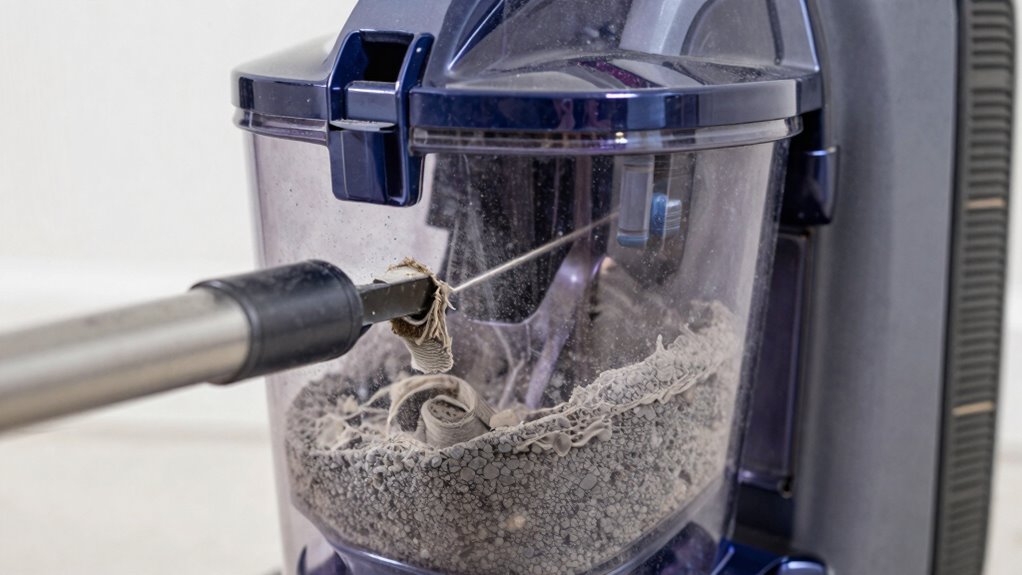
If your vacuum’s losing suction, start by checking the filters. Dirty filters can restrict airflow, so clean or replace them if you see dust buildup. If the filters are in good shape, inspect the hoses for clogs. Disconnect them and look for blockages caused by hair or debris. Using a long object can help dislodge hidden clogs. Understanding these issues can restore your vacuum’s performance, and there’s more you can do to troubleshoot effectively.

Get cleaning gear delivered free with Prime
- Fast, free delivery on millions of items
- Prime Video, Amazon Music and more included
- Member-only deals all year
Key Takeaways
- Check filters first; dirty filters typically restrict airflow and cause suction loss, necessitating cleaning or replacement.
- Inspect hoses and brush rolls for blockages; common clogs include hair and debris that can hinder suction.
- Look for visible signs of dust or debris on filters; this indicates they may need maintenance to restore suction.
- Use a long object to dislodge hidden clogs in hoses if necessary, ensuring unobstructed airflow.
- Examine vacuum components for wear or damage; cracks or motor issues can also contribute to suction loss.
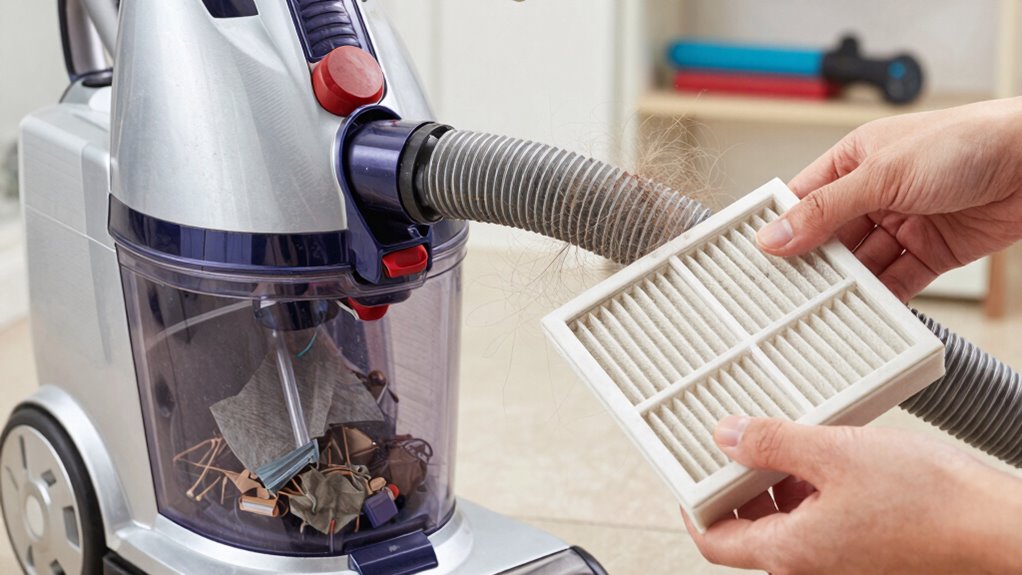
Have you ever wondered why your vacuum isn’t picking up dirt like it used to? If you’re noticing a decline in performance, it might be due to suction loss. This problem can often stem from two main culprits: filter issues or clogs. Understanding how to differentiate between the two can save you time and frustration.
First, let’s talk about filter maintenance. If you haven’t cleaned or replaced your vacuum’s filter in a while, that’s likely the first place to check. A dirty filter can restrict airflow, leading to considerable suction loss. Most vacuums have washable filters that need regular maintenance. If you see dust and debris caked on the filter, it’s time to give it a good wash or replace it entirely. After doing this, you’ll probably notice an immediate improvement in suction. If your vacuum still struggles to pick up dirt after filter maintenance, it’s time to dig deeper.
Next up is clog detection. Clogs can occur anywhere in the vacuum’s system, from the hose to the brush roll. To troubleshoot performance issues, start by inspecting the hose for any blockages. Disconnect it and visually check for obstructions. You might find hair, dirt, or other debris stuck inside. If you can’t see anything, try using a long object, like a broomstick, to gently push through and dislodge any hidden clogs. Don’t forget to check the brush roll as well; tangled hair can considerably impact suction.
If you’ve cleaned the filter and checked for clogs but still experience suction loss, it’s time for more thorough performance troubleshooting. Look for any signs of wear and tear on the vacuum itself, such as cracks in the hose or a malfunctioning motor. Sometimes, issues can stem from more complex problems within the vacuum’s airflow system, which can be caused by various factors including filter issues or clogs. Additionally, understanding how airflow works within your vacuum can help you pinpoint the source of the problem more accurately. Being familiar with common vacuum components can also assist in identifying potential causes of suction loss more efficiently. Regularly reviewing vacuum maintenance tips can also help prevent future issues.
As an affiliate, we earn on qualifying purchases.
Frequently Asked Questions
How Often Should I Clean My Vacuum Filter?
You should clean your vacuum filter every one to three months, depending on usage. Regular filter maintenance keeps your vacuum running effectively. If you use it frequently, aim for monthly cleanings; otherwise, every few months is sufficient. A clean filter improves suction power and prolongs the vacuum’s lifespan. Don’t forget to check your manufacturer’s guidelines for specific cleaning frequency recommendations tailored to your model. Staying on top of this guarantees peak performance.
Can a Clogged Hose Affect Suction Performance?
Absolutely, a clogged hose can greatly affect your vacuum’s suction performance. You might think it’s just a minor issue, but neglecting hose maintenance can lead to a noticeable drop in suction efficiency. Regularly checking for blockages guarantees your vacuum operates at its peak. If you notice weak suction, inspect the hose for debris or kinks. Keeping it clean and clear will help maintain ideal performance and prolong your vacuum’s life.
What Tools Do I Need to Check for Clogs?
To check for clogs, you’ll need a few simple tools: a vacuum cleaner hose attachment, a flashlight, and possibly a long, flexible brush. Start with clog detection by inspecting the hose and attachments for blockages. Use the flashlight to see inside. Next, perform a filter inspection to confirm it’s clean and not contributing to suction loss. If everything looks clear, you might need to check deeper into the vacuum’s system.
How Can I Tell if My Vacuum Needs Replacing?
When your vacuum struggles to pick up dirt but looks brand new, it’s time to evaluate its lifespan indicators. Signs of wear like unusual noises, overheating, or persistent suction loss often signal that replacement is necessary. If you’ve replaced filters and belts but still face issues, don’t ignore these clues. Weigh the cost of repairs against a new vacuum—sometimes, investing in a fresh model is the best choice for efficiency.
Is It Safe to Wash All Vacuum Filters?
Yes, it’s generally safe to wash most vacuum filters, but always check the manufacturer’s guidelines first. For effective filter maintenance, use gentle washing techniques, like rinsing under cool water and avoiding harsh detergents. Let the filter dry completely before reinserting it. Regularly cleaning your filters helps maintain suction power and prolongs your vacuum’s life. Just remember, some filters, like HEPA, may require specific care, so always refer to your vacuum’s manual.
As an affiliate, we earn on qualifying purchases.
Conclusion
In the quest for a spotless home, don’t let vacuum issues dim your sparkle. If you notice suction loss, remember it’s not always a villainous clog lurking in the shadows—sometimes, it’s just a weary filter needing a break. By checking both elements, you can restore your trusty sidekick to its former glory. With a little vigilance, you’ll keep your cleaning adventures on track and your space shining like a beacon of cleanliness.
As an affiliate, we earn on qualifying purchases.
As an affiliate, we earn on qualifying purchases.
Fall Picks
fall essentials
As an affiliate, we earn on qualifying purchases.