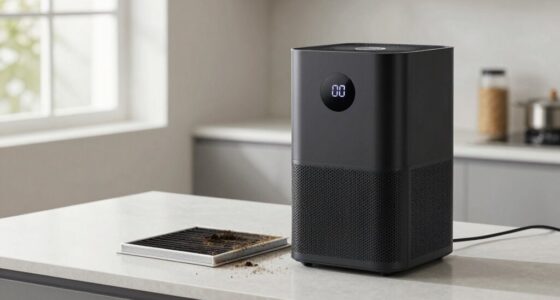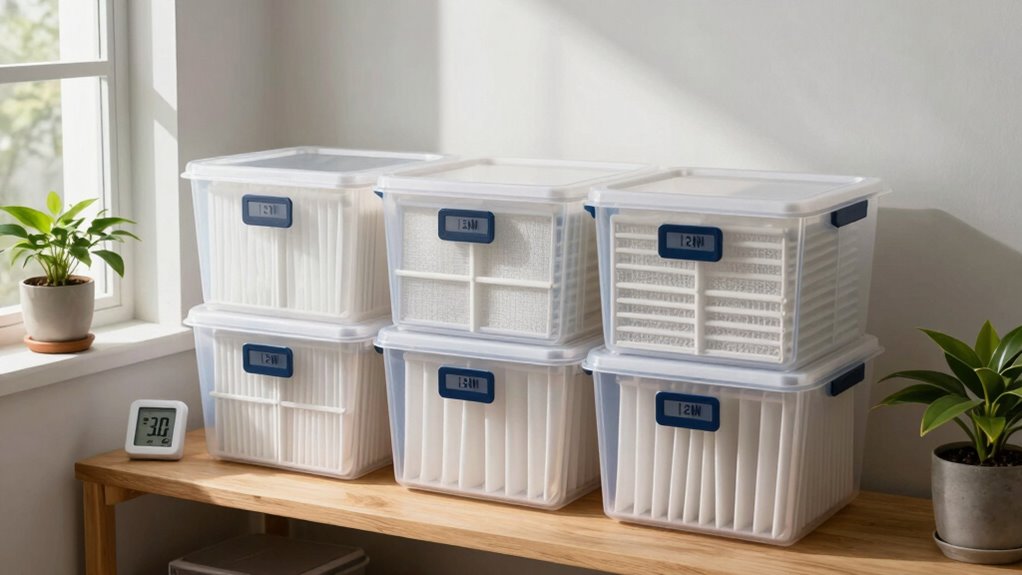
To store HEPA filters effectively, check for any damage before purchasing or putting them away. Keep them in a cool, dry location away from direct sunlight to avoid heat and moisture. Maintain humidity levels between 30% and 50% to prevent mold growth. Make sure to store them free from chemicals or strong odors that could compromise their integrity. Following these tips will help extend their lifespan and effectiveness. There’s more to learn about proper maintenance and care.

Get cleaning gear delivered free — and shop member deals
- Fast, free delivery on millions of items
- Access to Prime Big Deal Days deals on October 6–7
- Prime Video, Amazon Music and more included
Key Takeaways
- Inspect HEPA filters for any damage before storage, as tears can reduce their effectiveness.
- Store filters in a cool, dry place away from direct sunlight to prolong their lifespan.
- Maintain humidity levels between 30% and 50% to prevent mold growth on filters.
- Keep filters away from chemicals and strong odors to protect their integrity.
- Follow manufacturer guidelines for cleaning, and ensure filters are completely dry before storage.
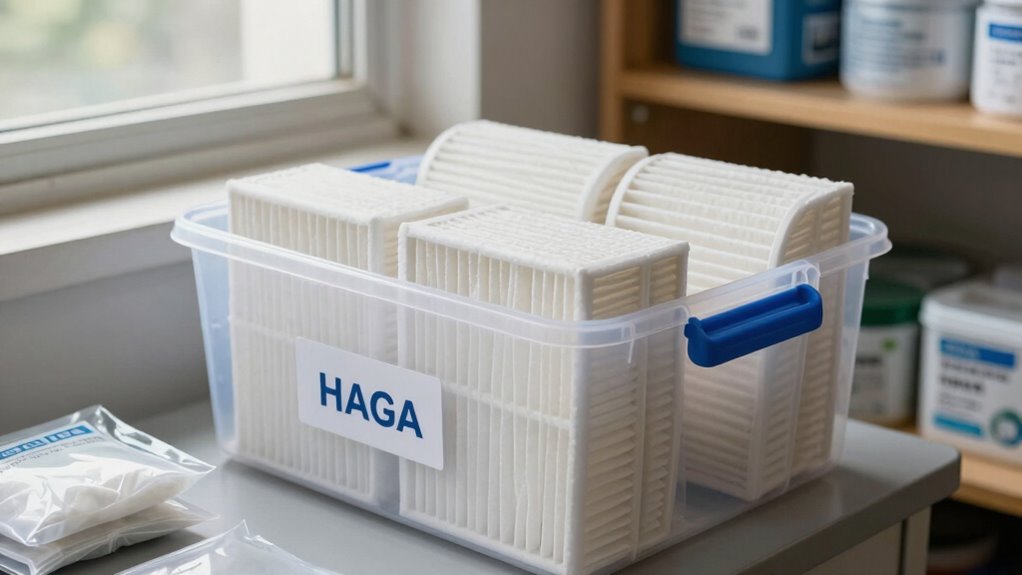
When it comes to storing HEPA filters, the right approach can make all the difference. Proper handling is essential from the moment you purchase your filters. Always check for any damage before buying or storing them, as even the slightest tear can compromise their effectiveness. Once you have your filters, evaluate your storage locations carefully. Ideally, you should keep them in a cool, dry space, away from direct sunlight. Excessive heat or moisture can drastically shorten the filter lifespan, so aim for a temperature-controlled environment.
Properly storing HEPA filters is crucial; ensure they remain undamaged and in a cool, dry, temperature-controlled environment for optimal effectiveness.
Another aspect to take into account is humidity control. High humidity levels can lead to mold growth, which not only affects the filter but can also pose health risks. If you live in a particularly humid area, think about using silica gel packets or a dehumidifier in your storage space to maintain ideal conditions. Regularly check the environment to verify it stays within a safe range, ideally between 30% and 50% humidity. Proper storage conditions can greatly influence the longevity and effectiveness of your filters. Additionally, maintaining stable environmental conditions helps prevent the buildup of dust and other contaminants that could compromise the filter’s integrity over time.
You also want to reflect on replacement frequency. Most HEPA filters need replacing every six to twelve months, depending on usage and the manufacturer’s recommendations. Keeping track of your replacement schedule can help you maintain air quality. When you do replace your filters, handle them carefully. Avoid touching the filtration material directly, as oils from your hands can obstruct airflow and reduce effectiveness.
Cleaning methods play a significant role in maintaining your HEPA filters. While most HEPA filters aren’t washable, some can be gently vacuumed to extend their life. Make sure to follow the manufacturer’s guidelines for cleaning to guarantee you don’t inadvertently damage the filter. If your filter is washable, allow it to dry completely before storing it to prevent mold or mildew. Additionally, understanding the proper storage conditions for HEPA filters can help prevent contamination and preserve their efficacy over time.
By taking these precautions, you can ensure your filters stay in optimal condition for longer periods. Finally, be mindful of environmental factors that can affect your HEPA filters. Storing them near chemicals or strong odors can lead to contamination, so it’s best to keep them in a dedicated space free from such substances. Proper storage not only extends the lifespan of your filters but also maintains their filter performance at peak levels. By following these maintenance tips and focusing on proper storage methods, you’ll not only extend the life of your HEPA filters but also make certain they remain effective for cleaner air in your home. Remember, a little attention goes a long way in keeping your air quality pristine.
As an affiliate, we earn on qualifying purchases.
Frequently Asked Questions
How Often Should I Replace My HEPA Filter?
You should replace your HEPA filter every 6 to 12 months, depending on the filter lifespan and your environment. If you have pets, allergies, or live in a dusty area, you might need to replace it more often, even as frequently as every 3 months. Regularly checking your filter’s condition can help you determine the best replacement frequency, ensuring your air quality stays ideal and your system runs efficiently.
Can I Clean a HEPA Filter Instead of Replacing It?
You can’t effectively clean a HEPA filter instead of replacing it. Imagine a homeowner who tried to save money by washing their filter; they ended up compromising air quality. While some cleaning techniques exist, like gently tapping or vacuuming the filter, these methods don’t restore its full effectiveness. For proper filter maintenance, it’s best to follow the manufacturer’s guidelines and replace the filter regularly to guarantee peak performance and cleaner air.
Do HEPA Filters Expire if Not Used?
Yes, HEPA filters can expire if not used, primarily depending on their storage conditions. While they have a long filter lifespan, improper storage can lead to degradation. To keep them effective, store them in a cool, dry place away from direct sunlight. Avoid areas with high humidity or temperature fluctuations. If you notice any damage or dirt accumulation when you finally use them, it’s best to replace the filter for peak performance.
What Are the Signs of a Clogged HEPA Filter?
You’ll notice a few signs of a clogged HEPA filter. First, your air quality may drop, leading to increased dust or allergens in your space. Second, your air purifier might struggle or make unusual noises. Finally, you might see a rise in energy bills, indicating it’s working harder. Keeping up with filter maintenance is essential, so check your filter regularly and replace it when necessary to guarantee peak performance.
Can I Store HEPA Filters in a Garage or Attic?
Imagine your HEPA filters as delicate flowers needing the right environment to thrive. Storing them in a garage or attic isn’t ideal. These areas often fluctuate in temperature and humidity, which can damage the filters. For the best conditions, keep your HEPA filter storage in a cool, dry place, away from direct sunlight. This way, your filters remain effective longer, just like flowers flourishing in a well-tended garden.
As an affiliate, we earn on qualifying purchases.
Conclusion
To sum up, if you want your HEPA filters to last as long as a Hollywood marriage, store them with care. Keep them in a cool, dry place—because who wants a soggy filter, right? Avoid damp basements or cluttered attics; they’re not vacation spots. And please, don’t forget about them like your gym membership! Treat your filters like royalty, and they’ll serve you well, filtering out all the dust and drama life throws your way.
As an affiliate, we earn on qualifying purchases.
As an affiliate, we earn on qualifying purchases.
Fall Picks
fall essentials
As an affiliate, we earn on qualifying purchases.