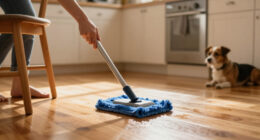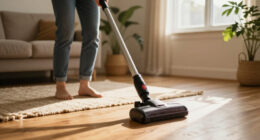
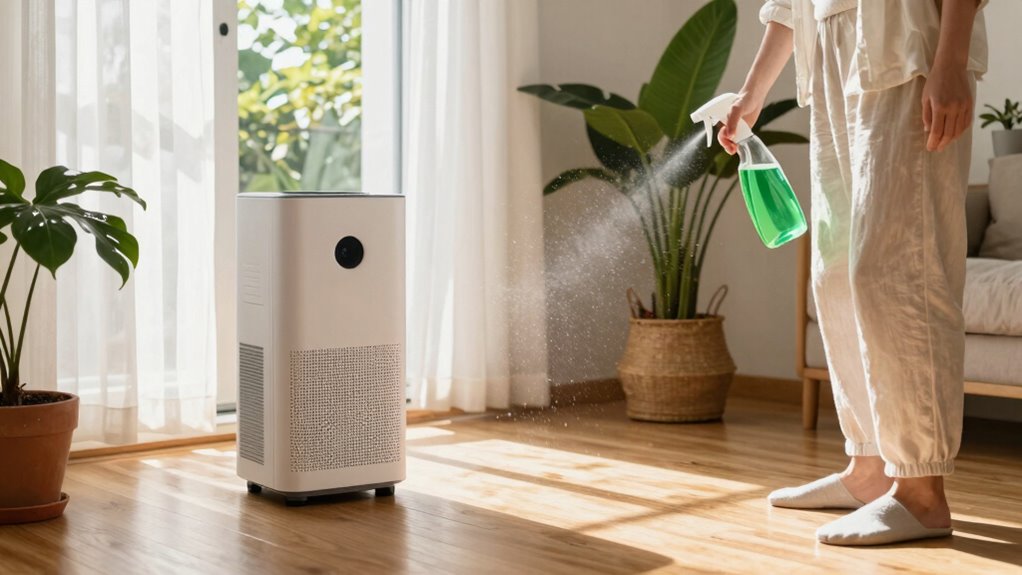
To reduce indoor air irritation during deep cleaning, opt for eco-friendly cleaning products that are free from harsh chemicals. Guarantee proper ventilation by opening windows and using exhaust fans to promote fresh air circulation. Dust surfaces and vacuum with a HEPA filter before you start cleaning. Time your cleaning on breezy days and allow spaces to air out afterward. By following these tips, you’ll create a healthier indoor environment. Discover more strategies to enhance your cleaning routine.

Get cleaning gear delivered free — and shop member deals
- Fast, free delivery on millions of items
- Access to Prime Big Deal Days deals on October 6–7
- Prime Video, Amazon Music and more included
Key Takeaways
- Choose eco-friendly cleaning products labeled “fragrance-free” and “non-toxic” to minimize chemical exposure and irritation.
- Open windows and doors to enhance ventilation and allow fresh air to circulate during cleaning.
- Dust surfaces and vacuum floors before cleaning to reduce airborne particles and allergens.
- Time deep cleaning sessions on breezy days to maximize air circulation and minimize indoor irritants.
- Incorporate indoor plants known for air purification to improve overall air quality during cleaning.
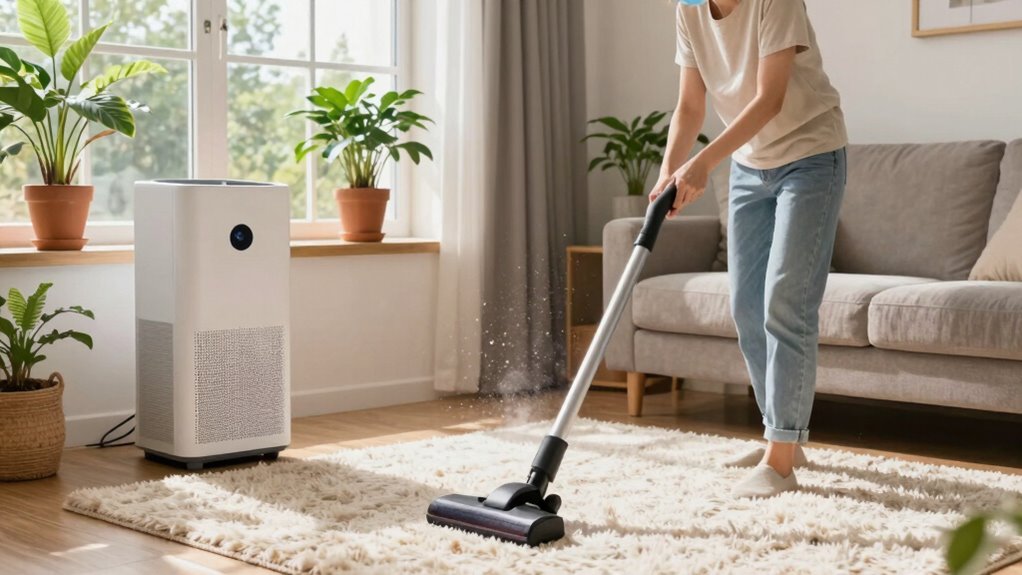
When you deep clean your home, you might not realize that the very products and processes meant to create a fresher environment can actually irritate your indoor air. Many cleaning products contain chemicals that can compromise your air quality, leading to allergic reactions or even respiratory health issues. Understanding how to reduce indoor air irritation during these sessions is vital for maintaining a healthy living space.
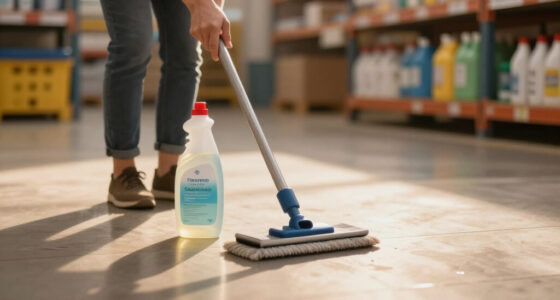
Start by choosing cleaning products wisely. Opt for environmentally friendly or natural alternatives that are less likely to emit harmful fumes. These products often lack harsh chemicals that can trigger allergic reactions or worsen existing respiratory conditions. Reading labels is essential; look for terms like “fragrance-free” and “non-toxic” to guarantee you’re making a better choice for your indoor air quality. Incorporating eco-friendly cleaning methods can further reduce chemical exposure and improve air safety.
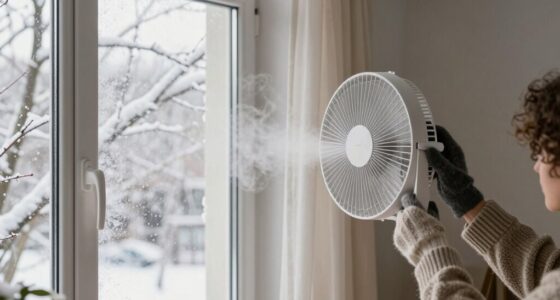
Next, consider your ventilation strategies. Open windows and doors to create a cross-breeze, allowing fresh air to circulate and any lingering fumes to escape. If weather conditions don’t permit this, use exhaust fans in kitchens and bathrooms to promote airflow. This simple step can dramatically improve air quality, reducing the risk of irritation during your deep cleaning process. Incorporating proper ventilation techniques can further enhance this effect and help clear out airborne irritants more effectively. Additionally, using air quality sensors can help you monitor and adjust your ventilation efforts in real time.
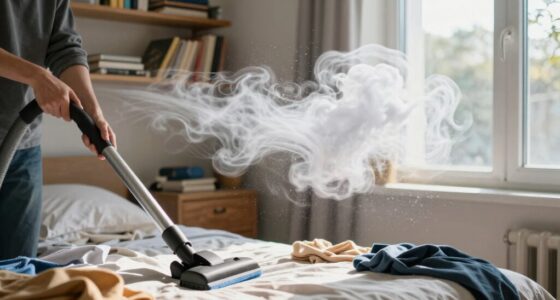
Don’t overlook dust control, either. Dust can aggravate allergies and contribute to poor air quality. Before diving into your cleaning routine, take a few moments to dust surfaces and vacuum floors with a HEPA filter. These actions can trap allergens and prevent them from becoming airborne, which is especially important when you’re using cleaning products that may already be irritating the air. Using dust mitigation methods can significantly reduce the amount of airborne particles released during cleaning. Regularly maintaining your HVAC filters can also contribute to cleaner indoor air.
Timing is another factor to think about. Try deep cleaning when you can ventilate your space effectively, such as on a breezy day. This way, any irritants released during cleaning can dissipate more quickly. After you’ve finished, allow your home to air out for a while before closing windows or running air conditioning. Incorporating indoor plants can also naturally filter the air, helping to improve your home’s overall air quality. Certain plants can absorb toxins and release oxygen, contributing positively to your respiratory health.
HEPA air purifier for indoor air quality
As an affiliate, we earn on qualifying purchases.
As an affiliate, we earn on qualifying purchases.
Frequently Asked Questions
What Are Common Sources of Indoor Air Irritation During Cleaning?
Common sources of indoor air irritation during cleaning include cleaning chemicals, which often release volatile organic compounds. Dust particles can also become airborne, aggravating allergies. Air fresheners, while masking odors, may contain irritants that affect your respiratory system. Additionally, inadequate ventilation systems can trap these pollutants, causing a buildup of irritants in your home. To minimize discomfort, it’s essential to be aware of these sources while cleaning.
How Often Should I Deep Clean My Home?
You might think deep cleaning‘s only necessary once a year, but that’s not true! For ideal home maintenance, aim for a thorough deep clean every three to six months. This cleaning frequency helps eliminate dust, allergens, and grime that accumulate over time. If you have pets or allergies, you might want to take into account more frequent sessions. Staying on top of it keeps your home healthier and more comfortable for everyone.
Can Pets Contribute to Indoor Air Irritation?
Yes, pets can definitely contribute to indoor air irritation. Their dander contains allergens that can trigger reactions. To manage this, focus on dander control by regularly grooming your pets and vacuuming your home with a HEPA filter. Keeping your pets out of certain rooms, especially during deep cleaning, can also help minimize exposure. With these steps, you can enjoy a more comfortable indoor environment while still sharing your space with furry friends.
What Natural Alternatives Can I Use for Cleaning?
For fresh, fragrant spaces, try eco-friendly solutions! You can whip up DIY cleaners using simple ingredients. Mix vinegar and water for windows, or combine baking soda with lemon juice for scrubbing surfaces. Essential oils like tea tree or lavender can add a pleasant scent while boosting cleaning power. These natural alternatives not only clean effectively but also help keep your indoor air fresh and irritation-free. Enjoy a cleaner home without harsh chemicals!
How Does Humidity Affect Indoor Air Quality During Cleaning?
Humidity affects indoor air quality during cleaning by influencing the amount of dust, mold, and allergens in the air. When humidity’s too high, these particles can thrive, leading to irritation. You can maintain better humidity control by using dehumidifiers or air conditioners, which help keep the air fresh and reduce pollutants. On the flip side, too low humidity can dry out your skin and respiratory system, so aim for a balanced level.
fragrance-free non-toxic cleaning products
As an affiliate, we earn on qualifying purchases.
As an affiliate, we earn on qualifying purchases.
Conclusion
To keep your indoor air fresh and irritation-free during deep cleaning, remember to ventilate your space like opening a window to let in a gentle breeze. Use natural cleaning products when possible, and take breaks to breathe easy. By planning ahead and being mindful of your choices, you can transform your cleaning routine into a healthier experience. So, roll up your sleeves and tackle that mess while keeping your air crisp and clear!
As an affiliate, we earn on qualifying purchases.
As an affiliate, we earn on qualifying purchases.
Halloween Picks
halloween
As an affiliate, we earn on qualifying purchases.