
If your dehumidifier smells musty, start by inspecting and cleaning the water collection tank to remove mold or mildew buildup. Next, clean or replace the air filter to prevent dust and mold from causing odors. Also, check and wipe down the coils and internal parts for any mold or dirt. Keeping these parts clean is key, and you’ll discover more tips to keep your dehumidifier smelling fresh if you continue.
Key Takeaways
- Empty and clean the water collection tank with soap or vinegar to eliminate mold and prevent odors.
- Inspect and scrub the air filter to remove dust, mold, and debris obstructing airflow.
- Clean the coils and internal surfaces with a soft brush or cloth soaked in mild detergent to prevent mold buildup.
- Check and clear the drainage system for proper water flow, avoiding stagnant water that causes musty smells.
- Regularly dry and reassemble all parts to prevent moisture retention and microbial growth inside the dehumidifier.
Why Does My Dehumidifier Smell Musty? Common Causes
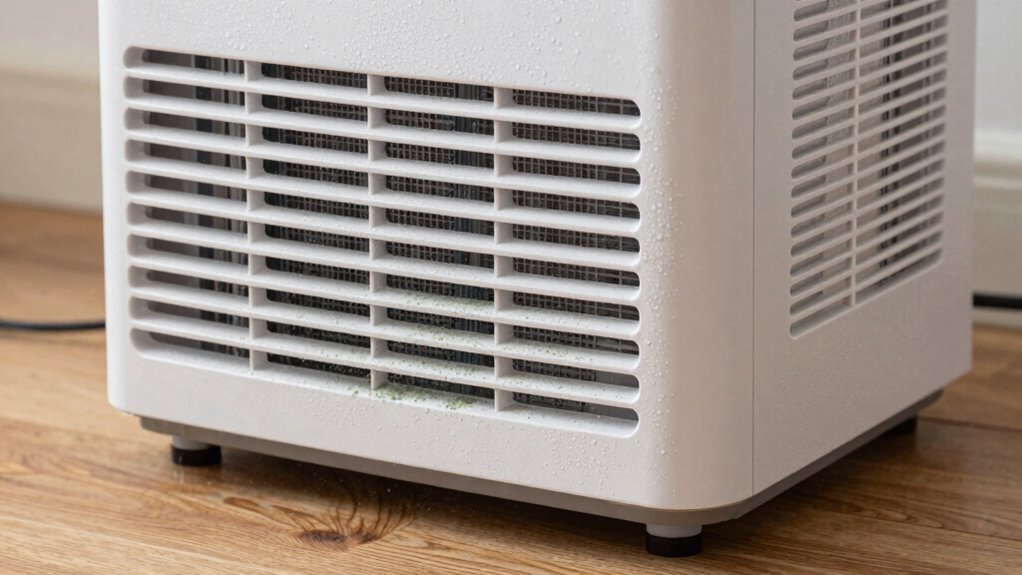
A musty smell from your dehumidifier often indicates mold, mildew, or bacteria growth inside the unit. Poor air quality can result from excess moisture that fosters these microorganisms. When humidity isn’t properly controlled, damp conditions develop, creating an ideal environment for mold and mildew to thrive. This growth releases musty odors and can negatively impact your indoor air quality. If you notice a persistent smell, it’s likely due to stagnant water or dirty filters harboring bacteria. Failing to address humidity levels or neglecting regular cleaning allows mold spores to accumulate, making the air you breathe less healthy. Proper sensor calibration in your dehumidifier’s sensors and components can help ensure optimal performance and prevent moisture buildup. Managing humidity control effectively and keeping your dehumidifier clean helps prevent these issues and maintains fresh, odor-free indoor air. Regular maintenance routines and proper cleaning techniques are essential to prevent mold growth and odor problems. Additionally, understanding the importance of humidity levels can help you avoid conditions that promote microbial growth.
How to Detect Mold and Mildew Inside Your Dehumidifier
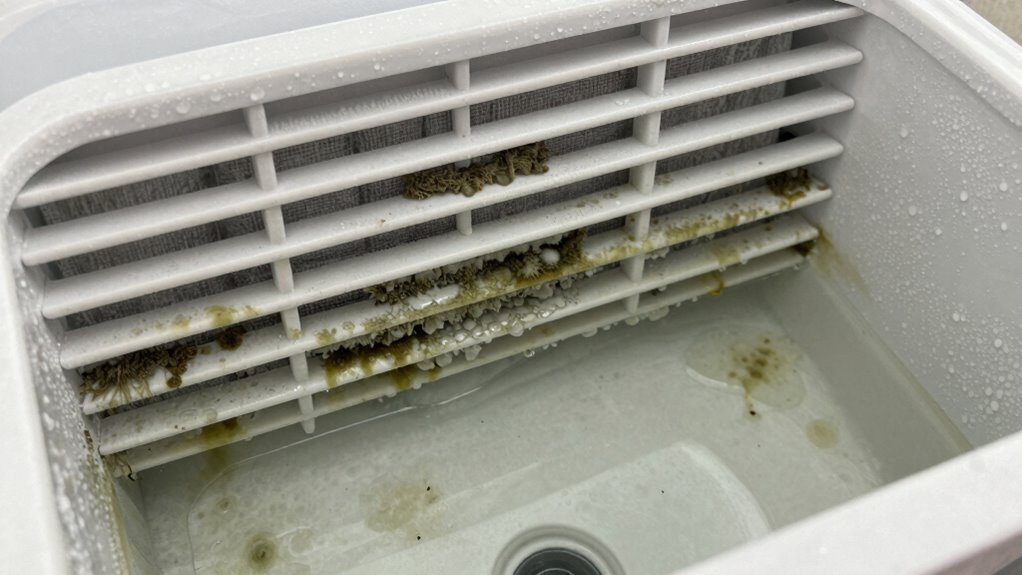
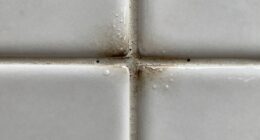
To determine if mold or mildew is causing the musty smell in your dehumidifier, you need to inspect the unit thoroughly. Start by visually examining all accessible parts for signs of mold detection, such as dark spots, fuzzy growth, or discoloration. Pay close attention to corners, filters, and any crevices where moisture might linger. Mildew identification involves checking for a musty odor combined with visible patches of powdery or slimy substance. Use a flashlight to illuminate hidden areas. If you notice any mold or mildew, it’s a strong indicator that these growths are contributing to the smell. Promptly addressing mold detection and mildew identification is essential to eliminate odors and prevent health issues. Additionally, understanding air purifier maintenance can help prevent future mold buildup and ensure optimal air quality. Regular cleaning of dehumidifier parts like filters, coils, and drainage trays can further reduce mold growth and improve overall performance. Being aware of humidity control can also help maintain a dry environment that inhibits mold development.
How to Inspect and Clean the Water Collection Tank
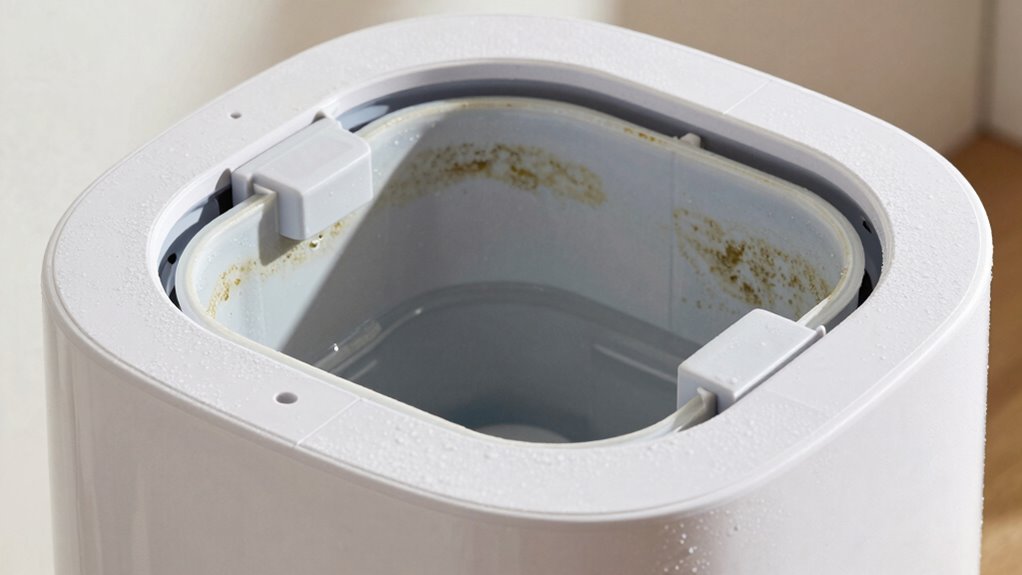
Start by removing and emptying the water collection tank to prevent any buildup. Next, scrub the interior surfaces thoroughly to remove mold or mildew that may cause odors. Be sure to check for any signs of mold growth and clean those areas carefully. Regular maintenance, including inspecting the water collection system, helps prevent odors from developing over time. Additionally, inspecting the ventilation system ensures proper airflow, which can reduce musty smells. Using a dehumidifier with a clean filter can also contribute to eliminating persistent odors and maintaining a fresh environment. Incorporating smart home automation can help monitor humidity levels automatically and alert you when cleaning is needed.
Remove and Empty Tank
Ever wondered how to properly inspect and clean your dehumidifier’s water collection tank? Start by removing the tank carefully, making sure you avoid spills. To do this effectively, follow these steps:
- Power off the unit and unplug it for safety.
- Gently slide out the tank from its compartment.
- Hold the tank with both hands, ready for water disposal.
- Pour out the collected water into a sink or drain, checking for any debris or buildup.
- Regular maintenance, including cleaning the tank with mild soap and water, helps prevent mold growth and odors. Additionally, inspecting the drainage system ensures proper water flow and prevents leaks.
- Inspecting all water contact parts periodically helps maintain optimal performance and hygiene. Proper cleaning and inspection are vital to avoid musty odors and ensure fresh, clean air from your dehumidifier. Regularly wiping down humidifier components can also reduce the likelihood of odor-causing bacteria developing.
This process is essential for tank maintenance and prevents musty odors. Regularly removing and emptying the tank keeps the water disposal process simple and minimizes chances of mold growth. Keeping your dehumidifier’s tank clean guarantees peak performance and fresher air.
Scrub Interior Surfaces
Inspecting and cleaning the interior surfaces of your dehumidifier’s water tank is essential for preventing musty odors and mold growth. Over time, surface contamination can build up, creating a breeding ground for bacteria and mold. Check for any buildup or residue that might restrict airflow and cause moisture to stagnate. Use a soft brush or cloth to scrub the tank’s interior with a mild detergent or vinegar solution, ensuring you reach all corners. Rinse thoroughly to remove any soap or residue. Dry completely before reinserting the tank. Proper cleaning helps eliminate surface contamination and maintains ideal airflow, reducing the risk of musty smells. Regular scrubbing keeps your dehumidifier functioning efficiently and smelling fresh. Routine maintenance is key to preventing persistent odors and ensuring your appliance operates effectively. Additionally, inspecting airflow pathways can help identify any obstructions that contribute to odor issues, and keeping these pathways clear ensures optimal dehumidifier performance. Regularly checking for surface contamination can further prevent odor buildup and prolong the life of your appliance.
Check for Mold Growth
Because mold can quickly develop in damp environments, it’s important to regularly check your dehumidifier’s water collection tank for signs of growth. Mold detection starts with inspecting the tank’s interior for fuzzy, discoloration, or slimy patches. Look for a musty smell, which indicates mildew prevention issues. To identify mold growth, consider these steps:
- Remove the tank carefully, avoiding spills.
- Examine all sides and corners for any dark spots or mold.
- Smell for a stale, moldy odor.
- Check for slimy residues or discoloration that signal mold presence.
- Remember that proper cleaning with vinegar and water can prevent mold buildup and maintain a fresh smell. Additionally, understanding mold growth conditions helps you better prevent future issues. Using a humid environment that is too damp can accelerate mold development, so controlling humidity levels is essential.
If you find any signs of mold, clean the tank thoroughly with a mixture of vinegar and water. Regular inspections will help prevent mold buildup and keep your dehumidifier smelling fresh.
How to Clean the Air Filter and Why It Matters

Cleaning your air filter is essential to keep your dehumidifier running efficiently and prevent musty odors. You should remove dust and debris regularly, and either replace or wash the filter as needed. Doing so helps improve air quality and extends the life of your unit.
Removing Dust and Debris
Regularly removing dust and debris from your dehumidifier’s air filter is essential for maintaining its efficiency and preventing musty odors. When dust buildup occurs, airflow blockage happens, reducing performance and causing odors. To keep your unit running smoothly, consider these steps:
- Turn off and unplug the dehumidifier for safety.
- Remove the air filter carefully, avoiding knocking dust into the unit.
- Gently brush or rinse the filter to clear dust and debris.
- Let the filter dry completely before reinserting it.
Cleaning the filter prevents dust accumulation, ensuring proper airflow and minimizing musty smells. Regular maintenance stops dust buildup from clogging the filter, keeping your dehumidifier fresh and effective.
Replacing or Cleaning Filter
To keep your dehumidifier functioning efficiently and prevent musty odors, it’s important to regularly clean or replace the air filter. A clogged or dirty filter restricts airflow, reducing performance and collecting mold or bacteria that cause odors. You can either clean the filter or opt for a filter replacement if it’s worn out. Here’s a quick guide:
| Step | Action |
|---|---|
| 1 | Turn off and unplug |
| 2 | Remove the filter |
| 3 | Clean with water and mild soap |
| 4 | Dry thoroughly |
| 5 | Reinstall or replace |
Regular filter cleaning or replacement keeps your dehumidifier fresh, odor-free, and working at peak efficiency.
How to Clean the Coils and Internal Parts to Remove Odors
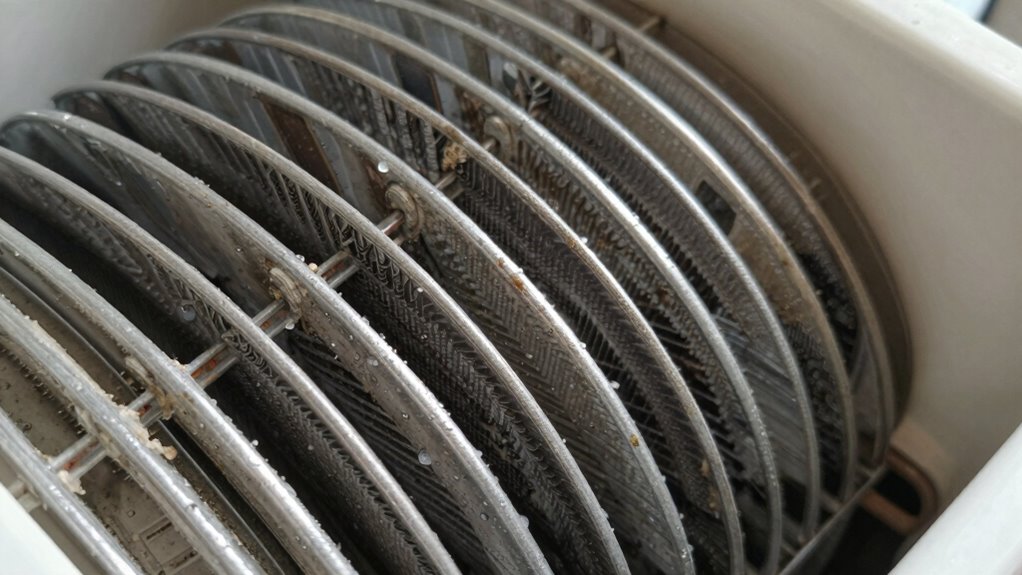
Since dirt and mold can build up on the coils and internal parts of your dehumidifier, maintaining them properly is essential to eliminate musty odors. To do coil cleaning and refresh internal parts, follow these steps:
- Turn off and unplug your dehumidifier before starting.
- Remove the cover and access the coils and internal components.
- Gently wipe the coils with a soft brush or cloth soaked in a mixture of water and mild detergent.
- Use a vacuum with a brush attachment to clear dust and mold from internal parts and vents.
This process helps remove mold, dust, and dirt that cause odors. Regularly cleaning the coils and internal parts guarantees your dehumidifier stays fresh and odor-free.
Top Tips to Prevent Musty Odors in Your Dehumidifier Long-Term

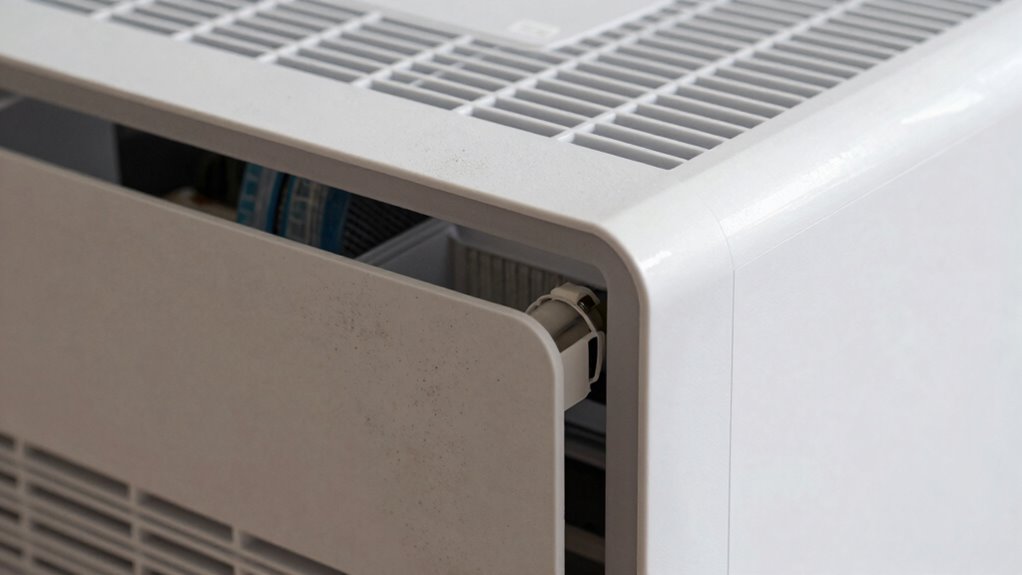
Keeping your dehumidifier smelling fresh over time requires proactive measures. First, guarantee proper dehumidifier placement—avoid cramped corners or enclosed spaces that trap moisture and hinder air circulation. Position it in a well-ventilated area where air can flow freely around it. Good air circulation helps prevent moisture buildup inside the unit, reducing the chance of mold and musty odors. Regularly check and empty the water collection bucket, and keep the filter clean to maintain ideal airflow. Additionally, leave the front grille slightly open when the unit isn’t in use to promote airflow and prevent stale air. These steps will help maintain a fresh environment, preventing musty smells from developing in your dehumidifier over the long term.
When to Consider Professional Cleaning or Replacement
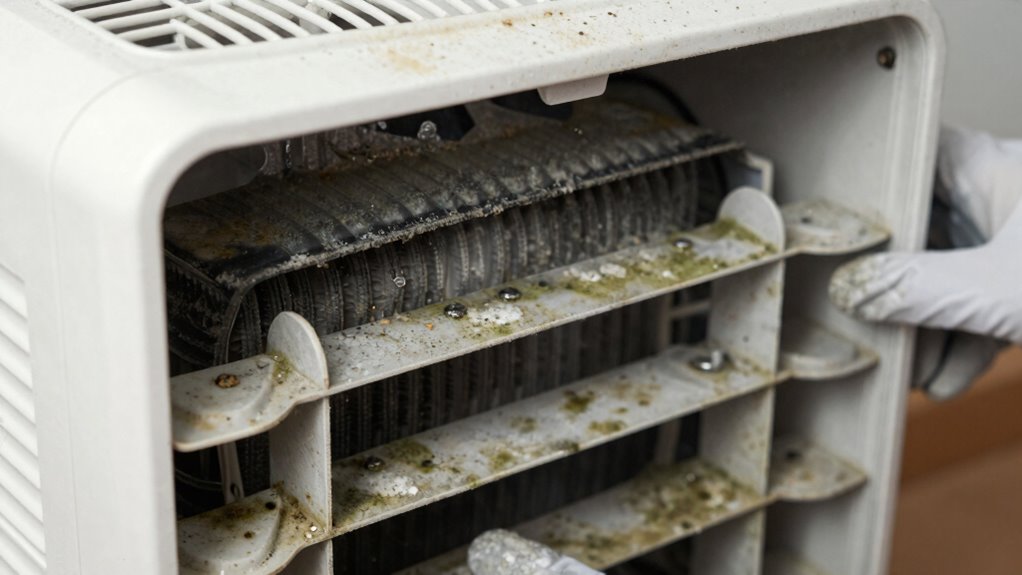
If your dehumidifier continues to emit musty odors despite regular maintenance, it may be time to seek professional cleaning or consider replacing the unit. Persistent smells can indicate mold buildup or inadequate air purification that DIY methods can’t resolve. Think of these signs as a call for expert intervention:
Persistent musty odors despite cleaning indicate mold buildup—consider professional cleaning or replacement.
- Unrelenting musty odor despite cleaning efforts.
- Visible mold or mildew inside the device.
- Reduced air quality or lingering dampness.
- Frequent malfunction or breakdowns.
Professional cleaning can improve odor prevention and restore air purification efficiency, ensuring your dehumidifier functions properly. If odors persist after expert treatment, replacement might be necessary. Addressing these issues promptly helps maintain a fresh indoor environment and prevents further mold growth.
Regular Maintenance Tips to Keep Your Dehumidifier Smelling Fresh

Regular maintenance plays a vital role in preventing musty odors from developing in your dehumidifier. To keep your air quality high and humidity control effective, clean the filter regularly and inspect the water tank for mold or buildup. Wipe down the coils and other accessible parts to prevent dust accumulation, which can contribute to odors. Confirm the dehumidifier is placed in a well-ventilated area and keep it dry when not in use. Empty the water tank frequently to avoid stagnation. Using distilled water in the tank can also help reduce mineral deposits that cause odors. Consistent upkeep keeps your dehumidifier functioning efficiently, maintains fresh air quality, and prevents musty smells from taking hold. Regular maintenance is your best defense against odor and humidity issues.
Frequently Asked Questions
Can Using Dehumidifier Dehumidifier Dehumidifier Reduce Musty Odors?
Yes, using your dehumidifier can help reduce musty odors by controlling excess humidity. Proper humidifier maintenance guarantees it runs efficiently and prevents mold growth, which causes those odors. Regularly cleaning filters and internal parts helps with odor prevention. By maintaining your dehumidifier, you create a less hospitable environment for mold and mildew, ultimately keeping your space smelling fresh and clean.
Are Certain Dehumidifier Models More Prone to Developing Odors?
Is your dehumidifier whispering secrets of odor? Some models are more susceptible to developing smells due to design flaws. You’ll find that certain odor-prone designs, especially those with tight crevices or poor drainage, are more prone to mold and mildew buildup. Model susceptibility varies, so opting for units with better air circulation and easy-to-clean parts can help prevent musty odors, ensuring your space stays fresh and inviting.
How Often Should I Replace the Dehumidifier’s Filters?
You should replace your dehumidifier’s filters every 1 to 3 months, depending on use and environmental conditions. Follow the maintenance schedule recommended by the manufacturer, as regular filter replacement keeps the unit running efficiently and prevents musty odors. Keep an eye on the filter’s condition, and if it looks dirty or clogged sooner, don’t wait—replace it promptly to maintain excellent air quality and prevent mold buildup.
Can Air Fresheners Help Eliminate Musty Smells Effectively?
You might find that air fresheners seem to work by coincidence rather than effectiveness, as they only mask musty smells temporarily. For better odor absorption, try using odor-absorbing techniques like baking soda or activated charcoal instead. While air fresheners can provide a quick fix, they don’t eliminate the source of the smell. Focusing on proper cleaning and odor absorption methods guarantees your dehumidifier stays fresh and odor-free long-term.
What Are the Signs of a Failing Dehumidifier Causing Odors?
If your dehumidifier is failing, you’ll notice signs like persistent odors despite cleaning, or increased musty smells indicating poor dehumidifier maintenance. You might also see reduced efficiency or water leaks. Odor detection becomes harder, and the unit may run longer without reducing humidity properly. Regularly inspect and clean filters, coils, and drainage parts to prevent these issues. When odors persist, it’s a sign you need to address potential mechanical or mold problems.
Conclusion
Think of your dehumidifier as a guardian of your home’s freshness. When you clean its parts, you’re clearing away the shadows of mold and mildew—like lifting a fog that dulls your space. Regular care keeps this guardian vigilant, ensuring it breathes new life into your environment. With each maintenance, you’re nurturing a sanctuary where clean air flows freely, and the musty shadows stay at bay, allowing your home’s true freshness to shine through.