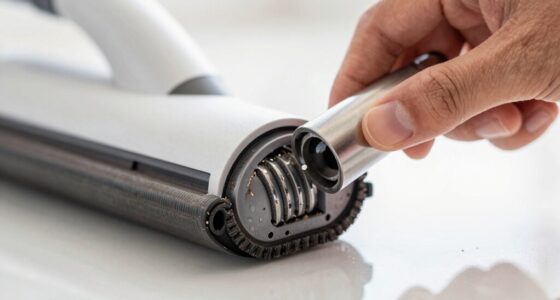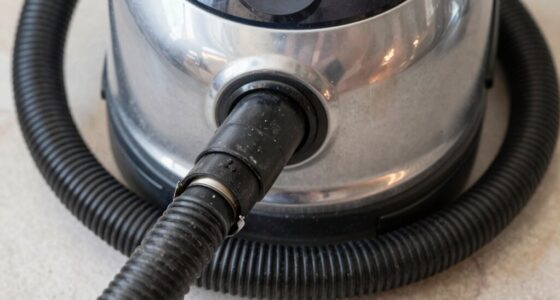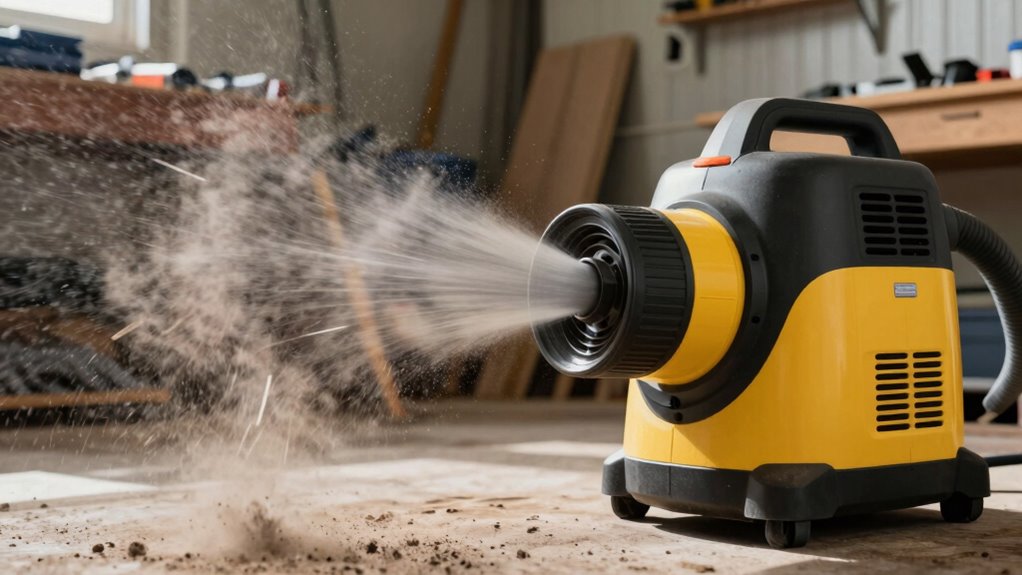

If your shop vac is blowing dust out the exhaust, it’s often caused by a clogged or damaged filter. To fix this quickly, turn off the vac, remove the filter, and inspect it for dirt buildup or tears; replace it if needed. Also, check that all hose connections are tight and sealed with clamps or tape to prevent leaks. Ensuring your filters and seals are secure can stop dust blowout fast. Keep going for more tips to clear and maintain your vacuum effectively.
Key Takeaways
- Inspect and replace clogged or damaged filters to restore proper dust containment.
- Ensure tight sealing of hose and filter connections with clamps or tape to prevent leaks.
- Clean or replace the pre-filter and foam sleeve if torn or excessively dirty.
- Check for gaps or loose fittings in the dust containment system and seal as needed.
- Regular maintenance, including filter replacement and connection checks, prevents future dust blowout.
Why Is My Shop Vac Blowing Dust Out the Exhaust?

Have you noticed dust blowing out of your Shop Vac’s exhaust? This usually happens when there’s a problem with dust containment or filter maintenance. Over time, your vacuum’s filter can get clogged or damaged, reducing its ability to trap dust effectively. When the filter isn’t working properly, dust escapes through the exhaust port instead of being contained inside the vacuum. Regular filter maintenance is essential to keep dust from blowing out and causing a mess or health issues. If you ignore this, dust can bypass the filter altogether, making your vacuum less efficient. Check your filter regularly, clean or replace it as needed, and ensure the dust containment system is sealed tight. Proper maintenance helps your Shop Vac perform at its best and keeps dust where it belongs—inside the vacuum. Additionally, understanding the importance of filter lifespan in maintaining vacuum performance can help you extend the effectiveness of your dust containment system. To prevent future issues, also verify that all seals and gaskets are intact and properly fitted. Ensuring that your vacuum’s filtration system is in top condition is crucial for optimal and safe operation.
How to Quickly Check and Replace Your Shop Vac Filter
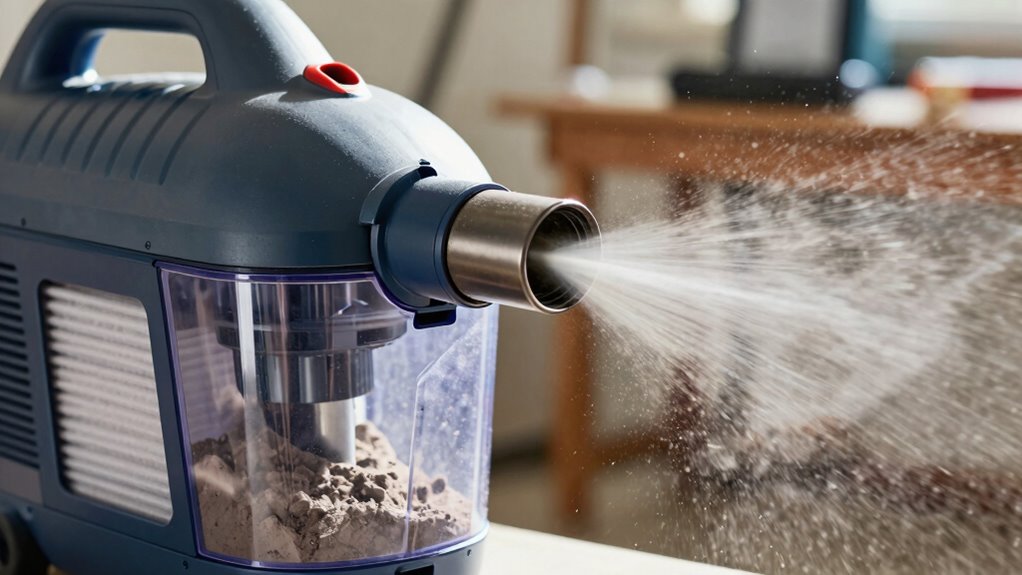
Checking and replacing your Shop Vac filter is a quick process that can considerably improve its performance. Start with a simple filter inspection—remove the filter and look for dirt buildup or damage. If the filter appears clogged or worn out, it’s time for a replacement. Make sure to choose the correct filter type for your model. While replacing, check the hose sealing; a loose or damaged seal can cause dust to blow out the exhaust. Ensure the new filter fits snugly and the hose connection is secure to prevent leaks. Regularly inspecting and replacing your filter keeps your Shop Vac functioning efficiently and prevents dust from escaping. Proper filter maintenance is essential for optimal dust collection and air quality. This simple maintenance step helps maintain strong suction and cleaner air output, which is especially important for maintaining air purifier efficiency in your cleaning routine.
How to Seal the Filter and Hose Connections to Keep Dust In
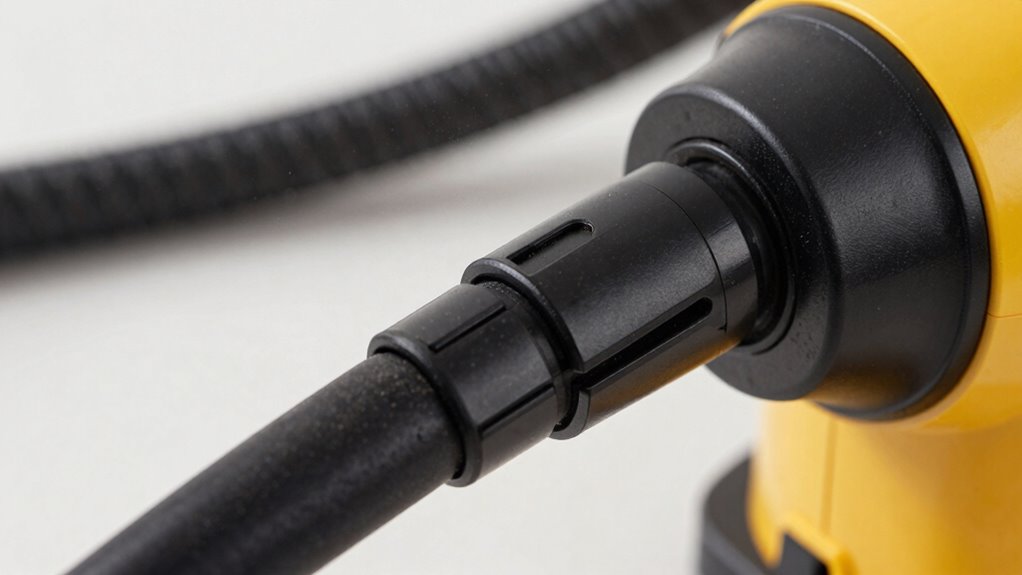
Ensuring a tight seal between your filter and hose connections is vital for preventing dust from escaping during vacuum operation. Proper dust containment relies on a secure fit, so check for gaps or loose fittings. Apply a sealant, like silicone or weatherstripping, around the connection points to improve the seal. Make sure the sealant is compatible with your vacuum components and dries quickly. For added security, wrap the hose connection with electrical tape or use a hose clamp to tighten the fit. These simple steps reduce dust leakage and keep your workspace cleaner. Regularly inspecting and maintaining these connections ensures consistent dust containment, and using proper sealing techniques can prevent future leaks. Using the correct sealant application techniques can significantly improve sealing effectiveness. Sealant application is a quick, effective fix to stop dust from escaping through leaks. Additionally, understanding art care principles can help maintain your equipment in optimal condition. Incorporating proper maintenance routines can further enhance your vacuum’s performance and lifespan.
Cleaning or Replacing the Pre-Filter and Foam Sleeve for Better Suction

Over time, dust and debris can clog your pre-filter and foam sleeve, reducing your vacuum’s suction power. Regular filter maintenance is essential to keep your shop vac performing at its best. To improve suction, remove the pre-filter and foam sleeve, then clean them thoroughly with water and let them dry completely. If they’re torn or excessively dirty, replacing them is the best option. A clean foam sleeve ensures unobstructed airflow, boosting suction and preventing dust blowout. Be sure to inspect the pre-filter for damage and replace it if necessary. Maintaining these components not only enhances your vacuum’s efficiency but also prolongs its lifespan. By dedicating a few minutes to cleaning or replacing the pre-filter and foam sleeve, you ensure your shop vac continues to operate at peak performance.
Tips to Maintain Your Shop Vac and Prevent Dust Blowout in the Future

Regular maintenance is key to preventing dust blowout and keeping your shop vac running efficiently. Regular filter maintenance guarantees dust and debris don’t bypass the filtration system, which can cause dust to blow out of the exhaust. Check and clean or replace filters as needed, especially after heavy use. Additionally, inspect hose sealing; loose or damaged seals allow dust to escape, so make sure all connections are tight and intact. Proper hose sealing prevents dust from leaking out during operation and reduces strain on the motor. Using the correct filtration system can significantly improve dust collection and overall performance. By maintaining filters and ensuring secure hose connections, you minimize dust blowout and prolong your shop vac’s lifespan. Understanding dust collection can also improve your overall setup and efficiency. Properly maintaining your vacuum components ensures consistent operation and reduces the likelihood of dust blowout. Consistent upkeep saves you time and effort in troubleshooting issues and keeps your workspace cleaner and safer.
Frequently Asked Questions
Can Using a Different Filter Type Reduce Dust Blowing Issues?
Yes, using a different filter type can reduce dust blowing issues. Make sure the filter is compatible with your shop vac to guarantee proper dust containment. A filter designed for better dust filtration traps more particles, preventing dust from escaping through the exhaust. Check the filter compatibility before switching, and choose a high-quality filter to improve overall performance and keep your workspace cleaner.
How Often Should I Replace My Shop Vac Filter for Optimal Performance?
You should replace your shop vac filter regularly for peak performance, aiming for a filter lifespan of about 3 to 6 months depending on usage. Follow a consistent replacement schedule, inspecting the filter monthly and replacing it when it appears dirty or clogged. Doing so ensures your vacuum maintains strong suction, reduces dust blowing issues, and keeps your workspace clean and safe. Regular maintenance is key to prolonging your vacuum’s efficiency.
Is It Safe to Wash and Reuse Certain Shop Vac Filters?
Yes, you can wash and reuse certain shop vac filters, but it depends on the filter type. Always check the manufacturer’s instructions for filter cleaning, as some filters are washable and can enhance filter longevity. Proper cleaning guarantees your vacuum maintains peak performance and reduces replacement costs. Be gentle during filter cleaning, and ensure the filter is completely dry before reinstalling to prevent mold or damage.
What Are Signs That My Shop Vac’s Motor Is Failing?
If your shop vac’s motor is failing, you’ll notice it’s overheating or making strange noises. These signs indicate the motor struggles to run properly and may be on its way out. You might also see reduced suction or a burning smell. If you spot these issues, it’s best to inspect the motor, clean or replace filters, and consider professional repair to avoid complete failure.
Can Improper Storage Cause Dust Blowout Problems?
Did you know improper storage can lead to a 30% increase in dust blowout issues? If you don’t store your shop vac’s filter properly, dust can escape through the exhaust. To prevent this, always keep filters in a sealed container or clean, dry area to maintain dust containment. Proper storage guarantees your vacuum functions efficiently, reducing dust blowout and extending its lifespan.
Conclusion
If your shop vac’s blowing dust out the exhaust, fixing the filter usually does the trick. Think of the filter as a gatekeeper—when it’s clogged or damaged, dust escapes like a tiny flood. By sealing connections and replacing worn filters, you’re restoring the vacuum’s power and preventing dust from sneaking out. With these quick fixes, you’ll keep your workspace clean and breathe easier, as if a fresh breeze has replaced the dust storm.