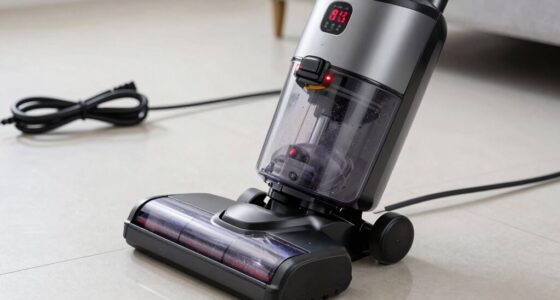
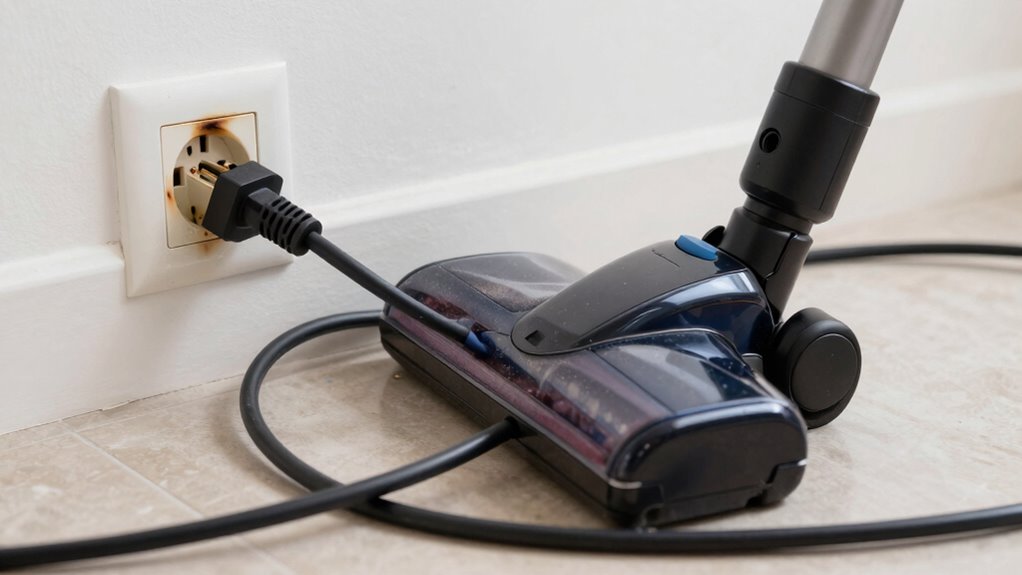

If your corded vacuum trips the breaker, it could be caused by power surges, overloaded circuits, or damaged cords. Faulty wiring or internal motor issues may also be responsible, especially if the vacuum overheats or short circuits. Regular maintenance and proper circuit use can help prevent trips, but persistent problems might signal electrical faults needing professional attention. Keep exploring to discover more common causes and solutions to keep your vacuum running smoothly.
Key Takeaways
- Power surges from lightning or faulty wiring can cause the vacuum to overload and trip the breaker.
- Overloading a circuit by connecting multiple high-power appliances exceeds its capacity, triggering a trip.
- Damaged power cords may cause short circuits, leading to excessive current draw and breaker trips.
- Internal motor problems or overheating within the vacuum can result in trips due to high current demands.
- Using the vacuum on the same circuit as other high-power devices increases the risk of overload and breaker trips.
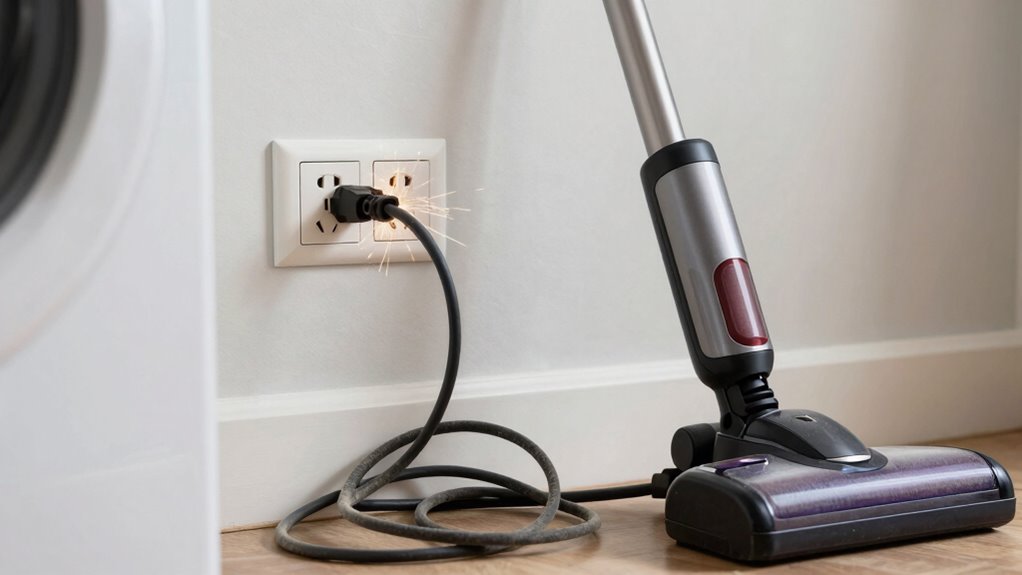
If your corded vacuum keeps tripping the breaker, it can be frustrating and disrupt your cleaning routine. One common reason for this issue is a power surge, which occurs when there’s a sudden spike in electrical current flowing through your outlet. Power surges can happen due to lightning strikes, faulty wiring, or even when other high-powered appliances turn on simultaneously. When your vacuum tries to draw power during a surge, it overloads the circuit, causing the breaker to trip as a safety measure. This prevents potential damage to your vacuum and electrical system but leaves you stuck without your vacuum functioning properly.
Another frequent cause is an overloaded circuit. Your home’s electrical system is designed to handle a certain amount of current, and if too many devices are plugged into the same circuit, it can become overloaded. When this happens, the circuit breaker trips to prevent overheating and potential fire hazards. If you notice your vacuum tripping the breaker whenever you turn on other appliances—like a hairdryer, microwave, or space heater—you might be overloading that particular circuit. To avoid this, try plugging your vacuum into a different outlet on a separate circuit, or limit the number of devices running on the same circuit during cleaning.
Worn or damaged power cords can also cause your vacuum to trip the breaker. Over time, cords can fray or develop internal breaks, which may lead to short circuits or inconsistent power flow. If your cord is damaged, the vacuum may draw excessive current or cause a short, prompting the breaker to trip to protect your electrical system. Always inspect your vacuum’s power cord for signs of wear, such as cuts, exposed wires, or burn marks. Replacing a damaged cord is essential to prevent tripping and ensure safe operation.
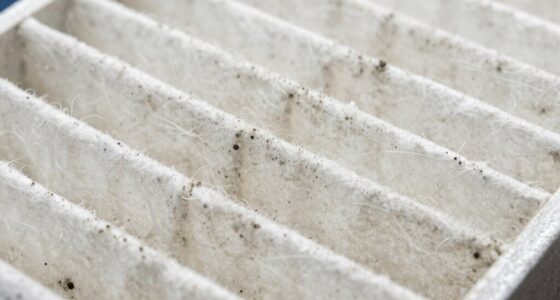
In addition to electrical issues, internal problems within the vacuum itself can cause breaker trips. A motor that’s overheating or has a short circuit can draw more current than usual. Dust and debris buildup inside the vacuum can also impair motor function, leading to overheating and tripping the breaker. Regular maintenance, such as cleaning filters and inspecting internal parts, can help prevent these issues. Additionally, power management with a high-quality circuit breaker can help protect your appliance from frequent trips, especially if you use multiple high-power devices on the same circuit.

Stick Vacuum Cleaner Charger Replacement Fit for INSE N5S N5 N670 N570 N660
- Compatible Models: Fits INSE N5S, N5, N670, N570, N660, and more
- Enhanced Durability: Snap-in dual power plugs for safety
- Longer Reach: 6 ft (1.8 m) power cord
As an affiliate, we earn on qualifying purchases.
As an affiliate, we earn on qualifying purchases.
Frequently Asked Questions
Can a Clogged Vacuum Filter Cause Breaker Trips?
A clogged vacuum filter can cause breaker trips because it puts extra strain on your vacuum’s motor, leading to overheating. When the filter isn’t clean, the motor works harder, which increases electrical load and can trip the breaker. To prevent this, regularly check and replace your vacuum filter. Keeping the filter clean helps your vacuum run smoothly and reduces the chances of breaker trips caused by electrical overload.
How Often Should I Check My Vacuum’s Power Cord?
Think of your vacuum’s power cord as its lifeline—fragile yet essential. You should check your power cord during regular power cord maintenance, ideally every few months, or if you notice any damage or fraying. Frequent inspections help catch issues early before they cause breaker trips or electrical hazards. Staying vigilant ensures your vacuum stays safe and efficient, preventing unexpected shutdowns and prolonging its lifespan.
Is a Damaged Power Cord Dangerous?
A damaged power cord is dangerous because it can cause electrical hazards like sparks or shocks. If you notice fraying, exposed wires, or burns, stop using your vacuum immediately. Damaged power cord damage increases the risk of electrical fires or shocks, so it’s crucial to replace it or get it repaired by a professional. Never ignore power cord damage, as it compromises safety and can lead to serious accidents.
Can Vacuum Motor Overheating Trip the Breaker?
Yes, a vacuum motor overheating can trip the breaker, like a fire alarm in a crowded room. When the motor gets too hot, it causes an electrical overload, prompting the breaker to shut off power for safety. If your vacuum’s breaker trips frequently, it might be due to the motor overheating or an internal fault. Check for blockages or debris that could be causing the motor to work harder and overheat.
What Should I Do if the Breaker Keeps Tripping?
If your breaker keeps tripping, first unplug the vacuum and check for blockages or damage. Avoid overloading the circuit, and consider switching to cordless alternatives if frequent trips happen. If the issue persists, it’s best to get a professional inspection to identify electrical problems or faulty wiring. Taking these steps helps safeguard your home’s electrical system and ensures safe, efficient vacuum use.
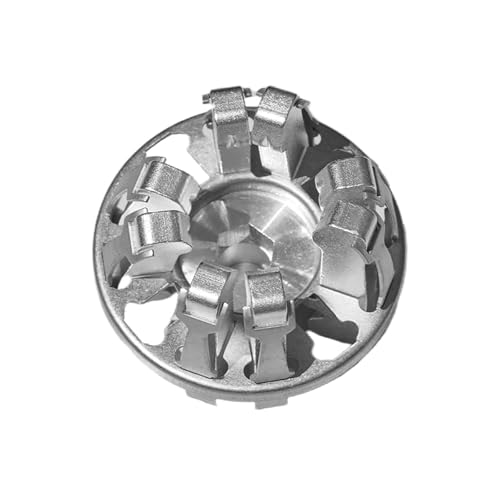
GeYanL Tulip Type Contact for 630A VD4 Medium Voltage Vacuum Circuit Breaker – Reliable Protection Solution,L23
- Reliable Control: Ensures stable power flow
- Easy Installation: Fits standard breaker panels
- Fast Trip Response: Instantly disconnects during faults
As an affiliate, we earn on qualifying purchases.
As an affiliate, we earn on qualifying purchases.
Conclusion
When your corded vacuum trips the breaker, it’s like a warning shot across your bow, signaling something’s amiss. Don’t ignore the signs—treat it like a tangled knot in your day’s smooth sailing. With patience and a little troubleshooting, you can clear the storm and restore peace to your cleaning routine. Remember, every trip is a gentle nudge, reminding you to care for your appliance so it can serve you with unwavering loyalty, mile after mile.

OMT Coolant Vacuum Refill Kit, 13 Pcs Radiator Cooling Tool Set with Hose
- Fast Refill Time: Fills system in 10 minutes
- Universal Compatibility: Fits various vehicle sizes and types
- Leak Detection: Includes pressure gauge for easy leak spotting
As an affiliate, we earn on qualifying purchases.
As an affiliate, we earn on qualifying purchases.

SUPERDANNY Power Strip Surge Protector, 22 AC 6 USB, 2100J, 6.5Ft,1875W/15A
- Versatile 28-in-1 Power Strip: 22 outlets and 6 USB ports
- Certified Safety Standards: FCC, RoHS, UL certifications
- Widely Spaced Outlets: Prevents blocking, organizes cords
As an affiliate, we earn on qualifying purchases.
As an affiliate, we earn on qualifying purchases.