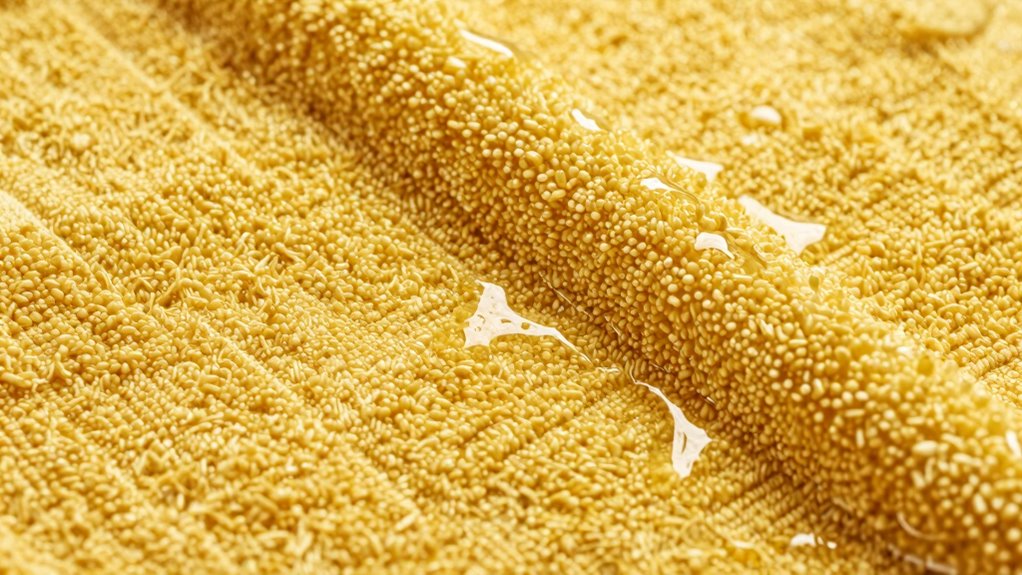

If a towel pushes water around instead of soaking it up, it’s usually due to its fiber type and weave pattern. Synthetic fibers like polyester tend to repel water or move it away quickly, while natural fibers like cotton create more capillary channels that draw water inward. A loosely woven towel has fewer of these channels, reducing absorbency. To learn what makes towels efficient, keep exploring how fiber choice and weave design affect moisture management.

Get cleaning gear delivered free with Prime
- Fast, free delivery on millions of items
- Prime Video, Amazon Music and more included
- Member-only deals all year
Key Takeaways
- Synthetic fibers like polyester tend to repel water or move it across the surface rather than absorbing it.
- The fiber structure and weave density influence how effectively a towel traps and draws in water.
- Loosely woven or low-density fibers create fewer capillary channels, causing water to be pushed around.
- Thicker towels with low fiber density may hold less water and push it outward instead of absorbing it.
- Natural fibers such as Egyptian cotton form dense structures with capillary channels, enhancing absorption and preventing water movement.
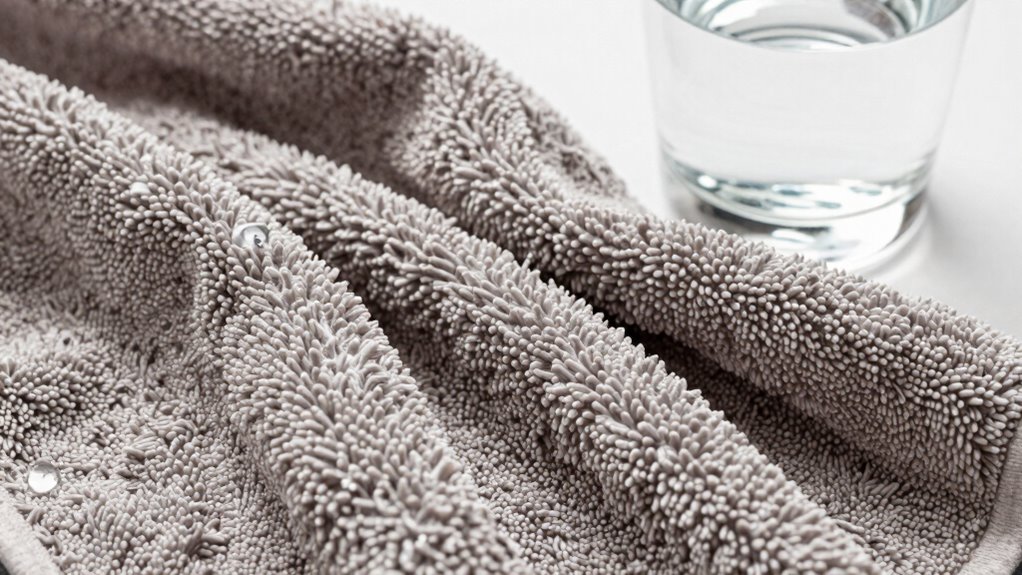
Have you ever wondered what makes some materials better at soaking up liquids than others? When it comes to towels and fabrics, understanding the role of fiber types and towel thickness can help you choose the best option for your needs. The type of fibers used in a towel greatly influences its absorbency. Natural fibers like cotton, especially those with long, dense fibers such as Egyptian or Turkish cotton, tend to be more absorbent because they can trap more water within their fibers. Conversely, synthetic fibers like polyester or microfiber often repel water or push it around rather than absorbing it, making them less effective for drying or cleaning. The structure of these fibers affects how much liquid they can hold and how quickly they do so. Fiber structure plays a crucial role in how well a towel can absorb water and how fast it dries. Towel thickness also plays an essential role. Thicker towels generally have more material and, consequently, greater surface area to soak up water. When a towel is thicker, it contains more fibers per square inch, which allows it to trap more moisture. However, thickness alone isn’t enough; the density of the fibers and how tightly they are woven also matter. A densely woven towel with high fiber content will outperform a loosely woven one in terms of absorbency, even if they appear similar in thickness. That’s because the denser weave creates more capillary channels that draw water into the towel, pulling liquid away from your skin or surface. While a thicker towel may seem like the obvious choice, it’s important to consider fiber types as well. For instance, a thick microfiber towel might look plush but could be designed more for quick-drying or water-repelling purposes rather than maximum absorption. On the other hand, a thinner towel made from high-quality cotton fibers can often absorb more water than a bulky microfiber towel. It’s about finding the right balance between fiber type and towel thickness for what you need, whether that’s quick drying, maximum soak-up, or durability.
As an affiliate, we earn on qualifying purchases.
Frequently Asked Questions
How Does Towel Thickness Affect Absorption?
Thicker towels generally absorb more water because their fiber weave and fabric density increase surface area, trapping more moisture. When a towel is dense, it holds water better and dries you faster. However, if it’s too thick without proper fiber weave, it might push water around instead of absorbing it. So, a well-balanced fabric density and fiber weave are key for ideal absorption and effective drying.
Can Towel Color Influence Absorbency?
Sure, your towel’s color might seem just for style, but it can influence absorbency, especially when dye transfer occurs. Bright or dark dyes often fade or transfer onto your skin or other fabrics, making you wonder if your towel is secretly resisting water. So, if you want a towel that truly absorbs, pick one with colorfast dyeing, and avoid those prone to fading—unless you’re into artistic water stains.
Do Eco-Friendly Materials Impact Towel Absorbency?
Eco-friendly materials, like sustainable textiles and eco-friendly fabrics, can impact towel absorbency. These materials often prioritize environmental benefits, which might mean they’re less plush or dense than traditional options, potentially reducing absorbency. However, advancements in sustainable textiles are improving, so some eco-friendly towels now match or exceed the performance of conventional ones. You should check product details to find eco-friendly towels that meet your desired absorbency and eco-conscious standards.
How Does Towel Age Affect Water Absorption?
As your towel ages, fiber deterioration and increased fabric porosity reduce its water absorption. Over time, fibers break down, creating tiny gaps that let water sit on the surface instead of soaking in. You’ll notice it doesn’t absorb as well, feeling less plush and more like pushing water around. To maintain absorbency, consider replacing old towels or washing them regularly to slow fiber deterioration.
Are There Specific Cleaning Tips to Maintain Towel Absorbency?
To keep your towels absorbent, use mild laundry detergents and avoid fabric softeners, which can coat fibers and reduce absorbency. Wash towels in warm water regularly, and opt for proper drying techniques—either tumble dry on low or air dry thoroughly. Avoid over-drying, as it can damage fibers. These steps help maintain their water-absorbing power, keeping your towels fluffy and effective.
As an affiliate, we earn on qualifying purchases.
Conclusion
Now you see why some towels feel like gentle giants, holding onto water like long-lost friends. Understanding absorbency reveals their secret power to soak up life’s little spills and big moments alike. When you choose the right towel, you’re inviting a soft guardian into your daily routine—ready to embrace every splash with open arms. So next time water tries to dance away, remember, your towel’s got the magic to keep it all in check.
As an affiliate, we earn on qualifying purchases.
As an affiliate, we earn on qualifying purchases.
Columbus Day / Indigenous Peoples' Day Picks
long weekend sales
As an affiliate, we earn on qualifying purchases.