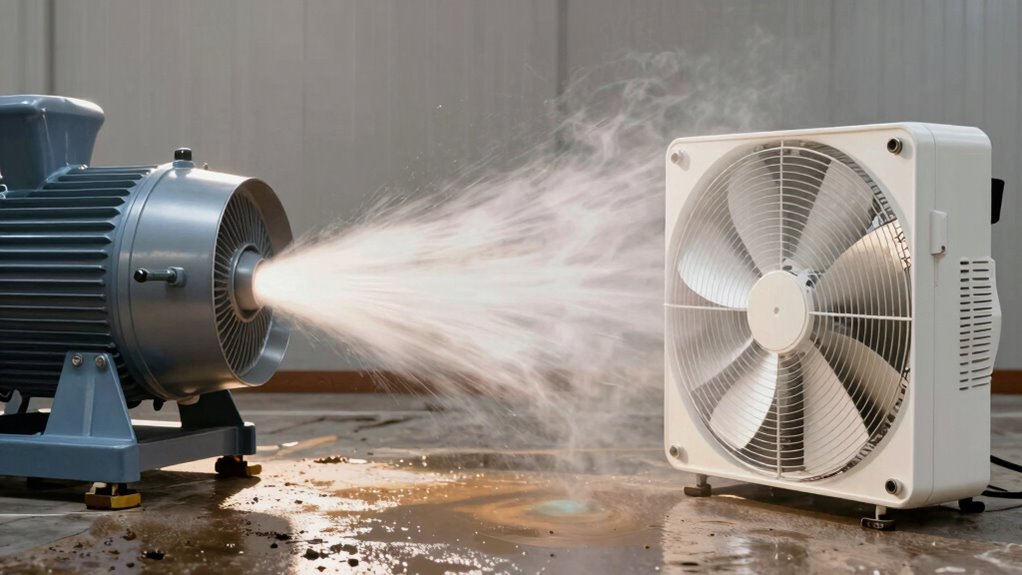

Air movers differ from box fans because they deliver higher-velocity, targeted airflow that speeds up moisture evaporation. Their focused design focuses air directly onto wet surfaces, making them much more efficient for drying jobs. Box fans circulate air broadly and quietly but are less effective for quick moisture removal. To understand how each tool impacts drying times and which to choose, you’ll find helpful details on optimizing airflow and placement if you explore further.

Get cleaning gear delivered free — and shop member deals
- Fast, free delivery on millions of items
- Access to Prime Big Deal Days deals on October 6–7
- Prime Video, Amazon Music and more included
Key Takeaways
- Air movers deliver higher airflow volume and velocity, accelerating evaporation and drying speeds compared to box fans.
- Their targeted, focused airflow directly onto surfaces enhances moisture removal efficiency.
- Air movers operate at higher noise levels and consume more energy, enabling faster drying results.
- Box fans circulate air broadly, providing less focused airflow, which slows drying but improves large-area ventilation.
- Proper placement and environmental humidity control are crucial; air movers optimize drying in controlled conditions.
How Do Air Movers and Box Fans Differ in Design and Functionality?

Although air movers and box fans both circulate air, their designs and functions are quite different. Air movers are built with a focused, high-velocity airflow, typically featuring a compact, powerful motor and a narrow duct to direct air efficiently. They are designed to dry surfaces quickly, often operating continuously for extended periods. Box fans, on the other hand, have a broader blade span and a simple, open frame, making them ideal for general air circulation. When it comes to fan noise, air movers tend to be louder due to their high-speed motors, which can also lead to higher energy consumption. Box fans usually run quieter and consume less power, but may not be as effective for targeted drying. Understanding these differences helps you choose the right tool for your needs.
What Factors Influence Drying Speed and Effectiveness?
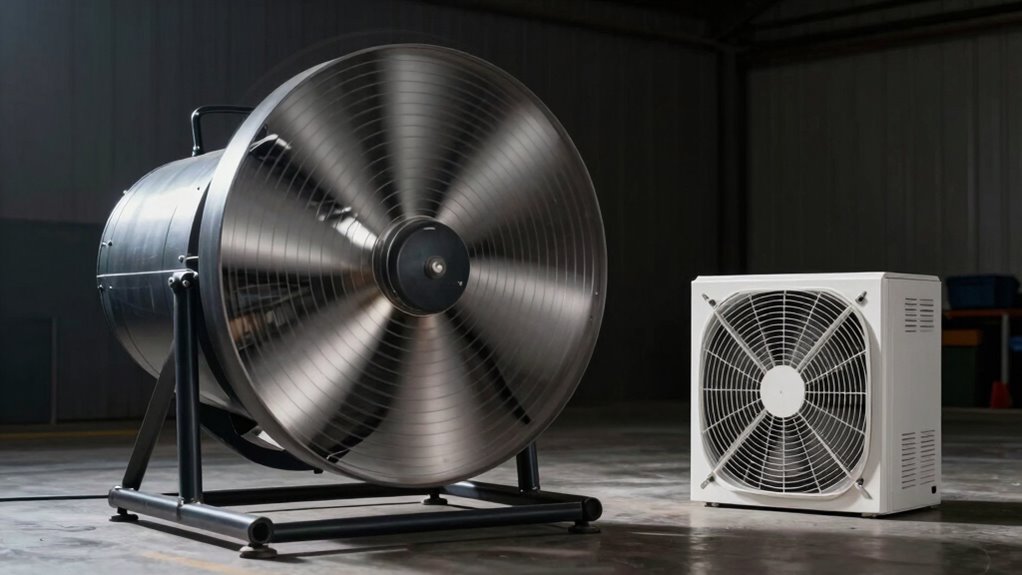
Several factors determine how quickly and effectively air movers and box fans dry surfaces. Humidity control is essential; higher humidity slows evaporation, so managing moisture levels helps speed up drying. The placement and airflow pattern also matter—direct, steady airflow increases drying efficiency. Fan noise can influence your choice: quieter models are better for sensitive environments, but louder fans may deliver more power. Additionally, the fan’s speed settings impact drying time: higher speeds typically dry surfaces faster but can generate more noise. Surface porosity and temperature play roles too—porous materials retain moisture longer, and warmer conditions enhance evaporation. Proper airflow management is crucial to optimize drying results. Understanding these factors helps you select the right equipment and minimize drying time, ensuring faster, more effective results.
How Do Air Movement Patterns Affect Drying Results?

The pattern of air movement plays a crucial role in drying efficiency because it determines how quickly moisture is carried away from surfaces. Proper air circulation ensures that moist air doesn’t stagnate, allowing moisture removal to happen faster. When air moves directly across wet surfaces, drying speeds increase. Conversely, poor airflow can cause moisture to linger, slowing the process. To optimize drying results, consider these factors:
Effective drying relies on consistent, direct airflow to prevent moisture stagnation and speed up moisture removal.
- Consistent airflow across the entire surface
- Avoiding areas of stagnant air
- Using directional air movement to target wet spots
- Maintaining even air circulation for uniform drying
- Preventing turbulence that can disrupt moisture removal
- Airflow patterns significantly influence how effectively moisture is extracted from surfaces. Understanding air movement patterns helps you avoid common drying pitfalls and ensures a more efficient process. Additionally, recognizing how airflow distribution impacts the overall drying process allows for better setup and equipment placement. Properly managing these airflow characteristics can also help prevent drying inconsistencies and improve overall results. Being aware of airflow control techniques can further enhance drying efficiency by directing air precisely where it’s needed.
Why Do Air Movers Usually Dry Surfaces Faster Than Box Fans?
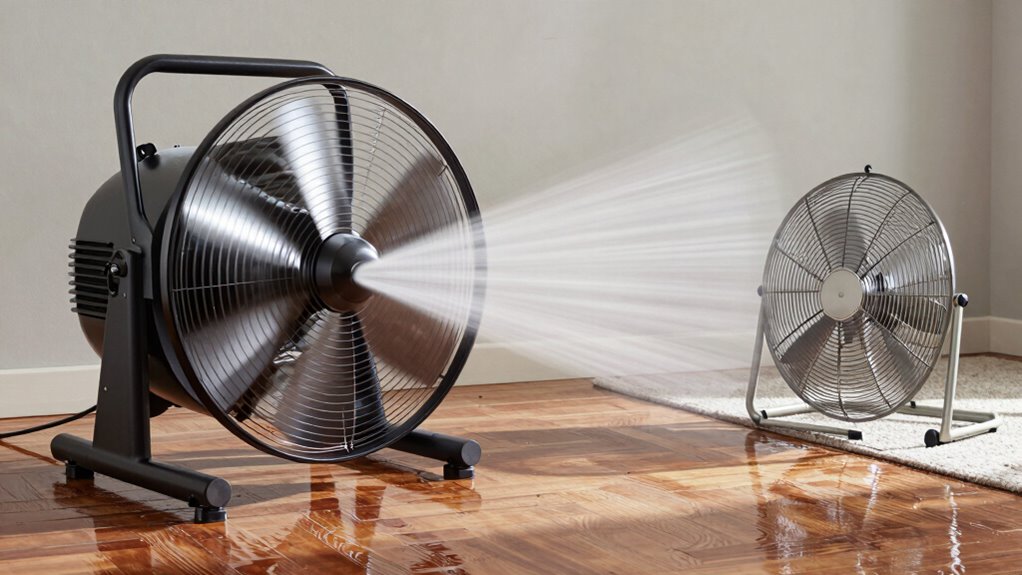
You’ll notice that air movers dry surfaces faster because they have higher airflow volume and speed. Their design and blade efficiency also help move more air directly over the wet area. These factors give air movers a clear advantage over box fans in drying times.
Airflow Volume and Speed
While both air movers and box fans create airflow, air movers typically dry surfaces faster because they generate a higher volume of air moving at greater speeds. This increased airflow volume and speed boost airflow efficiency, accelerating evaporation. Air movers are designed to focus airflow directly onto surfaces, maximizing drying power. They often operate at higher fan speeds, which improves airflow velocity but may increase fan noise. Conversely, box fans produce less focused airflow, reducing drying effectiveness despite similar operation. The greater air volume and speed of air movers help move moisture-laden air away quickly, speeding up the drying process. Their ability to deliver more consistent and concentrated airflow makes them more effective in drying applications than standard box fans. Additionally, airflow concentration plays a crucial role in optimizing drying performance by directing airflow precisely where it’s needed most. Moreover, professional-grade equipment ensures more reliable and efficient drying outcomes compared to typical household fans. Proper airflow management is essential for achieving faster drying times and preventing secondary damage from excess moisture, especially when considering specialized drying techniques used in professional settings.
Design and Blade Efficiency
Air movers are designed with specialized blades and airflow mechanisms that make them more effective at drying surfaces quickly than box fans. Their blade design optimizes airflow direction and creates a focused, high-velocity stream that accelerates moisture evaporation. Unlike box fans, which have simple blades that move large volumes of air without much precision, air movers feature blades engineered for maximum efficiency. Additionally, their motor efficiency guarantees consistent power delivery, allowing the blades to operate at higher speeds with less energy waste. This combination of precise blade design and efficient motors results in stronger, more directed airflow, which speeds up drying. blade design and airflow mechanisms are crucial components that determine drying performance. Moreover, the overall construction of air movers often includes durable housing that ensures long-term performance under demanding conditions, further enhancing their drying capabilities. In contrast, box fans lack this specialized engineering, making them less effective at surface drying despite moving a lot of air. A focused airflow also helps concentrate the drying power on targeted surfaces, increasing efficiency, and engineered blades contribute significantly to their superior performance. Proper airflow control is another feature that enhances drying speed by directing air exactly where it is needed most.
When Is It Better to Use a Box Fan Instead of an Air Mover?
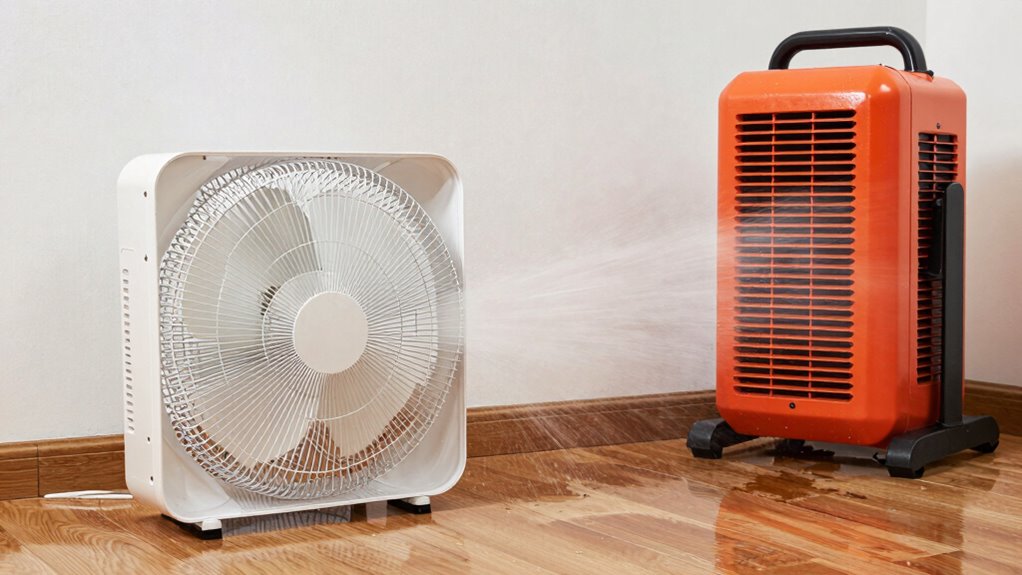
Box fans are often a better choice than air movers when you need to quickly circulate air over a large area or when budget constraints limit your options. They’re simple, portable, and cost-effective, making them ideal for short-term needs. Use a box fan when fan noise isn’t a concern, as they tend to be louder than specialized air movers. They also offer aesthetic appeal, blending easily into home or office spaces without looking industrial. Additionally, box fans are versatile for general airflow, cooling, or ventilation purposes. They’re especially useful when you want to cover a broad space without specialized drying features. Keep in mind, they may not be as efficient for targeted drying but excel at moving air across large, open areas quickly and economically.
- Cost-effective and portable
- Suitable for large-area circulation
- Slightly noisier than air movers
- Better aesthetic appeal in casual settings
- Ideal for general airflow and cooling
How Do Room Size and Humidity Levels Impact Drying Outcomes?
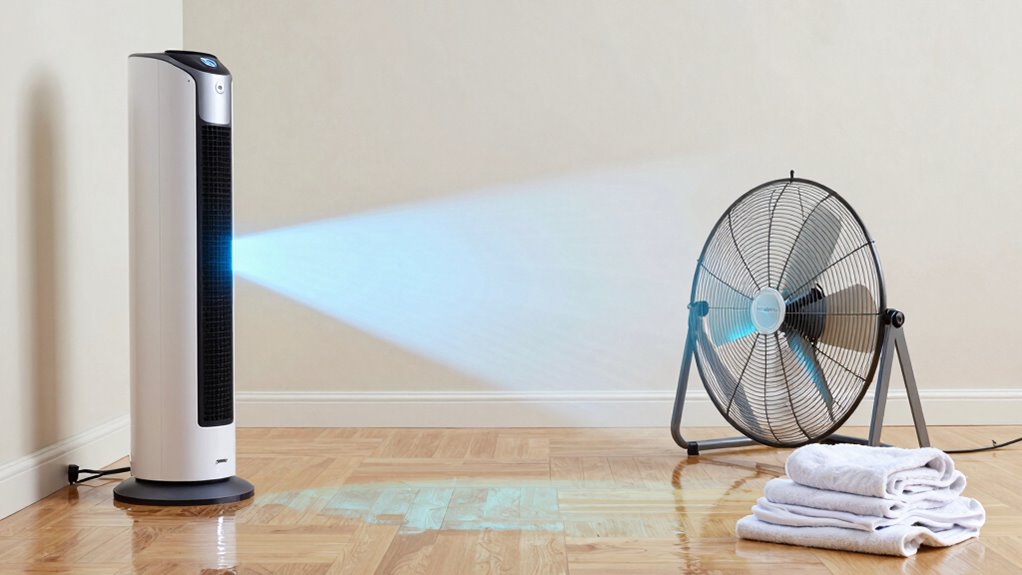
The size of your room directly affects how quickly air movers or box fans can dry the space. Larger rooms may require more powerful equipment or multiple fans to achieve good airflow. Additionally, high humidity levels can slow evaporation, making it harder to dry out the area efficiently. Understanding air circulation fundamentals can help optimize drying strategies in different environments. Proper placement of fans to maximize airflow distribution is essential for effective drying. Being aware of environmental factors can further enhance your drying efficiency and results. Recognizing cultural significance of proper drying methods can also inspire more effective practices. Incorporating knowledge of climate considerations can additionally improve your overall drying approach.
Room Size Effects
When dealing with drying processes, room size and humidity levels considerably influence how quickly and effectively air movers and box fans perform. Larger spaces require stronger or more strategically placed fans to guarantee proper ventilation strategies and thorough moisture detection. If the room is small, a box fan may suffice, but larger rooms benefit from multiple air movers to promote even airflow. Keep in mind, humidity levels can impact drying speed; high humidity slows moisture removal, so adjusting fan placement becomes vital. Properly evaluating your room size helps you choose the right equipment and optimize airflow. Additionally, monitoring moisture detection ensures drying is on track, preventing over-drying or lingering dampness. Tailoring your approach based on room size is essential for efficient, effective drying outcomes. Understanding airflow patterns can help optimize drying strategies for different spaces. Moreover, considering airflow dynamics can lead to more precise control of moisture removal.
Humidity Level Influence
Humidity levels play a significant role in drying efficiency, especially when considering room size. High humidity impact can slow moisture evaporation, making it harder for air movers and box fans to dry surfaces effectively. When humidity is too high, moisture stays trapped in the air, reducing the airflow’s ability to remove water from materials. Proper moisture regulation becomes essential to optimize drying times. In larger rooms, humidity can build up quickly, requiring dehumidification or increased ventilation to maintain ideal conditions. Conversely, in smaller spaces, controlling humidity levels helps prevent condensation and ensures drying tools work efficiently. Understanding how humidity impacts moisture control helps you choose the right equipment and techniques to speed up drying and avoid secondary damage caused by lingering dampness. Managing humidity levels is a crucial aspect of achieving consistent drying results with either method.
Common Mistakes That Reduce Drying Efficiency With Fans

One of the most common mistakes that can reduce drying efficiency with fans is placing them too far from the wet surface. When fans are too distant, airflow weakens, hampering moisture removal. To optimize drying, focus on proper ventilation strategies and moisture control. Avoid these pitfalls:
- Positioning fans at inconsistent angles
- Ignoring the importance of airflow direction
- Overlooking obstructions blocking airflow
- Using fans without considering room size
- Neglecting to monitor humidity levels
These mistakes hinder effective moisture removal, prolong drying time, and can cause secondary issues like mold growth. Proper placement and understanding ventilation strategies ensure fans work efficiently, speeding up drying and maintaining moisture control. Being mindful of these factors helps you achieve better results while conserving energy.
How to Use Air Movers and Box Fans Effectively for Better Drying Results

To achieve the best drying results with air movers and box fans, you need to position them correctly and use them strategically. Fan placement is key; place fans close to the wet area, directing airflow across surfaces rather than directly at walls or furniture. For air movers, aim them at the surface to increase evaporation, while box fans should be angled to circulate air throughout the space. Be mindful of noise levels—choose quieter settings or fans with adjustable speeds to prevent disturbance. Keep fans at a safe distance to avoid damage and ensure even airflow. Regularly monitor progress and adjust placement if needed. Proper positioning and strategic use maximize drying efficiency, saving you time and effort while preventing secondary damage.
Which Fan Type Offers the Best Value for Different Drying Scenarios?
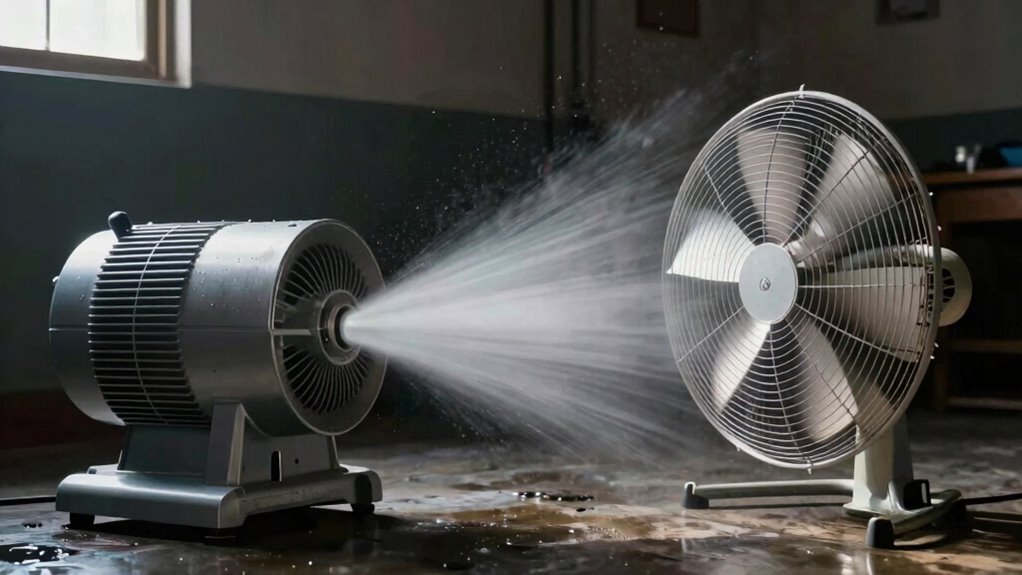
Choosing the right fan for your drying needs depends on the specific scenario and budget. When comparing air movers and box fans, consider the cost comparison and noise levels. Air movers often have a higher upfront cost but deliver faster, more efficient drying, making them cost-effective for large-scale jobs. Box fans are cheaper initially but may require longer operation, increasing overall costs. Noise levels vary; air movers tend to be louder but are more powerful, while box fans are quieter and suitable for less sensitive environments. Your choice should balance budget constraints with the importance of drying speed and noise tolerance. For quick, large-area drying, air movers are better value, but for smaller or less critical tasks, box fans may be more budget-friendly.
Frequently Asked Questions
How Do Noise Levels Compare Between Air Movers and Box Fans?
You’ll find that air movers generally have a higher noise comparison and volume levels than box fans. Air movers are designed to operate at higher speeds to circulate air efficiently, which makes them louder. Box fans tend to be quieter because they run at lower speeds and have a more basic design. If noise levels matter to you, expect air movers to be noticeably louder during operation.
Can Using Multiple Fans Improve Drying Times Significantly?
Using multiple fans can considerably speed up drying times if you optimize fan placement for maximum airflow. By strategically positioning air movers and box fans, you improve drying efficiency, allowing air to circulate more effectively. The more fans you deploy, the better the moisture moves away from surfaces. Just make certain fans aren’t blocking each other, and aim for a balanced airflow pattern to truly boost drying speed and results.
Are There Safety Concerns When Using High-Powered Fans for Drying?
Yes, there are safety concerns when using high-powered fans for drying. You should watch out for electrical hazards, like exposed wiring or damaged cords, which can cause shocks or fires. Make certain proper ventilation to prevent overheating and moisture buildup. Always follow manufacturer instructions, keep fans away from water sources, and regularly inspect equipment. By staying cautious, you can prevent accidents and ensure safe, efficient drying.
How Do Energy Consumption Costs Differ Between Air Movers and Box Fans?
You’ll find that air movers generally have higher energy consumption costs than box fans due to their powerful motors and continuous operation. However, air movers are more energy-efficient for drying tasks because they move larger volumes of air faster, reducing drying time. Box fans, while cheaper to operate initially, may lead to higher operational costs over time because they work less efficiently on large-scale drying projects.
What Maintenance Is Required to Keep Fans Effective During Drying?
To keep fans effective during drying, you should regularly clean the filters to prevent dust buildup that can hinder airflow. Also, check and replace filters as needed. Additionally, guarantee motor lubrication is maintained according to the manufacturer’s instructions, which helps prevent overheating and keeps the fan running smoothly. Regular maintenance like this maximizes drying efficiency and extends your fans’ lifespan, saving you time and money.
Conclusion
Choosing between air movers and box fans is like selecting the right tool for a job; each has its strengths. By understanding their differences and how to use them effectively, you can turn a stubborn dampness into a quick dry, like guiding a river to flow smoothly. When you match the right fan to your situation, you’ll see better results and save time. Think of your drying process as a journey—pick the right path, and you’ll reach your destination faster.
Fall Picks
fall essentials
As an affiliate, we earn on qualifying purchases.