
After cleaning your air quality sensors, they provide more accurate and reliable pollutant levels, such as PM, VOCs, or gases. Proper cleaning removes dust and debris that can interfere with measurements, but calibration is also essential to make sure the data reflects true air conditions. Once calibrated, your sensors can better guide you on indoor air safety and pollutant sources. If you want to understand how to keep them accurate, there’s more to discover.
Key Takeaways
- Clean sensors may show lower pollutant readings, but calibration is needed to confirm accuracy.
- Post-cleaning calibration ensures sensor responses match known pollutant levels.
- Sensor readings reflect the current environmental conditions, including recent cleaning effects.
- Regular calibration after cleaning prevents sensor drift and measurement inaccuracies.
- Accurate data after cleaning helps determine if further ventilation or remediation is necessary.
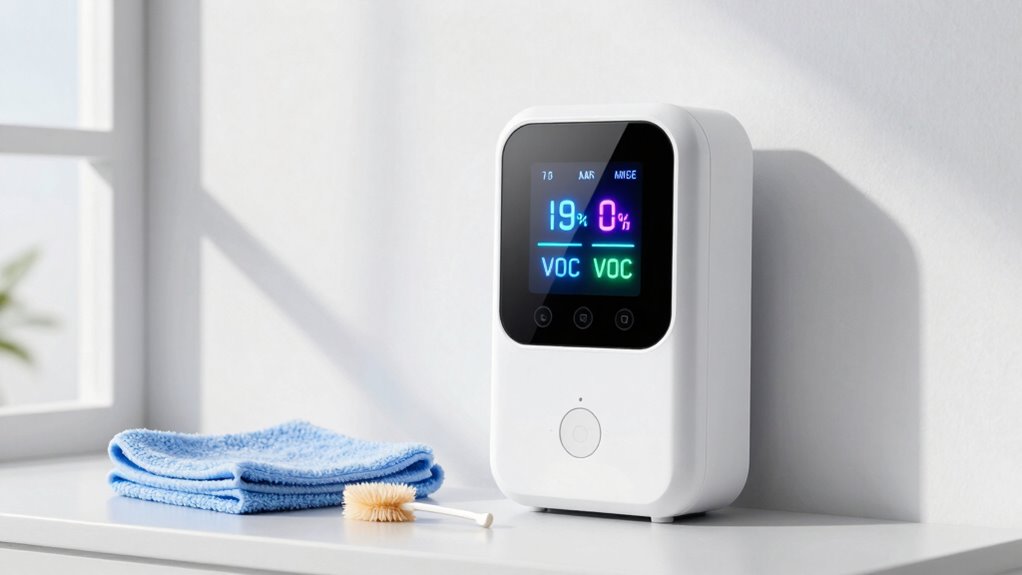
After cleaning your sensors, you should run a calibration check. Many sensors come with a calibration mode or offer calibration protocols through their accompanying app or interface. This step ensures that the sensor’s response aligns with known pollutant levels. Proper calibration involves exposing the sensor to a reference standard or a controlled environment with known pollutant concentrations. If the sensor’s readings deviate from expected values, adjustments are necessary. Regular calibration, especially after cleaning, guarantees that your sensor continues to detect pollutants accurately over time. It helps you trust the data and make informed decisions about air quality improvements.
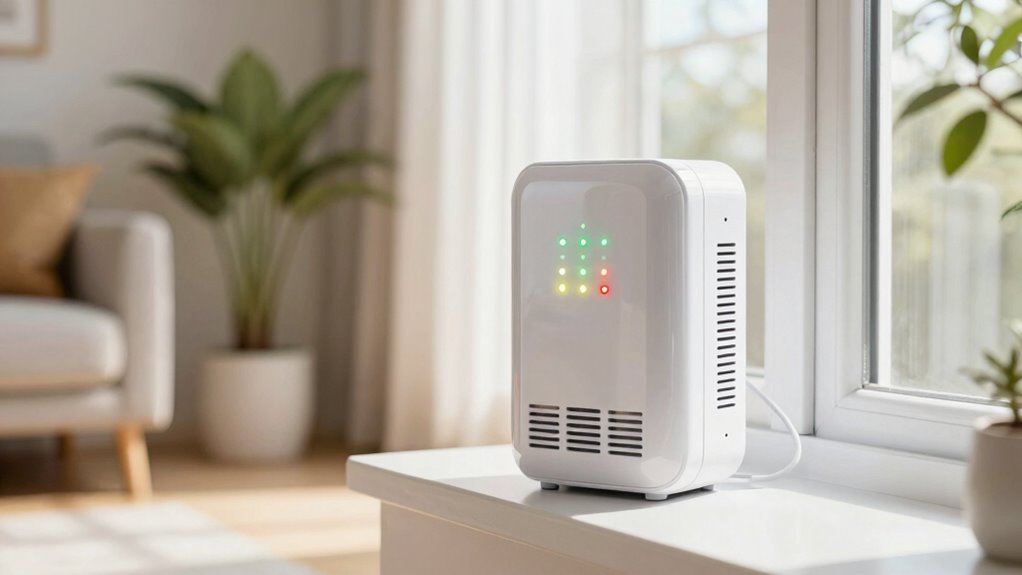
Additionally, environmental conditions such as humidity and temperature can influence sensor accuracy, so consider sensor environmental factors when calibrating. After cleaning and calibrating, your sensor provides insights into the air’s current condition. You’ll see real-time data on various pollutants, such as particulate matter (PM2.5 and PM10), volatile organic compounds (VOCs), carbon dioxide (CO2), and other gases. These readings tell you whether your indoor environment is safe or if you need to increase ventilation or take other actions. Keep in mind that sensor calibration isn’t a one-time task; these devices can drift over time due to environmental factors or aging components. Regular checks and calibration help maintain accuracy, ensuring you’re always getting trustworthy information. Recognizing the importance of sensor accuracy is essential for reliable air quality monitoring.
Your sensor’s ability to detect pollutants accurately is vital because it directly impacts your health and safety decisions. After cleaning, you can expect your sensor to offer precise pollutant detection, provided it’s well-calibrated. Use the data to identify sources of pollution, track improvements after airing out a space, or monitor outdoor air quality conditions. Remember, a clean and calibrated sensor isn’t just about maintenance; it’s about ensuring that every reading truly reflects your environment. Proper calibration procedures also account for sensor drift, which can occur over time and affect measurement precision. This way, you can respond appropriately to any air quality issues, staying informed and safe.
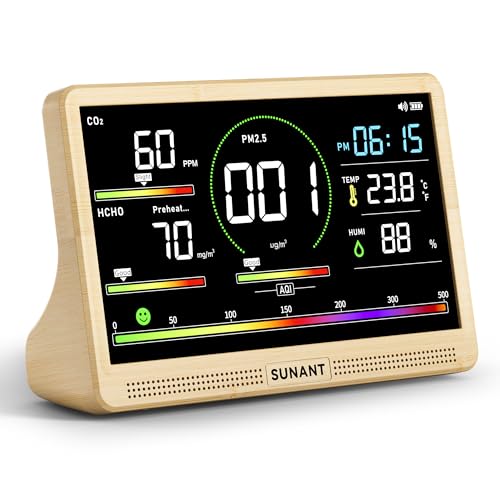
16-in-1 Air Quality Monitor Indoor, 7' Smart Large Display 9 AQI+7 Alarm Alerts, Real Time CO2, Formaldehyde, TVOC, PM2.5, PM10, Temperature & Humidity Portable Battery Powered Tester for Home, Office
- 16-in-1 Air Quality Monitoring: Detects 9 key indoor air parameters
- High-Precision External Sensors: Provides accurate, fast data updates
- Real-Time AQI Alerts: Includes 7 alert modes with mute function
As an affiliate, we earn on qualifying purchases.
As an affiliate, we earn on qualifying purchases.
Frequently Asked Questions
How Often Should Air Quality Sensors Be Recalibrated?
You should recalibrate your air quality sensors every 6 to 12 months, depending on their calibration frequency and sensor lifespan. Regular calibration guarantees accurate readings, especially if you notice inconsistent data or sensor drift. Factors like environmental conditions and usage can affect sensor performance, so keeping up with calibration schedules maintains reliability. Check manufacturer recommendations for specific calibration intervals to ensure peak sensor accuracy over time.
Do Sensors Detect All Types of Indoor Pollutants?
No, sensors don’t detect all types of indoor pollutants due to their limitations and pollutant specificity. They’re typically designed to monitor common issues like dust, VOCs, or carbon dioxide, but might miss things like radon or certain chemicals. Sensor limitations mean you should use multiple sensors or specialized testing for thorough indoor air quality, ensuring you get an accurate picture of your environment.
Can Sensors Differentiate Between Harmful and Harmless Particles?
Think of air quality sensors as loyal guards—they detect particles based on size and sensor sensitivity. They can tell you if particles are harmful or harmless by measuring their size, but they can’t always distinguish toxicity. Larger particles might seem harmless, but smaller, harmful ones, like allergens or toxins, can slip through. So, while sensors are helpful, always interpret their readings carefully, knowing their limitations in differentiating particle danger levels.
What Is the Lifespan of an Air Quality Sensor?
The lifespan of an air quality sensor typically ranges from 2 to 5 years, depending on sensor placement and usage. You should regularly monitor the sensor’s performance and interpret data carefully, as deterioration can affect accuracy over time. Proper placement away from direct airflow or sources of interference helps extend its life. When sensors age, their data interpretation becomes less reliable, so consider calibration or replacement to maintain accurate readings.
Are There Any Maintenance Tips for Sensor Accuracy?
Yes, to guarantee your sensor stays accurate, you should regularly perform sensor calibration and follow maintenance routines. Check the manufacturer’s guidelines for calibration intervals, usually every few months, and clean the sensor components gently to prevent dust buildup. Keep an eye on readings for anomalies, and replace filters or parts as recommended. Consistent maintenance routines help maintain reliable air quality data and extend your sensor’s lifespan.

GoveeLife Smart Air Quality Monitor with PM2.5 H5106, LED Display Wired
- High Accuracy & Fast Data Refresh: ±15 µg/m³ PM2.5 accuracy, 2-second updates
- Measures Multiple Air Quality Indexes: PM2.5, temperature, humidity
- Switchable Display Modes: Clock, PM2.5, bright and night modes
As an affiliate, we earn on qualifying purchases.
As an affiliate, we earn on qualifying purchases.
Conclusion
After cleaning, your air quality sensor can reveal surprising insights—like how indoor pollutants can drop by up to 50%, showing just how effective cleaning can be. Remember, these sensors don’t just monitor; they guide you to breathe cleaner air daily. Keep in mind, regular sensor checks guarantee your environment stays healthy. So, don’t overlook the power of clean sensors—your home’s air quality depends on it!

Amazon Smart Air Quality Monitor – Know your air, Works with Alexa
- Real-time Air Quality Monitoring: Tracks PM 2.5, VOCs, CO, humidity, temperature
- Easy Air Quality Insights: Color-coded LED and Alexa app scores
- Works with Alexa: Seamless smart home integration
As an affiliate, we earn on qualifying purchases.
As an affiliate, we earn on qualifying purchases.
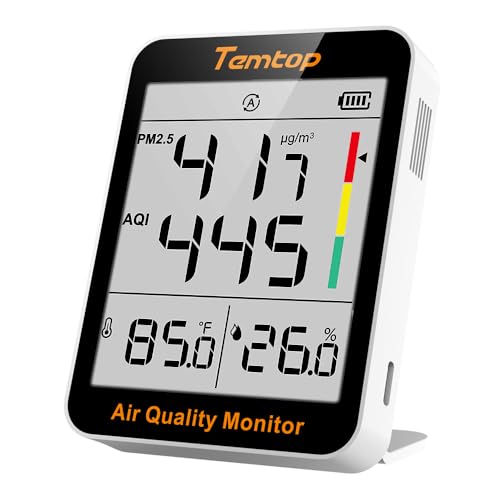
Temtop S1 PM2.5 Air Quality Monitor & Indoor Thermometer
- Multi-Function Air Quality Monitor: Tracks PM2.5, AQI, temperature, humidity
- All-in-One Indoor Environment Display: Shows temperature, humidity, air quality on one screen
- High-Precision Sensors: Digital temperature/humidity sensor and laser PM2.5 sensor
As an affiliate, we earn on qualifying purchases.
As an affiliate, we earn on qualifying purchases.