Fine dust particles are tough to remove because they’re tiny—less than 1 micron—making them easily stay airborne and settle into hard-to-reach spots. Their small size, electrostatic attraction, and ability to resuspend when disturbed mean ordinary cleaning struggles to trap them completely. Without specialized equipment like HEPA filters or careful cleaning techniques, these particles can linger and pollute your air. If you keep going, you’ll discover effective strategies to manage and eliminate fine dust more efficiently.
Key Takeaways
- Fine dust particles are extremely small (around 0.3 microns), making them difficult for standard filters to capture effectively.
- Their tiny size and low mass cause them to stay airborne longer, increasing recontamination risks during cleaning.
- Electrostatic forces cause fine dust to cling tightly to surfaces and embed in microscopic crevices, resisting removal.
- Fine dust easily resuspends when disturbed, spreading again into the air and complicating complete removal efforts.
- Conventional cleaning methods may inadvertently spread fine particles, reducing overall effectiveness in dust elimination.
What Makes Fine Dust So Hard to Clean?
Have you ever wondered why fine dust is so difficult to remove? The main reason is particle adhesion. Tiny dust particles cling tightly to surfaces due to electrostatic forces, making them hard to dislodge with regular cleaning. This adhesion is even stronger with finer particles, which can embed into microscopic crevices. Additionally, fine dust tends to proliferate quickly; it easily becomes airborne again after cleaning, settling elsewhere and creating a cycle. Because of their small size, these particles slip into hard-to-reach spots, resisting standard vacuuming or wiping. The combination of particle adhesion and dust proliferation makes it a constant challenge to keep your space spotless. Understanding particle behavior can help in choosing more effective cleaning strategies. Furthermore, employing proper cleaning techniques such as HEPA filters and damp cloths can significantly reduce dust buildup. Recognizing the aerosolization process of fine dust can also improve cleaning outcomes and reduce airborne dust levels. In addition, dust particle size influences how deeply particles penetrate surfaces and how easily they can be removed.
How Tiny Dust Particles Behave in the Air and Why They Settle Slowly
Tiny dust particles behave unpredictably in the air because their small size allows them to remain suspended for long periods. This is due to their unique particle behavior and dust dynamics, which influence how they move and settle. These tiny particles are easily affected by air currents and turbulence, causing them to drift unpredictably. Their small mass means gravity pulls them down very slowly, so they stay airborne longer. Factors like airflow, humidity, and electrostatic forces play significant roles in their movement. Particle suspension contributes to their extended stay in the air and complicates removal efforts. Additionally, the presence of electrostatic forces can cause particles to attract or repel each other, further affecting their behavior. Understanding these behaviors helps explain why fine dust lingers and is so difficult to remove from indoor environments. The aerosol behavior of dust particles makes it even more challenging to control their presence in the air. Dust dynamics are complex, making it essential to control air movement for effective cleaning. Recognizing how airflow patterns influence dust distribution can improve strategies for dust removal and air quality management.
How Dust Particle Size Affects Filtration and Home Cleaning Methods
Your choice of filtration systems directly impacts how effectively you capture different dust sizes. Some methods are better at trapping fine particles, but they can also be more challenging to maintain. Understanding these differences helps you select the right cleaning tools to keep your home dust-free. Additionally, selecting appropriate filtration technologies can improve efficiency and reduce maintenance efforts over time. Incorporating HEPA filters into your cleaning routine can significantly enhance your home’s air quality by capturing very small particles that traditional filters might miss. Recognizing the particle size involved is crucial for choosing the most effective filtration method, as different filters are designed to target specific dust particle ranges. Being aware of dust particle sizes enables you to choose the most suitable cleaning strategies for comprehensive dust removal.
Particle Size and Filtration Efficiency
Dust particle size plays a crucial role in determining how effectively filters can capture contaminants and how thoroughly your home can be cleaned. Smaller airborne particles are more challenging to trap, often slipping through less efficient filters, which reduces overall filtration efficiency. To improve dust removal, you need filters designed to target tiny particles, especially those under 1 micron. Higher-efficiency filters, such as HEPA filters, excel at capturing fine dust particles, enhancing indoor air quality. Keep in mind:
- Particle size directly impacts filter selection
- Fine dust particles require advanced filtration methods
- Proper filter maintenance boosts filtration efficiency
Understanding the relationship between particle size and filtration helps you choose the right cleaning tools and filters, ensuring a cleaner, healthier living environment.
Types of Dust Capture Methods
Since particle size directly influences how effectively dust is captured, understanding various dust capture methods is essential for achieving cleaner indoor air. Air filtration systems, like HEPA filters, excel at trapping small particles, reducing dust accumulation over time. Vacuum cleaners with HEPA filters use suction and specialized filters to remove both large and fine dust particles from surfaces and air. Electrostatic precipitators use static electricity to attract and trap dust, especially tiny particles that traditional filters might miss. Mechanical filters rely on physical barriers, like mesh screens, to catch larger dust. Each method targets different particle sizes, but fine dust remains challenging because it easily slips through less efficient filters. Additionally, proper maintenance and the right combination of these methods can significantly improve air quality and dust removal efficiency. Incorporating advanced filtration technologies can further enhance the effectiveness of dust elimination. Understanding the filtering mechanisms involved can help you choose the most effective solutions for your needs.
Challenges With Fine Dust Removal
While many dust capture methods are effective at removing larger particles, fine dust presents unique challenges that can undermine indoor air quality. Fine dust particles are small and lightweight, making them prone to dust particle behavior that allows them to stay suspended longer. Their tiny size also increases particle adhesion to surfaces and filter materials, reducing filtration efficiency. This makes it difficult for standard vacuum cleaners and air filters to fully capture these particles. To improve removal:
- Use high-efficiency particulate air (HEPA) filters designed for fine dust
- Regularly clean and replace filters to prevent particle buildup
- Employ electrostatic or advanced filtration systems that leverage particle adhesion properties
Understanding dust particle behavior and adhesion helps you choose better cleaning tools for fine dust. Additionally, being aware of dust particle size can help you select the most effective cleaning methods for your home. Recognizing the importance of airborne particle dynamics can further enhance your cleaning strategy and indoor air quality management. Moreover, understanding particle behavior can assist in developing more effective filtration solutions to target even the smallest dust particles.
The Best Equipment for Removing Fine Dust From Your Home

To effectively eliminate fine dust from your home, you need the right equipment. HEPA filters, electrostatic dust removal systems, and proper maintenance are key to keeping your space clean. Choosing the right tools and caring for them ensures better air quality and easier cleaning. Additionally, understanding navigation and mapping features in robotic cleaning devices can help optimize their performance in targeting fine dust particles. Incorporating effective filtration techniques can further improve dust removal efficiency and maintain a healthier indoor environment. Furthermore, selecting equipment with filter maintenance indicators can ensure consistent performance and prevent filter clogging, which is essential for maintaining optimal dust removal. Using dedicated cleaning schedules and routine filter checks can also enhance overall dust management efforts.
HEPA Filter Technology
HEPA filter technology is widely regarded as one of the most effective methods for capturing fine dust particles in your home. These filters trap airborne particles as small as 0.3 microns, preventing them from circulating and reducing dust accumulation. Using a HEPA filter means you’ll breathe cleaner air and lessen the buildup of allergens. To maximize its benefits, guarantee your filter is properly maintained and replaced regularly. Keep in mind that HEPA filters are designed to remove a broad range of fine dust, improving indoor air quality considerably. They are especially useful if you or your family members suffer from allergies or asthma. Regular use of a HEPA filter can drastically improve your home’s air purity, making everyday living healthier and more comfortable.
Electrostatic Dust Removal
Are you looking for an effective way to remove fine dust particles from your home without constantly replacing filters? Electrostatic dust removal uses electrostatic attraction to trap dust particles. These devices generate a static charge that attracts dust particle charge, causing particles to stick to collection plates or filters. Unlike traditional filters, electrostatic systems can capture smaller particles more efficiently, making them ideal for fine dust. They’re easy to maintain and don’t require frequent filter replacements, saving you money over time. By leveraging the natural charge of dust particles, electrostatic cleaners provide a powerful, chemical-free option for improving indoor air quality. If you want a low-maintenance, effective solution for fine dust, electrostatic dust removal equipment is a smart choice.
Proper Maintenance Practices
Maintaining your electrostatic dust removal system guarantees it continues to operate at peak efficiency. Regular upkeep reduces dust accumulation and ensures ideal allergen control. You should clean filters and collector plates often to prevent clogging and maintain suction power. Checking for damage or wear on components helps avoid system breakdowns. Additionally, replacing filters according to manufacturer instructions keeps fine dust from escaping back into your air. Proper maintenance not only improves dust removal but also prolongs your equipment’s lifespan.
- Clean filters and collector plates regularly
- Inspect for damage or wear
- Follow manufacturer recommendations for replacements
How Good Ventilation Helps Reduce Fine Dust in Indoor Spaces
Good ventilation plays a crucial role in reducing fine dust particles indoors by continuously exchanging stale air for fresh air. Improved air quality depends on effective ventilation strategies that remove airborne contaminants, including tiny dust particles that are hard to filter. When you guarantee proper airflow, you prevent dust from settling and recirculating within your space. Using exhaust fans, open windows, or installing air exchange systems helps dilute indoor pollutants and lower dust concentrations. This ongoing exchange of air not only reduces the amount of fine dust but also prevents the buildup of other harmful particles, making your environment healthier. By prioritizing good ventilation, you enhance air quality and create a cleaner, safer indoor space for you and your family.
Common Challenges When Cleaning Fine Dust and How to Overcome Them

Cleaning fine dust presents unique challenges because these tiny particles easily become airborne again if not handled properly. Their small size makes them prone to dust adhesion on surfaces and, when disturbed, they quickly resuspend as airborne particles. This can lead to recontamination and health risks. To overcome these issues, you need to minimize disturbance during cleaning and use tools designed for fine dust removal.
Cleaning fine dust requires gentle methods and proper tools to prevent airborne resuspension and health risks.
- Use damp cloths or microfiber mops to trap dust rather than just spreading it around
- Avoid sweeping or shaking rugs that can stir up airborne particles
- Seal vents and doors to prevent dust from spreading to other areas
Tips for Effectively Removing Fine Dust Particles

To effectively remove fine dust particles, you need to use tools and techniques that capture and contain these tiny particles without spreading them into the air. Start with a high-efficiency vacuum cleaner equipped with a HEPA filter to reduce dust accumulation and improve air quality. Use microfiber cloths for dusting surfaces, as they trap particles better than standard cloths. Always work from top to bottom to prevent redistributing dust.
| Tool | Technique | Benefit |
|---|---|---|
| HEPA Vacuum | Seal surfaces thoroughly | Captures fine dust effectively |
| Microfiber Cloth | Gentle wiping in circular motion | Reduces dust spread |
| Air Purifier | Continuous filtration | Improves air quality |
How to Prevent Fine Dust From Spreading in Your Home
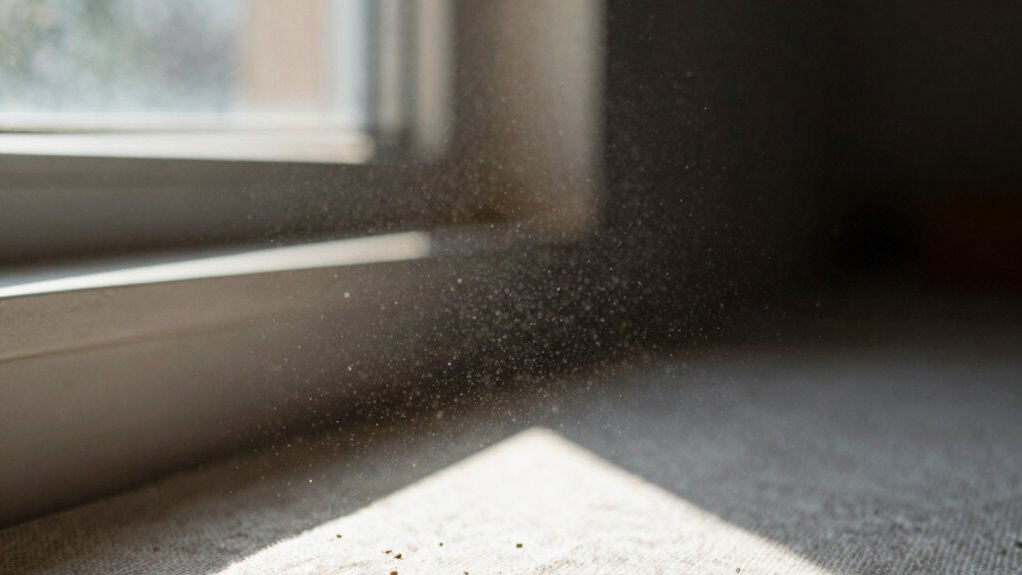
Since fine dust particles are extremely lightweight, they can easily become airborne and settle in hard-to-reach areas, making it essential to take proactive steps to prevent their spread. One effective measure is choosing the right air purifier—look for models with high-efficiency filters and perform regular dust particle analysis to identify sources. Keep windows closed during high pollution periods to limit outdoor dust entry. Regularly dust and vacuum with a HEPA filter to trap fine particles before they circulate. To maximize prevention:
- Use an air purifier with proper air exchange rates
- Seal gaps and cracks around windows and doors
- Maintain a clean environment to reduce dust accumulation
These steps help control dust dispersion, making your home healthier and easier to keep clean.
Improving Indoor Air Quality by Managing Fine Dust Levels
Improving indoor air quality involves actively managing fine dust levels to create a healthier living environment. To do this effectively, you need to understand dust particle science and choose air purifiers with high effectiveness for tiny particles. Proper ventilation, regular cleaning, and using HEPA filters can markedly reduce airborne dust. Not all air purifiers are equally effective; some excel at capturing fine particles, improving air quality quickly. Keep in mind that small dust particles can linger longer, so consistent management is key. The table below highlights factors influencing air purifier effectiveness:
| Factor | Impact on Dust Removal | Best Practices |
|---|---|---|
| Filter Type | Determines particle size captured | Use HEPA filters for fine dust |
| Air Circulation | Ensures thorough coverage | Maintain proper placement |
| Maintenance | Maintains efficiency | Regularly replace filters |
| Room Size | Affects purifier capacity | Match purifier to room size |
Frequently Asked Questions
What Are the Health Risks Associated With Fine Dust Exposure?
Exposure to fine dust poses serious health risks, including respiratory hazards like asthma and bronchitis. You might also experience immune system effects, making you more vulnerable to infections. Fine dust particles can penetrate deep into your lungs and bloodstream, causing inflammation and long-term health issues. To protect yourself, limit exposure, wear masks, and maintain good indoor air quality. Taking these steps helps reduce the health impacts of fine dust.
How Does Humidity Influence Fine Dust Particle Suspension?
Humidity impacts dust suspension by increasing moisture in the air, which causes fine dust particles to clump together and settle more quickly. When humidity rises, dust suspension decreases because the particles stick to surfaces or each other, making them less airborne. Conversely, low humidity keeps dust particles dry and suspended longer, making it harder to remove. So, maintaining proper humidity levels can help control dust suspension effectively.
Can Certain Cleaning Products Make Dust Removal Easier?
Yes, certain cleaning products can make dust removal easier. Electrostatic cleaners use static electricity to attract and pick up fine dust particles effectively, making cleaning more efficient. Anti-dust sprays create a protective layer that traps dust, preventing it from settling quickly. Using these products regularly helps reduce dust buildup, especially in hard-to-reach areas, and keeps your surfaces cleaner for longer.
Are There Specific Filters Effective Against Ultra-Fine Dust?
Absolutely, you can combat ultra-fine dust with specialized filters. HEPA filters are highly effective, capturing 99.97% of tiny particles, including ultra-fine dust. Electrostatic filters also excel by using static electricity to trap minuscule particles, making them a smart choice. By choosing these filters, you considerably improve your indoor air quality and make dust removal more manageable. Trust these tools to target those tiny, troublesome particles effectively.
How Often Should I Replace Air Filters to Control Dust Levels?
You should replace your air filter every 1 to 3 months, depending on its air filter lifespan and your home’s dust levels. Following a regular maintenance schedule guarantees maximum dust control, especially with fine dust particles that are hard to remove. Check your filter monthly, and if it looks dirty or clogged sooner, replace it sooner. This proactive approach keeps your indoor air cleaner and healthier.
Conclusion
To effectively tackle fine dust, you need the right tools, proper ventilation, and consistent cleaning. You must understand how tiny particles behave, choose the best filtration methods, and stay proactive in preventing spread. By controlling dust, improving airflow, and maintaining a clean environment, you create a healthier home. In doing so, you reduce risks, enhance air quality, and enjoy a fresher, cleaner space—because managing fine dust is about prevention, persistence, and peace of mind.