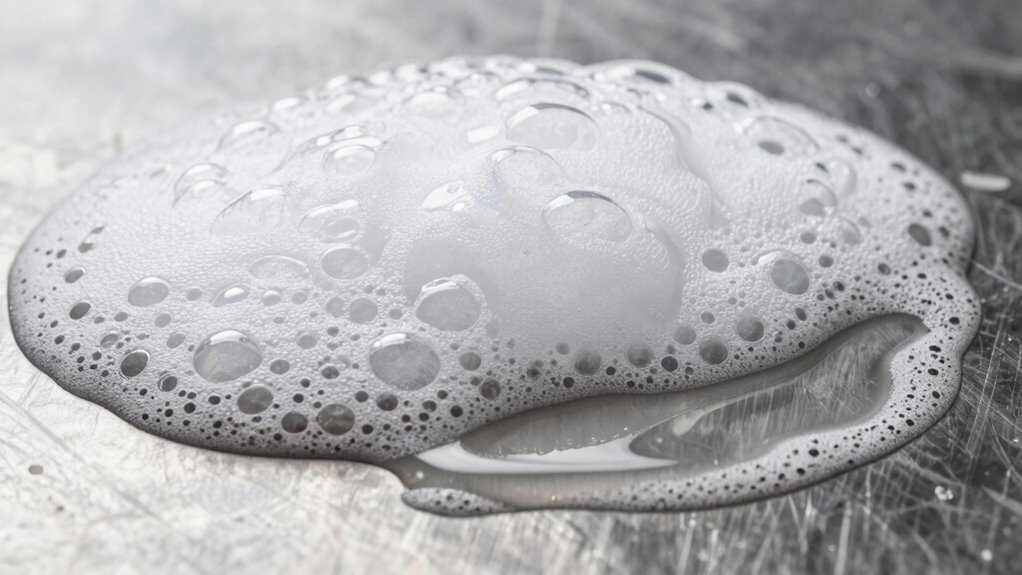

The texture of a cleaner impacts how it performs because foam stays in place longer, providing targeted, extended contact that helps loosen stubborn dirt, while liquids spread quickly over large areas for fast cleaning. Foam’s thickness means it takes more time to dry, which can boost cleaning power but slows workflow. If you’d like to discover more about how these differences can improve your cleaning results, keep exploring the details below.

Get cleaning gear delivered free — and shop member deals
- Fast, free delivery on millions of items
- Access to Prime Big Deal Days deals on October 6–7
- Prime Video, Amazon Music and more included
Key Takeaways
- Foam’s thicker texture allows for targeted application and longer contact with surfaces, enhancing stain loosening.
- Liquid cleaners spread quickly and evenly, covering large areas faster and drying more rapidly.
- Foam’s clinginess prolongs cleaning action but increases drying time, while liquids evaporate quickly for swift cleaning.
- The texture influences application methods: foam uses spray or brushes for precision; liquids are poured or sprayed for speed.
- Longer drying times of foam can improve cleaning of stubborn dirt, whereas liquid cleaners optimize efficiency in large-scale tasks.

When choosing between foam and liquid cleaners, understanding their differences can help you make a more informed decision. One key aspect to consider is how each type interacts with surfaces through their application methods and how quickly they dry. Foam cleaners tend to be thicker and cling longer to surfaces, which can make their application methods more targeted. You often apply foam using spray bottles, foam guns, or brushes, allowing you to cover specific areas with precision. This thick texture enables the foam to stay in place, giving it ample time to loosen dirt and grime before you wipe or rinse it away. Conversely, liquid cleaners are usually poured or sprayed directly onto surfaces, spreading quickly and evenly. Their thinner consistency means they cover large areas fast, which can be advantageous for quick cleaning jobs.
Drying times are another vital factor influenced by the texture of the cleaner. Foam cleaners typically have longer drying times because their thicker formulation takes more time to evaporate or be wiped away. This extended drying period might be beneficial if you want the cleaner to work longer on stubborn stains, but it can also mean more downtime and potential residue if not fully removed. On the other hand, liquid cleaners tend to dry faster due to their lower viscosity. They spread out thinly and evaporate more quickly, allowing you to proceed with subsequent cleaning steps or reapplications sooner. This rapid drying can streamline your cleaning process, especially when you’re working on large surfaces or multiple items.
Additionally, the cleaning efficacy of each type can vary depending on the surface and dirt level, so selecting the right texture can impact overall results. If you’re tackling a heavily soiled surface or a stubborn stain, the application method of foam might be more effective because it stays in contact longer, giving the cleaning agents more time to break down dirt. However, if you’re in a hurry or need to cover a large area quickly, liquid cleaners can save you time with their fast application and drying times. Be mindful that the texture impacts not just how you apply the cleaner but also how long it remains active on the surface. Properly understanding these differences ensures you select the right cleaner for the job, optimizing both effectiveness and efficiency.
As an affiliate, we earn on qualifying purchases.
Frequently Asked Questions
How Does Foam Cleaner Adhere to Vertical Surfaces Compared to Liquid?
Foam cleaner adheres better to vertical surfaces because its surface adhesion is stronger, allowing it to stay in place longer. Its thick texture provides application consistency, ensuring even coverage without dripping or running. This makes foam ideal for vertical surfaces, as it clings well and resists gravity, giving you more control during cleaning. Liquid cleaners, being more fluid, tend to slide down faster, reducing their effectiveness on vertical areas.
Can Texture Influence Cleaning Time Efficiency?
Yes, texture can influence cleaning time efficiency. A cleaner with the right texture enhances application precision, helping you target specific areas accurately. Additionally, the surface compatibility of the texture guarantees it adheres well and cleans effectively without wasting time reapplying or scrubbing. When choosing a cleaner, consider how its texture supports your task, making the process smoother and faster without compromising on thoroughness.
Are Foam and Liquid Cleaners Equally Environmentally Friendly?
You might assume foam and liquid cleaners are equally eco-friendly, but they differ in biodegradability comparison and ingredient transparency. Foam cleaners often contain fewer harmful chemicals and break down faster, making them more environmentally friendly. In contrast, liquid cleaners may have more complex ingredients and lower transparency, raising concerns about their impact. Always check labels for biodegradability details and ingredient transparency to choose the greener option.
How Do Storage Requirements Differ for Foam and Liquid Cleaners?
You need to ensure storage requirements carefully for foam and liquid cleaners. Foam cleaners often come in specialized packaging designs that help maintain their texture, while liquid cleaners usually have longer shelf lives and require airtight containers to prevent evaporation or contamination. Proper storage ensures the product stays effective, so always follow packaging guidelines and check shelf life recommendations to avoid performance issues or waste.
Does User Experience Vary Significantly Between Foam and Liquid Applications?
You’ll notice a difference in user experience when choosing foam or liquid cleaners. About 65% of users report higher satisfaction with foam, thanks to its application consistency and ease of control. Foam tends to spread evenly, reducing mess and making the process smoother. Liquid cleaners might feel messier or trickier to apply, but some prefer their directness. Your satisfaction hinges on your application style and preference.
As an affiliate, we earn on qualifying purchases.
Conclusion
Choosing between foam and liquid cleaner is like picking the right brush for a masterpiece—you want the one that brings out the best in your work. Foam clings like a loyal friend, dancing on surfaces to lift grime, while liquid races in, seeping deep with relentless energy. Your decision depends on the battle at hand. Whichever you pick, understanding their texture tricks will turn your cleaning routine into a smooth, powerful symphony of spotless perfection.
As an affiliate, we earn on qualifying purchases.
As an affiliate, we earn on qualifying purchases.
Fall Picks
fall essentials
As an affiliate, we earn on qualifying purchases.

![Bukit Bintang Hicks Flat: DBKL Orders Cleanup After Viral Video Exposes Dirty Conditions [WATCH] - NST Online](https://scrubhelm.com/wp-content/uploads/2026/08/bukit-bintang-hicks-flat-dbkl-orders-cleanup-after-viral-video-exposes-dirty-con-featured-560x300.jpg)