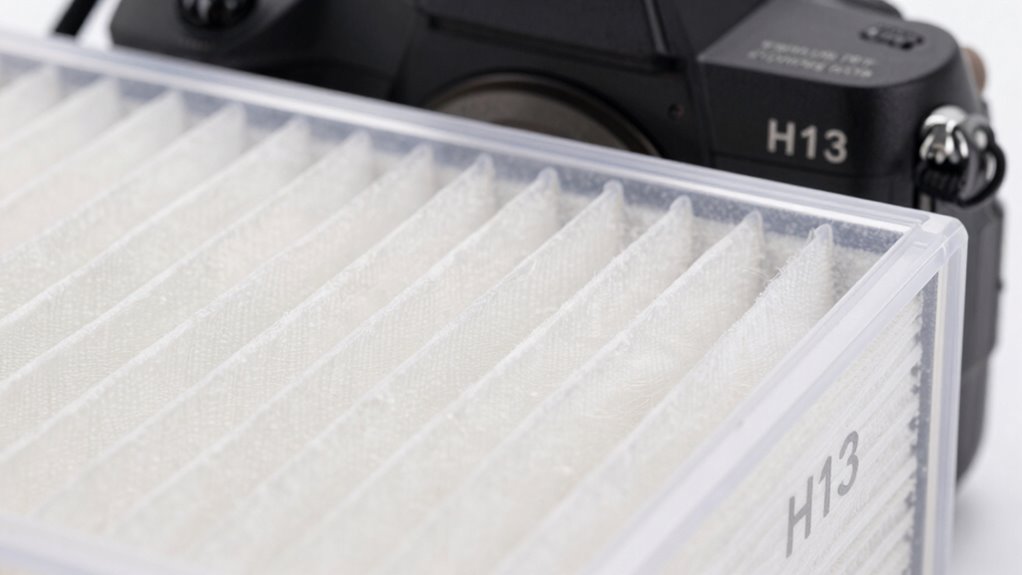
An H13 HEPA filter captures at least 99.95% of particles as small as 0.3 microns, making it highly effective at improving indoor air quality by trapping dust, pollen, bacteria, and allergens. Unlike standard HEPA filters, H13 offers slightly higher efficiency, especially for fine particles. It doesn’t eliminate odors or fumes, so proper maintenance is key. To understand if it’s right for you and how it works, keep exploring the details behind this advanced filtration technology.

Get cleaning gear delivered free — and shop member deals
- Fast, free delivery on millions of items
- Access to Prime Big Deal Days deals on October 6–7
- Prime Video, Amazon Music and more included
Key Takeaways
- H13 HEPA filters capture 99.95% of particles as small as 0.3 microns, improving indoor air quality.
- They are more efficient than standard HEPA filters, trapping finer particles, including bacteria and some viruses.
- Proper maintenance and regular filter replacement are essential to maintain their high filtration performance.
- H13 filters primarily trap particles and do not remove odors or chemical fumes.
- When choosing an air purifier, consider room size, filter availability, and specific air quality concerns.
H13 HEPA air purifier filter replacement
As an affiliate, we earn on qualifying purchases.
As an affiliate, we earn on qualifying purchases.
What Is an H13 HEPA Filter and How Does It Work?
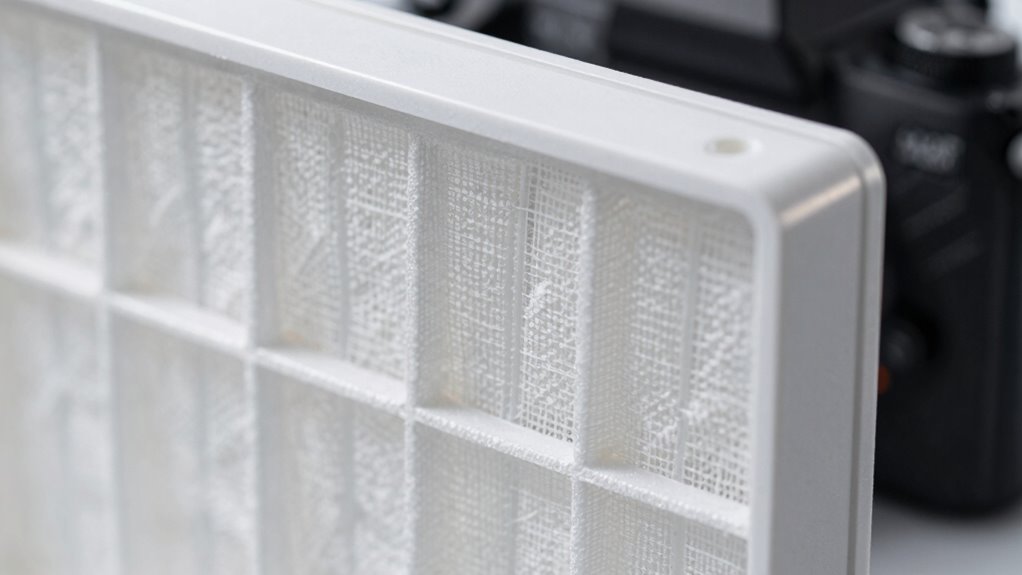
An H13 HEPA filter is a high-efficiency air filter designed to capture at least 99.95% of particles as small as 0.3 microns. When it comes to air filtration, this level of performance substantially improves indoor air quality by removing dust, pollen, bacteria, and allergens. As air passes through the filter, the dense fibers trap tiny particles that would otherwise circulate in your indoor environment. This results in cleaner, healthier air to breathe. You’ll notice fewer irritants and improved comfort, especially if you suffer from allergies or respiratory issues. An H13 HEPA filter is essential for maintaining ideal indoor air quality, making your space safer and more comfortable by effectively filtering out harmful airborne contaminants. Additionally, filters with this level of efficiency are often used in environments requiring air purification, ensuring the removal of even microscopic pollutants. The fiber density of H13 filters plays a crucial role in their ability to trap very small particles effectively, which is why they are considered a top choice for high-efficiency filtration. Furthermore, the filter design influences how well air flows through the system without sacrificing filtration performance.
high efficiency H13 HEPA filter for air purifier
As an affiliate, we earn on qualifying purchases.
As an affiliate, we earn on qualifying purchases.
H13 HEPA Versus Other HEPA Filters: What’s the Difference?
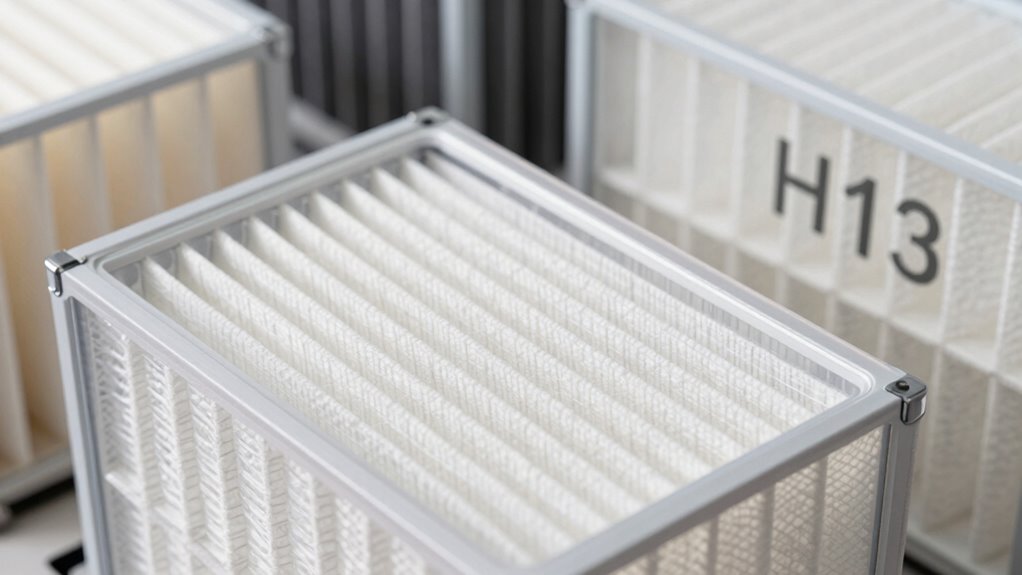
While all HEPA filters are designed to remove at least 99.97% of particles as small as 0.3 microns, their efficiency and performance levels vary. H13 HEPA filters provide higher filtration efficiency than standard HEPA filters, capturing finer particles that impact air quality. This means fewer allergens, bacteria, and viruses circulate in your space, reducing health risks. Proper maintenance extends filter lifespan and ensures consistent performance. Additionally, using filter efficiency standards can help consumers understand the performance differences between filter types. Regularly checking and following manufacturer guidelines for filter maintenance can significantly improve air quality. Understanding filter efficiency standards helps consumers make informed choices about air purification. For example, filtration efficiency relates directly to the ability to remove microscopic particles effectively. Here’s a quick comparison:
| Filter Type | Efficiency | Particle Size Capture | Maintenance Frequency | Cost |
|---|---|---|---|---|
| Standard HEPA | 99.97% | 0.3 microns | Regular replacement | Lower |
| H13 HEPA | 99.95-99.99% | 0.1-0.3 microns | Less frequent | Higher |
HEPA filter for allergies and asthma
As an affiliate, we earn on qualifying purchases.
As an affiliate, we earn on qualifying purchases.
Benefits of Using an H13 HEPA Filter for Clean Air
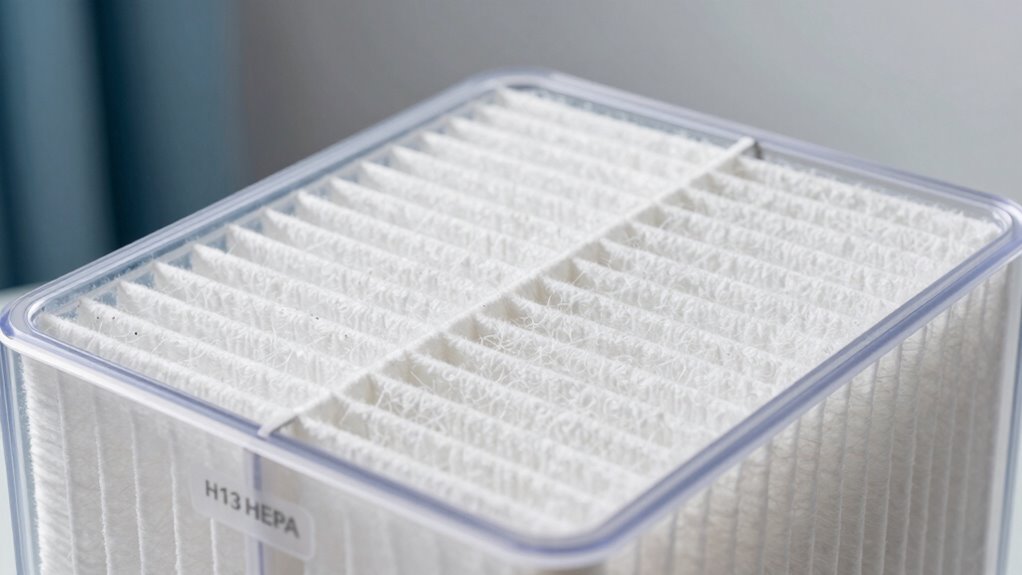
Using an H13 HEPA filter considerably enhances your indoor air quality by efficiently capturing tiny particles that can harm your health. These filters remove dust, pollen, pet dander, and airborne bacteria, creating a cleaner environment. Better air quality reduces your exposure to allergens and irritants, which can trigger asthma or allergies. With improved filtration, your respiratory health benefits, as you breathe in cleaner air with fewer contaminants. This is especially important if you live in urban areas or areas prone to pollution. An H13 HEPA filter ensures you’re protected from microscopic particles that traditional filters might miss. By maintaining high air quality, you support your overall well-being and enjoy a healthier, more comfortable indoor environment.
As an affiliate, we earn on qualifying purchases.
Limitations and Common Myths About H13 HEPA Filters
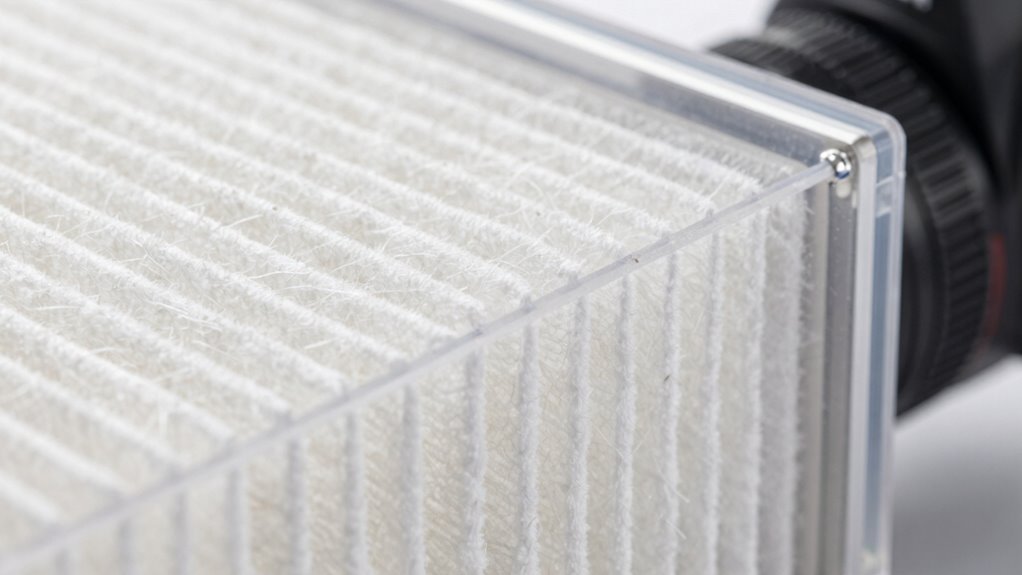
Although H13 HEPA filters are highly effective, they do have limitations that are often misunderstood. First, their filter lifespan depends on usage and air quality; neglecting this can lead to reduced efficiency. Second, maintenance requirements include regular replacement and cleaning to prevent buildup that hampers performance. Third, many believe these filters remove all viruses and bacteria, but they mainly trap particles larger than 0.1 microns—smaller pathogens may pass through. Fourth, some assume they eliminate odors completely, but H13 filters primarily target particles, not gases or chemical fumes. Recognizing these myths helps you set realistic expectations about their capabilities and ensures you maintain your filter properly for peak performance.
How to Choose the Best Air Purifier With an H13 HEPA Filter
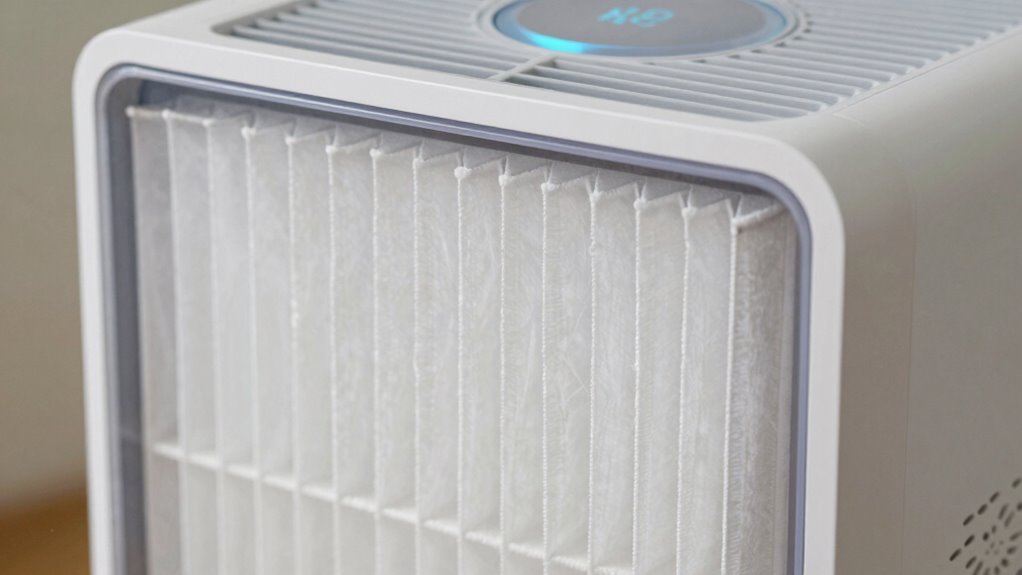
Choosing the right air purifier with an H13 HEPA filter depends on your specific needs and environment. Start by evaluating your air quality concerns—whether you’re targeting allergens, pollutants, or airborne viruses. Look for a device that matches your room size to guarantee effective purification. Consider ease of filter maintenance; some models require more frequent filter changes, which can impact ongoing costs and convenience. Check the purifier’s CADR (Clean Air Delivery Rate) to gauge its efficiency in removing particles. Also, verify that replacement filters are readily available and affordable. A well-chosen purifier will improve your indoor air quality without causing unnecessary hassle. Proper filter maintenance is key to maintaining peak performance and ensuring your air stays clean over time. Understanding HEPA filter classifications can help you make more informed choices for your health and comfort. Recognizing the European standards for air filters can further guide you toward reliable, high-quality products designed for optimal performance. Additionally, considering the wiring basics and ventilation considerations can ensure your air purifier is installed safely and functions effectively within your space.
Is an H13 HEPA Filter Right for Your Needs?
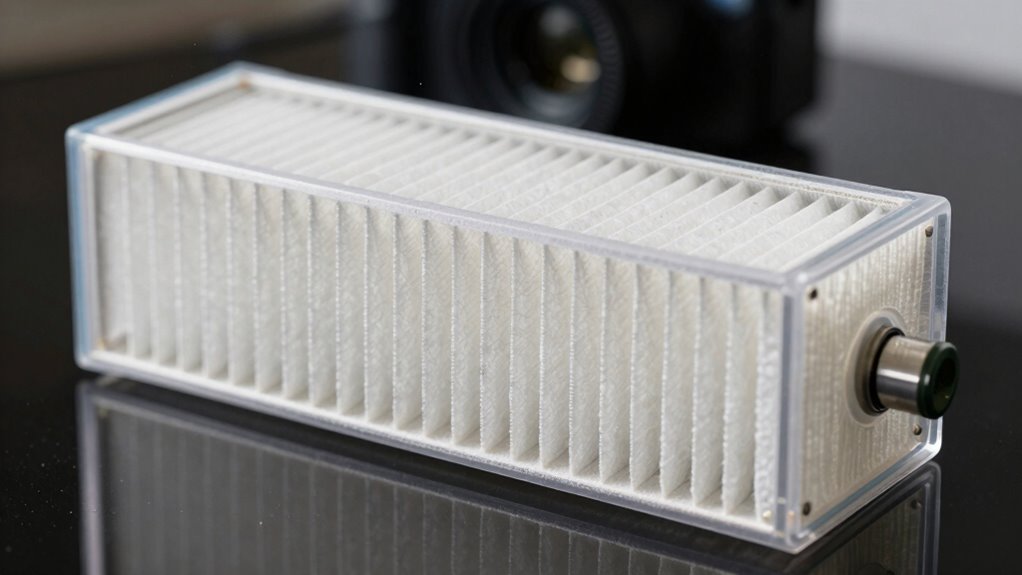
Wondering whether an H13 HEPA filter is right for your needs? If improving air quality and allergy relief are priorities, it could be a great fit. Consider these points:
- If you suffer from allergies or asthma, an H13 filter effectively captures airborne particles, providing cleaner air.
- For households with pets or smokers, it reduces pet dander and smoke particles.
- If you live in an area with high pollution levels, an H13 filter can help filter out fine pollutants.
- For general air quality improvement, it offers a higher level of filtration compared to standard filters.
Ultimately, if you want to breathe easier and reduce allergy symptoms, an H13 HEPA filter might be the right choice for your needs.
Frequently Asked Questions
How Often Should I Replace an H13 HEPA Filter?
You should replace your H13 HEPA filter every 6 to 12 months, depending on the filter’s lifespan and your usage. Check the manufacturer’s replacement guidelines, as factors like air quality and filter capacity can affect how often you need to change it. Regularly inspect the filter for dirt and buildup, and replace it sooner if it looks clogged or performance drops, ensuring ideal air purification.
Can H13 HEPA Filters Remove Viruses and Bacteria Effectively?
Yes, H13 HEPA filters effectively remove viruses and bacteria through viral removal, capturing particles as small as 0.1 microns. They are highly efficient during their filter lifespan, typically lasting 6 to 12 months with regular maintenance. Keep in mind that a clean filter maintains peak viral removal. To guarantee maximum protection, replace your filter when it reaches the end of its lifespan or shows signs of reduced performance.
Are H13 HEPA Filters Suitable for Allergy Sufferers?
If you suffer from allergies, H13 HEPA filters are highly suitable. Imagine reducing allergy symptoms considerably after switching to an air purifier with an H13 filter—this is common for allergy sufferers. These filters improve air quality by capturing tiny particles like pollen, dust, and pet dander. Keep in mind, for best results, replace the filter regularly to maintain its effectiveness and guarantee consistent air quality, extending the filter’s lifespan.
Do H13 HEPA Filters Produce Ozone or Other Harmful Emissions?
H13 HEPA filters do not produce ozone or harmful emissions during operation. You can trust that these filters clean the air effectively without adding dangerous substances. Unlike some air purifiers that generate ozone, H13 HEPA filters only trap particles and allergens, making them safe for allergy sufferers. Rest assured, using an H13 HEPA filter means you’re improving indoor air quality without risking ozone production or other harmful emissions.
What Maintenance Is Required to Keep an H13 HEPA Filter Functioning Properly?
To keep your H13 HEPA filter functioning properly, you should regularly check its filter lifespan and replace it when it reaches the recommended time, typically every 6 to 12 months. Follow the cleaning procedures specified by the manufacturer, which often involve gently vacuuming or wiping the filter surface. Proper maintenance guarantees peak air filtration, maintains airflow, and prolongs the filter’s effectiveness.
Conclusion
So, now that you know an H13 HEPA isn’t some magic air-cleaning wizard, maybe take a breath — literally. It’s great for filtering out most allergens and particles, but don’t expect it to turn your home into a sterile spaceship. Remember, no filter can do all the work alone. So, keep your expectations realistic, your air fresh, and your skepticism healthy — after all, hype only makes things smell worse.
Fall Picks
fall essentials
As an affiliate, we earn on qualifying purchases.