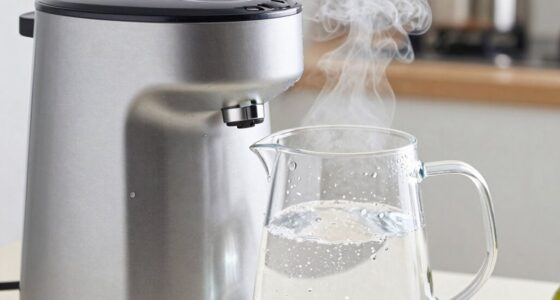
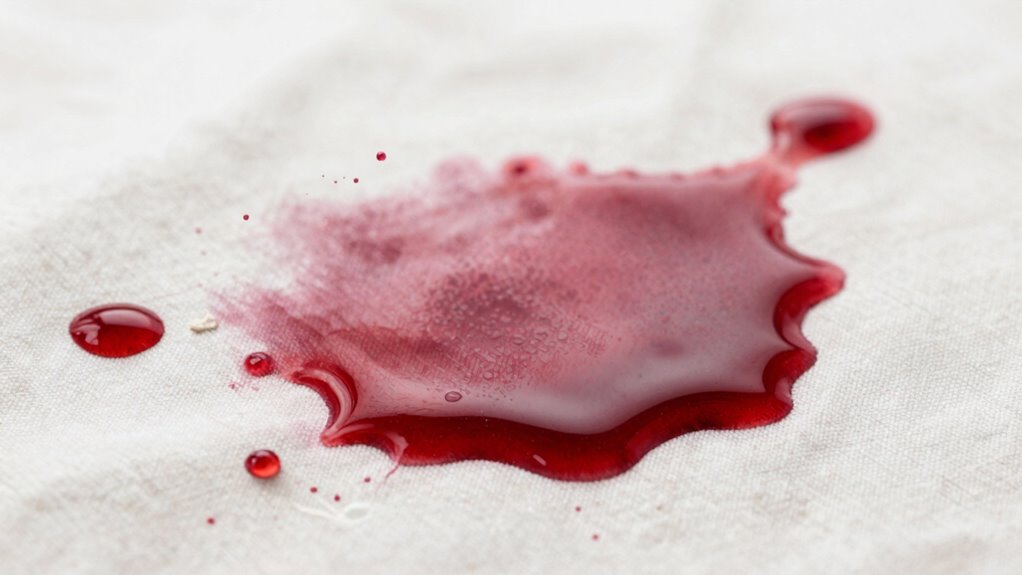
When you spill a stain, heat speeds up chemical reactions and molecular bonding, making the stain set deeper into fabrics or surfaces. Hot liquids cause fibers to expand and allow stains to penetrate further, creating stronger, more permanent bonds. Cooler temperatures slow these processes, helping you prevent stains from setting. If you want to understand how temperature impacts stain permanence and learn effective ways to tackle different stains, keep exploring this topic further.

Get cleaning gear delivered free with Prime
- Fast, free delivery on millions of items
- Prime Video, Amazon Music and more included
- Member-only deals all year
Key Takeaways
- Elevated temperatures accelerate chemical reactions, forming stronger bonds that make stains more permanent.
- Heat increases molecular activity, causing stains to penetrate deeper into fibers and surfaces.
- Higher temperatures promote faster bond formation, locking stains into place before removal.
- Cooler conditions slow molecular movement, reducing stain penetration and making removal easier.
- Sudden temperature changes can cause stains to set quickly or distribute unevenly, complicating cleaning efforts.
As an affiliate, we earn on qualifying purchases.
How Does Temperature Affect Stain Formation and Setting?
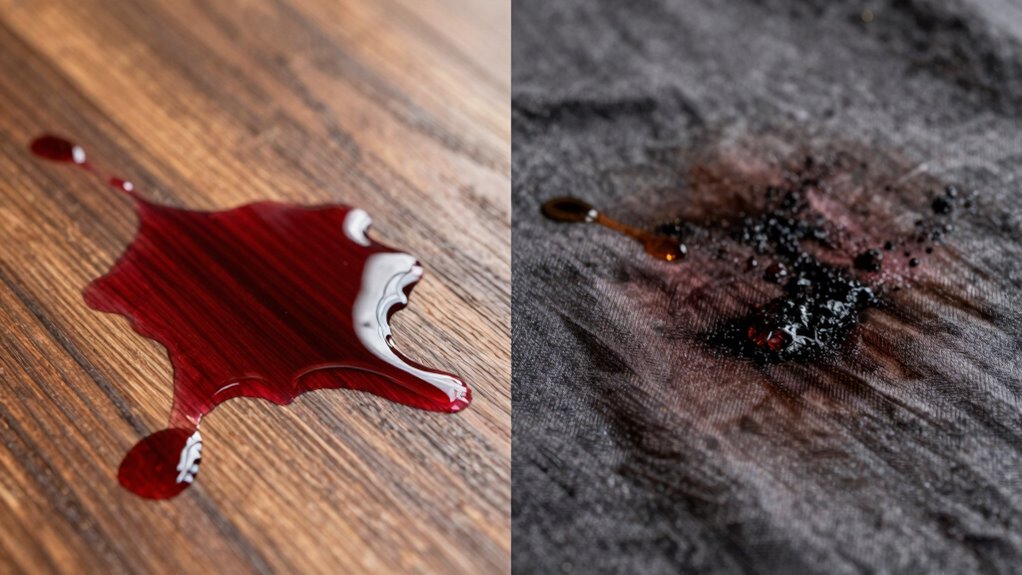
Temperature plays a crucial role in how stains form and set on surfaces. When you spill a liquid, heat transfer influences the molecular interactions between the stain and the material. Higher temperatures increase molecular activity, causing stain molecules to bond more strongly with fibers or surfaces. Heat accelerates the movement of molecules, making stains penetrate deeper and become harder to remove. Conversely, cooler temperatures slow down these molecular interactions, reducing the stain’s ability to set quickly. This process explains why hot liquids often create more stubborn stains. Additionally, temperature regulation can be a key factor in stain prevention and removal strategies. By understanding how temperature affects molecular interactions, you can better predict stain behavior and take appropriate actions, such as cooling or heating surfaces, to minimize staining or make cleaning easier. Proper temperature control during and after a spill can help prevent stains from setting permanently.
temperature-controlled stain remover
As an affiliate, we earn on qualifying purchases.
As an affiliate, we earn on qualifying purchases.
Why Do Hot Liquids Usually Set Stains More Than Cold?
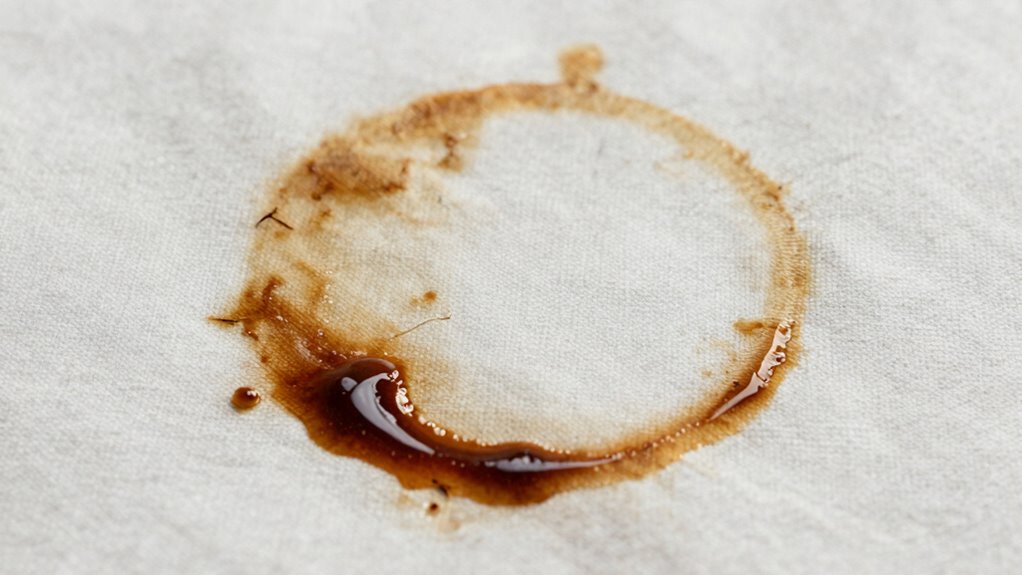
Hot liquids tend to set stains more than cold because the heat increases molecular activity, allowing stain molecules to bond more quickly and firmly with surfaces. When you pour hot liquids onto fabrics or other materials, the heat accelerates fiber reactions, making fibers more receptive to stain molecules. This rapid bonding often results in the stain color becoming more embedded and harder to remove. The warmth causes fibers to expand slightly, creating tiny openings that let stain molecules penetrate deeper. As a result, hot liquids create a more durable, set-in stain compared to cold liquids, which don’t promote the same level of molecular activity or fiber reactions. Additionally, thermal effects on fibers can influence how we perceive and respond to stains, especially in noisy environments where focus is challenged. The temperature-dependent nature of stain setting underscores the importance of quick and appropriate stain treatment. When dealing with stains, understanding projector technology and how heat affects materials can be useful in certain contexts. For example, some electric bikes can reach high speeds and produce significant heat during operation, which can affect materials and stains in certain contexts. That’s why, when dealing with stains, temperature plays a pivotal role in whether a stain sets or can be more easily cleaned.
As an affiliate, we earn on qualifying purchases.
Can Freezing Help Remove or Prevent Stains?
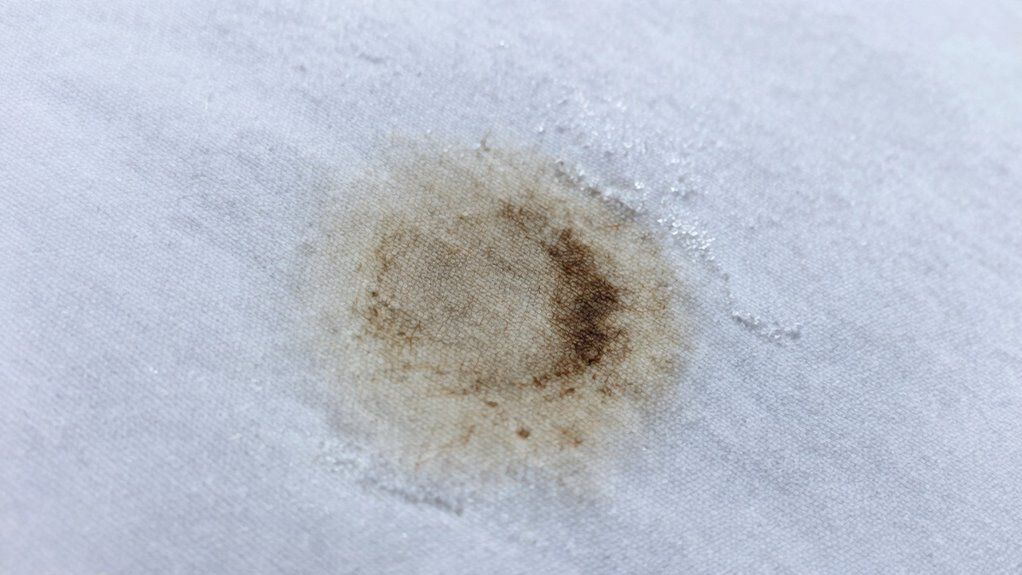
Freezing can trap stains in place, making them easier to remove later. When you put soiled items in the freezer quickly, it prevents the stain from setting deeper into the fabric. Using cold storage as a preventive measure can save you time and effort in stain removal later. Additionally, understanding the types of stains can help you decide whether freezing is an effective strategy for your specific situation. Recognizing different stain removal techniques can further improve your chances of successful cleanup. It’s also helpful to learn about proper cleaning methods to ensure you don’t accidentally set the stain further. Being aware of modern kitchen technology can introduce innovative tools that assist with stain detection and removal, streamlining your cleaning process.
Freezing Locks in Stains
While freezing may not be a universal solution for all stains, it can be effective in specific situations by preventing the stain from setting further. Freezing stains slows down the chemical processes that cause stains to bond with fabrics, fundamentally locking in the stain at its current stage. The temperature impact is significant because freezing stains reduces enzyme activity and bacterial growth that could deepen the stain. When you freeze a garment with a fresh stain, you give yourself extra time to treat it properly later. Additionally, air purifier maintenance can help keep your environment free of airborne pollutants that might contribute to stain buildup on fabrics. Properly managing your household environment can also prevent further staining by reducing airborne particles that settle on textiles. It’s crucial to act quickly; the longer a stain remains unfrozen, the more likely it is to set permanently. Using appropriate cleaning techniques alongside freezing can further improve stain removal success. Freezing stains can be a helpful tool in your stain removal arsenal, but it’s not a guaranteed fix. Incorporating techniques such as body piercing aftercare can also minimize irritation that might otherwise cause additional staining or damage to the skin. Additionally, understanding how stains set at different temperatures can inform your approach to stain removal strategies.
Prevention Through Cold Storage
Storing garments in cold environments can be an effective way to prevent stains from setting permanently. Cold storage slows down stain chemistry, reducing the likelihood of chemical reactions that make stains permanent. To maximize this benefit, consider these storage techniques:
- Freeze stained clothes promptly to halt stain progression.
- Keep garments in airtight bags to prevent moisture and odor buildup.
- Avoid temperature fluctuations that can cause fabric damage.
- Use dedicated storage containers to prevent cross-contamination of stains.
- Being aware of fabric preservation techniques can further enhance stain prevention efforts.
- Understanding stain chemistry can help in choosing the optimal storage methods to minimize stain setting.
- Monitoring solar system influences on environmental conditions can also inform better storage environments for delicate fabrics.
As an affiliate, we earn on qualifying purchases.
What’s Happening Chemically When Stains Set at Different Temperatures?
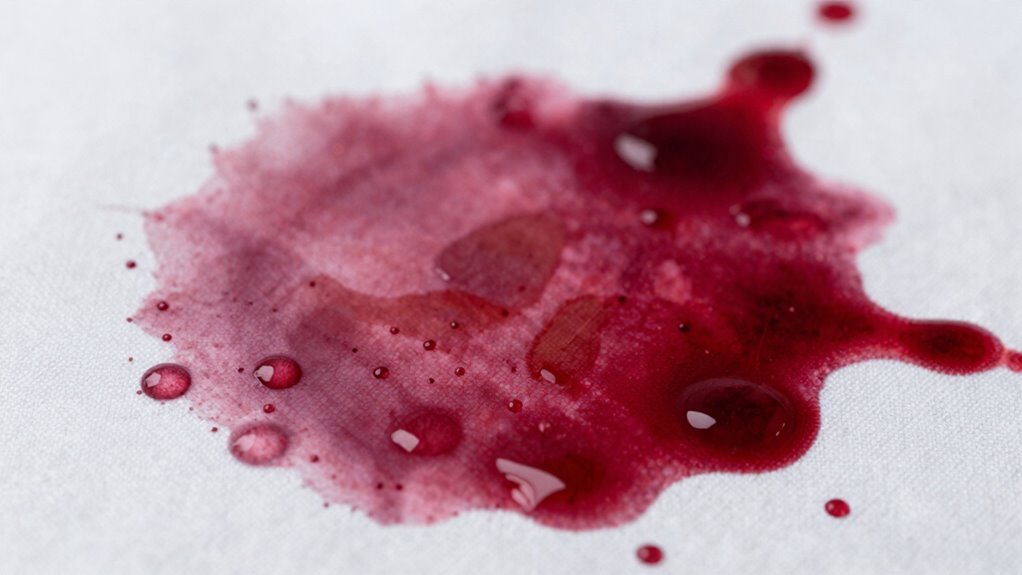
When stains set at different temperatures, the molecules involved react differently because temperature influences their energy levels. Higher temperatures can accelerate chemical bond formation, making stains more permanent, while lower temperatures slow these processes down. Understanding these changes helps you grasp why some stains become harder to remove over time. Additionally, temperature affects the molecular energy, which directly impacts how quickly or stubbornly a stain bonds to a surface. Variations in temperature can also influence the chemical reactions that cause staining, affecting how easily stains can be broken down or removed.
Temperature’s Effect on Molecules
Temperature directly influences how molecules in stains react and settle. When thermal energy increases, molecular motion speeds up, making molecules move more vigorously. Conversely, cooler temperatures slow down this movement. Here’s how temperature affects molecules:
- Higher temperatures boost molecular motion, causing stains to seep deeper into fibers.
- Increased thermal energy can weaken molecular bonds, making stains less likely to set permanently.
- Cooler temperatures reduce molecular motion, helping stains stay on the surface.
- Rapid molecular movement at high temperatures can cause stain particles to spread or set more firmly as they settle unevenly.
- The molecular interactions that determine how stains bond are highly sensitive to temperature changes, affecting their permanence and ease of removal. Additionally, temperature fluctuations can alter the chemical properties of certain stains, influencing how they respond to cleaning methods. Recognizing the temperature dependence of stain behavior allows for more effective stain removal strategies. Understanding this helps you see why heat can cause stains to bond more tightly, while cold can make them easier to remove.
Chemical Bond Formation Dynamics
As molecules in stains gain or lose energy, the way they form bonds with fibers changes considerably. Higher temperatures increase molecular motion, which influences molecular interactions during bond formation. At elevated temperatures, molecules have more energy to overcome activation barriers, enabling stronger, more stable bonds with fabric fibers. Conversely, cooler temperatures slow down molecular movement, resulting in weaker or incomplete bond formation. This dynamic affects how stains set, as the process depends on the precise interactions between stain molecules and fabric. Fast bond formation at higher temperatures can lock stains in place more permanently, while slower bonding at lower temperatures may allow for easier removal later. Understanding these chemical bond formation dynamics helps explain why temperature plays such a critical role in stain setting.
How Can You Prevent Stains From Setting During Cleaning?

To prevent stains from setting during cleaning, it is essential to act quickly and use the right techniques. Prompt stain removal is key. First, blot the stain gently with a clean cloth to absorb excess liquid without spreading it. Second, apply cold water or a suitable cleaning solution immediately to dilute the stain. Third, use appropriate cleaning techniques tailored to the stain type, avoiding heat, which can set it further. Fourth, avoid scrubbing aggressively, as it can embed the stain deeper. By acting swiftly and choosing proper stain removal methods, you reduce the risk of the stain setting, making cleaning more effective. Remember, quick response and the right techniques are your best tools for successful stain removal.
How to Treat Different Types of Stains Based on Temperature Conditions?
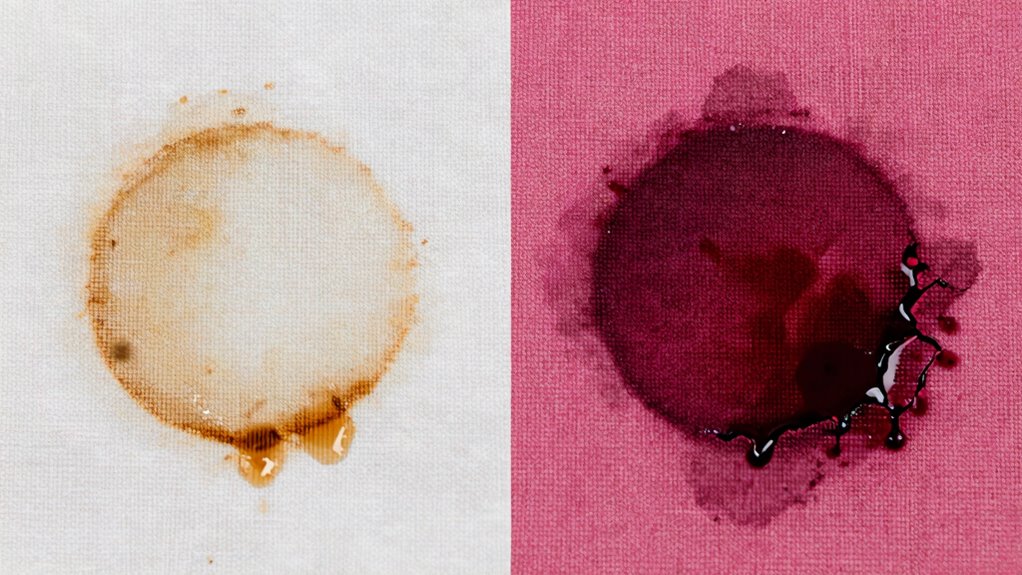
Different types of stains respond best to specific temperature conditions, so understanding how heat affects each can make your cleaning more effective. For example, protein-based stains like blood or sweat should be treated with cold water to prevent the stain from setting deeper into the fabric fibers. Warm or hot water can help remove oily or greasy stains, as heat breaks down the stain’s stain color and helps lift it from the material. However, high temperatures can set synthetic stains or those with vivid stain colors, making them harder to remove. Always consider the fabric fibers and stain color before choosing your cleaning temperature. Using the correct heat level guarantees you don’t unintentionally lock in the stain, making your efforts more successful.
When Should You Call a Professional for Stain Removal Challenges?
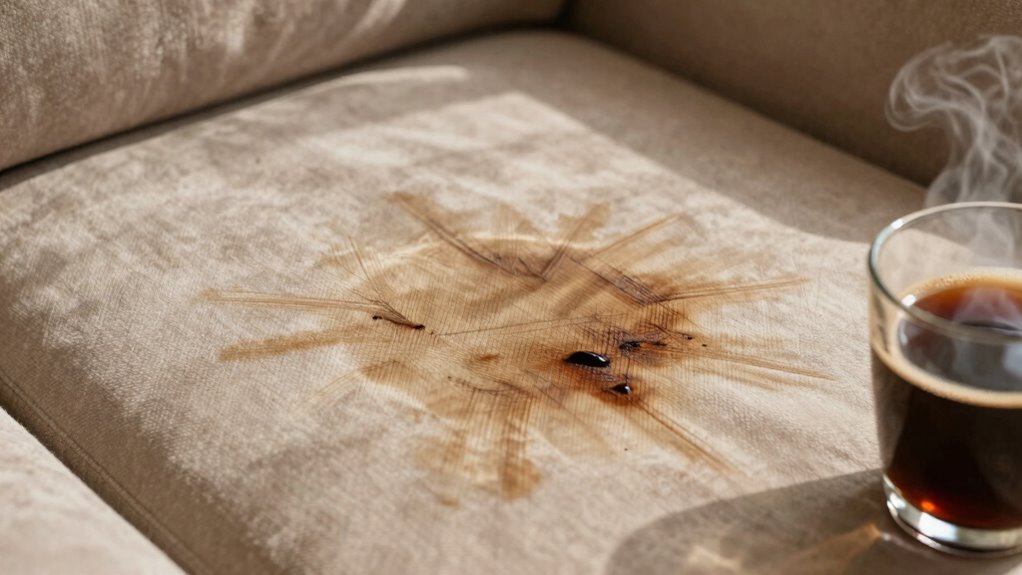
Sometimes, stubborn or large stains simply can’t be removed with DIY methods, and attempting to do so may risk damaging your fabric or worsening the stain. When you face complex stains, it’s time to contemplate professional intervention. Recognize these signs of stain complexity:
- The stain persists after multiple DIY treatments
- It’s on delicate or valuable fabrics
- The stain has set deeply into the fibers
- You’re unsure about the best cleaning approach
In these cases, professional cleaners have the expertise and specialized equipment to handle tough stains safely. Don’t risk damaging your fabric or making the problem worse—trust professionals when the challenge exceeds typical stain removal skills. Their intervention can save your item and ensure proper cleaning.
Frequently Asked Questions
Can Certain Fabrics Resist Stain Setting Despite Temperature Variations?
Certain fabrics do resist stain setting despite temperature changes because of their fabric dyeing process and inherent stain resistance. You’ll find that tightly woven or treated fabrics, like those with stain-resistant finishes, prevent liquids from penetrating deeply. These fabrics are designed to repel stains, making them less likely to set even when exposed to heat. So, choosing stain-resistant fabrics can help you avoid stubborn stains that set easily.
How Does the Age of a Stain Influence Its Susceptibility to Setting?
Did you know that older stains are 60% more likely to set permanently compared to fresh ones? Stain maturity considerably influences its susceptibility to setting, as aging increases the likelihood of absorption into fibers. You’ll find that aging influence makes it harder to remove stains over time, so acting quickly is key. The longer a stain sits, the more embedded it becomes, making it tougher to clean.
Are There Specific Cleaning Agents That Work Better at Preventing Set-In Stains?
You should choose effective cleaning agents like enzyme-based or stain removers designed for specific stains to prevent set-in marks. These specialized products work better at breaking down stains and stopping them from setting deeper into fibers. Always follow the instructions carefully, apply the cleaning agent promptly, and avoid heat until the stain is thoroughly treated. This approach maximizes your chances of successful stain removal and prevents stubborn, lasting marks.
Does Sunlight Exposure Impact the Likelihood of a Stain Setting?
Sunlight exposure acts like a relentless spotlight, revealing every flaw and making stains more stubborn. When your fabric resists the sun’s rays, stains can deepen and set more quickly, like shadows growing bolder in fading light. To prevent this, avoid prolonged sunlight contact after cleaning. Keeping your fabric resistance high helps protect your clothes from the sun’s harsh influence, ensuring stains don’t become permanent scars on your favorite pieces.
Can Repeated Washing Help Remove Stains That Have Already Set?
Repeated washing can sometimes help with stain removal, but it depends on how long the stain has set. When a stain has already set, fabric treatment needs to be more targeted, like using stain removers or specific cleaning agents. Regular washing may gradually fade the stain, but for best results, pre-treat the area with appropriate products and avoid harsh scrubbing, which can damage the fabric.
Conclusion
By understanding how temperature influences stains, you can gently guide them away from becoming stubborn. Cooler conditions often keep stains more manageable, while warm or hot environments may encourage them to settle in deeply. With a little care and the right approach, you can keep your fabrics looking fresh and vibrant. Remember, sometimes a gentle touch and patience are your best allies—think of it as giving stains a little time to quietly fade away.
Halloween Picks
halloween
As an affiliate, we earn on qualifying purchases.