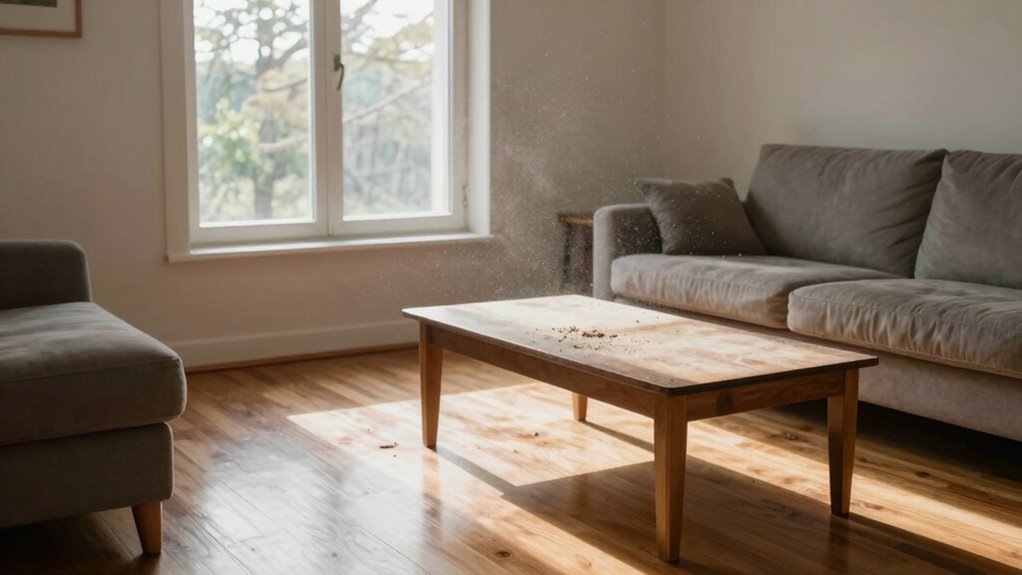
Dust comes back after cleaning because of various constant sources in your home. Fabrics, carpets, and pets shed particles that contribute to dust buildup. Open windows let in outdoor dust and pollen, too. Traditional cleaning methods often miss corners and high surfaces, allowing dust to settle back onto cleaned areas. To manage this cycle effectively, you’ll need a consistent routine and the right techniques. Discover how to enhance your cleaning strategy for a longer-lasting clean.

Get cleaning gear delivered free — and shop member deals
- Fast, free delivery on millions of items
- Access to Prime Big Deal Days deals on October 6–7
- Prime Video, Amazon Music and more included
Key Takeaways
- Dust reaccumulates due to ongoing sources, like home materials, pet dander, and outdoor particles entering through open windows.
- Traditional dusting methods often just redistribute dust instead of removing it effectively.
- Inadequate cleaning routines can overlook high surfaces and corners, allowing dust to settle again quickly.
- Poor indoor air quality and humidity levels can lead to dust resuspension and increased particle circulation.
- Regular use of HEPA-filter vacuums and air purifiers helps capture and reduce airborne dust for longer-lasting cleanliness.
Even though you might clean your home diligently, dirt always seems to make a comeback. It’s frustrating, right? You dust, vacuum, and mop, yet by the next day, you find dust settling on surfaces again. So, what’s going on? Understanding the dust sources in your environment can help you tackle the issue more effectively.
Your home is a collection of materials and fabrics that attract dust like magnets. Everything from your carpets and upholstery to curtains and bedding can harbor dust mites and tiny particles. Even your pets contribute to the dust problem. Their fur, dander, and skin flakes are constant offenders, adding to your cleaning woes. If you’ve got windows open, outdoor dust and pollen can slip inside, increasing the overall dust load. These are the primary dust sources you need to address if you want a cleaner space.
Your home’s fabrics and materials attract dust, while pets and outdoor elements add to the problem, creating a constant cleaning challenge.
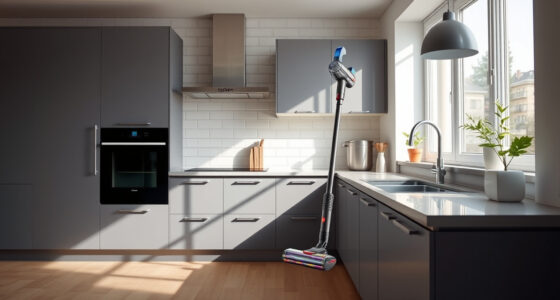
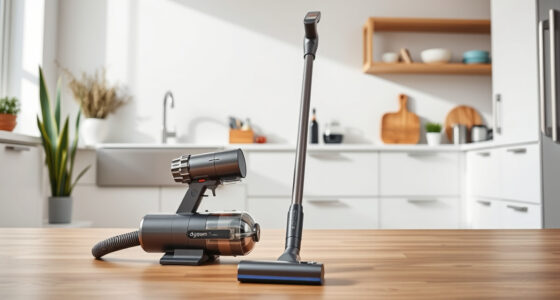
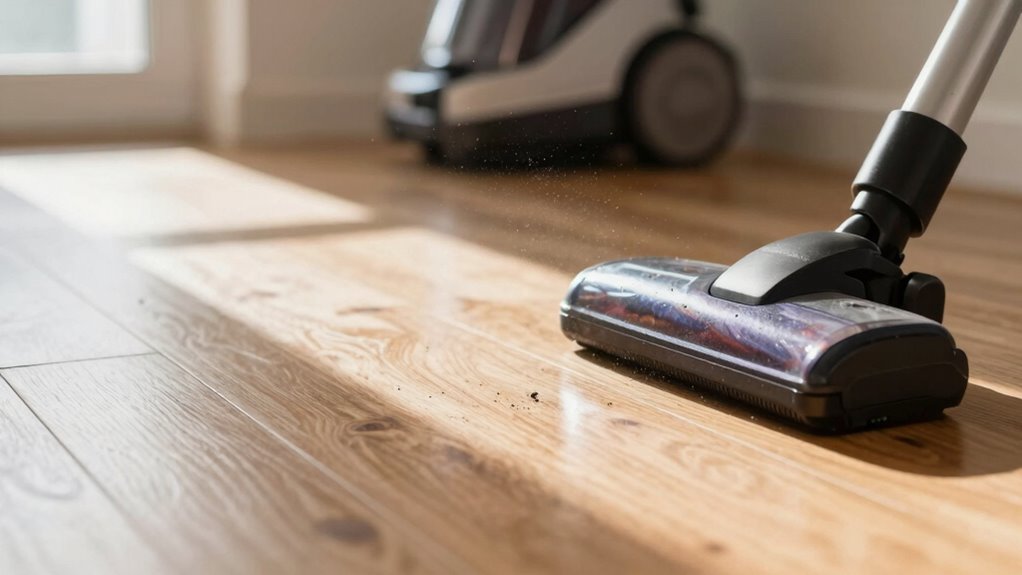
The techniques you use to clean also play a significant role in how quickly dust returns. Traditional dusting with a dry cloth can sometimes just push dust around instead of removing it. Instead, think about using microfiber cloths, which trap dust particles more effectively. When you vacuum, make sure you’re using a vacuum with a HEPA filter to capture smaller particles that regular vacuums might miss. Additionally, vacuuming your furniture and drapes can make a noticeable difference. Regularly cleaning these surfaces prevents dust buildup and reduces the amount of dust that becomes airborne.
While you’re at it, check your cleaning routine. Are you moving from one room to another without giving each area a thorough clean? It’s easy to overlook corners or high surfaces where dust accumulates. Make a habit of cleaning from top to bottom, ensuring that any dust you dislodge falls to the floor, where you can effectively vacuum it up last. Incorporating this cleaning hierarchy into your routine can improve your results. Maintaining proper indoor air quality by controlling dust sources can significantly impact your overall health. Also, addressing dust resuspension by controlling airflow and disturbance can prevent dust from becoming airborne again shortly after cleaning. Using air purifiers equipped with HEPA filters can further help reduce airborne dust particles and improve air quality in your home. Maintaining proper humidity levels can significantly decrease dust resuspension and improve overall air quality.
As an affiliate, we earn on qualifying purchases.
Frequently Asked Questions
How Often Should I Vacuum to Reduce Dust Accumulation?
You should vacuum at least once a week to reduce dust accumulation effectively. If you have pets or allergies, consider increasing your vacuuming frequency to two or three times a week. Along with regular vacuuming, use effective cleaning techniques like dusting surfaces before vacuuming and using a vacuum with a HEPA filter. This combination helps capture more dust and allergens, keeping your home cleaner and healthier for you and your family.
Does Humidity Affect Dust Levels in My Home?
Absolutely, humidity affects dust levels in your home. In fact, high humidity can lead to a 50% increase in dust sources like mold and allergens. When the air’s moist, dust particles cling together and settle more quickly, but it can also promote the growth of dust mites. To keep your space comfortable, aim for a humidity level between 30% and 50%. Regular cleaning helps manage those pesky dust sources and maintain a healthier environment.
What Are the Best Air Purifiers for Dust?
When choosing the best air purifiers for dust, look for models with HEPA filtration systems, as they capture 99.97% of dust particles. Features like activated carbon filters help eliminate odors, while a high Clean Air Delivery Rate (CADR) guarantees efficient air cleaning. Consider purifiers with smart sensors that adjust settings based on air quality. Brands like Dyson and Honeywell offer excellent options that combine these features for peak performance in your home.
Can Pets Contribute to Indoor Dust Significantly?
Yes, pets can greatly contribute to indoor dust. Their dander and fur accumulate, especially during shedding cycles, leading to increased dust levels in your home. When you pet or brush them, tiny particles get released into the air, settling on surfaces. Regular cleaning and grooming can help reduce this accumulation, but it’s tough to eliminate completely. Investing in an air purifier specifically designed for pet dander can also make a big difference.
Is There a Way to Prevent Dust From Entering My Home?
You can definitely prevent dust from entering your home by taking some effective preventive measures. Start by installing dust barriers, such as door mats and weather stripping on windows and doors. Regularly clean your HVAC filters and use air purifiers to reduce dust circulation. Make it a habit to remove shoes at the door and keep windows closed during windy days. These steps can greatly minimize the amount of dust that makes its way inside.
As an affiliate, we earn on qualifying purchases.
Conclusion
To sum up, you might find it surprising that a single person sheds about 1.5 grams of skin flakes every day, contributing considerably to household dust. This statistic highlights just how persistent dirt can be. While cleaning can temporarily banish dust, it’s an ongoing battle against nature. Understanding the dust loop not only helps you manage your cleaning routine but also keeps you aware of the invisible forces at play in your home. So, stay vigilant!
As an affiliate, we earn on qualifying purchases.
As an affiliate, we earn on qualifying purchases.
Fall Picks
fall essentials
As an affiliate, we earn on qualifying purchases.