Opening your windows can actually make dust problems worse. While you might think fresh air is beneficial, it invites outdoor allergens and pollutants inside, boosting your total dust levels. Seasonal changes can worsen this effect, as high pollen counts and other allergens increase. Plus, the airflow stirs up existing dust, leading to more dirt to clean. If you’re looking for effective strategies to balance fresh air and reduce dust, there’s more to explore on this topic.
Key Takeaways
- Opening windows allows outdoor allergens and dust to enter, increasing indoor dust levels.
- Fresh air can stir up existing dust, exacerbating indoor allergen problems.
- Seasonal changes introduce varying pollutants, worsening dust accumulation and air quality.
- Poor air filtration systems fail to manage incoming outdoor pollutants effectively.
- Increased airflow from open windows necessitates more frequent cleaning of dust and allergens.

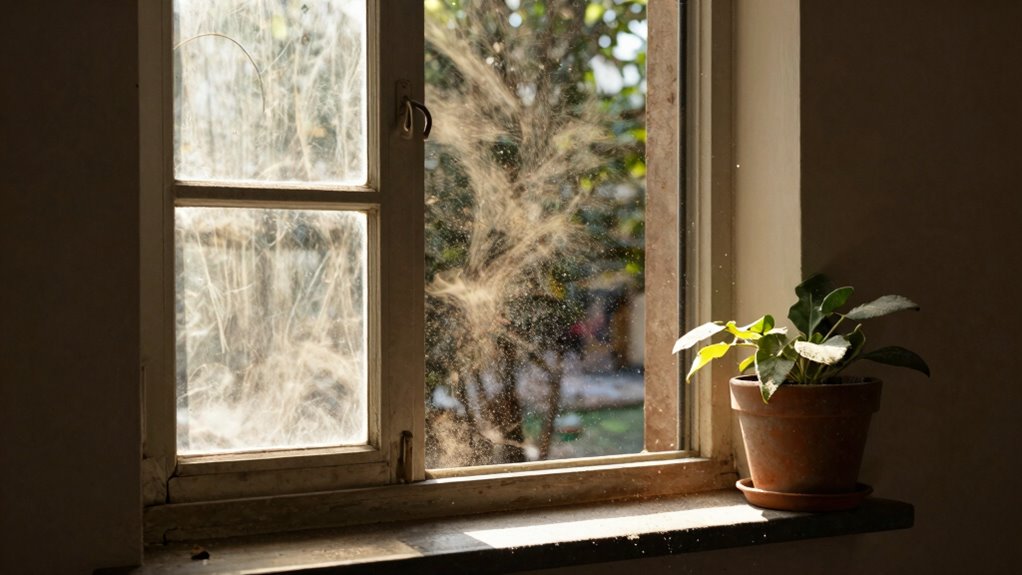
When you open your windows for fresh air, you might not realize that you’re also inviting a flurry of dust into your home. While the idea of fresh air sounds invigorating, it’s essential to reflect on how outdoor allergens and dust can impact your indoor air quality. Seasonal changes can bring various pollutants into your living space, and once those windows are open, you’re giving dust a direct pathway inside.
Every time you let that fresh breeze in, outdoor allergens—like pollen, mold spores, and various particulates—can hitch a ride into your home. This influx can lead to increased dust accumulation, especially if you live in an area with high pollen counts during spring or fall. If you suffer from allergies, this is particularly concerning, as the introduction of these allergens can exacerbate symptoms and make your indoor environment less hospitable.
Every time you invite fresh air inside, outdoor allergens like pollen and mold spores can increase dust accumulation, worsening allergy symptoms.
You might think that opening windows improves ventilation, but it can sometimes have the opposite effect. While good ventilation is critical for maintaining air quality, it can also mean more dust settles in your home. As the air flows in, it can stir up existing dust that’s been lying around, causing an increase in indoor allergens. This becomes a loop where you open windows for fresh air, only to find yourself dealing with more dust and allergens to clean up afterward.
Moreover, dust accumulation isn’t just a cosmetic issue; it can also affect your health. Poor indoor air quality due to dust and allergens can lead to respiratory issues, headaches, and fatigue. When you let outdoor air in, you’re also allowing all those tiny particles to circulate in your home, especially if you don’t have a robust air filtration system in place. Outdoor pollutants can significantly influence indoor air quality and dust levels, emphasizing the importance of managing airflow carefully. Additionally, outdoor pollutants can carry various particulates that settle into dust, further complicating indoor air quality management. To minimize these issues, it’s beneficial to consider ventilation strategies that balance fresh air with indoor air cleanliness. Implementing proper air filtration can help reduce the impact of outdoor pollutants, making it easier to maintain a healthier indoor environment. Furthermore, using indoor air quality sensors can help monitor and manage pollutant levels more effectively.

Purivortex Air Purifiers for Bedroom, Quiet Air Purifier with HEPA Filter for Pollen, Smoke, Dust, Pet Dander, Odor, Hair, Ozone Free, Covers Up to 880 Sq Ft, PX500 Black
- Covers Large Areas: Covers up to 880 sq ft
- Fast Air Purification: Purifies a 215 sq ft room in 15 min
- High-Efficiency Filtration: Filters 99.97% of pollutants
As an affiliate, we earn on qualifying purchases.
As an affiliate, we earn on qualifying purchases.
Frequently Asked Questions
How Often Should I Clean My Windows to Reduce Dust?
You should clean your windows at least once a month to reduce dust. This frequency helps combat dust accumulation factors like pollen, pet dander, and outdoor debris. If you live in a particularly dusty area or have pets, you might want to clean even more often. Regular window cleaning not only improves your view but also minimizes the amount of dust that can enter your home through open windows. Keep it fresh!
Does Opening Windows Affect Indoor Air Quality?
Yes, opening windows can greatly affect indoor air quality. For instance, when you open a window during peak pollen season, you might invite in not just fresh air but also outdoor allergens like pollen and dust. This can worsen allergies and respiratory issues. While good ventilation is essential, consider the timing. If you’re sensitive to indoor allergens, it’s worth checking outdoor air quality before letting in that fresh breeze.
Can Air Purifiers Help With Dust From Open Windows?
Absolutely, air purifiers can help reduce dust that comes in from open windows. Their effectiveness depends on the type of filter used, so consider HEPA filters for the best results. While you’re using an air purifier, employing window sealing techniques can also minimize dust entry. Make sure your windows close tightly and check for gaps. Together, these strategies can greatly improve your indoor air quality and keep your space cleaner.
What Time of Day Is Best to Open Windows?
Opening windows in the morning brings a rush of freshness, like sipping your first coffee. That’s the best time to let in cool air, as the day’s heat hasn’t stirred up dust yet. Conversely, evening calmness offers a gentle breeze, perfect for winding down. So, you’ll find that early morning and late evening are your sweet spots for fresh air, balancing comfort without overwhelming your space with dust.
Are Certain Window Types Better for Reducing Dust?
Yes, certain window types can help reduce dust. Windows with tighter seals and double or triple glazing minimize dust accumulation by limiting outside air circulation. Consider frames made from materials like vinyl or fiberglass, which offer better insulation and are less prone to air leakage. Additionally, designs that allow for easy cleaning can keep your windows clear, further reducing the dust that settles in your home.

High Density dustproof and Pollen Proof net Window Screen mesh roll Used to Replace Screen Windows and Doors(Grey: 109''X37''(276X95cm)
- High Density Mesh: Prevents dust and pollen infiltration
- Enhanced Mesh Structure: 20×20 mesh with extra reinforcement lines
- Transparent Ventilation: Allows light and airflow while blocking particles
As an affiliate, we earn on qualifying purchases.
As an affiliate, we earn on qualifying purchases.
Conclusion
Keeping your windows open might seem like a fresh idea, but it can actually invite more dust into your home. Did you know that a typical household can accumulate nearly 40 pounds of dust each year? That’s a staggering amount! So, while you enjoy the breeze, remember that all that fresh air can bring along unwanted particles. It might be worth considering how often you really need those windows open to keep your indoor air clean and comfortable.

Air Purifiers for Home Large Room, Cover Up to 2400 Ft² with True HEPA Filter, PM2.5 Air Quality Display, 22dB Sleep Mode, Aromatherapy with 2X-Purification & 360°Air Outlet, HAP603
- Powerful Filtration for Large Rooms: Covers up to 2400 ft² with 2X filtration
- Real-Time Air Quality Monitoring: PM2.5 display and infrared sensor
- Quiet Sleep Mode with Aromatherapy: 22dB operation for peaceful sleep
As an affiliate, we earn on qualifying purchases.
As an affiliate, we earn on qualifying purchases.

41×22 Basement Window with Tempered Glass, Adjustable Ventilation Windows,360Degree Rotation, Bathroom – Customizable Size – White
- Customizable Size: Tailored to your specific dimensions
- Tempered Glass: Durable, safe, and insulated glass
- 360-Degree Rotation: Adjustable for optimal airflow
As an affiliate, we earn on qualifying purchases.
As an affiliate, we earn on qualifying purchases.