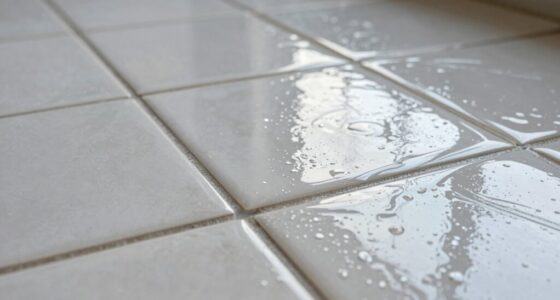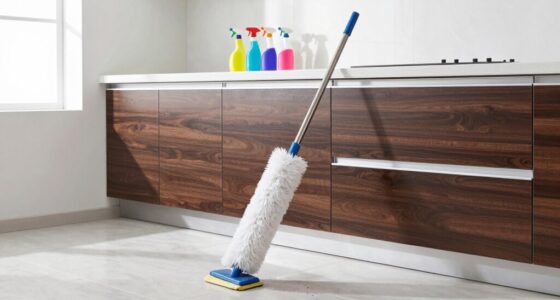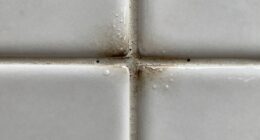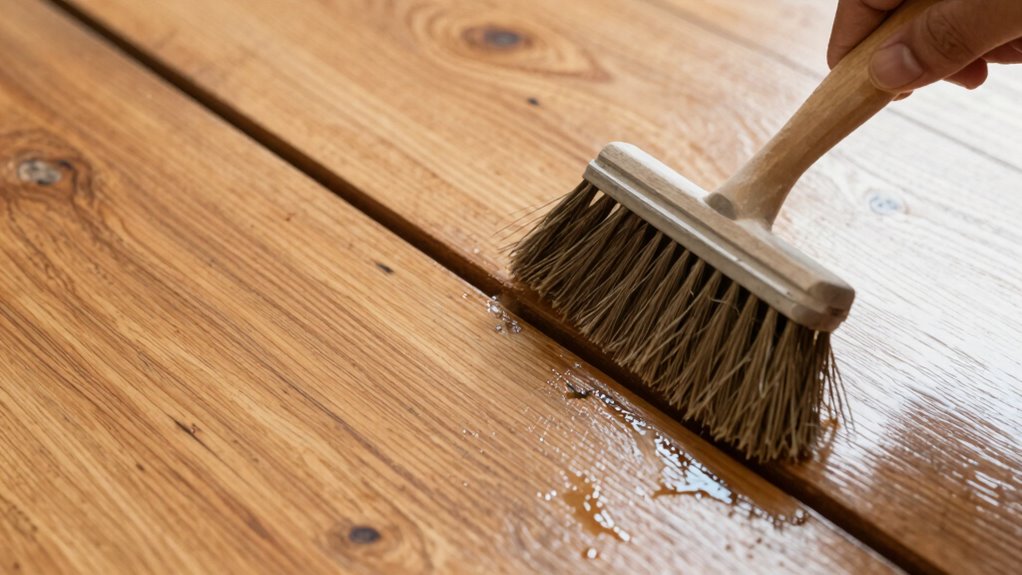

To clean grime from floor joints and edges, inspect the area for buildup, mold, or cracks. Use a mixture of water and mild detergent or a commercial mold remover, applying it directly to the grime. Let it sit briefly, then scrub gently with a stiff brush. Seal any gaps afterward to prevent future dirt buildup. Keeping up with regular maintenance and proper cleaning techniques will guarantee your floors stay clean and mold-free—continue to explore how to maintain them effectively.
Key Takeaways
- Use a stiff brush and warm water with mild detergent to scrub grime from joints and edges.
- For stubborn grime, apply a mixture of baking soda and water, then scrub gently.
- Rinse thoroughly with clean water to remove residue and prevent buildup.
- Dry the area completely to prevent moisture accumulation that can promote mold growth.
- Regularly inspect and reseal joints to maintain cleanliness and prevent grime buildup over time.
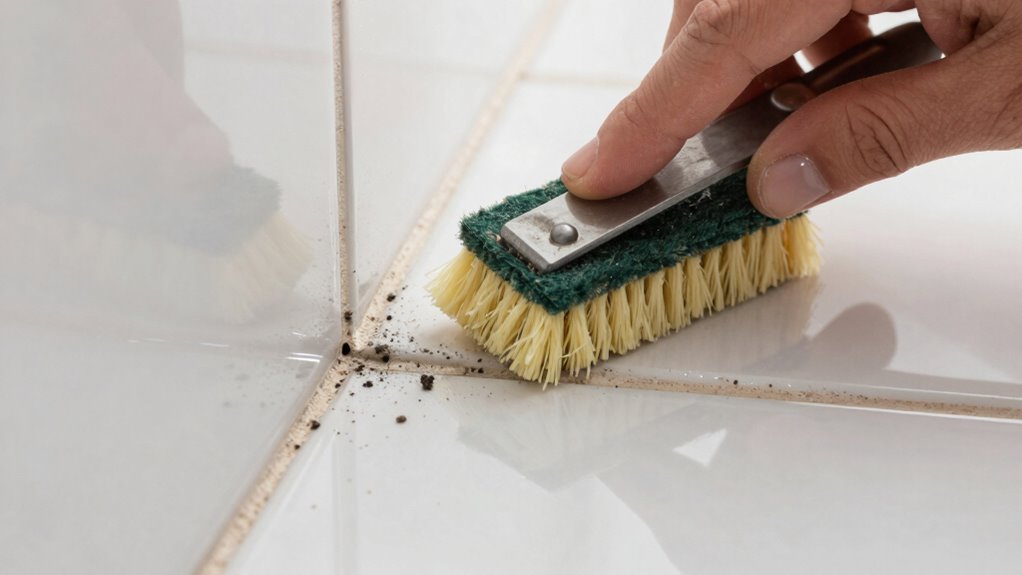
Regularly cleaning floor joints and edges is essential to maintaining a clean and safe environment. These areas tend to trap dirt, dust, and moisture, creating a perfect breeding ground for mold and bacteria. If you neglect them, grime can build up rapidly, making your space look neglected and potentially causing health issues. To keep these areas pristine, you need a targeted approach that effectively removes grime while preventing future problems.
Start by inspecting the joints and edges carefully. Look for signs of mold, which often appears as dark or fuzzy patches. Mold thrives in damp, unventilated spaces, so if you find any, address it promptly. Mold removal isn’t just about cleaning; it’s about eliminating the spores to prevent recurrence. Use a mixture of water and mild detergent for routine cleaning, but for mold, a solution of diluted bleach or a commercial mold remover works best. Apply it directly to the affected areas, let it sit for a few minutes, then scrub gently with a stiff brush. Wearing gloves and a mask is advisable to avoid inhaling spores or coming into contact with harsh chemicals. Regular inspection and maintenance can also help identify early signs of mold before it spreads.
Sealing cracks is another critical step in maintaining your floor’s integrity. Cracks provide entry points for dirt, moisture, and mold spores, accelerating grime buildup and fostering mold growth. After cleaning, inspect the joints and edges for any cracks or gaps. Use a high-quality sealant suitable for your flooring material to fill these gaps. Proper sealing not only prevents dirt and grime from settling but also reduces moisture infiltration, which is crucial for mold prevention. When applying sealant, ensure the surface is completely dry to get a good bond. Smooth out the sealant with a putty knife or your finger, and wait for it to cure fully before walking on the area.
Regular maintenance also includes routine sweeping and mopping to prevent dirt accumulation. Consider applying a protective coating or sealant periodically to keep the joints water-resistant and easier to clean. This proactive approach minimizes the chances of grime buildup and mold recurrence. Remember, the key to effectively cleaning floor joints and edges lies in consistent care and addressing issues as soon as they appear. Sealing cracks, removing mold promptly, and keeping the area dry are your best defenses against grime buildup and mold proliferation. Maintaining proper floor system integrity and ensuring adequate ventilation can significantly reduce the likelihood of mold growth and grime accumulation. With these steps, you’ll preserve both the cleanliness and safety of your space, ensuring it remains hygienic and visually appealing over time.
Frequently Asked Questions
Can I Use a Power Washer to Clean Floor Joints Safely?
Yes, you can use a power washer to clean floor joints, but be aware of power washer risks like damaging the surface or forcing water into cracks. To stay safe, use a low-pressure setting and keep the nozzle at a safe distance. Always wear protective gear, test in a small area first, and avoid directing the spray at delicate or damaged spots to prevent accidents or damage.
What Natural Remedies Effectively Remove Grime From Edges?
Imagine stubborn grime lurking in edges like shadows in a corner. You can use natural cleaning methods, like a mixture of white vinegar and baking soda, to tackle it effectively. Herbal solutions, such as tea tree oil diluted in water, also work well as antimicrobial cleaners. These natural remedies break down grime without harsh chemicals, giving you a safe, eco-friendly way to keep your floor joints and edges spotless.
How Often Should I Clean Hard-To-Reach Floor Joints?
You should clean hard-to-reach floor joints at least once a month, depending on foot traffic and dirt buildup. Regular cleaning prevents grime accumulation and makes maintenance easier. Incorporate cleaning frequency into your routine as part of maintenance tips to keep your floors looking their best. Use a small brush or vacuum to reach tight spots, then follow up with a damp cloth for thorough cleaning, ensuring your floors stay spotless and long-lasting.
Are There Eco-Friendly Cleaning Products for Delicate Flooring?
Yes, you can find eco-friendly solutions for delicate flooring that effectively clean without damage. Look for products labeled as biodegradable, non-toxic, and free of harsh chemicals. These are gentle on your flooring while still tackling grime and dirt. Always check the manufacturer’s recommendations to verify the product suits your specific flooring type. Using eco-friendly solutions helps protect the environment and keeps your home safe for everyone.
How Do I Prevent Future Grime Buildup in Floor Joints?
You can prevent future grime buildup in floor joints by applying a sealant regularly—this creates a barrier that keeps dirt out. Don’t forget to schedule regular inspections to catch potential issues early. If you notice cracks or gaps, reseal promptly. These simple steps keep your floors cleaner longer, but stay vigilant—unknown buildup might be lurking just beneath the surface, waiting to surprise you.
Conclusion
Keeping floor joints and edges clean prevents grime buildup and maintains your space’s appearance. For example, imagine you notice dirt accumulating in your bathroom tiles; by regularly scrubbing with a brush and using a gentle cleaner, you prevent stains and mold. Consistent maintenance makes a big difference, saving you time and effort later. So, make it a routine—your floors will stay fresh, and your home will look its best every day.